
By Xhelal Marku
Memorie.al / The name of Sheh Ymeri has entered the history of the Reç and Dibra region as one of the most honoured and respected figures among all local public opinion, as a personality and master of the Dibra “Oda” assemblies, as a symbol of humanism, justice, wisdom and the Islamic faith, to which he remained devoted until the last moments of his life. And it is no small feat – about a century of life, filled with intense patriotic and religious activity, which left indelible marks and impressions on people and on all those who had the chance to know Sheh Ymeri.
Born in 1907 in the village of Kraj‑Reç, Dibra district, Sheh Ymeri, as the youngest and last child of Sheh Osmani and mother Sulltana, was raised with the special care of these exemplary parents of the region, who from his early childhood saw in little Ymeri an innate intellect, a precocious wisdom and an admirable spiritual purity. It was precisely these high human qualities that prompted Sheh Osmani to educate his son Ymeri in the traditional profession of the generations of the Sheh house of Reç. Until then, that renowned household of Islamic faith had produced nine generations of believers, among whom the name of Sheh Ymeri stood out for his activity.
Thus the figure of Sheh Ymeri grew over the years, with the constant care of his father, Sheh Osmani, by his side. He completed two years of primary school with Hafuz Shabani in the Kukës district and another two years in the village of Gjegjan, in the same district. Afterwards, Sheh Ymeri managed to obtain a passport – still preserved by his family – which enabled him to study at the Islamic School in Skopje, which he finished with excellent results. After finishing school, he returned to his native village, Kraj‑Reç, where throughout his life he would exercise the honourable duty of imam. His work is considered not only a model of high professionalism in performing religious services for the citizens, but also a special human devotion, inclined only towards justice and honesty.
Sheh Ymeri was a well‑rounded figure in terms of human qualities – qualities he reflected everywhere in his relationships with people, whether as a citizen or as a respected cleric of the Reç region of Dibra. Always calm in his work, measured in what he said, loved and respected by the many friends and companions he had, correct and generous, brave when the occasion demanded, honest, and highly trustworthy in the opinion of the area where he carried out his religious activity. He often said in the men’s assemblies of the Dibra “odas”: “There is no religion without a homeland. Religion is and should always be in the service of the Homeland.” This lofty patriotic principle would guide him in all his actions. Thus, in Sheh Ymeri’s portrait, his patriotic stance and his religious one were inseparably and visibly intertwined. This further increased the esteem and trust of the residents of the community where he served.
Therefore, when Sheh Ymeri spoke, his word was not disputed, because it had been weighed on the scales of wisdom and justice. Thus, with the “power of justice” he represented, he had intervened in resolving many disputes, quarrels and blood feuds among people, not only in his native village but wherever he was known. This was the reason why one day the people of Reç entrusted him, alongside his religious duty as imam, also with the duty of Chairman of the National Liberation Council for the Reç region – a duty he carried out with honour and dedication for three consecutive years, 1942–’44. Such a combination of duties as with Sheh Ymeri of Reç – a man the people loved deeply, but who later saw his relations with Enver Hoxha’s communist regime cool – has rarely occurred.
Seeing the great authority and trust the people of Reç had in the figure of Sheh Ymeri, the communist regime, newly emerged from the war, used this name for its own interests, making him chairman of the Anti‑Fascist National Liberation Council for the Reç region. However, this did not diminish his reputation among the people, because Sheh Ymeri knew how to do both jobs well and honourably – both as a devout religious figure and as an exemplary official, one who sacrificed everything for justice, including his own sentence in 1947, when he was sentenced by a military court to six months in prison and three years of house arrest for non‑cooperation with the Local Command. As soon as he became the local authority chairman, Sheh Ymeri established a pact (itifak) in the areas of Reç, Dardhë and Lurë to protect the population from armed conflicts.
Through this measure, he saved many people from execution – people whom the then communist regime had sentenced to death for non‑cooperation with its Command, such as Selim Lala, Kadri Tanushi with his son, Misim Doda and Zef Skana, etc. – arguing that executions would break the local pact. Also much sought after as a dissident of communism was Sheh Halimi, to whom Sheh Ymeri had said: “Go to the mountains, or they will kill you!” But Sheh Halimi replied: “I cannot go, my neck is stiff!” Under these circumstances, the Command captured him and executed him without trial, at “Farkëtar’s Brook” in the village of Kraj‑Reç.
According to Sheh Ymeri’s son, Abaz, in the village of Gjurrë‑Reç in Dibra, the Great Anti‑Fascist National Liberation Council summoned Sheh Ymeri, as the local authority chairman for the area, to a meeting and asked him to hand over to the Local Command Adem Gjurra and Shaban Gjurra, who had openly declared themselves against the communist regime. Sheh Ymeri, with his prudence and diplomacy, went and met these two men, because they trusted the word of their imam. Their reply was: “If you take us under your responsibility, we will come and surrender; otherwise, no.” Sheh Ymeri could not take on that responsibility, so he gave a negative answer: “I cannot protect you.” Under these circumstances, the two most‑wanted men by the regime offered another alternative to the local authority chairman: to give them a deadline of fifteen days for them to surrender. Sheh Ymeri accepted this request and reported to the Higher Command asking for a fifteen‑day deadline to find the two men they wanted. This condition was agreed by the parties, but Adem Gjurra and Shaban Gjurra never surrendered, as they fled to America.
A local official and a revered cleric of the village
By this tolerance, where the authors had calculated well, Sheh Ymeri avoided their execution, but condemned himself to prison for non‑cooperation with the Higher Command of the country. When asked why he did not cooperate with the Command, Sheh Ymeri replied: “I do not cooperate, because tomorrow this Command will ask me to hand over to it even my own son.” After he served the sentence handed down by the wartime military court, Sheh Ymeri also served three years of house arrest and thereafter carried out religious services in complete secrecy for all believers of that region.
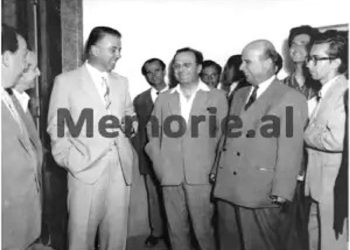
His relatives also recount another bold episode of Sheh Ymeri in a meeting with Haxhi Lleshi (Chairman of the Presidium of the People’s Assembly of the People’s Republic of Albania) at the latter’s home in Tirana after 1967, when the practice of religious activities was prohibited by law. After receiving Sheh Ymeri, Haxhi Lleshi invited him to sit in one of the armchairs in the hall. To show the comfortable conditions of the house, he asked Sheh Ymeri: “Are you comfortable, O Sheh?” “No,” replied Sheh Ymeri. “Well, why?” asked Haxhi Lleshi. Sheh Ymeri answered in the language of the Dibra “oda” gatherings: “How can I be, O Haxhi, I have never sat on a packsaddle without a felt pad?” “How do you drink your coffee, O Sheh?” continued Haxhiu. “One after the other, O Haxhi.” “Go on, make more coffee,” Haxhi Lleshi told the server, because Sheh Ymeri drank a lot of coffee. “And tobacco, how do you take it, O Sheh?” “Light it, put it out, and we drink,” Sheh Ymeri replied.
The conversation with Haxhi Lleshi then continued with other questions. “What name did the people call you?” Haxhi Lleshi asked Sheh Ymeri. Sheh Ymeri answered: “When I was born, my father gave me the name Ymer. Later, for about fifteen years, I struggled to make them call me Sheh Ymeri, while in 1946 they made my name Ymer.” “And now, what do they call you?” “They call me Sheh Ymeri, but now I am not able to carry this name, because old age has weighed on me.” “Will that time come again, O Sheh?” Haxhi Lleshi asked again. “Yes,” Sheh Ymeri replied boldly, “it will come again.”
As the conversation quoted above shows, Sheh Ymeri was characterised by courage, daring and bravery in his actions, through which he also openly expressed his optimism that one day the long‑awaited moment would come: the freedom of belief and democracy, so that a person would not be punished for thinking differently. Therefore, Sheh Ymeri often said in conversations with others: “Bravery and wisdom go together. Bravery after a war has no value, just as wisdom after an assembly has no value.”
Sheh Ymeri received the first blow from that dictatorial system in 1947, when he was imprisoned in Elbasan, solely for his religious views. The time of imprisonment and isolation would be for him a period of manly resistance, but it also influenced the consolidation of his anti‑communist views, leading later to his decisive stance in 1967, when religion was banned by law and places of worship were finally closed. This was also the hardest blow for Sheh Ymeri, forcing him to carry out his religious activity illegally, under conditions of surveillance and total isolation.
But even the years of the communist dictatorship could not bring the revered imam of Reç to his knees – the local residents listened to him and believed in his word, as always, as a representative of religion and of God. Thus Sheh Ymeri never interrupted his humane activity as a respected cleric of the area. Several of his interventions are known, using his authority as a believer and of the justice he represented in public opinion, to reconcile blood feuds, to settle quarrels and disputes through elders’ councils, as well as many other activities that further enhanced the name and personality of Sheh Ymeri, not only in the Reç region but throughout all of Dibra.
Sheh Ymeri – “Honorary Citizen” of Reç
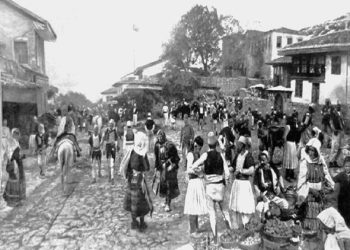
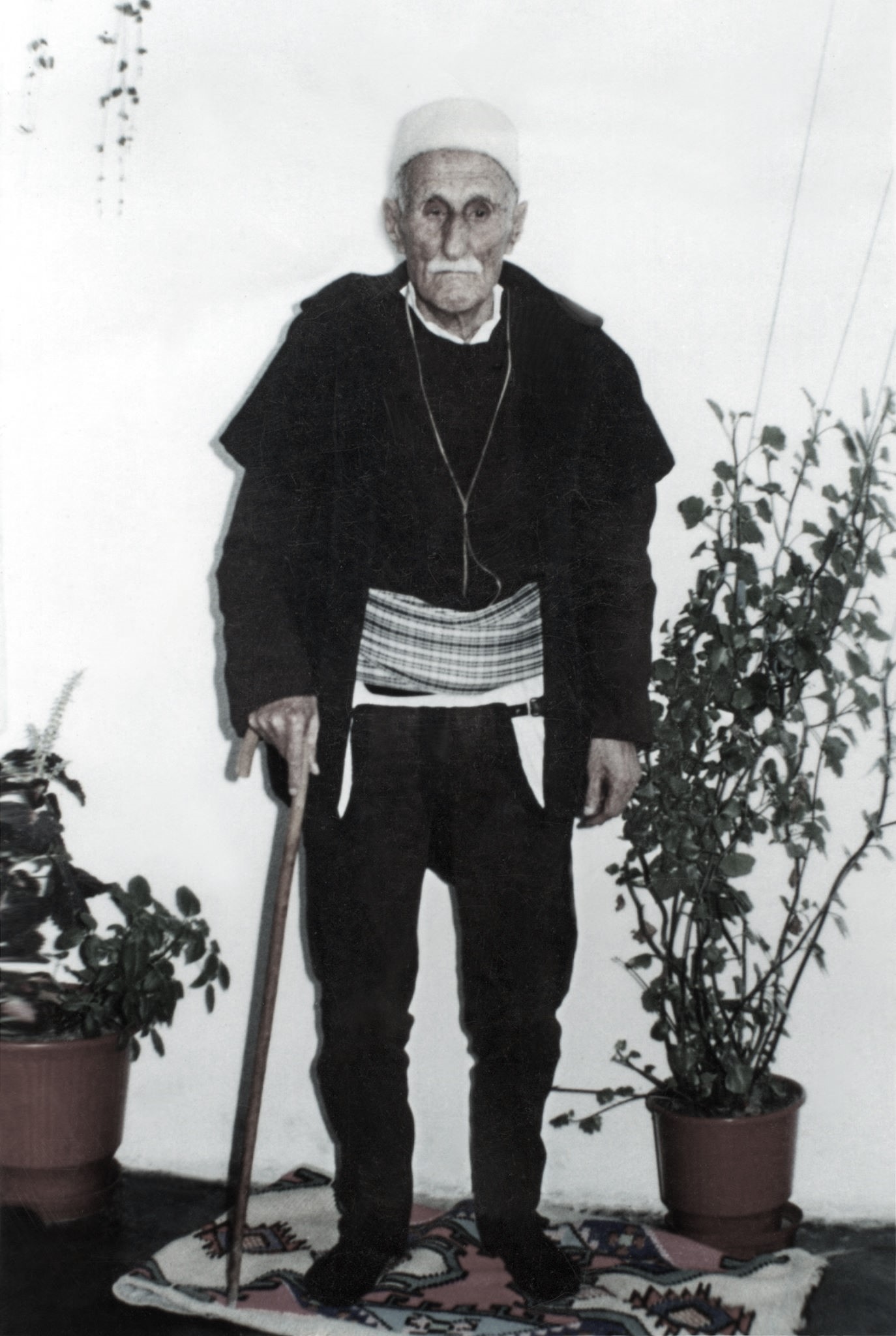
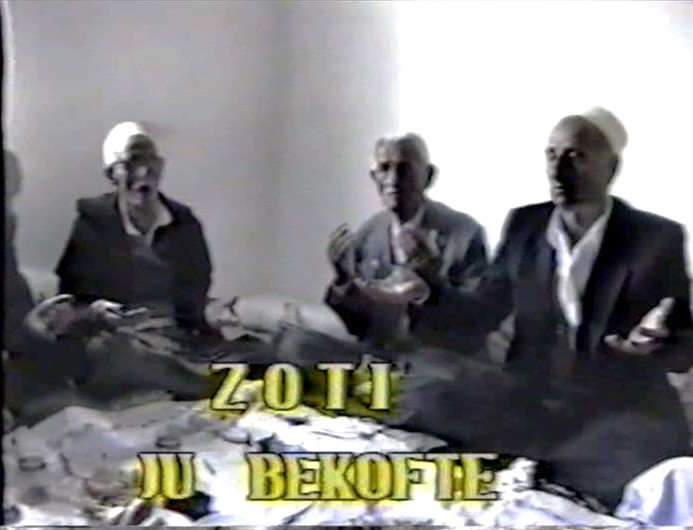
The life and work of Sheh Ymeri represent the most perfect model of the pure, honest, dedicated and versatile man of Reç, who spared nothing for the good of his birthplace. He was and remains the exemplary religious man and patriot of the Reç region, in form and in substance. In his typical highlander costume of Reç, which suited him so well: dark cloth tirqe and xhurdi, an xhamadan, a sash and a cap white as snow, Sheh Ymeri represented himself everywhere – in assemblies of men, in religious ceremonies and in celebrations – adding more seriousness and responsibility to his patriotic and religious work throughout the Reç and Dardhë regions? And he wore this costume not only in storms and snow, but also in the middle of July and the scorching summer heat, which attests to his strong and indomitable character against difficulties, his fighting spirit and resilience. And at the foundation of all his resilience was high optimism in every task – he believed he would succeed, overcoming the obstacles and difficulties encountered. Importantly, he knew how to pass this optimism on with great confidence to all the many believers who surrounded him everywhere, instilling in them the hope that a better day from God would come, as Democracy did.
And precisely when the wind of change began to blow from afar, Sheh Ymeri lost the beloved person of his heart, his wife Zahide Adem Lami, with whom he had raised seven children: two sons and five daughters (Lutfija, Abazi, Mihania, Sulltana, Huma, Feriti and Rukia). Describing that moment of grief at the loss of his wife, Sheh Ymeri said in conversations with relatives who were consoling him: “Today I lost my wife, but also the person who made my work easier in religious services for the believers.” He said this because Zahide was an ideal wife, who raised and educated the children with her parental care, but also worked to create all conditions for Sheh Ymeri to fulfil his religious duties towards the believers.
The premature death of his wife certainly weighed heavily on the renowned Sheh of Reç, leaving him at a very advanced age. But this loss was alleviated by his legacy: children, grandsons and granddaughters, with their great love for their esteemed grandfather, Sheh Ymeri. And today, Sheh Ymeri’s lineage numbers over 50 descendants. As can be seen, the prayers of the believers and the needy – “May your descendants fill a village” – which Sheh Ymeri was always inclined to help, have found a place in his family. This is Sheh Ymeri of Reç, who now also holds the title “Honorary Citizen” of Reç. These are recognitions and titles that he deserved over time in the opinion of the people of Reç, whom he served throughout his life with high dedication and with great love and humanism.
Even in the years of democracy, although at a very advanced age – around one hundred – Sheh Ymeri showed himself to be a humane and tolerant person in his relations with people, far from vengeance, calling and praying for them to engage more in reconciling and brotherly actions, to forgive the mistakes of the past that had led people astray. Life in Tirana, far from his birthplace, increased Sheh Ymeri’s longing for the people and for the place he had left behind in search of a better life. Therefore, in his conversations, love for his birthplace was the topic of the day. And just as he was about to knock on the “door” of the new century, old age and years took their toll: Sheh Ymeri passed away, leaving behind a name and a brilliant history of work and remarkable humane and patriotic activity.
Thus, over the course of a century, Sheh Ymeri and Reç became bound to each other, and bound they will remain for the generations who will remember him with respect. Therefore, whoever mentions Reç also mentions the great and unforgettable Sheh Ymeri – a distinguished and respected son of the region. From these bonds, from these values, springs the deep gratitude of the region for Sheh Ymeri, whom it honoured with the title “Honorary Citizen” of Reç. Although Sheh Ymeri no longer lives among us physically, his name and work live and will live for centuries and forever in the hearts and minds of those who knew and loved him as a dedicated cleric and patriot of the twentieth century, to which he belonged. He will always be remembered as a symbol of the perfect and noble Islamic believer, such as the Reç region gave birth to once in its history. The grandeur of Sheh Ymeri’s figure is also reflected in the magnificent funeral ceremony here in Tirana, attended and paid homage by hundreds and hundreds of people from many regions of the country, including Dibra, Tirana, Kukës, Mat, Kurbin, Lezhë, etc. With such yearning and respect for the worthy son of Reç, Sheh Ymeri, the people of Reç bid him farewell on the day of his departure to his final resting place. / Memorie.al