From Ali Buzra
Part Thirty‑Nine
– LIFE UNDER PRESSURE AND SUFFERING –
(ASSESSMENTS, COMMENTS, NARRATIVES)
Memorie.al / At the request and wish of the author, Ali Buzra, as his first editor and reader, I will briefly share with you what I experienced in this encounter with this book, which is his second (after the book “Gizaveshi in the Years”) and which naturally outlines his writing style. The sincerity and frankness of the narrative, the simple and unadorned language, the accuracy and precision of the episodes, or the absence of a deliberate, later‑stage imaginative elaboration, or its non‑exploitation, I believe have served the author positively, who presents himself to the reader in his original form, inviting us at the very least to become acquainted with unknown human fates and sufferings, whether by chance or not, leaving us to reflect as a beginning of awareness toward a catharsis so necessary for the Albanian conscience.
Bedri Kaza
Continued from the previous issue
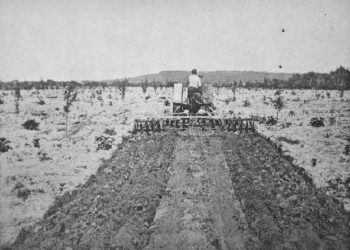
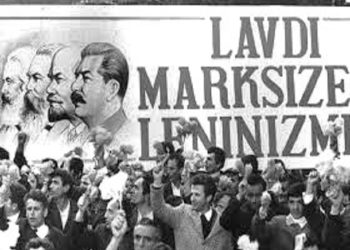
Thus, the words of Nebi Dosku or of someone else – “we work night and day and still cannot fill our stomachs with bread” – was a reality lived under the socialist system. Fear reigned everywhere. People spoke in low voices, but with fear. Year after year, arrests were made, in almost every village, naturally selecting victims mainly from among the persecuted elements of the system, those who had traditionally inherited wealth and had been dispossessed. The slogans of the time said: “Albania has been transformed into a construction site for building socialism.” In fact, it had been transformed into a forced labor camp without pay, or with a minimal wage just to keep body and soul together. The daily wage in the cooperative was 30 old lek, provided you met the norm, which on production fronts was very high.
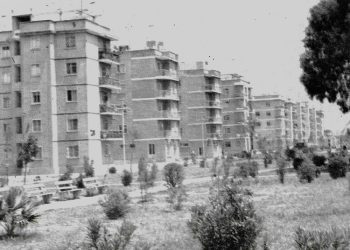
With that amount of money you could only buy a cornbread, which the peasants lived on for most of the year, working with rubber sandals in rain and snow. The situation in the cities was slightly better, but the urban population in the 1980s, as far as I remember, made up about 22% of the population. Thousands of young men and women from the countryside and cities spent one or two months in so‑called volunteer work, which in fact was compulsory. They worked on railways, terracing the coastline, deforestation, construction of apartment buildings, etc., without pay.
Even today, a neighborhood in Elbasan is called “Volunteer Neighborhood.” In Librazhd, hundreds of young people went through such forced labor for the terracing of the Shkumbin valley on the hills of Spathar. Unfortunately, seven of them – Flutura Allushi, Bule Prrenja, Mereme Brahja, Fatime Gega, Refie Çerri, Ruzhdie Çerri, and Naim Elezi – fell from an unsafe footbridge into the Shkumbin River and drowned in the cold winter water on January 15, 1979.
While testifying about the inhuman treatment inflicted especially on the cooperative peasant in agriculture, I will describe an incident that remains fresh in my memory, even though I did not personally experience that work because I was fortunate enough to pursue education and become a teacher. It was the first days of January 1984. We teachers were on semester break, which lasted 15‑16 days. The cooperative members, who had no weekly days off (let today’s young people not be surprised), had two days off for New Year’s: January 1 and 2. My wife was a cooperative member.
It might have been January 4 or 5 of the aforementioned year. I lived with my brother. My wife and my sister‑in‑law told us at dinner that the next day they would go to gather oak branches in the forest. “Where will you get them?” I asked. – “At ‘Beautiful Forest’,” they replied. – “What if you don’t go?” I said?! They smiled. – “The brigade leader told us that whoever is absent will have their family member who works for the state removed from their job, so we will go,” they explained. – “Alright,” I said, “but don’t carry too much.” My brother worked in a state enterprise, and I also had a state job. Anything could happen.
Many things went through my mind….! A teacher who sabotages work in the cooperative, leaving livestock without fodder, etc., etc.…! A few years earlier, the former secretary of the Party organization had once mentioned the fact that my grandfather, Selim Buzra, in Zog’s time had “farmhands,” servants in the house. In fact, this was true. Two families from the “Kopal” neighborhood of the village Librazhd‑Katund, Shaban Kopali and Tafil Kopali, stayed with their families near our house, in a dwelling where my grandfather had sheltered them. They did the agricultural work on our land in exchange for a plot of land he had given them to use in order to secure their livelihood. After my grandfather’s death, his sons married and separated. It was 1939, when the country was occupied by Italy. Their families no longer had the need, or the means, to keep workers.
Thus, they moved back to their “Kopal” neighborhood. We kept the friendship even after the liberation of the country. They invited us to weddings and parties they organized, and we did the same. I was worried that this fact might be used by malicious persons to label us as an exploitative family. Nevertheless, except for that particular instance, this fact was never mentioned to me again during the communist regime. Among the many things that crossed my mind that night when the brides of the house told us they would go for oak branches, this matter also came to mind, which I remembered in silence and had discussed with my father on occasion. He had told me that the above‑mentioned families were grateful to our family for having supported them for a while.
In the morning, before it was fully light, my wife left with my sister‑in‑law, carrying ropes on their shoulders and each a piece of cornbread with curd cheese in a cloth bag for the road. “Beautiful Forest” lies on the northern slope of Qafë‑Shapkë, over two hours’ walk from the village on ordinary days, but the area was covered in snow. During the day, I went to the livestock barn, which was near my house. There was a herd of goats there, because the cooperative sent the sheep to the fields of Kavaja during winter. Although around the barn the stacks of animal fodder were visible, I asked the shepherd if they had feed for them. “There is,” he told me, pointing to the part of the barn that was completely filled with leafless oak branches.
The women returned in the evening after dark, tired and exhausted to the bone. We asked them how it went. They told us that as far as the “Hysa” neighborhood of Librazhd‑Katund, the road was cleared. Further on, along a footpath, the snow was untouched. Two or three men from the brigade went ahead, one after another, taking turns breaking the snow. When they entered the forest, there was no path; they walked by guess. They wandered in the forest for over an hour to find the place where the oak branches had been stacked. The snow there was over a meter deep. The men broke open the stack, while the women prepared the loads of oak branches they would carry. They ate a little bread hurriedly, sitting on the loads. They loaded them onto their backs and set off.
It had taken nearly five hours just to get there. On the way back, loaded, it would take even longer. When they arrived at the barns, the brigade leader was waiting for them to weigh each person’s load with a scale. I asked how much they had carried. They laughed – “About 40‑some kg each,” they said. – “Well, you did well,” I told them. One day, I happened to meet the brigade leader and asked him why he had sent the workers through the snow to gather oak branches at such a time and on such a day. He explained that when the brigade has no work front, which usually happens when snow covers everything, the sector head is notified. Together with the cooperative leaders, they determine the work front for the workers. So the order had been given to send them to gather oak branches, regardless of the fact that there was a fodder base for livestock in the village.
Returning to the issue of agitation and propaganda for which Nebi Dosku and others were convicted, we can say that the former prisoners convicted on those grounds had in fact said little, because the truth is that this was truly slave‑like treatment. Regarding the fire‑break centers for which Nebi was held legally responsible, increasing his sentence to 10 years, I will mention another fact related to the Gizavesh sector. I don’t remember the exact year, but an order came: all the labor force of the sector would go to the village of Letëm to open the positions for fire‑break centers. To be as accurate as possible, now that I am writing, I asked my sister‑in‑law about that work, since my wife did not take part in this case because she was on maternity leave.
“It was winter, maybe around February,” she recounts. “Men and women worked there for nearly a month. Every day we walked to the ‘Llëngë’ neighborhood of Letëm, on the hills above the ‘Koprile’ neighborhood of Kosharisht. The road, if you walk well, takes two and a half hours.” They crossed the stream of Qarrishta twice a day, going and coming, in water that was freezing cold. The day was short. Over five hours were spent on the road, and they worked as many hours there. The ground was frozen solid like rock. They took a piece of bread with them, having nothing else, and ate it there in the bitter cold. My sister‑in‑law began to lose patches of skin from her feet. A real torture. And to think of not going…! Sabotage in the sector of national defense. Who would dare! The one who dared ended up behind prison bars.
Nevertheless, we must acknowledge that those convicted for agitation and propaganda are heroes and martyrs of this country. They deserve honor and respect for the courage and bravery they showed in reacting against the dictatorial regime. One hears it said that even today there are poor people in Albania who lack bread, food, and shelter. That is true, but with a fundamental difference. Under communism, poverty was sown by the system. But it was not only poverty. It was accompanied by terror and fear, by punishments and imprisonments against freedom of speech. The poor person did not dare say “I am poor,” because persecution, harassment, and imprisonment could be added to the poverty.
While working on the book, I was at the home of Besim Nexhip Biçaku in Fushë Mbret, Elbasan. His wife was the daughter of Nebi Dosku. Actually, I recognized her as soon as I saw her, but I did not know she was married there. During the conversation with Besim and her, I noticed she was very agitated. Among other things, she told me: “You are a teacher! Explain to me how it is possible that my father’s interrogator… the one who processed and arranged the statements of witnesses and compiled the indictment that was so severe against him, causing him to suffer 10 years in prison, becomes Chief Prosecutor in the capital and then runs as a candidate with ‘Rilindja’?!”
“This ‘Rilindja’ man,” she said, “used my father’s statements during the interrogation – that he did not have enough money to feed his children with bread and asked the cooperative for permission to work for the state – interpreting them as he pleased, with the aim of having my father convicted at all costs. For 4 years, this interrogator was a deputy for the Kukës district, instead of being punished for crimes, he is promoted”?! What could I say? Party paradoxes! The former interrogator of the dictatorship becomes Chief Prosecutor and legislator. – “You are right,” I said. “Indeed, democracy in Albania is in a sorry state.”
Returning to the account of the kulak families in Dorëz, Nebi Dosku served eight of his ten years, because two years were commuted for work in the galleries of Spaç mines and the cells of Burrel. While Nebi was serving his sentence, contempt and discrimination against his family increased even more. Fellow villagers could not enter their home. It’s not that they did not want to, but they were surveilled by the State Security and its informants. Nebi’s brother, Gani, stayed close to his nephew Xhemal. The latter was young. Their houses were visited mainly by their kulak friends, and occasionally a neighbor nearby, mostly in secret. There were also some special cases where they were valued and respected. And this case, which can be considered special, involves the family of Lutfi Dosku, one of their neighbors. They invited Gani and Xhemal to Ramazan’s wedding. Three days before the wedding began, Gani and Xhemal went to drink coffee “for good luck.”
To avoid causing problems for the neighbor’s family, they decided to go only for coffee, but not for the wedding. After congratulating and thanking for the invitation, Gani said they would not come to the wedding. Lutfi’s eldest son, Xhelali, told them bluntly: “You will come because we have invited you; we will not start the wedding without you. You, Xhemal, are younger, you will serve the guests coffee.” This was also supported by Xhevdet Dosku, a first cousin of Lutfi’s sons. – “We felt sorry for Xhevdet,” Gani recounts. “His wife was a Party member, and they might cause her problems in the organization.” In fact, the husband and wife proved steadfast in their support of the host. One day, before the arrival of the bride, three cooperative officials, who were also communists, came to have coffee there.
When they noticed Xhemal on the balcony serving, they stopped in the yard and told the host, Xhelal, that they could have their coffee in the yard. “Coffee is drunk in the guestroom; if you want, welcome! If you don’t, go back where you came from!” he replied. The three newcomers left without drinking coffee, simply because a kulak was serving there. On the wedding day itself, as soon as Gani entered, three men from the neighborhood, together with their wives, left the wedding. Members of Nebi and Gani Dosku’s families could not go visiting in the village. They kept in touch only with their kulak friends. Cases of discrimination and contempt were numerous.
Xhemal tells a detail about his young daughter, which he says he can never forget. Students up to the age of 8‑9 were called fatosa (little children), while when they passed that age, in the fourth grade, they were called pioneers and were given a triangular red scarf to wear. In the last years, they were named “Pioneers of Enver.” Since she was entering the fourth grade, her mother put the red scarf she had prepared for her daughter Miranda around her neck and sent her to school with her friends. But there the unexpected happened. They separated the girl and told her that the next day she “should not wear the pioneer scarf anymore because you are kulaks.” It was an unusual occurrence!
In general, teachers during the dictatorship did not despise the children of kulaks. They treated them the same as others. In this case, the reasons that led to such an action are unknown. I believe some authoritarian and zealous person ordered it to wage the class struggle even with children. The girl went home and told her mother what happened. She cried, asking why she could not wear the pioneer scarf like her friends! “When my wife told me,” Xhemal says, “I felt terrible. Even today, I cannot forget it.”
The children of the persecuted were very sensitive, especially when they grew up. We teachers noticed this, but perhaps we were not always attentive to them to avoid hurting them. For this, I will describe a detail that happened around 1986 in the class I was teaching in Dorëz. I was teaching eighth grade and was covering the topic “The German Operation of June 1944 in Albania” in history class. Usually at the end of the lesson, I would tell the students to ask about anything unclear regarding the topic. At that moment, I did not remember to ask them, but as I was going out the door, I remembered and turned back, saying: “Did you have any questions?” The student Shpresa Dosku asked: “Comrade Teacher! What was the name of the German forces’ commander in Albania during the war?”
Actually, I had not thought of such a question. It was not mentioned in the textbook. During my studies in higher education, I might have come across the name, but I had not paid attention enough to fix it in memory. The question was more a matter of curiosity than anything problematic, but it was a pleasure that the student was asking. I returned to the desk and addressed not only the student but the whole class, saying: “The question Shpresa asked is very valid; I don’t remember the name at the moment, but I will find it and tell you next class.” While I was speaking, I noticed that she blushed all over; apparently she thought she had made a mistake by asking. She was more physically developed than the others. Her father, Xhevat Dosku, had been convicted for agitation and propaganda and was serving his sentence in prison. She may have thought: “What did I need to ask about the German for – he was the enemy!”… To free her from this state, I addressed her again: “Shpresa! Don’t worry; you did very well to ask; you also did me an honor by making me look through the literature to find it.”
As soon as I went home, I looked through the literature on Albanian history that I had in my personal library and found the name of the German Division Commander in Albania. The next day, we did not have history, but at the beginning of the geography class, I gave the answer to the question, saying once again that a teacher is pleased when a student asks. The pattern of other villages regarding kulak families was followed here as well. At the cooperative assembly meeting, the brigade leader would take them to the meeting place, they say, and then dismiss them in front of the public. / Memorie.al