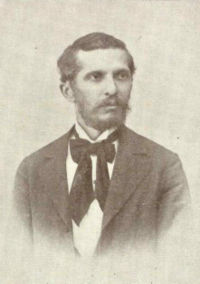
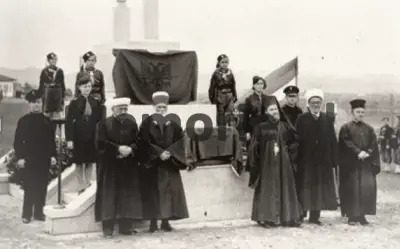

Memorie.al / In 1937, when the twenty-fifth anniversary of our independence was celebrated, many of us assumed that, at least from a national perspective, the role of the message of Naim’s poetry had ended: Albania had been created as a nation and had imposed itself as a state among the other states of the Balkans. However, the years that followed overturned this belief of ours, and the events that unfolded during those years brought Naim back among us just as he appeared on the stage of our history, here ninety years ago. Today, Naim is entirely “relevant” among us, not only as a poet, but also as an apostle of nationalism and freedom.
This wonderful event, this perpetuation and renewal through the ages, Naim owes to the power of his mind and the height of the feelings that accompanied that mind. He is relevant today as an apostle, as a herald of universal love, as a preacher of “mirësi” (goodness/kindness): behold a word created by Naim himself, in which, in a blazing synthesis, many meanings are encompassed, such as that of love, of wisdom of the soul, of mercy in the most humanistic sense of the word.
The word “mirësi” fills Naim’s verses from the first to the last. With this word, he addressed his compatriots, urging them not to give in to the savagery of their customs, to guard especially against bloodshed. His foresight in politics is relevant. Ninety years ago, Naim pointed out the West to Albanians as an example of civilization, because in his view, only from that direction, and not from the East, does the light come. We all remember one of his poignant little poems:
Why?
“Why do you not come, O good day,
Why, pray, do you not come?
How long in darkness?
Or does God like it so?
Just leap over the fence
And hasten a bit,
O white day,
And hurry, hurry,
For I await you,
I do not die.
O blessed day,
That is born from the West,
Its dawn has brightened there,
And us, why does it forget?
Little light of life,
And of the times,
And of truth,
And joy of God,
Shine upon us
And awaken us.”
It seems that even ninety years ago there was a fence separating Albania from the West. He is relevant as a poet. A personality endowed with extraordinary spirituality and religiosity, although he started from the mystical Persian poets, towards whom his gentle nature and Bektashi faith predisposed him, nevertheless, he created an entire philosophical and religious world, in which the concept of the universe and that of God can be exchanged in pure poetry, securing for their author a very special place in European literature.
Naim’s Universal Poetry
Therefore, the new criticism has concentrated all its attention on this part of Naim’s poetry, which truly becomes “universal,” because the material it encompasses flies above the boundaries of personal feelings and embraces the entire universe in a fiery embrace. Cosmic poetry, therefore, and not merely mystical, burnt and scorched by that creative flame, which is love and goodness.
To find another rival to Naim in love for all creatures of the universe, we must go back centuries and reach as far as St. Francis of Assisi; although our poet has no equal in European literature for the genre of his notes.
However, the purpose of my lecture is not to dwell on this point, but to address one of the most unaddressed and neglected issues of Naim’s world: His religious thoughts. On this issue, unfortunately, we have not had deep and specific studies to this day, because the face of the poet has always overshadowed the face of the religious man. We can even say that this second face has not been considered at all by scholars.
It seemed reasonable to me, therefore, to touch upon this very interesting problem in our American gathering, because it would be difficult to get another opportunity where competent representatives of both faiths: Christians (Catholic and Orthodox) and Muslims (Sunni and Bektashi) are all present together.
Naim has left us his religious thoughts in two books: “Mësime” (Teachings), published in 1894, and “Fletore e Bektashinjet” (Notebook of the Bektashis), which came out in 1896. With the “Fletore e Bektashinjet,” within 14 prose pages, Naim seeks to offer his co-religionists a sort of brief doctrine of Bektashism. The esoteric and reserved belief of this doctrine is known by the learned only in a general and superficial way.
“Everything is within man,
Even God himself is truly there.
For when He wished to appear on the scene,
He made man in His own image.”
The Bektashis believe that man does not die, but “only changes and transforms and is always towards God, for in the son is hidden the father.” We will not enter here into a matter of philosophical discussion on the essence of Bektashism, as that is not within the aims of our communication. We will, however, ask a question related to the philology of the book: Which Bektashism does Naim’s “Fletore” offer us? Traditional Bektashism, as it was treated in Albania, or a reformed Bektashism?
What were the sources upon which it was based? This is a very attractive topic, deserving to be discussed at length, because among scholars in the West, I am not aware of anyone having dealt with it; therefore, only some competent Albanian here present can shed light on it. If indeed Naim acted as a reformer, by compiling the “Fletore e Bektashinjet,” this fact should be emphasized and research should continue for a deeper and more complete understanding of his activity, even in this field.
Naim’s Conception of God
But we believe that for Naim’s religious activity, the other book is much more interesting, I mean “Mësime” (Teachings), a brochure of about 50 pages, entirely in prose and divided into four chapters: 1) The Great and True God, 2) Wisdom, 3) The Eternal Law of Albanians, 4) The Essence of the Quran. “Mësime” is one of those books that leave the modern reader amazed. Reading it was truly a revelation for us. In the first chapter, the traditional explanation of God’s being is mixed with knowledge from the scientific discoveries of the West, which is unlikely in religious books of the East.
Here are some excerpts taken from the Tirana edition of 1942, p. 29: “Learn the knowledge of the universe, then you will understand the power and goodness of God.” “Behold the universe, boundless and endless, and its eternal and perfect law.” “The stars, without beginning and without end, circle in the boundless spaces, hastening with great speed.” “They never strayed from the path that God marked for them. To keep them from colliding with one another and from straying off the path, He gave them the force of attraction and the force of repulsion”! “The stars in the middle pour light upon the orbiting stars that go around them, and upon their followers, which have their own orbits”!
“God is the King of the universe, the light of the universe”! Regarding the very essence of God and the God-man relationship, Naim writes, p. 31: “Praise be to God, who created the universe and the universe is He Himself”! “For when the true God wished, with His greatness, to appear face to face on the scene, then He created man alive in His own image”! p. 32: “All that is seen is the face of God; all that is heard is the voice of God.”
“God with His greatness is a boundless sea and we are the waves.” Here too, we see, therefore, identification, an interweaving of the essence of God with nature, or as he calls it, with the universe. From this principle, two conclusions may follow: first, the deification of man as a part of the universe that is interwoven with God; second, the denial of another transcendental world, precisely as in the Bektashi principles we saw above, and not according to Muslim principles.
But in “Mësime,” Naimian pantheism is almost whispered, we mean it is not emphasized as strongly as in other parts of his works, and thus it gives way to the face of the traditional God of the three monotheistic faiths. Another very important point should also be noted: the position of man towards God. For Naim, man is no longer God’s slave, but a free man to judge and choose. Here, the free will of the Christian faith emerges, and thus the contradiction with Muslim doctrine becomes even more serious and insurmountable. Quranic fatalism disappears from his belief. In the second chapter, “Wisdom,” the same concepts from the first chapter are briefly repeated.
Much more interesting for understanding Naim’s religious aims is the fourth chapter, “The Essence of the Quran.” This title, in our opinion, might initially mislead the reader, because anyone reading it carefully notices that the Poet departs significantly from Quranic orthodoxy. This departure is due especially to some of Naim’s expressions concerning the Christian faith. The Christian influence, noticeable in all his works, here takes a fundamental place. In “Mësime,” we find entire phrases taken from the Gospel; thus on page 33 we read: “If you have two shirts, give one to him who has none; if you are slapped on one cheek, turn the other also; love your friend, love also your enemy; do not do to others what you would not have them do to you; do to every man what you would have him do to you.”
On p. 37, some of the Gospel principles: “Do not steal, do not snatch, do not take where you have not put, do not consume the world’s goods, love your mother and father, love your sister and brother, love those near you and all humanity, overcome anger, forgive the wrongdoer their fault, do good to humanity, do not be unfaithful, keep your word, remember God and love poverty, do not lie and do not mock and do not despise humanity, do not envy, do not insult, do not beat, do not quarrel, do not be lazy, but work, do not fight, do not separate from right and truth, do not boast, do not praise yourself…”! On page 45: “The Good One said: Marry and multiply.”
And again on p. 69, he writes: “The great God forgave Christ, the son of Mary, gave him wisdom and beautiful speech from infancy, and gave him the gospel and light.”
“Christ said to his servants: Who comes with me on the paths of God? They answered him: we come. They said: O true God! We believed in what was revealed to you and followed your messenger; write us down among the witnesses. Christ is the spirit of God…”! P. 77: “Behold, He sent the angel to Mary, and honored her and Christ and his servants…”! In “Lulet e Verës” (Summer Flowers), Naim dedicates an entire poem to Christ, titled “Before Christ”; here too the Poet calls him “Young man, son of God,” and, contrary to what he affirmed on p. 69 of “Mësime,” he accepts the Gospel testimony of Christ’s death, who was crucified for the salvation of humanity and the image of Christ.
The Relevance of Naim
Allow us, therefore, to read it entirely to you, because we know it is difficult for many to get a copy of “Summer Flowers.”
“Young man, son of God,
Your face shows me
Ah, the evils of humanity,
That it has done and continues to do.”
Now the question naturally arises: what were the goals that drove Naim to write such a work? Did he perhaps write “Mësime” to soothe the division between Muslims and Christians? Or did he intend to create a new faith, a new post-faith belief for the divided Albanians? A definitive answer is difficult to give today, because as I said before, investigations and studies have not yet been conducted on this hidden aspect of Naim’s religious world. We have the texts, indeed. When the reader reads, especially the first chapter of the work, they get the clear impression that Naim truly intended to give Albanians a common religion, a national creed, taking elements from the Christian faith and from the Muslim faith, and binding them into a theism, precisely as Bektashism suggested to him.
On pp. 53-54, Naim writes: “One nation has one language, all who speak one language are sons of one Motherland, and all sons of one mother and one father have one blood, one character and one consciousness, one similar face and one manner.” “Thus, in truth, all sons of one Motherland also have one creed, for they all believe in the great and true God, who is God of lives and the boundless universe; they believe in the Good One, and in goodness for good, and in wickedness for evil; therefore, they all have one faith and one religion.”
One might think that the third chapter, The Eternal Law of Albanians, disproves these suppositions of ours, but in reality, it is not so. This chapter has no doctrinal content; there Naim advises Albanians on the greatest tolerance from every point of view. But even if the matter is not exactly so, one thing remains certain: that Naim, with his prophetic foresight, took the first steps towards fraternization, towards the unification of faiths. It seems to us, therefore, that precisely today when “ecumenism” is spoken of from all sides, Naim, even on this point, is more than relevant.
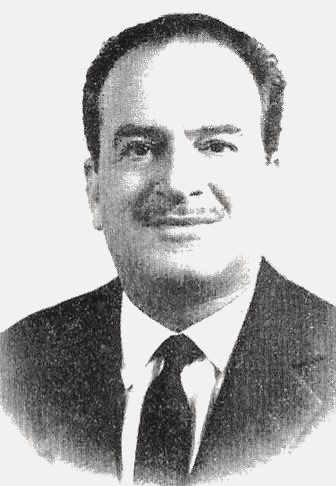
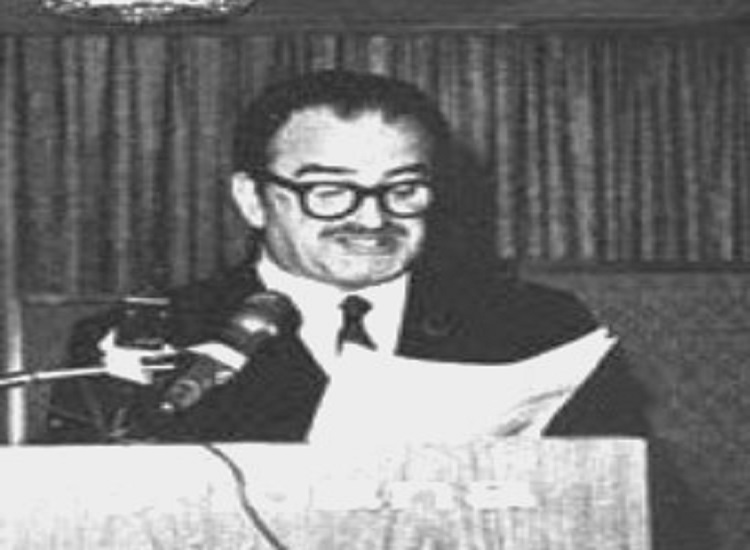
Who was Professor Namik Resuli?
Namik Resuli was born in 1911 in the city of Lushnje, from which his family also originates, one of the most renowned families throughout Myzeqe. In the early 1930s, Namik graduated from the University of Florence with a degree in Italian Language and Literature. After graduation, he returned to Albania and served for a long time as a literature teacher in several of the country’s lyceums (gymnasiums). In 1939, he published, with the “Gurakuqi” Publishing House, the famous poem “Milosao” by De Rada, which he adapted from Arbëresh into literary Albanian.
That publication had a great echo at the time and was considered one of the most accomplished works published about De Rada. During the years of the fascist occupation, Namik Resuli worked at the Institute of Albanian Studies, together with Ernest Koliqi, Father Zef Valentini, Aleksandër Xhuvani, Hasan Dosti, Father Anton Harapi, etc. Shortly before the end of the War, Namik Resuli left Albania and settled in the city of Turin, near his Italian wife’s family. From that period until his retirement in 1971, Namik worked as Head of the Albanian Language Chair at the Institute of Oriental Studies in Naples.
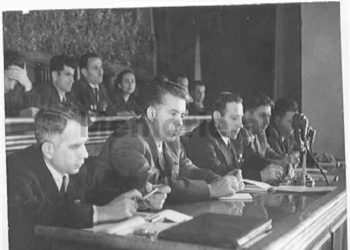
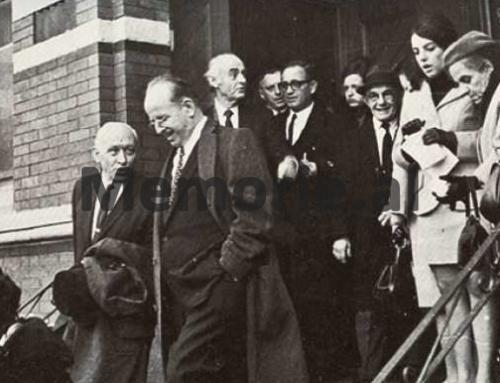
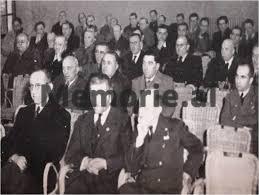
During that time, he engaged in studies on the history of Albanian literature and Albanology, re-publishing the work of Buzuku. In 1979, during a meeting with writers and artists, Enver Hoxha harshly attacked Prof. Resuli, calling him an aristocratic bey, because he had done a study on Faik Konica. Prof. Namik Resuli died in the city of Turin in the early 1980s. The study we selected and published above in this article about Naim Frashëri was written by him in 1968 and was presented at a scientific session organized by the “Vatra” Society in 1969, in Detroit./ Memorie.al