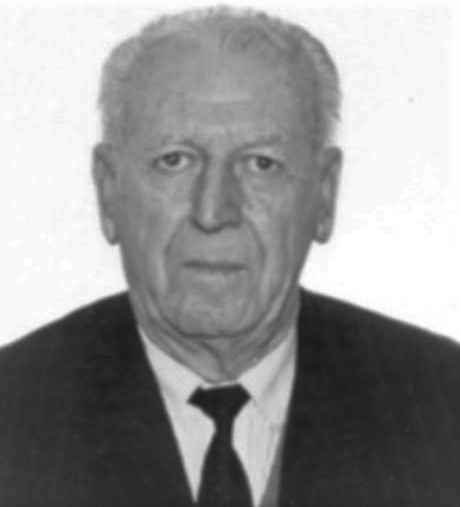
Memorie.al / Caf Jonuz Çulaj was born in Reç, Malësia e Madhe, in 1926. Until 1946, he led the Antifascist Youth of Malësia e Madhe in clandestinity. In 1954, he was sentenced to 20 years in prison on charges of “Treason against the fatherland and agitation and propaganda.” He was released in 1967 and worked as a laborer at the Construction Enterprise in Shkodër until 1970. In 1970, he was re-sentenced on charges of “Agitation and propaganda against the people’s power,” receiving a 9-year prison sentence, which he served in full across various camps and prisons.
After the 1990s, following the collapse of the communist regime, Caf Jonuzi engaged unreservedly in democratic processes. He was one of the founders of the Shkodër branch of the Association of Former Political Prisoners and Persecuted of Albania. During this time, he also contributed various writings to the press of the era, primarily for the newspaper “Liria” (the organ of the Association of Former Political Prisoners), publishing numerous articles as well as the book “Krushqit e lirisë” (The Guests of Freedom), from which we have selected the piece published below.
A Heinous Murder that Shook the Highlands: Taro Keqi (1916–1948)
He lived a very short life – only 32 years. He filled these years with acts of bravery and heroism; he left behind fond memories among those who knew him and, ultimately, met a tragic death.
He was born in 1916 in the village of Reç (of the Balaj clan), well-known not only in the village but throughout the Highlands. His father, Keq Sadiku, was an officer of the Albanian Kingdom holding the rank of lieutenant. He was disciplined in his duties and very wise. The highlanders used to call him “The Scales of Justice.” Taro Keqi inherited all of his father’s capabilities.
When Fascist Italy attacked our country in 1939, the patriotic highlanders of Reç, under the leadership of Dom Luigj Pici, went to the sub-prefecture offices in Koplik to demand weapons, but in vain…! Taro was among that group.
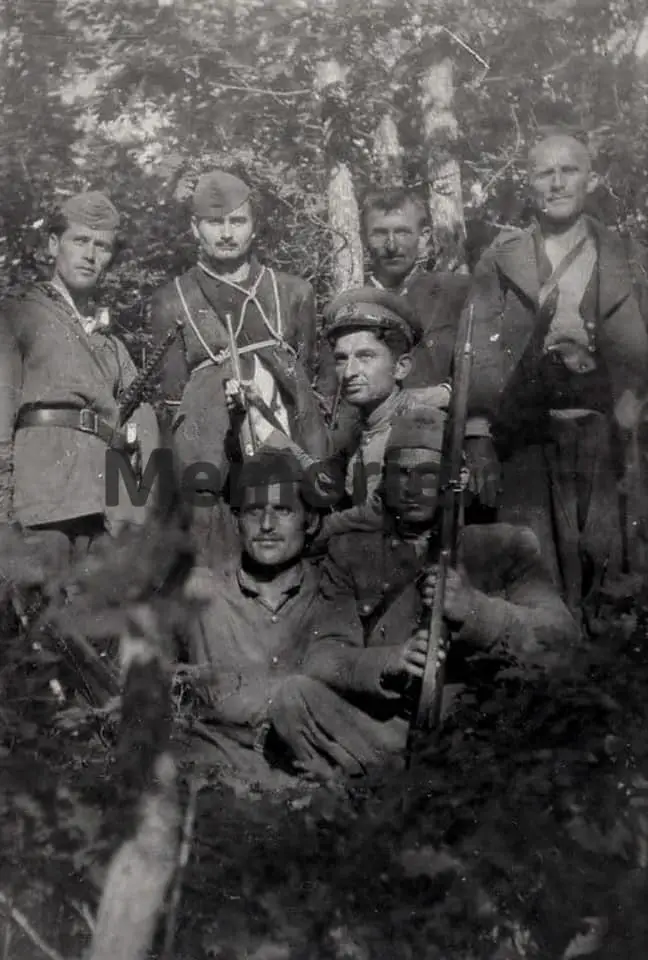
In 1942, he joined the nationalist units (çetat), and for three years, he never laid down his rifle. He participated in many actions against the Italian occupation (cutting telephone lines, the attack on the Vraka post office, the Battle of Reç) as well as against German forces in late 1944. He fought for Albania with the belief that the country would be governed justly by Albanians for the benefit of Albanians, and with the conviction that true democracy would be established in our land.
With the end of the war in 1944, he was appointed commander of the border post in Kelmend. It was a difficult duty to fulfill, but he did not want to harm his brothers, as many highlanders had participated in two anti-communist resistances (1945). Consequently, he stood by his people – a stance that certainly did not please the communist regime in power.
The new rulers recalled that some time ago, he had refused to join the State Security (Sigurimi i Shtetit). Finally, they remembered he was the son of the Zogist lieutenant Keq Sadiku. They decided to first dismiss him from duty, thinking, “We’ll see what to do later.”
Taro was discharged, returned to his village, and went back to his personal life, though he was constantly surveilled. The list of suspects was ready; it was only a matter of time before the sinister plan was executed.
And then, the night of July 28, 1948. (The people in their memory labeled this night “The Night of the Witches”). Fifty-six men from the Highlands, fourteen of whom were from Reç, were suddenly arrested by State Security. Among the men of Reç, Taro Keqi’s name was at the top of the list.
The others included: his father, Keq Sadiku, followed by Mark Toma, Rexhep Lani, Ali Malja, Tomë Gjoni, Gjekë Pjetër Dushi, Mac Deda, Ali Hajdari, Sait Lani, and others. The highly sought-after Lekë Pjetër Marku managed to escape by crossing the border into Yugoslavia.
By chance, Taro Keqi was not at home that night. He learned of the tragedy the next day. His family told him everything. He found out they had looked for him several times. He immediately sensed the looming danger and understood the predestined fate of the 56 men. He could have escaped by crossing the border, but he could not bring himself to leave…! His thoughts were with his father and his companions, whom he could not abandon. He was even offered “guarantees” that nothing would happen to him, his father, or the other isolated highlanders. Thus, for a “formality,” he was asked to present himself at the local offices. Though suspicious, he went anyway. The “formality” was quite simple: his immediate handcuffing.
The following day, all the elders were sent to the Internal Affairs Branch in Koplik; all of them packed together like sardines in a tin. They had been 24 hours without food or water, and hygiene was out of the question. At midnight, two policemen took Taro Keqi and brought him to the office of Ll.N., the Chief of Security. The latter asked him several questions:
“Who belongs to the traitorous organization ‘The Two-Headed Eagle’?” “Who leads it?” “Who held the meetings?” etc.
Taro, surprised by these questions, remained silent – something that displeased the official, who stood up and struck him.
Not out of pain, but out of rage, even while handcuffed, he attacked the Chief of Security, striking him with the irons on his hands and knocking him to the ground, bloodied. The criminal’s screams forced the policemen waiting behind the door to rush in to help their chief.
Then they took Taro and subjected him to every torture they knew, which proved to be more than enough: after two hours, Taro passed away. While dead, the executioners “buried” him near a latrine pit, just as they had done with Dom Pjetër Çuni, Dom Aleksandër Sirdani, and Nikë Marku from Kelmend.
This was Taro Keqi, who continues to be remembered by the entire Highland region./Memorie.al