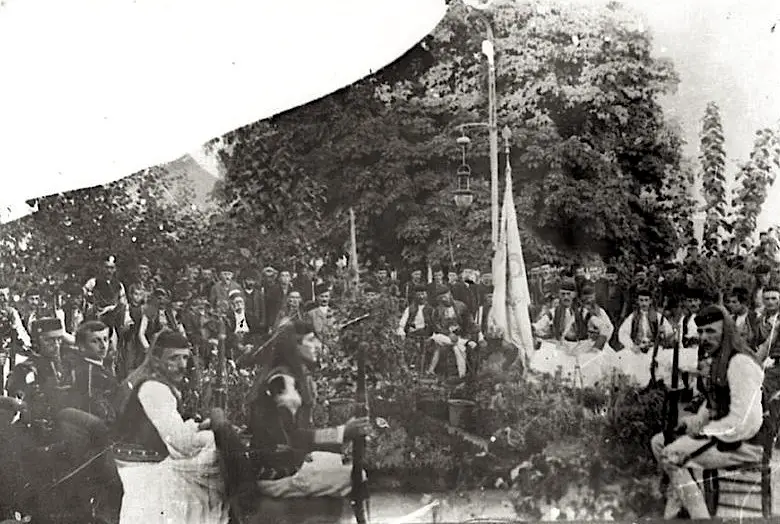



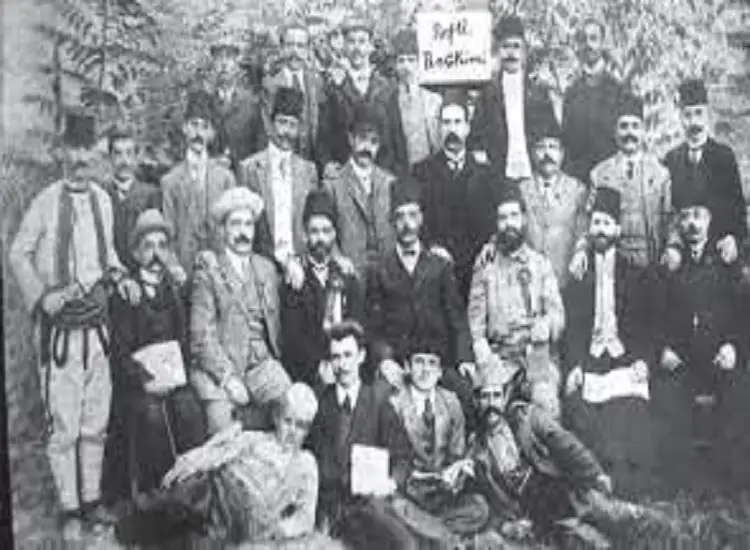
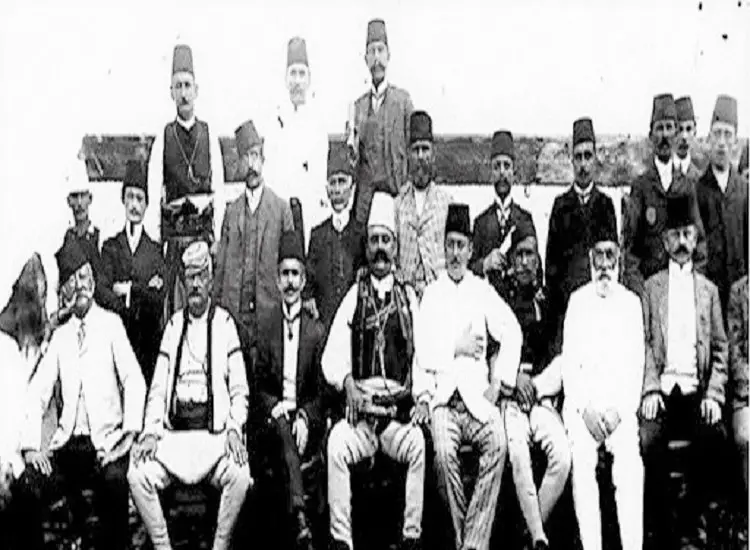
Memorie.al / In Dibër, the word ‘assembly’ (kuvend) meant a broad meeting of members of a community, or of several communities together. In these assemblies, the highlanders discussed problems pertaining to a specific community, in times of peace and in times of war. Problems of peacetime were the economic issues of agricultural and livestock development (work oxen, the tenant farmer, seeds, the crops to be planted, shepherds, summer pastures and enclosures); issues of property such as lands, pastures, forests, orchards, high mountain pastures (their sale, purchase, and exchange), homesteads, roads, waters, and boundaries; issues of friendship such as engagements and marriages, partnership, and sworn brotherhood, etc. Problems of wartime were mobilization according to the call of the clan, neighborhood, village, or region (Mountain or Bajrak), to defend honor, home, land, and property from other clans, neighboring villages, neighboring regions, or from foreign invasions; blood feuds and vengeance, etc. In the assemblies, issues of division, the pledge of honor (besa), the guest, the celebration of festivals, etc., were also discussed.
At that time, several forms of assemblies were distinguished, such as: the Assembly of the House (or of the family branch), the Assembly of the Brotherhood (or of the lineage or clan), the Assembly of the Neighborhood (of the lineages or of several clans), the Assembly of the Village (or of several neighborhoods), the Assembly of the Region or of the Mountain (or of several villages), and the Assembly Between Mountains (where several Mountains or regions gathered).
Announcement for assemblies was made by firing rifles, in a specific manner, by lighting fires, by messengers called ‘pojakë’, and other methods. Participation in the assemblies was obligatory for every man capable of bearing arms (or man of the house), representatives of clans, representatives of villages, representatives of regions or Mountains, according to the purpose of the assembly and the method of announcement used.
What was discussed in the men’s assemblies?
In the assembly of the house, or family branch, problems of agriculture, livestock, land, meadows, forests, the shepherd, the master of work tools, marriages and engagements, the guest and sworn brother, relations with lineages or other clans, problems of blood feuds and blood reconciliation, etc., were discussed. In the assembly of the lineage or clan, problems between lineages or clans were discussed, which had to do with roads, land boundaries, meadows and forests, with shepherds and masters of agricultural tools, shameful acts or misfortunes that might occur within the brotherhood or clan, or the stance that should be taken when these occurred in other clans, in the village, or in other villages.
In the assembly of the clans or of the village, problems of lands, boundaries, waters, roads, forests, pastures, concerning the given pledge of honor and the honored guest, concerning ‘verbal rifle shots’ (empty threats), when someone fired a rifle in violation of established decisions, were discussed. All these were discussed, both for those that happened within clans and for those that happened in the village or between villages. In the Assembly of the Region or of the Mountain, property problems, like those mentioned in other instances, problems of social and customary relations, and other issues were discussed.
The enforcement power of the assemblies’ decisions was great. No one dared to override the decisions, the ‘karare’ (decisions) and ‘itifaqe’ (agreements) that were made. Everyone was obliged to implement them, or in cases of non-implementation, they would immediately find themselves facing an extraordinary sanction, such as the expulsion of the responsible person from the village, along with their family, for a specified period or forever, the burning of the house, the destruction of crops, like mowing the corn and other harvests before ripening, or the cutting down of the forest.
The assemblies were entirely democratic parliaments of their time. In the assembly, both the elite and the common people were equal. All participants in the assembly sat in an equal manner: Men sat carefully in the assembly according to a rigorously defined method. Usually, the most preferred was for men to sit in a circle, as if to show that everyone was equal.
Each man sat cross-legged. The chairman of the assembly also sat cross-legged, in the circle with the others, only with a more noticeable distance from his predecessor and successor. Usually, the men participating in the assembly went armed. But even the manner of keeping weapons in the assembly was defined by a special regulation. Rifles had to be kept in one’s lap.
Speaking in the assembly was done in turn. One spoke, the others listened in absolute silence. In the assembly, speaking loudly, with threats, with jokes, with insults, was not allowed. In the assembly, hand gestures were restrained. No one could (under any circumstances) point their finger at another in the assembly, and no one could shake, even instinctively, a stick in the direction of another. Both pointing the finger and pointing the stick were considered threats, and for this gesture, the person at whom someone had pointed a finger or stick would take severe revenge, even up to killing, even though such actions might have been accidental and unintentional.
The decisions taken in the assemblies were called ‘karare’ (decisions) and ‘itifaqe’ (agreements). The decisions of the assemblies were implemented according to the time determined by the assembly, such as 3 months, six months, one year, but usually the deadlines were: from St. George’s Day to St. George’s Day, from Bajram to Bajram, from St. Andrew’s Day to St. Andrew’s Day.
In Dibër, two main assemblies operated. When the Mountains of the two Dibërs gathered, in Upper Dibër, the assembly was held at the Gurra e Mazhicës (Spring of Mazhica) and when they gathered in Lower Dibër, the assembly took place at Ferra e Pashës (Pasha’s Thornbush), in Çidhën. As for villages, the meeting places were Zogjaj, in Upper Dibër, and Arras, in Lower Dibër. When they gathered separately, those of Upper Dibër met at the Church in Vorra of Shupenzë, while when Lower Dibër gathered, the assembly was held at “Ferra e Pashës”, or at “Varret e Dali Hasanit” (Graves of Dali Hasani). Above all, there was the People’s Gathering, the “Besëlidhja” (League), the “Itifaku” (Agreement), or the “Great Assembly”.
The assemblies at “Ferra e Pashës” were led by Salë Demiri and in other times, by Lusha, Noka, Troci, etc., according to the period. While the assemblies of Upper Dibër were led by Salë Markja, Sheh Zerqani, Mersim Dema, Dalip Kara, Cen Leka, etc. Around the year 1800, the term “Itifak” (Agreement/League) began to be used, meaning league or covenant, while later, at the beginning of the 20th century, the word “congress” came into use. Leagues (Itifaqe) were formed in every village, in every Mountain, and in every region. The most important congresses of that period are the Congress of Dibër in 1880 and 1909. Sometime later, we find simply the word “meeting” being used, such as the meeting at the “Varret e Dali Hasanit” near Pilafe, the meeting at Gjurra e Mazhicës, the meeting at “Ferra e Pashës”, the meeting at “Varret e Shupenzës”, etc. All these forms were genuine leagues. Such “leagues” were also formed during the wars and tensions against Zog, which took place in Sllovë, at Kulla e Lumës, in Allajbegi, in Dhoks, etc.
Participation in these assemblies was massive. Thus, in the Assembly of Dibër, held in the open field of Qernanica, in July 1878, 10,000 people took part, while in the league on the mountain of Dhoks, 12,000 people took part.
In 1872, the “Mountains of Dibër” made a pledge (besën) to fight against the Ottoman Turks. The fights in Kastriot, Sllovë, Muhurr, Zogjej, and Bulqizë, led by Mahmut Daci, Dalip Karaj, and Hasan Shini, caused great damage to the forces of the Turkish army of Demir Pasha, who came to suppress the uprising in Dibër.
Mountain gatherings, oath-taking, and assemblies were held in the houses of villagers in Viçisht, in Çerenec, in Gropat e Ujkut (Wolf Pits) (Shupenzë), in Meja e Kalasë, at Guri i Shpuar (Pierced Stone) (Mazhica), etc.
“…10,000 Dibrans gathered in the field of Maqellara, where they were addressed by Abdyl Frashëri and Iljaz Dibra, who asked them to forgive blood feuds and make a pledge (besën)…”
The most important assemblies of Dibër were held to organize and face the new situations created after the attacks, occupations, and invasions by foreign powers. All the assemblies of Dibër had as their main goal the fight for national freedom and independence. Some of these important assemblies, significant not only for the history of Dibër, are:
The Assembly of Dibër (1878)
The Assembly convened on November 1, 1878, under the chairmanship of Iljaz Pasha Dibra. The Assembly of Dibër approved a resolution in the form of a memorandum, which contained the 5 points set forth in the program of the Istanbul Committee: the formation of the Vilayet of Albania, the creation of an administration with Albanian officials, the development of education in the Albanian language, the implementation of reforms by the Great Assembly, and the use of a significant part of the budget for the progress of education and public works. The resolution stated that these demands would be presented within a month to the Sublime Porte by a delegation composed of prominent personalities of Albania, who would obtain written consent from all Albanian kazas and sanjaks. The resolution emphasized the determination of the Albanian people to secure the fulfillment of the aforementioned demands. The resolution was presented to the Sublime Porte at the beginning of February 1879.
The Congress of Dibër (1880)
On October 20, 1880, a congress convened in the city of Dibër, with participants from all four vilayets, a total of 300 delegates accompanied by 5000 fighters. The congress discussed the defense of Ulcinj, the creation of an autonomous Albanian principality, and a Provisional Government. The congress, by a majority vote, expressed its support for defending Ulcinj with all its surroundings and sent an ultimatum-like request to Riza Pasha, the commander of the Shkodër Garrison, demanding that Ulcinj be defended.
The congress discussed the unification of the four vilayets into a single autonomous principality, under Ottoman protectorate, with its center in Elbasan. It was decided that every inch of Albanian lands should be defended, that there should be schools and courts in the Albanian language, and that the administration should consist of local officials. It was decided that compulsory military recruitment would be implemented for the defense of the country. Of the revenue collected from taxes, 20% would be spent on education and public works.
Regarding the formation of a Provisional Government, there were many discussions and strong debates. Radicals and moderates were contradictory among themselves, and neither side yielded. It was discussed that in every city, a “Union-League” (Bashkim-besëlidhje) should be created, which would also have its own offices. These would be the governing bodies of the country, maintaining order, stopping killings and thefts, and collecting taxes. Despite the debates, these “Unions-Leagues” began their work in Dibër, Tetovo, Kumanovo, Skopje, and elsewhere.
In Skopje, a demonstration broke out with about 10,000 participants because the city’s mufti tried to hinder the activity of these unions. But he could not sabotage these leagues; on the contrary, the demonstrators drove the mufti away. Two petitions were sent to the Sublime Porte from this congress, while the occupier responded to these decisions with severe punitive measures.
This congress helped keep the patriotic spirit alive. Therefore, during the months of March-April 1881, the Dibrans rose several times against the Ottoman occupier. To suppress these resistances, the Sublime Porte sent Dervish Pasha at the head of 6 battalions, but he failed to subdue Dibër. The Congress of Dibër was followed by other assemblies and leagues that preceded the Congress of Dibër in 1909.
The Congress of Dibër (1909)
A meeting organized by the Central Committee of the Young Turks “Union and Progress”, with a general Ottoman character. Its aim was to unite, under the banner of Ottomanism, the lands of European Turkey, and especially the ruling classes of Albania. Here is what the newspaper of the time, “Shqypeja e Shqypnis” (The Eagle of Albania), (No. 5, dated July 15, 1909, p. 4), published by the Dibran publicist Josif Bageri, wrote on the eve of the Congress: “Our correspondent from Dibër informs us that these days there will be a meeting in Dibër, which meeting they call a congress. As we understood, this congress aims for Albanians to come to an agreement among themselves regarding any national work for the enlightenment and self-governance (vet-urdhërim) of Albanians.” In Albanian, ‘vet-urdhërim’ means to be independent. So, from this notice, it is clear that the Albanians aimed, with this congress, to declare independence. While two weeks later, on August 1, 1909, the same newspaper writes: “It was very well understood that the called congress in Dibër is close to the Young Turks.” And then it continues: “But unfortunately for the men, because the burden (oppression) weighs more heavily on the Albanian sides, who think more about their country, and not about the world.”
At this congress, the Mufti of Dibër took an anti-national stance. Here is how this newspaper describes his speech at the congress: “The shameful speech in the language of the dark-minded, by the mufti of Dibër, was nothing but a handful of dust thrown in the eyes of Albanians and others.” Further on, this newspaper emphasizes: “But three times more were the others, the local people, in which they were born and raised… because in this congress, there were many sincere and patriotic Albanians, who, filled with national ideas, took the floor, that podium of orators, and like lively patriots, began to speak fiery words.”
Three hundred and twenty-five delegates from various cities of the vilayets of European Turkey participated, most of whom were Albanians. The majority of the delegates consisted of pro-Turkish elements. Representatives of Albanian patriotic forces also participated in the congress, such as Dervish Hima, Sotir Peci, Fehim Zavalani, Loni Logori, etc.
The congress approved a program of 17 points. The first part of five points represented the Ottoman program presented initially by the Young Turks. The second part of the program, consisting of 12 points, which was imposed on the Congress by Albanian patriots, included, although in a very moderate way, some of the demands of the Albanian National Movement of a cultural character. Although the Congress of Dibër was called as an Ottoman meeting, Albanian patriots turned it into an arena of struggle against the Young Turk reaction for the protection of the national rights of the Albanian people.
The Assembly at Gurra e Mazhicës (Spring 1910)
For the first time, the two Dibërs gathered together in an Assembly in 1910 at Guri i Mazhicës (The Stone of Mazhica). Moreover, this assembly was led by a representative of Lower Dibër, Isuf bej Karahasani, from Brezhdani.
Other participants from the highlands’ leadership were: Zenel Hoxha from Gjurrasi; Mersim Dema from Homeshi, Zenel Kraja from Gjorica; Sheh Hajredini from Zerqani, Myftar Murrja from Luznia; Tahir Bazi and Kurt Hoxha from Muhurri; Llan Kaloshi, Selman Alia, Mud Lusha and Selim Noka from Çidhna, Avdi Ndreu and Shaban Kaca from Dardha; Baftjar Doda, Sheh Abazi and Hysen Shabani from Reçi, etc. Leaders from the lowland fields at the Assembly were: Sheh Abazi of Dohoshishti, Sheh Hasani of Tomini, Rustem Bardulla, of Peshkopia, and Tahir Tafa of Sohodolli. In this assembly, the situation in which Dibër found it was discussed, and it was decided to continue the armed uprising against the Ottomans.
The Assembly of Arras (August 13, 1920)
Ramiz Daci, on August 7, 1920, was in Arras and organized a rally with the participation of over 3000 people (elite and commoners), where they expressed pride for the War of Vlora, against the Italians, and expressed readiness to defend their lands and homeland by all means. Also participating in the Assembly of Arras were: Ramiz Bej Dibra (of Iljaz Pasha), Dine bej Maqellara, Izet bej Maqellara, Selman Alia (Fushë-Alie), Ramiz Daci, Jashar Erebara, Ismail Strazimiri, Selë Bajraktari (Arras), Shaqir Dema, Dine Dema, Riza Lusha, Dervish Lusha, Dine Hoxha, Selim Noka (Kandër), Haxhi Noka (Grykë-Nokë), Murat Kaloshi, Abdi Kaloshi, Sali and Selim Noka (Sinë), Dan Cami (Sepetovë), Selman and Hakik Mena (Lurë), Llan Destani (Ndregjoni-Lukan), Kurt Spata and Dikë Spata (Blliçe), Ali Tahiri (Pira-Muhurr), from Daci i Kalisit and Lita i Ploshtanit, as well as some representatives from the leadership of Mat.
On February 13, 1920, the Assembly of Arras convened, which took several important decisions, which in the people’s mouths were called decisions of the “Provisional Government”. The Assembly elected a staff, whose members were Ramiz Daci, Jashar Erebara, Suf Xhelili, Ismail Strazimiri, Destan Puca, etc. Within two or three days, the staff resolved several important problems of a political, economic, and military nature.
Ramiz Daci received a letter from Hasan Prishtina, who informed him that he had participated in a congress of plenipotentiary delegates and diplomats of the Italian, Hungarian, and Bulgarian nations, who had prepared the program for a general uprising, and that the congress had decided that “the Dibrans should attack the Serbian army on August 15, 1920.”
On the day the Assembly of Arras convened, the Serbian army bombarded the gendarmerie station in Luzni from Lisi i Trenës. A day later, Ramiz Dibra sent an ultimatum to the Serbian army command in Llas, demanding withdrawal within 24 hours. The Serbs remained silent because they had 10 battalions and several batteries deployed in echelons from Shumbat to Gollobordë, while the insurgents were fewer in number and poorly armed.
The insurgents’ attack began on August 13. The highlanders of Çidhna, Reç, Dardha, Kastriot, Muhurr, Zerqan, and Gollobordë attacked with such fury that by August 13, Dibër was completely liberated. The Serbs left 1,000 dead and 2,000 captured on the battlefield and retreated in terror towards Gostivar.
The “Kompromis” (Compromise) Meeting (September 6, 1943)
On September 6, 1943, representatives of Operational Zone I of the National Liberation Army (NLA) and of the Macedonian battalions (Messrs. Jeleste Popovski and Toma Sofronovski), representatives of the popular forces of Dibër (Messrs. Cen Elezi, Hysni Dema, Ali Maliqi, Fiqiri Dinia, etc.), and representatives of the NLA, such as Esat Ndreu, Njazi Islami, and Sotir Vullkani, gathered. The meeting elected a combat staff, composed of Cen Elezi (chairman-commander) and Shaban Strazimiri, representing Esat Ndreu, Jeleste Popovski, and Hamdi Dema.
The meeting decided to unite in the fight with the partisan forces. It was agreed that the operational staff would be recognized only when both sides entered the fight. The staff would not interfere in the internal affairs of the city. Order and tranquility in the city would be maintained by joint guards, both partisan forces and those of Cen Elezi.
The Meeting at “Varri i Deli Hasanit” (Grave of Deli Hasani)
On August 11, 1943, leaders of the Balli Kombëtar came to Dibër, such as Mit’hat Frashëri, Ali Këlcyra, Et’hem Haxhiademi, Thoma Orogllai, Isuf Luzi, Hasan Dosti, Faik Quku, Sulejman Meçe, etc. They held a meeting at “Varri i Deli Hasanit”. Here they discussed the development of the war against the occupiers and against the communist danger.
The “Ploughs” Uprising, 1910
At Gropat e Ujkut, in Shupenzë, over 500 men gathered in an assembly, who took new decisions for the fight against the Ottoman occupier.
Mersim Dema from Homeshi i Grykës së Vogël and Mehmet Duriçi from Vajkali, together with other patriots and popular leaders of Bulqiza, Gryka e Madhe, and Gryka e Vogël, issued the call for armed uprising and demanded that a pledge (besa) be made. They called upon the highlanders of these regions to replace their ploughs with rifles and bullets because their life had no meaning under occupation and slavery. Over 500 fighters responded to their call. The men gathered at “Gropat e Ujkut”, a place located 7 km from Homeshi.
The Meeting of Lurë
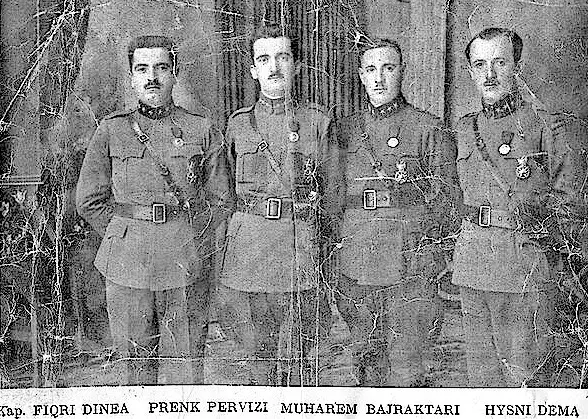
Held on August 27, 1943. Central figures participated in this Meeting, such as Mit’hat Frashëri, Abaz Kupi, Muharrem Bajraktari, Fiqiri Dine, Hysni Dema, Miftar Kaloshi, Et’hem Haxhiademi, Thoma Orogollai, Isuf Luzi, etc.
Also participating in the Meeting of Lurë were Destan Rexhepi from Bicaj, Tasim Spahiu from Kolesjani, Elez Çajku from Lusna, Sefë Xheladini from Ujmishti, Ramiz Hyseni and Haziz Shehu from Çaja, Selim Noka, Shaban Noka and Gafurr Noka from Kalisi, Dalip Zyberi from Topojani, Hasan Vellku from Buzëmadhja, Dalip Zyberi from Topojani, Adem Gjurra, Shaban Gjurra, Sali Doda from Reçi. The purpose of the meeting was the unification of the Albanian people without distinction of religion, region, or ideology, in a common fight against the occupying forces in our country. Here a highland pledge (besa) was made and combat actions were coordinated against the country’s occupiers.
The Meeting of Lurë had great historical significance, similar to the Meeting of Mukje. In this meeting, the “Besa e vendit” (Country’s Pledge) was elected, a body that would ensure the unification of the country, which would avoid divisions and rifts. The meeting also appointed a joint command that would lead the fight for liberation from the Nazi-fascist occupiers. Dibër was represented in this meeting also by Cen Elezi (Sllovë), Myftar Kaloshi (Kandër), Ali Maliqi (Maqellarë), Aqif Lleshi (Zogjej), Selman Mena (Lurë), Dervish Lusha (Arras), Ramadan Hoxha (Muhurr), Faik Shehu (Peshkopi), Ali Lika (Kala e Dodës), Selim Sulë Kaloshi (Sinë), Mahmut Pervizi (Zerqan), Llan Mena (Lurë), Preng Gjergji (Lurë), Ramadan Doda (Reç), Ibrahim Gjoçi (Lurë), Gjon Biba (Lurë), Met Hoti (Lurë), Bajram Mena (Lurë), Tahir Mena (Lurë), Haziz Kaloshi (Kandër), Zenel Lita (Kala e Dodës). From Luma also participated: Rushit Daci (Kalis), Metush Luma (Bicaj), Sadik Spahia (Kolesjan), Has Doçi (Arrën), Xhemë Shahini (Arrën), Halit Osmani (Arrën), Ramadan Çajkri (Ujmisht), Murat Mera (Kalis). /Memorie.al