By Spartak Topollaj
Why must we know the dark history of the Russo-Soviet Secret Services and their influence in Albania?!
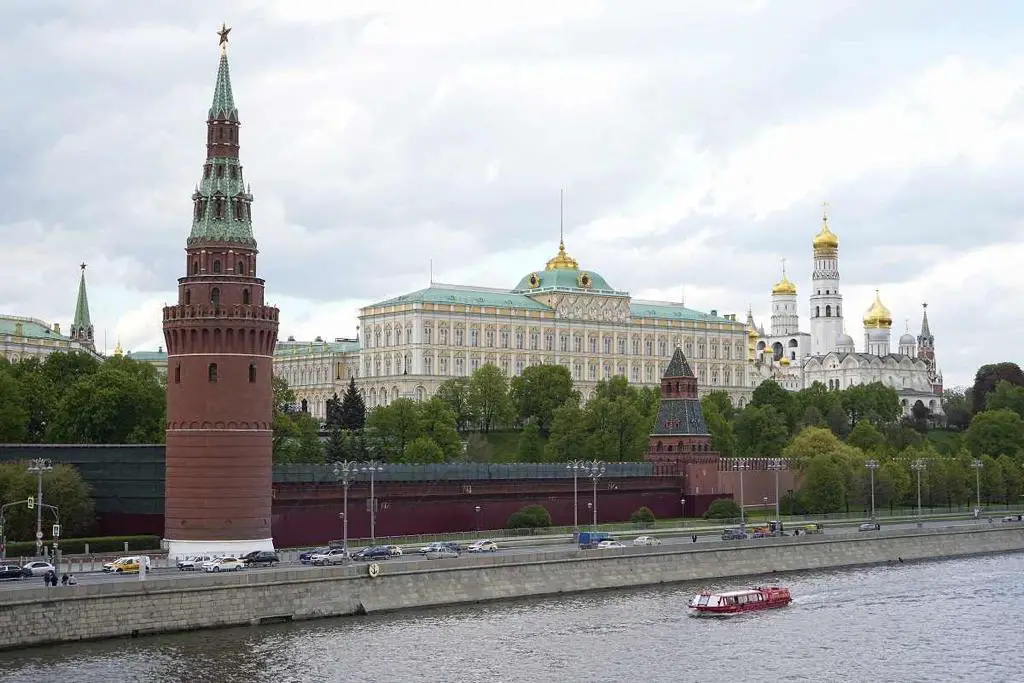
Memorie.al / The history of states, and especially of great empires, could not be understood without knowing their secret services – the role and importance that espionage, intelligence, and counter-intelligence play in the existence of states and regimes! Thus, the Russian Empire, the largest state in the world by surface area, characterized by persistent and permanent chauvinistic expansion, could not be an exception to this!
The Tsars of Russia constantly took care to maintain their repressive regime through the army, police, and secret services. Thus, the first Tsar of all Russia, Ivan IV Vasilyevich (1530-1584), known as Ivan the Terrible – who called Moscow the “Third Rome” – Tsar Peter I (the Great), who built Saint Petersburg, Catherine I and Catherine II (the Great), etc., certainly had their spies. However, in the modern sense, the secret police in Russia originated in 1826 under Tsar Nicholas I, immediately after he had bloodily suppressed the “Decembrist Movement” of 1825! It was dubbed the “Third Section,” “Tretiye Otdeleniye,” and existed under this name until the end of 1880, under the regime of Tsar Alexander II, when it was placed under the Department of Police within the Ministry of Internal Affairs and took the infamous name OKHRANA (The Guard)!
The “Third Section” was divided into 5 Offices:
- Surveillance of revolutionary organizations and anti-Tsarist individuals.
- Maintaining the Peter and Paul Fortresses, holding political prisoners.
- Monitoring foreigners and the political forces connected to them.
- Controlling peasant movements and potential uprisings.
- Censorship of the press, books, theatrical performances, etc.
The heads of the Third Section over the years were: Beckendorf, Orlov, Dolgorukov, Shuvalov, Potapov, Mezentsov, Drenteln, and Cherenvin! Mezentsov was assassinated by Sergei Kravchinsky, while Drenteln was seriously wounded by Lev Mirsky! As for the OKHRANA, it is known to have been a fearsome political police of the Tsars, up to the last Tsar, Nicholas II Romanov, who was overthrown by the Bolshevik October Revolution of 1917. The revolution was led by Lenin, who could not forgive the Tsar for the execution by hanging of his brother, Alexander, on May 20, 1887, following a failed assassination attempt on the Tsar. Before a year had passed – specifically at the dawn of July 17, 1918 – Lenin approved the devoted request of Yakov Mikhailovich Sverdlov and Felix Edmundovich Dzerzhinsky for the execution of Tsar Nicholas II (who had abdicated the throne in March 1917, leaving power to the Provisional Government of Alexander Fyodorovich Kerensky, 1881-1970) and his entire family.
This included the Tsarina Alexandra Fyodorovna – so much rumored for her relationship with the infamous Grigori Yefimovich Rasputin (1869-1916) – and their daughters, Olga, Maria, Tatiana, Anastasia, as well as their 11-year-old son, Alexei, who suffered from hemophilia. Along with them, the entire close service staff of the imperial family – Demidova, Trupp, Kharitonov – and even the family’s personal doctor, Yevgeny Sergeyevich Botkin (son of the great scientist Sergei Petrovich Botkin, who discovered Jaundice, known as Morbus Botkin), totaling 11 people, were executed. The execution was carried out in the basements of the Ipatiev House in Yekaterinburg, where they were kept isolated by a squad of Bolshevik Red Guards, muzhiks, led by the extremist Yakov Mikhailovich Yurovsky (1878-1938), a former watchmaker, along with Medvedev, Kabanov, Strekotin, etc.!
Yurovsky himself did not have a good end; he died of a cancerous stomach ulcer, completely forgotten, while his daughter Rimma (1898-1980) was exiled for 10 years to a gulag in Kazakhstan during the years of the Great Stalinist Purge! The macabre crime was justified by the fear that the White Guard forces and those of the Czechoslovak Division, commanded by Admiral Kolchak, might seize the Tsar! Another macabre act and a history of shame for the communist governments of the USSR toward the Romanovs remains the desecration, burials, and exhumations of their corpses until recently, when their remains were finally found and buried humanely on July 17, 1998 (9 of them), in the Peter and Paul Cathedral in Saint Petersburg, and the other two when they were found in 2007!
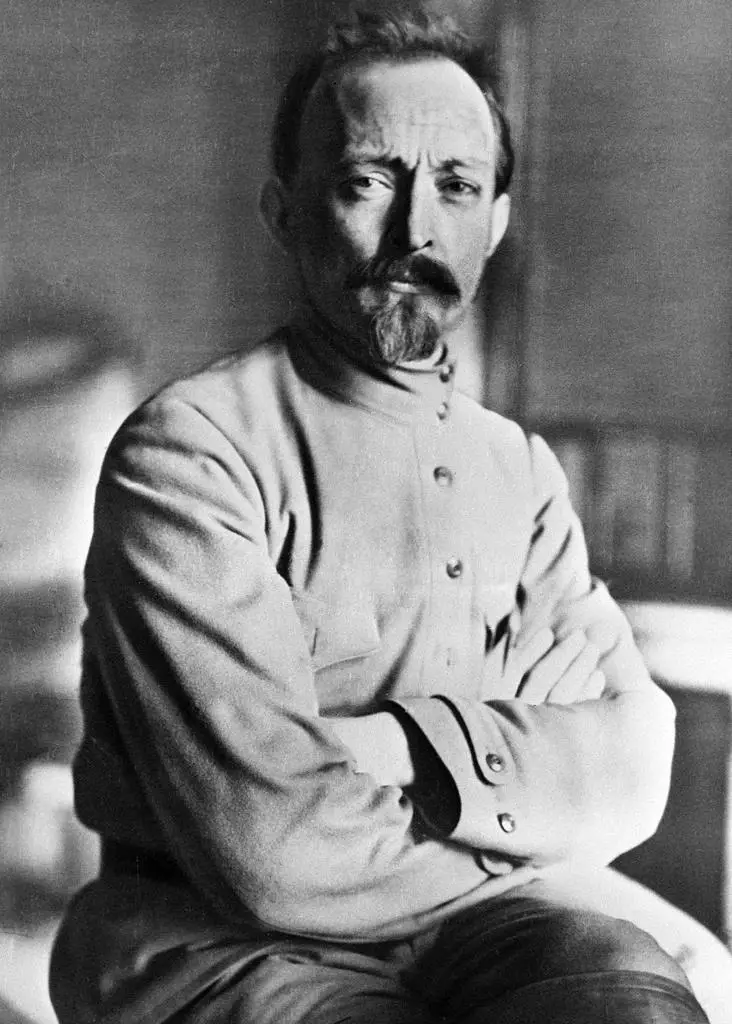
Regarding Lenin, there has existed, and still exists, a conspiracy theory that he was recruited by the German Secret Police on the eve of World War I to carry out a mission assigned by them in Russia! Similarly, to conclude with the OKHRANA, always within the framework of conspiracy theories, it is said that Stalin himself was one of its agents, but it is understood that he had the time, opportunity, and power to destroy his personal file. As soon as the Soviet Bolsheviks came to power, led by Vladimir Ilyich Lenin-Ulyanov as the Head of the Council of People’s Commissars, they oversaw the establishment of the Secret Police as early as December 20, 1917, during a meeting of the SOVNARKOM, appointing Felix Edmundovich Dzerzhinsky (1877-1926) as its head. Nicknamed “Iron Felix,” he belonged to a family of Polish aristocrats but abandoned his class to join the extremist Marxist-Leninist Bolshevik revolution after spending 11 years in prison!
The imposing ‘Lubyanka’ was chosen as the Central Headquarters, seized from the “Rossiya” Insurance Company. Built with yellow bricks by architect Aleksandr V. Ivanov in 1897-1898, it was reconstructed between 1940 and 1947 by Alexey Viktorovich Shchusev, while the final reconstruction took place during Yuri Andropov’s time in 1983. In front of it stood the statue of the fearsome Dzerzhinsky, plated in 16-carat gold. Dzerzhinsky was a man as cold as ice or wax – like the statues in Madame Tussauds – harsh, merciless, yet financially incorruptible.
The first name of the Soviet secret police was VECHEKA, shortened to CHEKA (Chrezvychaynaya Komissiya); the full name in English was: “All-Russian Extraordinary Commission for Combating Counter-Revolution and Sabotage”! These were the years of the Civil War and foreign intervention, when the very existence of Soviet power was seriously threatened. Not without reason, Lenin chose the merciless and fearsome Dzerzhinsky to lead the CHEKA, who justified and even exceeded the trust given to him, to the point where even Lenin harshly criticized him and Stalin for excessive violence in suppressing the Georgian revolts during the forced process of Russification!
A single figure is enough to prove the brutality of the CHEKA and its leader as a fanatical and extremely indoctrinated Bolshevik: the number of those who died from hunger and those killed by them during the Civil War fluctuates between 3 and 7 million – keeping in mind that for that time, no one can ever know the exact truth! Dzerzhinsky was against the humiliating Peace Treaty for Russia at Brest-Litovsk (March 3, 1918) and aligned himself with Trotsky, whereas after Lenin’s death on January 21, 1924, he presented himself as a fervent Stalinist. In fact, while delivering a fiery speech in Stalin’s defense and harshly attacking Trotsky, Kamenev, Pyatakov, etc., during a stormy meeting of the Central Committee, he erupted into a hysterical ecstasy, suffered a heart attack, and died on the spot on July 20, 1926!
He had been equally harsh with his Polish wife, Zofia Sigizmundovna Dzerzhinskaya (1882-1968), and his only son, Jan Feliksovich Dzerzhinsky (1911-1960)! Regardless of the institution’s names changing over the years – from CHEKA to GPU or OGPU – the repression, cruelty, cunning, striking policy, and its people, including Dzerzhinsky himself, remained at the helm, unchanged until his death on July 20, 1926. As an old friend and confidant of Lenin, he simultaneously held the portfolio of Minister of Communications (1921-1924), given the importance of this department at the time, and was elected head of the Supreme Council of the National Economy immediately after Lenin’s death! The Civil War, foreign intervention, and mass famine had forced Lenin to implement the harsh and restrictive policy of “War Communism,” against which revolts erupted everywhere, including the ‘Kronstadt Rebellion’ in 1921 – the “reddest of the red” – suppressed after brutal bombardment by the Red Army itself, commanded by Trotsky, after which Lenin began implementing the NEP (Novaya Ekonomicheskaya Politika – New Economic Policy)!
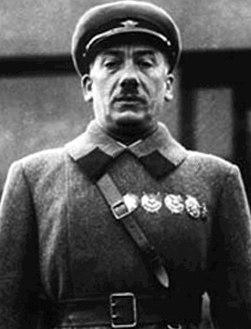
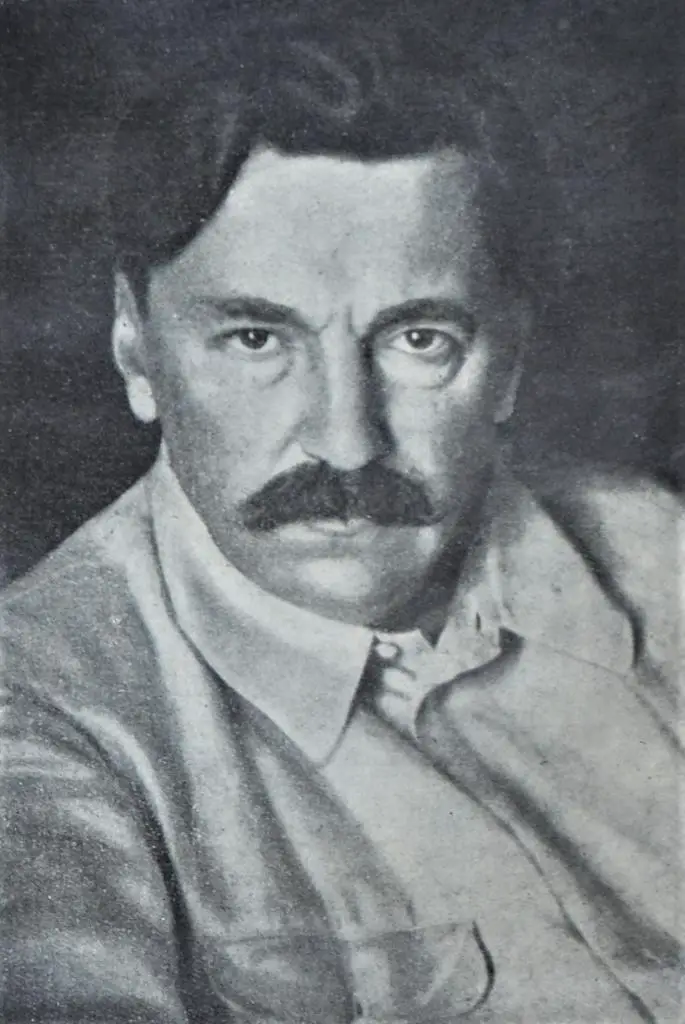
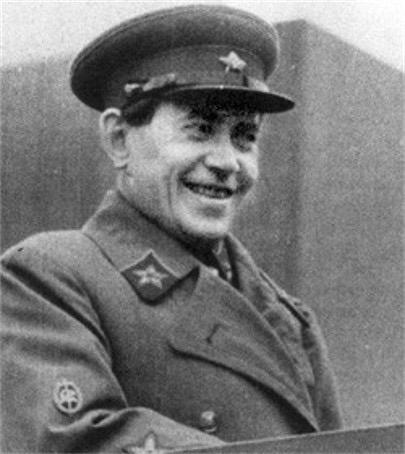
The one who replaced Dzerzhinsky was Vyacheslav Rudolfovich Menzhinsky (1874-1934), also of Polish origin, the first People’s Commissar for Finance for a few months following the Revolution’s victory. A polyglot, he spoke 10 languages fluently, including Chinese, Persian, Korean, Turkish, etc. Although a sworn loyalist to Stalin, he ended up poisoned – if we refer to the court testimony of the man who took his place, Genrich Grigoryevich Yagoda (1891-1938) – even though officially his death was considered natural, as he had suffered in his final years from an acute form of angina pectoris, which left him disabled; he did not leave his office in Lubyanka, where he was accommodated, until he died lying on a sofa! Yagoda himself was arrested, tried, and executed by Stalin’s order on March 15, 1938, after a show trial of 21 defendants, accused of being a hostile group. The execution was carried out personally by the man who also replaced Yagoda at the head of the NKVD, Nikolai Ivanovich Yezhov (1895-1940), the author of what is known as the “Yezhovshchina” (a campaign of terror and numerous convictions), who was likewise executed by Stalin’s order by his own successor, Lavrentiy Pavlovich Beria (1899-1953).
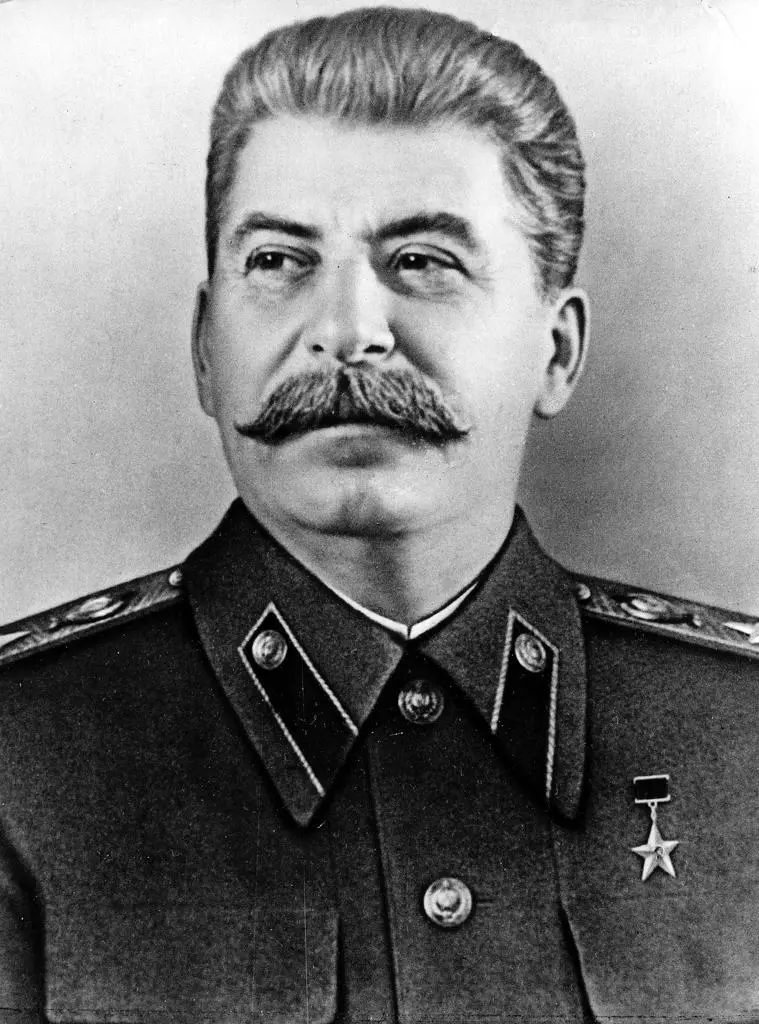
With these apocalyptic characters, fallen like dominoes and then executed, the ‘Red Despot of the Kremlin’ realized the Great Purge (drastic cleansing) of those his paranoia considered enemies! The great cleansings, or the great Stalinist terror, began immediately after the assassination of Sergei Mironovich Kirov (1886-1934), the prestigious leader of Leningrad, at 4:30 PM on December 1, 1934, on the 3rd floor inside the Smolny Palace, by one of Yagoda’s men, Leonid Vasilyevich Nikolayev. It was masterminded by Stalin, who considered Kirov a potential rival! Nikolayev was immediately arrested along with 13 others, tried for conspiracy, and executed!
This fate was also shared by his family members, including his beautiful wife, Milda Draule – for whose “honor” he allegedly shot Kirov in the back of the neck with two bullets from a “Nagant M”-1895 pistol, as rumored by Yagoda’s people that Kirov had intimate relations with her. Two days after Kirov was killed, his bodyguard, Mikhail Borisov, suffered a strange “automobile accident” that took his life! In the early 1960s, in the archives of the Institute of Marxist-Leninist Studies, Lidia Lebedinskaya discovered a letter from Kirov to Valerian Vladimirovich Kuybyshev, No. 2 of the Soviet government, written on August 30, 1934, full of strong criticism toward Stalin! A few months later, in January 1935, at the age of 46, his heart also “stopped”!
Through three processes, 62 personalities were brought to trial, 55 of whom, after investigation and horrific torture, were sentenced to death and executed! The Prosecutor General in these staged trials was Andrey Yanuaryevich Vyshinsky, and the Chief Justice was Vasily Vasilyevich Ulrich – both beasts with human faces! Apart from Lev Davidovich Trotsky, whom Stalin expelled from the USSR in 1929 and ordered killed in Mexico in 1940; other prominent Party and State leaders were executed, such as: Zinoviev, Kamenev, Bukharin, Rykov, Ordzhonikidze, Pyatakov, Tomsky, Bela Kun, Liber, Tukhachevsky, Yegorov, Blyukher, etc. The last three were Marshals of the Red Army, out of five such figures! The numbers of those executed, political prisoners, and those exiled to the infamous gulags during the period of the Stalinist Great Purge in the second half of the 1930s are terrifying!
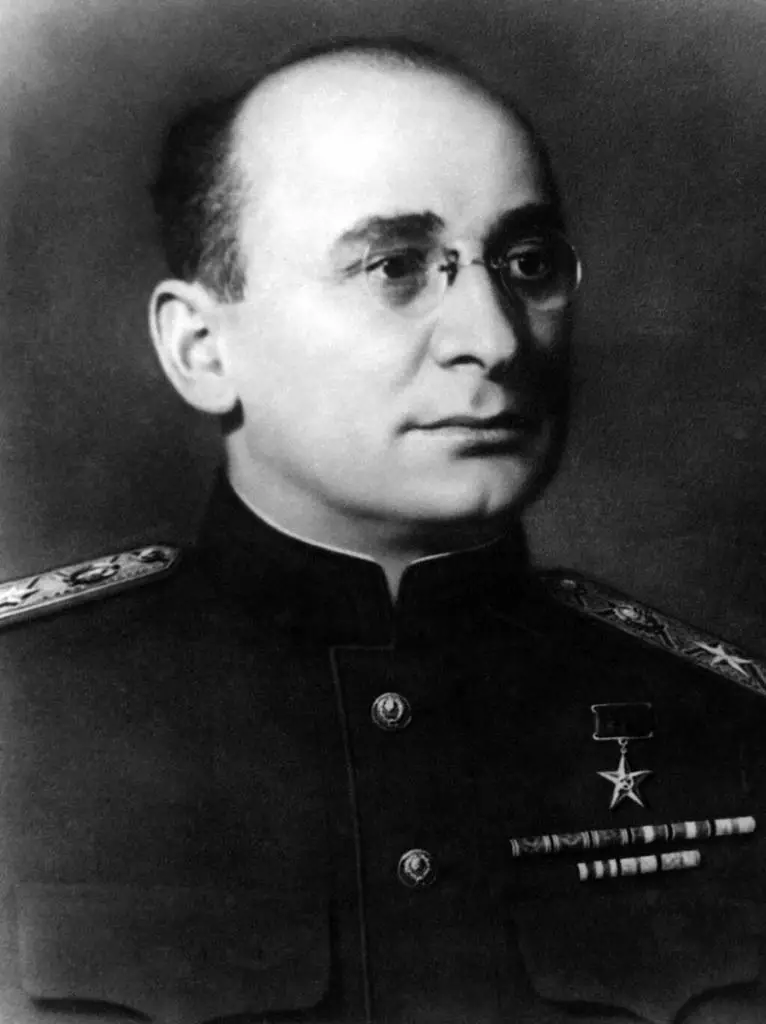
According to the NKVD archives themselves, in 1936, 1,118 people were sentenced to death, while in 1937 and 1938, approximately 190,000 and 225,000 respectively; in the years 1936-1939, this figure for Stalin’s 30 years of bloody despotic rule reached 340,000! The Jews paid dearly, as Stalin’s attitude toward them differed little from Hitler’s – especially famous Jewish doctors in the Kremlin who were arrested on charges of a conspiracy to kill Stalin with treatment that did the opposite! The Holodomor (death by starvation) also claimed millions of lives! Beria, a Georgian like Stalin, was a monster and a pervert, a sexual maniac! Over 100 cases of rape were proven against him, including adolescent girls! His horrific crimes, such as the ‘Katyn Massacre’ – approved by Stalin, where 22,000 Polish nationalist officers were executed – is just one of the major crimes he committed; thus, his life, character, and crimes deserve a separate analysis!
This criminal despotic rule, characterized by violence and repression under Lenin and particularly Stalin, was copied and even further perfected by our dictator Enver Hoxha and his bloody, yet simultaneously caricature-like regime. Using the same methods, after exploiting and misusing all the Ministers and other heads of the Ministry of Internal Affairs and the State Security (Sigurimi), they sent them to the firing squad! Their tragic end concluded with the trial and execution of Kadri Hazbiu (Minister for over 25 years), Feçor Shehu, and other high-ranking Sigurimi hierarchies in the autumn of 1983! Enver Hoxha classified them as part of a great conspiracy with the “poly-agent” Mehmet Shehu – 27 years Prime Minister – at the head of the Albanian state! The party trial in the Bureau and Plenum concluded that “all the plots had been discovered not by the Security service, but by the Party (meaning Enver Hoxha himself)”!
The second grave accusation was that they had been recruited by the Soviet KGB; in fact, Soviet advisors in the Ministry of Internal Affairs had been given the lists of our agents, which in reality had been done according to the Platform of the Political Bureau, signed by Enver Hoxha himself. Even the success of some Sigurimi “Radio-games” was achieved thanks to the British super-agent turned Soviet, Kim Philby! In the three-volume book “The Mitrokhin Archive” by the Director of the KGB Archives, Vasili Nikitich Mitrokhin (1922-2004) – who defected to the West in 1992 – (co-authored with the famous historian Christopher Andrew), featuring about 300,000 documents in 2,000 folders and many envelopes and microfilms, it is clear that almost all the main leaders of the socialist countries, or the heads of Communist Parties in the West, had been recruited by the Soviet Political Police. Here, one cannot exclude Ramiz Alia and many members of the Political Bureau and the Central Committee of the AWP (PPSh), who refused the generous offer of the Bavarian Chancellor Franz Josef Strauss, Chairman of the CSU and Minister of Defense of the FRG!
That there has been and continues to be Soviet espionage activity in Albania is now clear, as the KGB recruited some of those who stayed for years as students in the USSR, some of whom made careers up to the Party-State leadership! Most of them are no longer alive, but nostalgia and duty have certainly made them pass it on to their sons! It must not have been a coincidence that on the eve of the May 26, 1996 elections – abandoned by the socialists on orders from “above” – around noon, there arrived as a “tourist” the No. 2 of the Russian State Committee for Tourism (de facto No. 2 of the KGB), Sergei Vladimirovich Kozyrev, brother of the Foreign Minister, Andrei Vladimirovich Kozyrev!
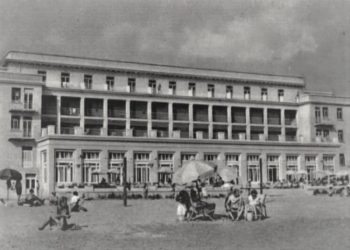
He requested the most luxurious apartment in Hotel “Dajti,” No. 215, where Enver Hoxha had long stayed since November 28, 1944, but also Leka Zogu in November 1993! Kozyrev was accompanied by three agents – one around 70 years old and the other two around 35 years old, with the physique of heavyweight boxers! On the way to Saranda, when they stopped at Syri i Kaltër (The Blue Eye), they “coincidentally” met four individuals whose car had “broken down,” and it also “coincidentally” coincided that all four of them had studied in the USSR!
The strange poisoning of a Russian general’s family (Sergei Burenkov with his wife, Natalia, daughter Yekaterina, and son-in-law Nikita Belousov) in a luxury hotel in Qerret, on the Adriatic coast, can never be without a connection to Russian espionage! The secret political police in the USSR frequently changed names; it was sometimes separated from and sometimes merged with the Ministry of Internal Affairs! Its acronyms matter little: from VECHEKA, CHEKA, NKVD, GPU, OGPU, GRU, KGB, SVR, to FSB. It was and remained repressive, an “octopus” with poisonous tentacles; even its symbol, the crest or emblem, has a sharp sword in the center that pierces it vertically from top to bottom! Immediately after Stalin’s death (March 5, 1953), anti-Soviet revolts broke out in the GDR (June 16-23, 1953), starting in East Berlin and spreading to many cities. They were brutally suppressed by the Soviet army, Beria’s KGB, and the German STASI as its subsidiary! Walter Ulbricht, Wilhelm Pieck, and Otto Grotewohl – the East German leading troika – proved to be more Soviet than the Soviets themselves!
55 protesters were killed (4 were women)! The severe economic crisis and delayed de-Stalinization, as well as the hatred toward the Soviets (the Katyn Massacre could never be forgiven), caused revolts to break out in Poland as well, mainly in Poznan, from June 28-30, 1956, which were also brutally suppressed by the Polish army of Konstantin Rokossovsky, Minister of Defense of Poland and simultaneously a Marshal of the USSR! The dead numbered 57-100 and the wounded 600, but there were also 80 killed from the army and police! At the head of the Party and State was Edward Mieczyslaw Ochab (1906-1989), who was replaced in the Party by Wladyslaw Gomulka, recently released from prison, as well as Cardinal Stefan Wyszynski, sentenced by Stalin since 1949! Those responsible for the situations Poland went through after WWII were the main communist leaders: Boleslaw Bierut, Jozef Adam Zygmunt Cyrankiewicz, Marian Spychalski, etc.
From October 23 to November 11, 1956, for the same reasons as in the GDR and Poland, the Hungarian ‘Liberal Democratic Revolution’ broke out, suppressed even more brutally by the boots and tanks of the Soviet army, which killed 2,652 Hungarians and suffered 720 dead and 1,540 wounded among the troops of Soviet Marshal Ivan Stepanovich Konev (1897-1973), the first Supreme Commander of the Warsaw Pact Armed Forces! Khrushchev, Andropov, and Serov prepared the “Russian soup,” aided by Erno Gero, Janos Kadar, Andras Hegedus, etc.! Imre Nagy, who led the Revolution, sought political asylum in the Yugoslav Embassy in Budapest, but treacherously, Tito handed him over to the Soviets, who executed him on June 16, 1958!
It was different for Cardinal Jozsef Pehm Mindszenty (1892-1975), who was surrendered neither to the Soviets nor to the Hungarian authorities by the American Embassy, where he stayed for 15 years (1956-’71) after seeking political asylum there! Currently, as in over 100 years, Russia’s embassies are filled with intelligence secret service agents, while there are few career diplomats—the opposite of the embassies of Western countries! The presence of the Russian agency has increased feverishly, especially in the Balkans and particularly in Vucic’s Serbia, masked behind activities in supposedly scientific, research, commercial, economic, cultural, and sporting institutions, etc.
Here are the heads of Soviet and Russian Intelligence over the years after Beria:
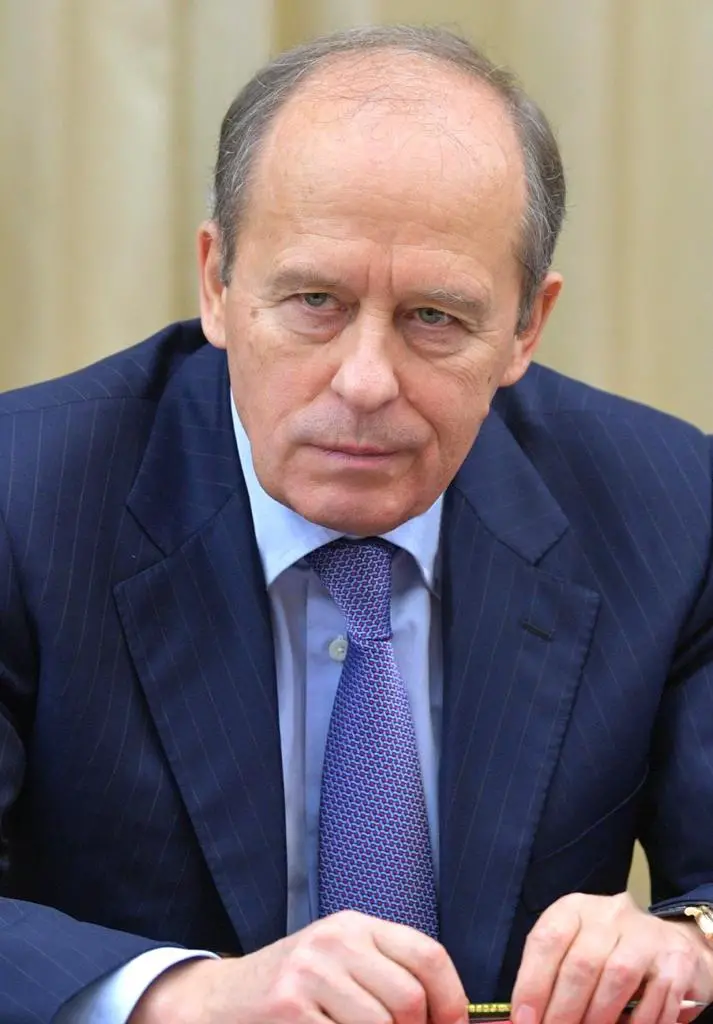
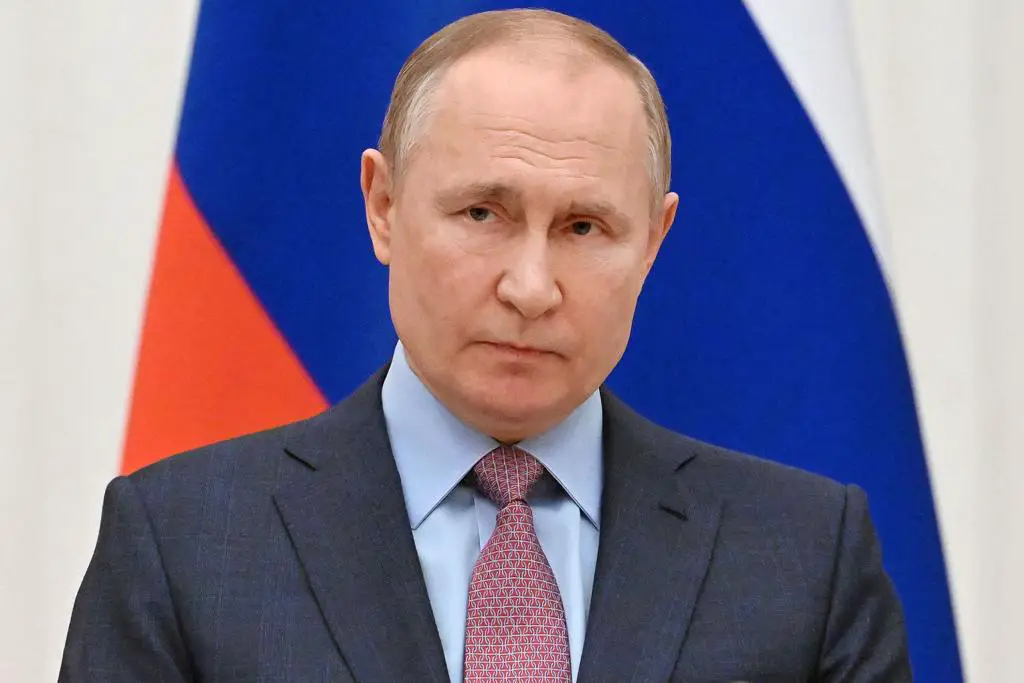
Sergei Nikiforovich Kruglov-(Yakovlev) (1907-1977, dies crushed by a train), Nikolai Dudorov, Ivan Aleksandrovich Serov, Alexander Nikolayevich Shelepin, Vladimir Yefimovich Semichastny, Yuri Vladimirovich Andropov (Leader of the Soviet Party and State), Vitaly Vasilyevich Fedorchuk, Vladimir Aleksandrovich Kryuchkov, Viktor Mikhailovich Chebrikov, Vadim Viktorovich Bakatin, Boris Karlovich Pugo (1937-1991, kills his wife and himself), Viktor Barannikov, Nikolai Golushko, Sergei Stepashin, Mikhail Barsukov, Nikolai Kovalyov, Vladimir Vladimirovich Putin (Prime Minister and President of Russia), Nikolai Platonovich Patrushev—involved in the poisoning of Litvinenko and the Skripals (father and daughter), the assassination of the strong oppositionist Boris Nemtsov on February 27, 2015, as well as before him, the well-known journalist Anna Stepanovna Politkovskaya (October 7, 2006), the events in Montenegro, and everywhere in the Balkans. The current head of the FSB today is Alexander Bortnikov, but its power and role are no longer what they once were! / Memorie.al