



By Nertila Hodo
Part Two
Memorie.al / In the southwest of the Balkan Peninsula, along the eastern shores of the Ionian Sea – from Lake Butrint and the Pavlla River in the north to the Gulf of Arta in the south – lies the region with distinct landscape features known by the name Chameria. Due to its highly favorable geographical position, the majority of the economic income of this region has always come from the branch of agriculture, providing it with visible socio-economic development. Throughout the course of history, this region has been inhabited by an indigenous Albanian population. The simple Albanian character of this territory is proven by toponymy and the living presence of the human factor: Albanians in language, culture, and customs.
Continued from the previous issue
Why Rasih Dino was not allowed to participate in the Peace Conference as a representative of Chameria. The declaration of Albania’s independence on November 28, 1912, was welcomed with joy by the entire Albanian population. The National Assembly chaired by Ismail Qemal Bey Vlora, alongside the declaration of independence, the creation of a government, and the election of a Senate – which “would control and assist the government” – also decided on the composition of a delegation that would make possible the recognition of Albania’s independence in the courts of the Great Powers.
By mid-December, upon hearing the news of the upcoming opening of the Ambassadors’ Conference in London, the Vlora government presented the immediate need to send a delegation to represent the Albanian state at this conference. The importance of this delegation is evident in the fact that Ismail Qemali prepared to head this delegation himself. After advice from Italy and Austria-Hungary that his departure would be risky, and the fact that the warships of the “Athenian-Phanariot crusaders” were circling before Vlora, blocking the Albanian coastline, he withdrew. Under these circumstances, the Vlora government had no choice but to appoint several personalities located outside of Albania as its delegates to London. The Vlora government appointed the delegation that would defend Albania’s interests at this Conference. The delegation consisted of Filip Noga, Mehmet Konica, Sotir Kolea, and was to be headed by Rasih Dino.
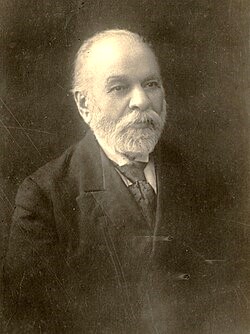
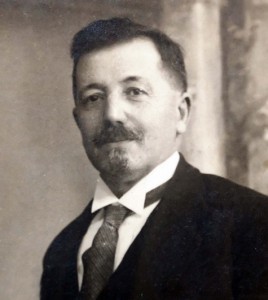
Rasih Dino (1875–1926) was appointed head of the delegation for several reasons. As the son of Abedin Pasha Dino, a former Foreign Minister of the Ottoman Empire, Rasih Dino enjoyed a good reputation and belonged to one of the most prominent families in terms of national traditions. Regardless of these factors, in assigning him such an important mission, the Vlora government must also have been motivated by his own patriotic activity. Rasih Dino played a significant role in the patriotic activities of the “Filat Club” as well as in the opening of Albanian-language schools.
The “Filat Club” was created on September 20, 1908. It was one of the first clubs opened after the declaration of the Young Turk Constitution. Rasih Dino was one of the 130 members the club had at its inception. The “Filat Club” was not represented by any member of the Young Turk community, ensuring greater independence. This club was created as a hearth of unity and struggle; it was a center of education and culture. During this period, Rasih Dino was also distinguished for his efforts in spreading education and schools in the Albanian language, financing a large part of the expenses of the “Filat Club,” which were used to pay the teachers, purchase textbooks, open schools, and publish the newspaper “Zgjimi i Shqipërisë” (The Awakening of Albania).
At the end of November 1912, in agreement with Ismail Qemali, Rasih Dino settled in Paris. He was tasked by Ismail Qemali himself to be an unofficial observer for the Vlora government and to closely follow the diplomatic development of the Albanian issue in Europe. Throughout December, Rasih Dino informed Ismail Qemali from Paris from time to time regarding the statements made by personalities of the Great Power governments on the Albanian issue. On December 23, 1912, Rasih Dino was notified by cablegram from Vlora to depart for London. He was instructed by Ismail Qemali to notify by telegraph Sotir Kolea in Brindisi, and Mehmet Konica and Filip Noga in Vienna, to go to London, where they would represent the Albanian state at the Ambassadors’ Conference in London. Ismail Qemali emphasized that he would introduce the delegates via telegraph to the British Foreign Minister, Edward Grey, who would also be the chairman of the commission.
At the end of December, the delegation arrived in London. This delegation consisted of only three members: Rasih Dino, who would be the head of the delegation, Filip Noga, and Mehmet Konica. At the London Conference, although the Albanian issue occupied an important place, the Vlora government was not officially invited to participate. Once again, Albania found itself in an inferior position compared to its neighbors, being denied the right of representation in the high forums of European diplomacy. In such a delicate situation, the task of the Albanian delegation was even more difficult.
The Ambassadors’ Conference began its proceedings on December 17, 1912, in the city of London. Participants in this conference included representatives from France, Russia, Germany, Italy, Austria-Hungary, and Britain. The greatest success of the Albanian delegation was the presentation of a memorandum on January 2, 1913, to the Ambassadors’ Conference. Rasih Dino, as head of the delegation, read this memorandum on behalf of the Albanian government. This memorandum expressed the views of the Vlora government and informed them of its legitimate demands: “…the Albanian people form the most compact, homogeneous, and important ethnic group of the Balkan Peninsula. Their origin and language, customs, and character distinguish them from neighboring races and give them a distinct individuality, thanks to which they have known how to resist assimilation…” With rare eloquence and determination, Rasih Dino defended the Albanian national cause at the London Conference, expressing the Vlora government’s views regarding the borders of the Albanian state: “The borders must be followed by marking a dividing line starting from the current borders of the Montenegrin Kingdom and specifically including, with all relevant surroundings, the cities of Peja, Mitrovica, Prishtina, Skopje, Manastir, down to Meçova, maintaining the borders until Preveza…”!
This memorandum presented by Rasih Dino argued the validity of the demands based on ethnic, geographical, and historical factors. This memorandum was supplemented by an annex on January 25, 1913. This annex consisted of statistical data on the border population of northern, eastern, and southern Albania. The Ambassadors’ Conference concluded its work by making decisions to the detriment of the Albanian cause. At this Conference, Albania became a state, but was reduced to one-fourth of its natural size.
Rasih Dino did not stay in London until the end of the conference; it is likely that he left towards the end of March, as from that time on; he is no longer mentioned in the reports coming from London. Even though Rasih Dino did not stay until the end, he represented the Vlora government with dignity and determinedly defended the national cause, showing that he belonged to a high rank of Albanian diplomats. Rasih Dino’s diplomatic activity in defense of the national cause did not end there.
After his departure from the London Conference, Rasih Dino continued his activity in defense of the national cause across various European cities, participating in organizations that Albanians in the diaspora formed in defense of Albania. Rasih Dino’s relentless activity in defense of the national cause made him stand out as one of the most active Albanian personalities in the diaspora. This active work and his previous participation in the delegation of the 1913 London Conference led to his appointment by the “Chameria” Society in America as the representative of the Cham population at the 1919 Paris Peace Conference.
After the First World War, to finalize peace treaties with the defeated countries and to settle their post-war interests, the victorious powers organized the Paris Conference, which opened in Paris on January 18, 1919. The hopes of thousands of Albanians, who had been unjustly severed from their motherland at the London Conference, were directed toward this conference. It would be the Peace Conference that would determine Albania’s further fate. At this conference, the Albanian government was to be represented by an official delegation that would closely follow the proceedings. The delegation consisted of Turhan Pasha, in the capacity of Prime Minister of Albania, Mehmet Konica, Mit’hat Frashëri, Mihal Turtulli, Luigj Bumçi, and Mustafa Përmeti.
Upon hearing the news of the conference’s opening, the Cham Albanians in America were of the opinion that a representative of the Chameria region should also be present at the Paris Conference to represent the population of this region, which had been unjustly passed to the Greek state at the 1913 Ambassadors’ Conference. The representative of this region would speak about the suffering and atrocities the Greek state was committing against this innocent population. Initially, the Albanian community in America decided that the representative of the Chameria region at the Peace Conference should be Ismail Qemali.
Upon hearing the news, the “Old Man of Vlora” set out with determination “to present the demands and rights of the Albanians at the Conference,” but unfortunately, on the way, in Perugia, Italy, he suffered a hemorrhage and died there on January 26, 1919. Upon hearing the news of Ismail Qemali’s death, the Cham population of the American colonies chose Rasih Bey Dino, who was at that time staying in Lausanne, Switzerland, as their representative at this Conference.
The choice of Rasih Dino as the representative of the Chameria region must have been made not only based on his patriotic activity in this region and his participation as head of the Albanian delegation at the Ambassadors’ Conference but, above all, because he was a Cham himself, making him the most suitable person to make known the sufferings of the Cham population at this conference. Plans for Rasih Dino’s participation in the Peace Conference seemingly faced obstacles. These obstacles came from the French and Italian governments.
Neither of these two governments was interested in having the Cham issue raised for discussion at this conference. The Italian government expressed its position openly, stating it did not agree with the representative of the Chameria region participating in the Conference, creating difficulties for Rasih Dino to enter the Italian border. Upon learning the Italian government’s stance toward their appointed representative, the Chameria Society sent a telegram to the chairman of the Italian delegation in Paris, pleading that the representative of Chameria not be hindered from going to Paris to present the solution to the Cham issue at the Peace Conference.
The “Chameria” Society hoped its pleas for Rasih Dino’s participation would be considered. Hoping he would be allowed to participate, the “Chameria” Society organized a meeting calling on the Cham population in America to help Rasih Dino with funds to make his journey to Paris possible. Unfortunately, all the Society’s efforts found no support from “Lady Europe.” Rasih Dino was not being granted permission to go to France; under these conditions, at his own suggestion, the “Chameria” Society appointed Fuat Bey Dibra and Mihal Turtulli, who were already in Paris, as representatives of the Chameria population. The Albanian government also transmitted its complaints regarding the suffering of the Albanian population in “Chameria” to international governments.
Among the most active Albanian diplomats regarding this issue was the Cham diplomat Xhemil Dino. As Minister Plenipotentiary of the Albanian Legation in Paris, he informed the Albanian government of every meeting related to the fate of the Cham population in Greece. In a report sent on November 30, 1923, from Paris to the Minister of Foreign Affairs in Tirana, Pandeli Evangjeli, he informed him of his efforts with the French Parliament and Government to protect the Albanian minority in Greece. In another notification letter dated December 4, 1923, also from Paris, addressed this time to the Chairman of the Council of Ministers, Ahmet Zogu, he informed him of the collective efforts of the Great Powers with the Greek government, which were unsuccessful because the British Minister in Athens had not received instructions from his government.
In a report dated April 1, 1924, after informing the Foreign Minister in Tirana, Iljaz Vrioni, about his meeting with Clinchant, deputy director for Asia at the French Ministry of Foreign Affairs, and with Bargeton, the primary French expert at the Lausanne Conference, Xhemil Dino brought to his attention the proposal of the latter: “…since the League of Nations was powerless to settle the disputes in favor of Albania, in order to avoid all friction, [Albania should] enter into talks with the government of Athens for a forced exchange between the Albanian Muslims of Greece and the Greek-speakers of Albania…”! From this report, one understands not only the efforts of the Albanian government to stop the forced relocation of the Cham population to Turkey but also the engagement of international governments in finding a solution, even if it was not the right one.
Despite the Greek government’s promises and declarations regarding the non-inclusion of the Muslim Cham population in the relocations, expropriations, and their displacement to Anatolia, it did not act accordingly. Based on this, on June 7, 1924, Ali Dino sent a detailed report from Athens to Widding, chairman of the Mixed Commission, on the basic criteria for determining the nationality of the inhabitants of Chameria. Relying on basic criteria such as race, religion, national consciousness, language, and customs for determining a population’s nationality, he provided a clear and accurate reasoning, proving with historical and scientific facts the Albanian nationality of the Cham population in Greece and the non-existence of any connection to Turkish nationality, thereby definitively excluding them from relocation to Anatolia.
Despite protests from representatives of the Cham population, the Albanian government, and diplomats across Europe, Greek government circles did not cease their actions against this population. Reaching an agreement with the Turkish side, Ankara – which in September 1924 had declared itself against settling Chams in Turkey – broke under pressure from Athens, and on July 6, 1925, declared to the Greek government that it accepted the settlement of 5,000 Chams in Turkey. With this agreement, the Greek government openly admitted that the exchange would be carried out with the Cham population holding Greek citizenship. In March 1926, the Greek government officially declared that the exchange of the Muslim population had ended and the Muslim Chams of Greece would be considered Albanians. Although this population exchange had officially concluded, the Greek government continued to use a series of coercive measures against this population.
Albanian recruits in military service were used as prisoners of war. In Chameria, only Greek schools functioned formally, not allowing the opening of any Albanian schools until 1937. Members of communes and municipalities were appointed by the central government, and the vast majority of them were Greeks. Chams excluded from the exchange were not free to dispose of their properties. Albanian literature was not allowed, nor was the participation of this population in public life. This dire situation for the Albanian population in Chameria remained tense until 1940.
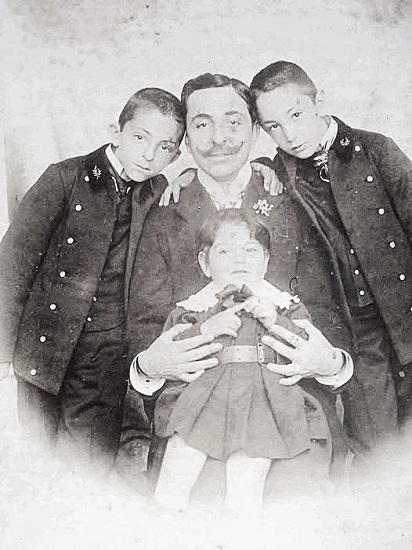
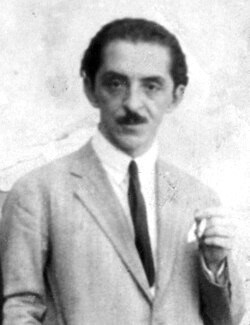
During this period, members of the Dino Family played an important role in “exposing” this expansionist policy pursued by the Greek state, fighting with dedication and determination through diplomacy to find the most suitable solution for the Cham population. For his activity in defending this population from the violence and terror exercised by Greek authorities, Ali Dino would be labeled by Greek government circles as a propagandist of Albanian policy.
Negative characterizations of Ali Dino’s figure came not only from the Greek government but also from some Albanian personalities. Thus, in a request that Lec Kurti, the chargé d’affaires at the Albanian delegation in Athens, sent to the Albanian government on July 12, 1929, for financial support for the Cham delegation going to Geneva, he expressed opposition to Ali Dino’s inclusion in this delegation, claiming he had often spoken out against the figure of the Albanian King and that regarding his nationality, he always displayed a Turkish one; thus, the Greeks at the Geneva meeting would have support coming from the head of the Chameria delegation.
Despite the unpatriotic labels that Greek circles and some Albanian circles have given to Ali Dino’s figure, through his diplomatic activity, he showed that he was a defender of the rights of the Cham population, performing this duty both within the Greek parliament and outside it. Such a policy was followed to sow discord among the Albanian population of Chameria and specifically toward intellectuals and patriots like Ali Dino. / Memorie.al
![“In an attempt to rescue one another, 10 workers were poisoned, but besides the brigadier, [another] 6 also died…”/ The secret document of June 11, 1979, is revealed, regarding the deaths of 6 employees at the Metallurgy Plant.](https://memorie.al/wp-content/uploads/2026/02/maxresdefault-75x75.jpg)
