By Dashnor Kaloçi
Part twenty-two
Memorie.al / The history of parliamentary elections in our country, or more accurately, the attempts at elections, have its origins in the era of Ottoman rule when Albania was part of the Turkish Empire. One of the first Albanian deputies elected to the first Turkish Parliament, which opened its proceedings in December 1877, was Abdyl Frashëri. However, that parliament did not last long, as it was dissolved by the Sultan himself due to the outbreak of the Russo-Turkish War. Following the dissolution of Turkey’s first parliament, there were several other attempts at elections, but they all failed for various reasons. The first regular elections in Albania were held only in 1908, when the Young Turks came to power in Turkey. Those elections were not direct but were held through representation, otherwise known as the two-tier voting system (secondary electors).
The first Turkish Parliament opened on December 10, 1908, and out of 266 deputies, 27 were Albanians elected from the four vilayets of Albania. At that time, members of the “Committee of Union and Progress” in Turkey, which included many Albanians, split and grouped into three political factions. The first group was “Union and Progress” (the Turkish-Macedonian party) with 164 deputies, consisting of 130 Turks, 5 Arabs, 1 Greek, and 15 Albanians, led by Hasan Prishtina, a deputy from Kosovo.
The second group, called “Liberal Union” (the Greek-Albanian party), consisted of 45 deputies and included 12 Albanians led by Ismail Qemali. Among the other Albanian deputies in the Turkish Parliament at the time were Esad Pashë Toptani, Nexhip Draga, Rexhep Pashë Mati, etc. After 1908, there were several other elections where Albanians continued to vote for their representatives in the Turkish Parliament, a process that lasted until November 1912, when Independence was proclaimed and Ismail Qemali was elected head of the Government.
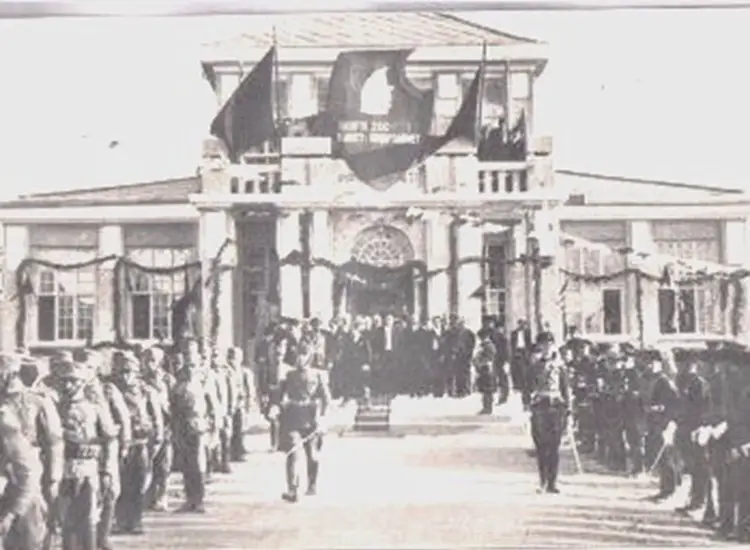
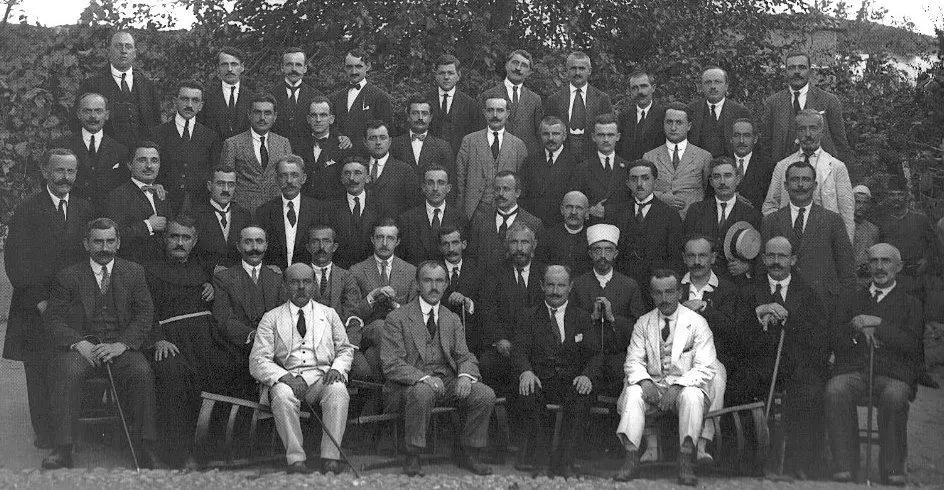
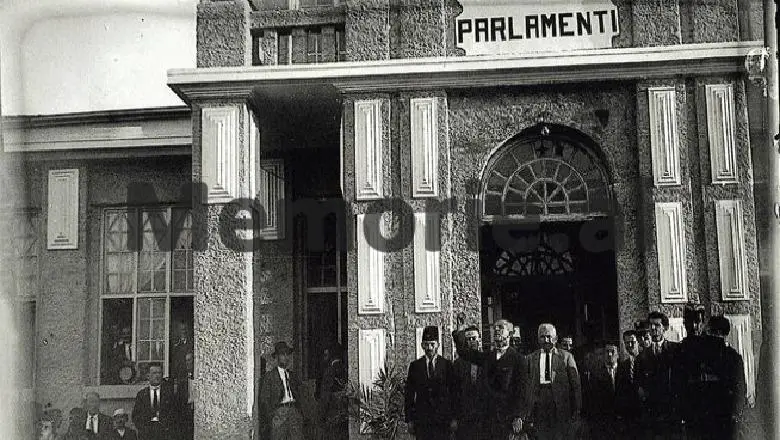
Meanwhile, the first parliamentary elections in Albania took place in the spring of 1921, as they had not been held until then due to World War I, in which Albania was also involved. The first Albanian Parliament opened on April 21 of that year; the first building of the Albanian Parliament was located where the Academy of Sciences stands today. In that parliament, 76 deputies participated, elected following a relatively regular process from the nine prefectures of the country: Berat, Durrës, Elbasan, Gjirokastra, Korça, Kosovo, Shkodra, Vlora, and the Albanian colony in the USA.
As in the past, those elections were conducted through a system of representation, or secondary electors, where based on territorial division, representatives of each province had the right to elect their deputy. The aforementioned, along with a brief history of parliamentary elections in Albania from that period until 1991, has been published by Memorie.al in previous issues. Here, we are publishing the complete Basic Statute of the Albanian Republic (the Constitution) of 1925, where a special place is held by the parliamentary election legislation of that time, as well as the Parliament’s regulations regarding the rights and duties of deputies, published by the “NIKAJ” Printing House in 1925.
Continued from the previous issue…
PENAL CODE 1928
SECOND BOOK
TITLE VII: Crimes Against Public Integrity
CHAPTER III: Abduction
ARTICLE 449. – Whoever, without the consent of the rightful claimant, harvests or gathers stalks, grapes, or other unharvested products of the land, shall be punished, upon the request of the injured party, with imprisonment for up to three months, or with a fine of up to one hundred gold francs; and in the event of a recidivism of this offense, they shall be punished with imprisonment from ten days to six months, and a heavy fine from fifty to one thousand gold francs.
CHAPTER II: Robbery, Extortion, and Ransom
ARTICLE 450. – Whoever, by using violence or by intimidation of bringing imminent severe harm to person or property, compels the possessor or another person present at the scene of the crime to hand over a movable object, or not to resist its seizure, shall be punished with heavy imprisonment from three to ten years, and a heavy fine of no less than one hundred gold francs.
The same punishment applies to whoever, at the time of taking, or immediately upon taking a movable object of another, uses against the person being robbed, or against anyone who comes to their aid at the scene of the crime, the aforementioned violence or intimidation to commit the offense, to transport the stolen object, or to secure impunity for themselves or their accomplice.
If the violence was directed solely toward snatching the object from the person’s hand, the offender shall be punished with heavy imprisonment from one to five years and a heavy fine of no less than fifty gold francs.
ARTICLE 451. – Whoever, by using violence or by intimidation of bringing severe harm to person or property, compels anyone to hand over, to sign, or to destroy – to their own or another’s detriment – an act that carries any kind of legal effect, shall be punished with heavy imprisonment from three to ten years, and a heavy fine of no less than one hundred gold francs.
ARTICLE 452. – When any of the acts provided for in the preceding articles is committed through threat to life, by the perpetrator being armed, or by two or more persons, of whom at least one is visibly armed, or by two or more persons who are disguised (déguisé), or if the act is committed through the deprivation of personal liberty, the heavy imprisonment shall be from seven to fifteen years, and the heavy fine no less than two hundred gold francs.
ARTICLE 453. – Whoever, by any means of intimidation that they shall bring severe harm to person, honor, or property, or by presenting an order as if it were issued by the Authority or by any terrifying committee, compels anyone to send, deposit, or place at the disposal of the offender money, objects, or acts or documents that have a legal effect, shall be punished with heavy imprisonment from three to ten years, and a heavy fine of no less than two hundred and fifty gold francs.
ARTICLE 454. – Whoever, through written or oral intimidation, even if indirectly, of making defamatory revelations or attributions (imputations diffamatoires), compels [the victim] to hand over money or valuables, or to sign, give, or destroy any writing, act, or document that has a legal effect, shall be punished with heavy imprisonment from one to three years, and a heavy fine from one hundred to three thousand gold francs.
The same punishment applies to whoever, by intoxicating another, causes them to sign, give, or destroy an act that has any kind of legal effect.
ARTICLE 455. – Whoever detains (sequestre) a person to obtain from them or from others, as a price for their release, money, objects, or acts or documents that have a legal effect in their own favor or in favor of persons indicated by them, even if the goal is not achieved, shall be punished with heavy imprisonment of no less than five years, and a heavy fine of no less than five hundred gold francs.
ARTICLE 456. – Whoever, outside the cases provided in Article 65, without prior notification to the Authority, carries correspondence or messages, written or verbal, to fulfill the purpose of the crime provided in the preceding article, shall be punished with heavy imprisonment from one to five years, and a heavy fine of no less than one hundred gold francs.
ARTICLE 457. – To the punishments determined for the crimes provided in Articles 450, 451, 452, 453, and 455, there shall always be added the placement of the convicted under the special supervision of the Public Security Authority.
CHAPTER III: Fraud, Other Deceits, and Bankruptcy
ARTICLE 458 (Fraud). – Whoever, through artifices or cunning intended to deceive or to seize (surprendre) the trust of another, misleads them, and thereby procures for themselves or others an unjust profit to the detriment of another, shall be punished with heavy imprisonment from one month to three years and a heavy fine of no less than one hundred gold francs.
The heavy imprisonment shall be from one to five years if the offense is committed:
- By lawyers, legal representatives, or administrators in the exercise of their duties.
- To the detriment of a public administration or an institute for public welfare.
- Under the pretext of exempting someone from public service.
ARTICLE 459 (Insurance Fraud). – Whoever, with the intent to obtain for themselves or others an insurance payment for an accident or another unjust profit, destroys, disappears, or damages by any means their own property, shall be punished with heavy imprisonment for up to one year; if the goal is achieved, the provisions of the preceding article shall apply.
ARTICLE 460 (Abuse of Incapacity). – Whoever, for their own interest or that of another, and by abusing the needs, passions, or inexperience of a person under twenty years old, or of a person interdicted or legally incapacitated, causes them to sign an act that brings any kind of legal effect to the detriment of themselves or others, shall be punished with imprisonment from one to five years and a heavy fine of no less than one hundred gold francs.
ARTICLE 461 (Usury(. – Whoever, in entering a convention by which they credit a person over twenty years old who is neither interdicted nor incapacitated, abuses the urgent need or the heat of the moment of the borrower, and contracts for themselves or others such profits which, considering all circumstances, clearly appear to be in great disproportion to the credit or facility granted, shall be punished with imprisonment for up to three months or a heavy fine of no less than two hundred gold francs.
The same punishments apply to whoever, knowing that such rights arose in the aforementioned manner, receives, demands, or transfers (céde) them to another.
If a simulated act is made to hide these unjust profits, or if the creditor, for security, has taken a word of honor or an oath from the victim, the punishment is imprisonment for up to six months and a heavy fine of no less than three hundred gold francs.
If the offender makes this a habit or a profession, the punishment is imprisonment from one month to one year and a heavy fine from five hundred to five thousand gold francs, with temporary disqualification from public office.
Prosecution for these cases occurs only upon the request of the injured party. The offender is not punished if they fully compensate the victim before being sent to trial.
ARTICLE 462 (Defrauding Creditors). – Whoever, with the intent to harm their lender, hides or dispossesses their own property or damages it, or makes secret agreements with others by presenting them as their creditors, shall be punished, upon the request of the injured party, with imprisonment for up to one year and a heavy fine.
ARTICLE 463 (Deceptive Emigration). – Whoever, for the purpose of profit, causes a citizen to emigrate by deceiving them with false news or narratives of non-existent facts shall be punished with imprisonment from three months to five years and a heavy fine of no less than five hundred gold francs.
ARTICLE 464 (Bankruptcy). – Offenders who, according to the commercial code, are declared fraudulent bankrupts, and their accomplices, shall be punished with heavy imprisonment from three to ten years. Traders declared simple bankrupts shall be punished with imprisonment from one month to two years.
CHAPTER IV: Abuse of Trust
ARTICLE 465. – Whoever appropriates, by converting to their own profit or that of another, a foreign object entrusted to them for any reason that carries the obligation to return it or to make a specific use of it, shall be punished, upon the request of the injured party, with imprisonment from two months to two years and a heavy fine of no less than one hundred gold francs.
ARTICLE 466 (Abuse of Blank Signature). – Whoever, by abusing a paper signed in blank by another and left in their trust with the obligation to return it or use it specifically, writes or causes to be written within it an act that brings any legal effect to the detriment of the signer, shall be punished, upon the request of the injured party, with heavy imprisonment from three months to three years and a heavy fine of no less than two hundred gold francs.
ARTICLE 467. – The imprisonment shall be from one to five years and prosecution shall be initiated ex officio when the abuse of trust involves items entrusted due to profession, industry, trade, administration, work, service, or as a necessary deposit (dépot nécessaire).
ARTICLE 468 (Found Property). – Punishment is imprisonment for up to six months or a fine from fifty to one thousand gold francs for:
- Whoever finds and appropriates lost property without fulfilling civil law obligations.
- Whoever finds a treasure and appropriates the part belonging by law to the landowner.
- Whoever appropriates foreign objects that came into their possession by mistake or by chance (cas fortuit).
If the offender knew the owner of the object, the punishment is imprisonment for up to one year.
CHAPTER V: Receiving Stolen Goods
ARTICLE 469. – Whoever buys, receives, or hides money or objects originating from an offense, or mediates in their sale or concealment without having participated in the original offense, shall be punished with imprisonment for up to two years and a heavy fine of up to one thousand gold francs.
If the items originate from an offense punishable by more than five years, the punishment is one to four years of imprisonment.
If the offender makes this a habit, the punishment is three to seven years (for Section I) or five to ten years (for Section II), plus a fine from three hundred to five thousand gold francs.
CHAPTER VI: Usurpation
ARTICLE 470 (Property Boundaries and Water). – Whoever, to appropriate immovable property of another, moves or alters boundaries or landmarks, shall be punished with imprisonment from one to thirty months and a heavy fine. The same applies to whoever unjustly diverts or alters the flow of public or private waters.
If done with violence or by armed/large groups, the punishment is one to five years and a higher fine.
ARTICLE 471. – Whoever, through violence against a person, interferes with the peaceful possession of another’s immovable property shall be punished with imprisonment for up to one year or a heavy fine./Memorie.al