Memorie.al / A hilly area in the coastal crown of Durrës, where the folds (stanet), livestock, and later the dwellings of the city’s Aromanian community were located, continues to bear the name “Stan” neighborhood today as a sign of the community that lived there. At the beginning of the last century, the Aromanians were a well-known community in Durrës. With an early tradition of welcoming foreigners, the city valued them as hardworking people. The Aromanians were pastoralists, entrepreneurs, and craftsmen, all integrated into the life of the city and several nearby coastal villages. However, for years while the country was under dictatorship, members of the community – some of whom were major merchants – hid their identity to escape persecution.
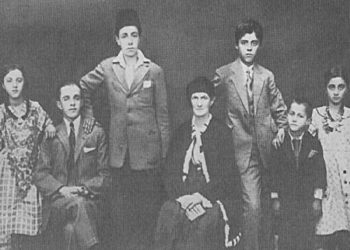
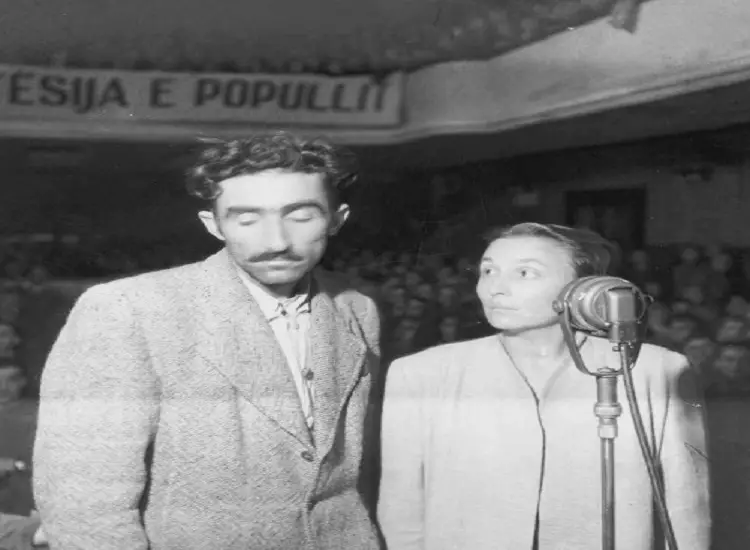
“Our parents worried that we might speak in the street or with friends about the fact that the communists physically eliminated our grandfather because he was a major merchant, or on the other hand, that one of our cousins, Nako Spiru, an important figure of the war, met a tragic end in 1947,” recalls Petri Spiru, a member of the coastal city’s Aromanian community. Spiru says he only learned his family’s history after the 1990s.
Other members of this community also learned of their origin only after the 1990s. “My ancestors came to Durrës from Berat about 150 years ago,” says Endri Jorgoni, underlining that some of the data on Aromanians has been published in the magazine “Aromanians – Vlachs,” which, since the early 1990s, was published in about 50 issues in both Tirana and Durrës.
According to the Census published in 2012, about 8,200 Vlachs live in Albania, or 0.3% of the total population. They were officially recognized as a national minority in 2017. Recently, historian Hajredin Isufi has attempted to uncover the history of this small community that is part of the coastal city’s history.
Isufi states that there is a lack of written data on them and that the basis for their history is a 1912 book written by Aromanian scholar C. N. Burileanu, titled “I Romeni di Albania” (The Romanians of Albania), published in Bologna. The author visited Albania in 1904, 1905, and between 1906–1907; according to his data, at that time, the city of Durrës had 2,000 inhabitants, of whom 100 were Aromanians.
Beyond the city, Aromanians lived in the villages of Shën Vlash, Sukth, Pjezës, Rreth, and Rrushkull at the beginning of the last century. Burileanu writes that he found about 239 Aromanian families in total. The scholar specifies that in Rrushkull there were fewer Aromanians (11 families), while the majority, about 100, had settled in the village of Pjezës. According to Burileanu, the Aromanian family Shallvari owned an estate in Rrushkull; similarly, in the village of Jubë, Jorgo Goga, Vasil Spiru, and Kristaq Spiru—all Aromanians—had their properties.
The Aromanians of Durrës specialized in several professions less preferred by the city’s residents, such as coppersmiths, blacksmiths, watchmakers, tailors, embroiderers, or wool-workers. Scholar Isufi tells us that when Burileanu visited Durrës, the Aromanians were a compact community living in harmony with their fellow Durrës citizens.
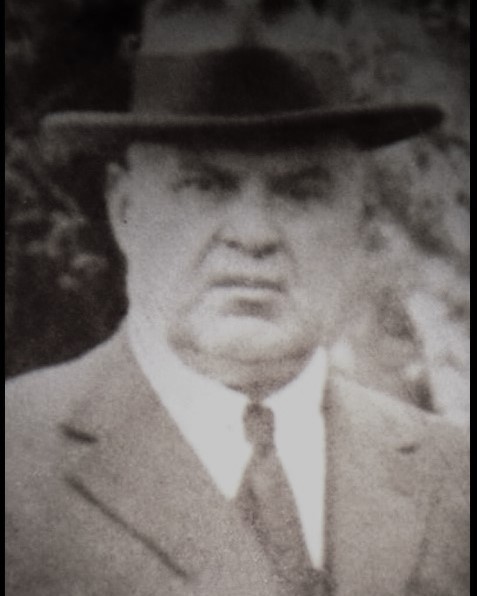
The author singles out Pavli Terka, a wealthy Aromanian who owned the houses of a large neighborhood near the port, as well as one of the city’s hotels. “A very cultured man with great influence on the civic community’s life among Muslim, Orthodox, and Catholic residents, Pavli Terka led the Aromanian community in Durrës at that time,” the book states.
Main names among the Aromanians of the time also included Anastasia Moisiu, Miltiadh Shallvari, and Spiro Golgota, while well-known families included Hodbari, Goga, Leka, Lazaridi, Mima, Papa, Anastasi, Sallabanda, Truja, Bakalli, Koja, Janku, Dovana, and many others.
“Many of them became defenders of the Albanian alphabet with Latin letters, opposing Greek pressure that insisted on writing the Albanian alphabet with the Hellenic script,” says scholar Hajredin Isufi, according to whom: “they found their argument in the words of patriot Pavli Terka: ‘we cannot be separated from other fellow citizens, regardless of religion.'”
The Aromanians of Durrës and Kavaja maintained the same stance in the early 1900s, when Greece and Austria-Hungary opened their schools in the city for the interests of great powers. In his interview, Hajredin Isufi again highlights the stance of fellow citizen Pavli Terka, who, in appreciation of his activity, was elected vice-president of the “Bashkimi” (Union) Club in Durrës.
“Mihal Rama, another Aromanian from Durrës at the beginning of the last century, was known as a very skilled publicist and had published articles under the initials M. R. in all the newspapers of the time,” says Isufi. Scholar Isufi has given a special placed to Aromanians in his book “Religion and the Flag,” dedicated to the patriotic cleric Dom Nikoll Kaçorri.
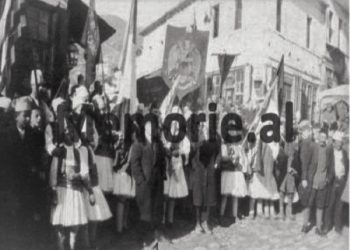
Isufi states that in the first decade of the 20th century, Aromanians in Durrës were in full harmony and cooperation with other communities in the city – from the Balkan wars and the protection of the Latin alphabet to the spread of national education and the raising of the national flag for independence. “There is no historical event in Durrës and its surroundings in which the Aromanians were not involved,” says Isufi.
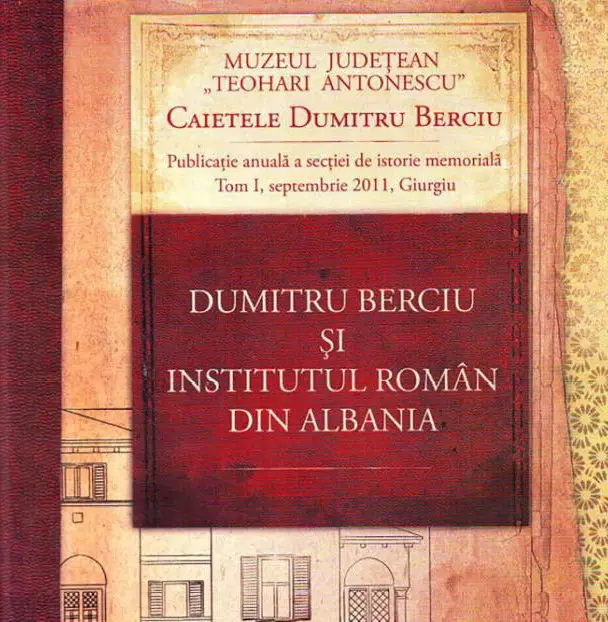
A part of the Aromanian descendants continue to live in the ancient city among their fellow citizens, neither standing out nor making efforts to segregate themselves. However, an interest in the community’s history has recently awakened. Endri Jorgoni, who completed his studies in Cluj in the early 2000s, says he has recently started translating the historical book “The Diary of Dumitru Berciu – The Romanian Institute of Albania” from Romanian.
“I am not a translator, but I feel it as an obligation to make it known to my family and the Aromanian community in Durrës,” concludes Endri Jorgoni./Memorie.al