

By Dashnor Kaloçi
Part sixteen
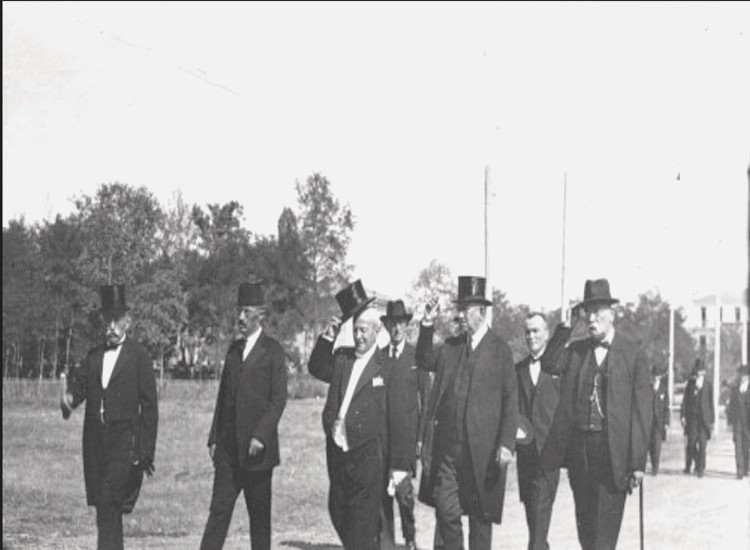
Memorie.al / The history of parliamentary elections in our country, or more accurately, the attempts at elections, have its origins in the era of Ottoman rule when Albania was part of the Turkish Empire. One of the first Albanian deputies elected to the first Turkish Parliament, which opened its proceedings in December 1877, was Abdyl Frashëri. However, that parliament did not last long, as it was dissolved by the Sultan himself due to the outbreak of the Russo-Turkish War. Following the dissolution of Turkey’s first parliament, there were several other attempts at elections, but they all failed for various reasons. The first regular elections in Albania were held only in 1908, when the Young Turks came to power in Turkey. Those elections were not direct but were held through representation, otherwise known as the two-tier voting system (secondary electors).
The first Turkish Parliament opened on December 10, 1908, and out of 266 deputies, 27 were Albanians elected from the four vilayets of Albania. At that time, members of the “Committee of Union and Progress” in Turkey, which included many Albanians, split and grouped into three political factions. The first group was “Union and Progress” (the Turkish-Macedonian party) with 164 deputies, consisting of 130 Turks, 5 Arabs, 1 Greek, and 15 Albanians, led by Hasan Prishtina, a deputy from Kosovo.
The second group, called “Liberal Union” (the Greek-Albanian party), consisted of 45 deputies and included 12 Albanians led by Ismail Qemali. Among the other Albanian deputies in the Turkish Parliament at the time were Esad Pashë Toptani, Nexhip Draga, Rexhep Pashë Mati, etc. After 1908, there were several other elections where Albanians continued to vote for their representatives in the Turkish Parliament, a process that lasted until November 1912, when Independence was proclaimed and Ismail Qemali was elected head of the Government.
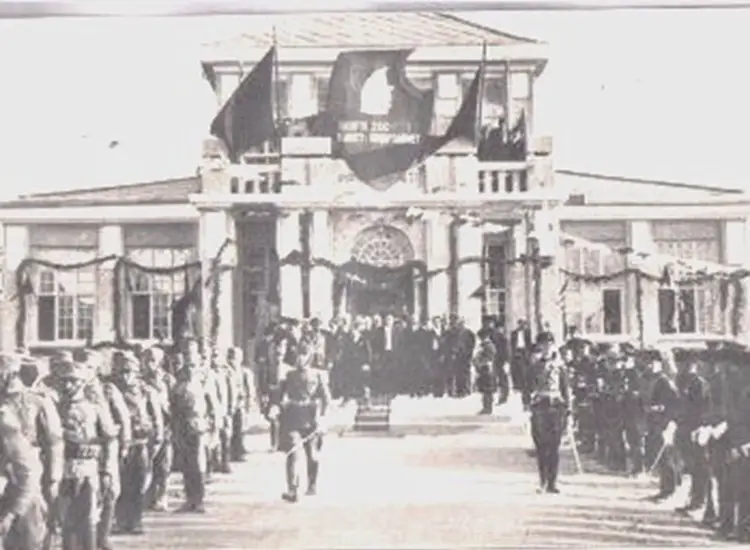
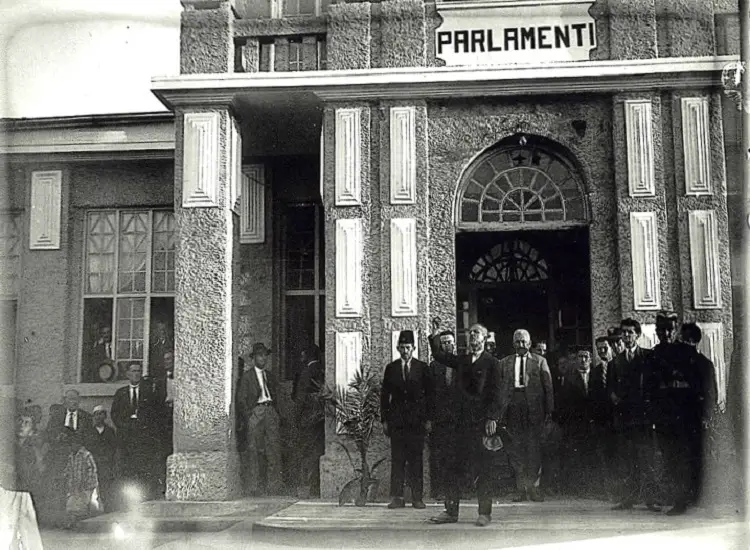
Meanwhile, the first parliamentary elections in Albania took place in the spring of 1921, as they had not been held until then due to World War I, in which Albania was also involved. The first Albanian Parliament opened on April 21 of that year; the first building of the Albanian Parliament was located where the Academy of Sciences stands today. In that parliament, 76 deputies participated, elected following a relatively regular process from the nine prefectures of the country: Berat, Durrës, Elbasan, Gjirokastra, Korça, Kosovo, Shkodra, Vlora, and the Albanian colony in the USA.
As in the past, those elections were conducted through a system of representation, or secondary electors, where based on territorial division, representatives of each province had the right to elect their deputy. The aforementioned, along with a brief history of parliamentary elections in Albania from that period until 1991, has been published by Memorie.al in previous issues. Here, we are publishing the complete Basic Statute of the Albanian Republic (the Constitution) of 1925, where a special place is held by the parliamentary election legislation of that time, as well as the Parliament’s regulations regarding the rights and duties of deputies, published by the “NIKAJ” Printing House in 1925.
Continued from the previous issue
Criminal Code of 1928
BOOK TWO: Felonies (Delicts)
Felonies Against Public Order
CHAPTER III: Forgery of Acts (Documents)
ARTICLE 305. – Any State official who, in the exercise of their function, creates a false act in whole or in part, or alters a genuine act, shall be punished – if such action may cause public or private harm – with rigorous imprisonment from five to twelve years.
If the act in question is of the type that, by law, constitutes full evidence until proven false, the rigorous imprisonment shall be from eight to fifteen years.
Authentic copies shall be treated as original acts when, according to the law, they take the place of a missing original.
ARTICLE 306. – Any State official who, while drafting or executing an act in the exercise of their function, certifies (attests) as true and occurring before them facts or declarations that do not conform to the truth, or fails to record or alters the declarations made to them, shall be punished with the penalties set forth in the preceding article, provided such acts may cause public or private harm.
ARTICLE 307. – Any State official who simulates an original copy of a non-existent official act and issues it in legal form, or issues a copy of an official act different from the original without having altered or destroyed the original, shall be punished with rigorous imprisonment from three to ten years. If the act constitutes full evidence by law until proven false, the rigorous imprisonment shall not be less than five years.
ARTICLE 308. – Anyone who, not being a State official, commits forgery of an official act in the manners described in Article 305, shall be punished with rigorous imprisonment from three to ten years. If the act constitutes full evidence, the punishment shall not be less than five years.
If the forgery is committed on a copy of an official act – either by presenting it as a copy of a non-existent original, or by making it differ from the original, or by altering a simple copy – the punishment shall be rigorous imprisonment from one to five years (not less than three years if it constitutes full evidence).
ARTICLE 309. – Anyone who falsely certifies (attests) to a State official, in an official act, their own identity or status (civil status), or that of another, or other facts which the act is intended to prove authentic, shall be punished – if such act may cause public or private harm – with rigorous imprisonment from three months to one year. If the matter concerns a Civil Status act or a Judicial Authority act, the penalty is nine to thirty months.
The same penalty (three months to one year) applies to anyone who falsely certifies their identity or that of another person in commercial titles or bills of exchange (effets de commerce).
ARTICLE 310. – Anyone who creates a false private document in whole or in part, or alters a simple private document, shall be punished – if public or private harm may result – with rigorous imprisonment from one to three years, provided they or others use that document.
ARTICLE 311. – Anyone who uses or profits in any other way from a forged act, even if they did not participate in the forgery, shall be punished according to the case: with the penalties of Article 308 for official acts, and Article 310 for private documents.
ARTICLE 312. – When the perpetrator commits one of the aforementioned felonies to procure for themselves or others a means of proving true facts, the punishment shall be rigorous imprisonment from one month to two years for official acts, and one to six months for private documents.
ARTICLE 313. – Anyone who disappears or destroys, in whole or in part, an original act or a copy that legally replaces a missing original, shall be punished – if public harm may result – with the penalties set forth in Articles 305, 308, 309, and 310, as applicable.
ARTICLE 314. – In the application of the above provisions, those authorized to create acts to which the law attributes public trust are equated with State officials; holographic wills, bills of exchange, and all credit titles transferable by endorsement or marked “to the bearer” (au porteur) are equated with official acts.
Criminal Code of 1928
CHAPTER IV: Forgery of Identity Cards, Passports, Passes, Permits, Certificates, Affidavits, and Declarations.
ARTICLE 315. – Punished with rigorous imprisonment from one to eighteen months:
- Anyone who counterfeits identity cards, permits, passes, and passports;
- Anyone who alters, in any way, genuine documents of the types mentioned above, with the intent to present them as belonging to another person, or as issued in other places and times different from those of their actual issuance, or who falsely makes it appear that certifications have been carried out or conditions for their validity and force have been met;
- Anyone who uses counterfeited or altered permits, identity cards, passes, or passports, or provides them to others for use.
ARTICLE 316. – Anyone who, when obtaining identity cards, permits, passes, or passports, attributes to themselves a false name, surname, or qualities, or cooperates through their testimony to have such documents issued in that manner, shall be punished with rigorous imprisonment up to six months and a fine from 50 to 1,000 gold francs (fr. ari).
ARTICLE 317. – A State official who, in the exercise of their function, commits any of the felonies provided in the preceding articles or cooperates in any way in the commission of such a felony, shall be punished with rigorous imprisonment from six months to three years.
ARTICLE 318. – Anyone who, being legally required to maintain special registers subject to inspection by the Public Security Authority or to inform said Authority of their industrial or professional activities records or allows the recording of false notes or facts, shall be punished with rigorous imprisonment up to three months or a fine from 50 to 1,000 gold francs.
ARTICLE 319. – Doctors, Surgeons (Operators), Veterinarians, Midwives, or other Health officials who, solely as a favor, issue false certificates intended to inspire trust in the Authority, shall be punished with imprisonment up to fifteen days or a fine from 100 to 1,000 gold francs.
The same penalty applies to anyone who uses such false certificates.
If, due to such a false certificate, a person of sound mind is admitted to or kept in a madhouse (asylum), or if any other serious harm is caused, the penalty shall be rigorous imprisonment from six months to three years.
If the act was committed for money or other benefits given or promised, for oneself or another, the penalty shall be rigorous imprisonment from three months to two years; and if the certificate caused the effect mentioned above (asylum/serious harm), the penalty shall be rigorous imprisonment from two to seven years. In every case involving rigorous imprisonment, a fine from 300 to 3,000 gold francs shall be added.
The same penalties apply to those who give or promise the money or other benefits. Anything given for this purpose shall be confiscated.
ARTICLE 320. – A State official or others who have the legal faculty to issue certificates, if they falsely certify good conduct, poverty, or other circumstances capable of procuring for the person concerned charity, public or private trust, an office, public employment, favors, or exemption from obligations, services, or public burdens, or any other type of benefit, shall be punished with rigorous imprisonment up to three months or a fine from 100 to 1,500 gold francs.
The same penalty applies to anyone who uses those false certificates.
ARTICLE 321. – Anyone who, without possessing the qualities or rights mentioned in the two preceding articles, counterfeits a testimony or certificate of the type provided in those articles or alters a genuine one, as well as anyone who uses such counterfeited or altered documents, shall be punished with rigorous imprisonment up to six months.
ARTICLE 322. – Anyone who, to deceive the Authority, presents a genuine affidavit or certificate by falsely attributing it to themselves or to another, shall be punished with the penalty set forth in the preceding article.
CHAPTER V:
ARTICLE 323. – Anyone who, by spreading false news or using other deceitful means, causes an increase or decrease in the price of wages, food, or commercial goods, or of securities circulating in the public market or listed on the stock exchange, shall be punished with rigorous imprisonment from three to thirty months and a fine from 200 to 3,000 gold francs.
If the felony is committed by public brokers (middlemen) or exchange agents, the penalty shall be rigorous imprisonment from one to five years, a fine exceeding 1,000 gold francs, temporary debarment from public office, and suspension from exercising their profession or craft.
ARTICLE 324. – Anyone who uses measures or weights with counterfeited or altered legal marks (imprints), if public or private harm may result, shall be punished with rigorous imprisonment up to one month and a fine up to 100 gold francs. If the perpetrator uses these in the exercise of public trade, either in their shop or outside while selling, the penalty is up to three months of rigorous imprisonment and a fine of 50 to 500 gold francs.
Any public trader who keeps measures or weights with counterfeited or altered legal marks in their shop, for this act alone, shall be punished with a fine of up to 500 gold francs.
ARTICLE 325. – Anyone who, in the exercise of their trade, deceives the buyer by delivering one item for another, or an item whose origin, type, quality, or quantity differs from what was declared or agreed upon, shall be punished with rigorous imprisonment up to six months or a fine from 20 to 3,000 gold francs.
If the deceit concerns precious items, the penalty is rigorous imprisonment from three to eighteen months or a fine exceeding 500 gold francs.
ARTICLE 326. – Anyone who counterfeits or alters names, brands, or distinguishing marks of an intellectual work or products of any industry, or uses such counterfeited or altered names, brands, or marks, even if created by others, shall be punished with rigorous imprisonment from one month to two years and a fine from 50 to 5,000 gold francs.
The same penalty applies to those who counterfeit or alter industrial marks or models. The court may order the judgment to be published at the expense of the convicted person in a newspaper designated in the ruling.
ARTICLE 327. – Anyone who imports into the State for trade, or puts up for sale or otherwise in circulation, intellectual works or industrial products with counterfeited or altered names, brands, or distinguishing marks capable of deceiving the buyer regarding the origin or quality of the work or product, shall be punished with rigorous imprisonment from one month to two years and a fine from 50 to 5,000 gold francs.
ARTICLE 328. – Anyone who reveals news known to them by reason of their status, office, profession, or craft regarding scientific inventions, discoveries, or industrial applications that must remain secret, upon the complaint of the injured party, shall be punished with rigorous imprisonment up to six months and a fine exceeding 100 gold francs.
If the disclosure is made to a foreigner not residing in Albania or their agent, the rigorous imprisonment shall be from one month to one year and the fine exceeding 500 gold francs.
ARTICLE 329. – Anyone who, through violence, intimidation, gifts, promises, secret agreements (collusion), or other deceitful means, prevents or disturbs competition in public auctions or private biddings (licitation) on behalf of the Public Administration, or deters bidders, shall be punished with rigorous imprisonment from three to twelve months and a fine of no less than 100 gold francs.
If the perpetrator is the person legally or officially charged with the said auctions or biddings, the rigorous imprisonment shall be from one to five years and the fine no less than 500 gold francs.
Anyone who, for money or other benefits given or promised to them or another, withdraws from competition in said auctions or biddings, shall be punished with rigorous imprisonment up to six months or a fine from 100 to 2,000 gold francs. / Memorie.al