Memorie.al / The new voluminous publication “The Civil War in Albania” is the fruit of research and scientific treatment of documents from the archives of Albania, Kosovo, England, Italy, Yugoslavia, Germany, etc., concerning World War II, which shed light on and confirm the framework of the civil war in Albania (1943–1945) – an internal war, organized and armed between political and military forces, including the popular masses that supported them, a war with tragic and devastating consequences, not only for that time. From the outset, the author makes clear the distinction between the war of the Albanian people against the Italian and German occupiers – the Anti-Fascist War (1939–1944) – and the Civil War among Albanians (1943–1945), which is the subject of this study.
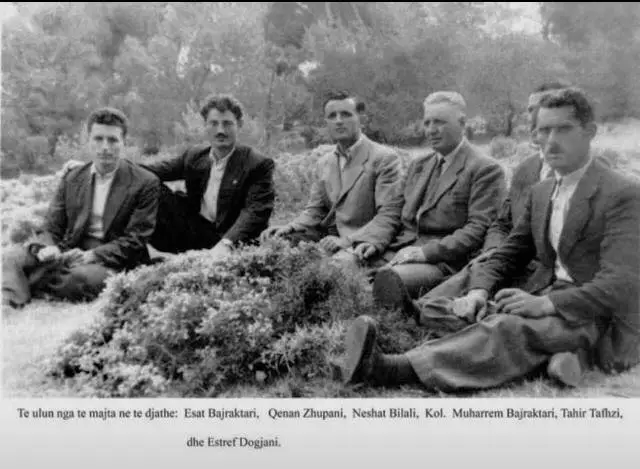
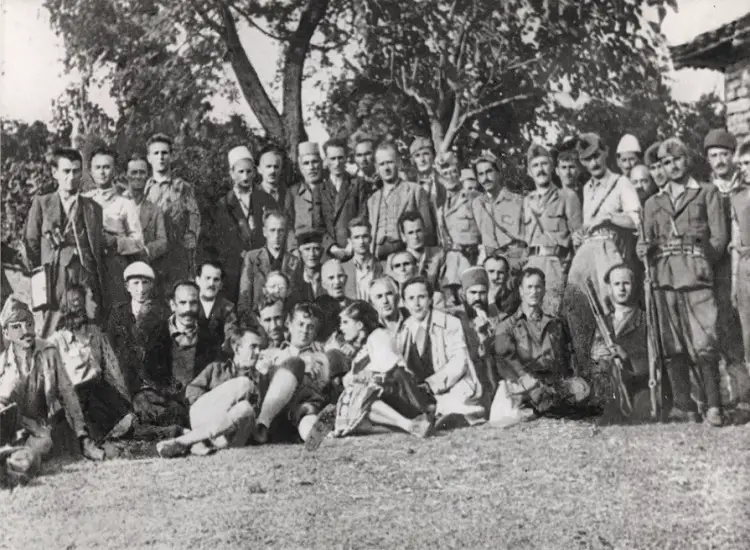
The war of the Albanian people against the Italian and German occupiers was a patriotic war, a just war, which served the liberation of the country and the common anti-fascist and freedom-loving cause of peoples during World War II. In this war, all anti-fascist factors participated and contributed: the National Liberation Movement, ‘Balli Kombëtar’ (National Front), Legaliteti (Legality Movement), the Leaders of the North, the independent movements of Gani Kryeziu, Muharrem Bajraktari, Ramë Mujë, Mehmet Ali Bajraktari, and other actors. Meanwhile, the National Liberation War, led by the Communist Party of Albania (PKSH), is a part of that anti-fascist war, just as the war of other factors is also a part. The author honors the partisans’ war against the occupiers and their fallen martyrs, just as he values the war of the Ballists, Legalists, and other anti-fascist fighters, as well as their martyrs.
However, the effort to present the National Liberation War, both in the past and today, as the only war of Albanians against the Nazi-fascist occupiers, is a political bias, a historical speculation and appropriation by the communist leadership and its historiography, aimed at seizing and maintaining monolithic power, mythologizing the National Liberation War and Enver Hoxha, as well as for political gains.
The National Liberation War was the armed wing of the Communist Party and, in reality as well as legally, could not be or be considered as the armed movement of all Albanians. Especially since the National Liberation War, from a war against the occupiers, transformed in the years 1943–1945 primarily into a bloody war for power and communism – a war against political opponents, even against those patriots who were genuinely fighting against the Germans for a free, democratic, and Western Albania. A National Liberation War that ultimately brought the Stalinist regime to power and placed Albania within the communist empire of the East.
Enver Hoxha erected and elevated the cult of himself and of the National Liberation War as the only war of the Albanian people against the Nazi-fascist occupiers, in order to monopolize the war and, consequently, to secure his sole absolute power and that of the PKSH, as well as to cover up or deny the crimes of the civil war – ordered by himself and incited and supported by the communist tutors, the Russians and Yugoslavs.
Communist historiography also attempted for half a century and continues today to treat the events and personalities of World War II in Albania in a one-sided and falsified manner for political and ideological purposes.
The war against Balli Kombëtar, and subsequently against Legaliteti and other factors, was initiated by the PKSH immediately after the breakdown of the Mukje Conference. E. Hoxha ordered: “With force and arms, we must seize power. Balli must be mercilessly liquidated from every side.” The leaders of the National Liberation War – Enver Hoxha, Mehmet Shehu, Koci Xoxe, Hysni Kapo, Dali Ndreu, Shefqet Peçi, etc. – were terrorists and instilled a terrorist spirit and practices into the National Liberation War for the merciless destruction of political and ideological opponents.
Mid’hat Frashëri, on behalf of Balli Kombëtar, appealed to stop the civil war and unite as brothers in the war against the fascist occupiers: “Today is the time for a STEEL FRONT against the occupying enemy and against the vultures that follow it. This common front is forged with the blood of our heroes: Qemal Stafa gave the oath and sacrificed to the homeland the most precious thing he had: his life. Jashar Cakrani also heard that oath, falling as a martyr for the homeland. Hundreds of others followed in the footsteps of the martyrs’ blood and watered this Albanian land with the blood of their hearts…. Let us fight united around the words our ancestors left us: EITHER DEATH, OR LIBERTY! WE ARE BROTHERS, NOTHING CAN DIVIDE US!”
The main cause of the Civil War was the issue of power. The fear that power might be shared with other political forces, or could be taken from them through free elections after the war, led the PKSH and Enver Hoxha to that arbitrary stance and anti-democratic act, which aimed at seizing power by force of arms, according to Marxist-Leninist theory, by eliminating other political factors – a move that paved the way for totalitarian power and the installation of dictatorship in Albania. The intervention and war-inciting role of the emissaries of the Communist Party of Yugoslavia, for their hegemonic and chauvinist interests, influenced the transformation of the Anti-Fascist War in Albania into a civil war. Subsequently, Balli Kombëtar and other movements of that time, as well as the majority of the population, were forced to become involved in this war.
This war is extensively evidenced and documented in this book with acts, documents, and written evidence across 1,555 archival references. The overwhelming majority of the documents are orders, circulars, communications, reports, speeches, chronicles, operation orders, letters, leaflets, radiograms, telegrams, diaries, etc., of the main leaders of the National Liberation War (commanders and commissars), as well as reports from the staffs of army corps, divisions, brigades, and battalions of the National Liberation Army, written in their own hand directly in the heat of the civil war. These are preserved in the Central State Archive of Albania, the Archive of the Armed Forces, the Archive of the Ministry of Internal Affairs, and in central and local museums, constituting the primary material of this publication – material that cannot be refuted or altered. Additionally, the incitement and anti-Albanian activity of Yugoslav policy and its agents in Albania, such as Miladin Popović, Dušan Mugoša, etc., are also treated and documented regarding the declaration and outbreak of the civil war in Albania and its subordination to Yugoslav interests.
The civil war in Albania has been affirmed and reported by almost all British officers who operated in Albania during that wartime period, such as B. McLean, J. Emery, D. Smiley, P. Kemp, T. Simcox, G. Seymour, A. Hibbert, A. Nicholls, Major Oliver, General Davis, etc., who are also extensively covered in my book “Sekretet e Luftës” (“Secrets of the War”). In the Butka publication “Lufta Civile në Shqipëri” (“The Civil War in Albania”), the events and protagonists of the civil war in all regions, even in the villages of Albania – from Vermosh to Konispol, and even in Albanian territories beyond the borders – are treated professionally and impartially, because this war encompassed the entire Albanian space but was particularly bloody in regions with nationalist dominance such as Vlora, Mallakastra, Gjirokastra, Kolonja, Korça, Devoll, Pogradec, Dibra, Mat, Mirdita, Shkodra, Luma, the Highlands of Gjakova, etc., and which culminated in the Great Highlands and Kelmend.
The civil war began immediately and extensively after the decision made at the Labinot Conference, September 4–9, 1943, and Enver Hoxha’s circular of September 9 calling for armed struggle against ‘Balli Kombëtar’. Historian Paskal Milo also admits this when he says; “Enver Hoxha’s letters prove without any doubt that the PKSH was the initiator of armed actions against Balli Kombëtar.” The British officer Julian Emery observed; “Enver Hoxha attacked the Ballists so as not to share the trophy of political power with rivals. This civil war had no connection with the War for National Liberation, which both sides had initially set out to pursue. It was regrettable that the Civil War had taken precedence over the war for liberation.”
Midhat Frashëri, who tried by all means to stop the Civil War, wrote; “With the Civil War, the communists began the worst terror ever known in the history of Albania”! Meanwhile, Enver Hoxha declared; “We bear no responsibility if, in the fight to annihilate Abas Kupi, the British officers who are with him also meet their death.” Thus, he was calling enemies even those British mission members who were aiding the anti-fascist war but opposed the civil war among Albanians, caused by the communists.
Throughout the Civil War of 1943–1945, frontal and partisan battles between communists and nationalists took place, collective massacres, and thousands of illegal political killings, execution of prisoners of war, execution of innocent people, physical torture, burning of homes and entire villages, illegal confiscation of movable and other property – in short, war crimes and crimes against humanity.
The author presents to readers documents about a civil war across all of Albania, revealing its instigators and tragic consequences. It is enough to mention the Devoll Massacre of September 8, 1943, immediately after the Labinot Conference of September 4–8, 1943, which officially declared the civil war, where six prominent nationalists were unjustly massacred, stabbed, and killed by the communists: among them also the Kosovar Zija Gashi. Dr. Kasimati had his throat slit with a knife, while they told him: “Go on, speak once more about ethnic Albania.”
In the Battle of Dukat on November 30, 1943, which lasted 14 hours, the 1st Assault Brigade received an order from Dušan Mugoša: “to take Dukat, using the most terrible fire, this nationalist stronghold.” Hundreds were killed on both sides, and several women were also wounded, victims of the civil war. In this frontal battle, the Italian battalion “Antonio Gramsci” also took part, which shelled the village with artillery, after which the partisans multiplied. I would like to emphasize that not only in the 1st Brigade, but in almost all partisan brigades there were contingents from the former Italian fascist army who had surrendered and joined the National Liberation Army, and who participated in all battles against Albanian nationalists and became a factor in the communist victory in the civil war.
After the fighting between nationalists and communists near Lushnjë, in the village of Golem, on October 21, 1943, where 127 people were killed, Mehmet Shehu executed without trial 85 surrendered Albanian nationalists, who were nothing but innocent peasants from the villages of Myzeqe, who refused to join the 1st Assault Brigade. Dušan Mugoša, deputy commissar of the 1st Brigade, also played a role in this massacre. The order for the military operation in Starovë and Pogradec had been given by Enver Hoxha as early as March 21, 1944.
He had addressed the commissar of the staff of the 1st Assault Brigade, Tuk Jakova – “The strike and capture of Pogradec and Starovë. As you know, Starova has been and is the center of the filthy reactionaries of the Korçë district…! In a word, Starova is a filthy nest which we must strike hard and destroy. On the other hand, Starova is the gateway for Balli bands…! In order to attack Starova and act by capturing the beys and burning their houses, it is absolutely necessary to also strike Pogradec, where, besides the political success we may have; we can supply the forces of the Brigade with clothing and food…!”
The tragic conclusion of the operation against the population of Starova, with 400 houses: “Now, except for the 5 houses that were with us, we burned the others. Starova exists no more”! – reported the staff of the 1st Assault Brigade. Can it still be said that the National Liberation War was a war of all Albanians, a war for liberation, when in Starova and Pogradec there was not a single German, and when in Starova the communists burned 395 peasant houses and left unburned only the 5 houses that were with the National Liberation War?!
In Tirana, from October 28 to November 16, 1944, hundreds of non-communist citizens were arrested and killed by communist terrorists: merchant proprietors, intellectuals who had studied in the West, publishers, ordinary citizens, career military personnel, etc., without any judicial decision, only based on party blacklists. The goal was that the liberation of the capital would not find them alive.
Massacres against innocent populations are those carried out by the 5th Brigade under Commander Shefqet Peçi in Southern Albania, Northern Albania, and in Albanian lands beyond political borders. In Lumë, he executed 22 completely innocent Lumjans, while killing highlanders throughout the region, motivated by revenge because they supported Muharrem Bajraktari, while he was fighting against the Germans.
In Martanesh, Mehmet Shehu ordered the summary execution without trial of 22 villagers, one from each household, along with the village elder, in revenge because one partisan was killed there. (Report 1/22). In Fushë-Aliaj of Dibra, partisan brigades completely burned the houses and killed the innocent population as revenge against Halil Alia. In Mat, they carried out massacres against the legalists of Abas Kupi, for whom Enver Hoxha had engaged the 2nd Partisan Brigade to kill him. He ordered; “We bear no responsibility if, in the fight to annihilate Abas Kupi, the British officers who are with him also meet their death”!
The civil war in the Shkodër district and especially in the Malësia e Madhe (Great Highlands) was the largest and most absurd offensive by the national liberation forces, from December 1944 to March 1945 – when the war against the occupiers had ended, there was not a single German foot left in the Malësia e Madhe, and the National Liberation Army arrived there as an occupying army, also committing war crimes and crimes against humanity. The Great Highlands responded with the oath to defend life, lands, and faith, as expressed by the leader Prek Cali. The III Army Corps, the 1st Division headquartered in Shkodër with the 1st, 23rd, and 24th Brigades, the 8th Division with the 17th, 18th, and 27th Brigades, the 4th Brigade, two battalions of the 11th Brigade, and the Defense Brigades, carried out military offensives and massacres in this region with well-known patriotic and freedom-loving traditions.
From the 1st Brigade alone, 39 partisans – sons of Albanian mothers – were killed as “cannon fodder” (14 of them in the Battle of Tamara). Moreover, the 1st Brigade, to subdue Kelmend, crossed the border into Yugoslavia and from there attacked in the midst of the January 1945 snows, the highlanders who were defending their hearths. The Great Highlands lost 137 of its brave, devoted sons. 345 men were imprisoned, and 41 families declared “reactionary” were interned in the camps of Tepelena, Kavaja, Vloçisht, and Berat. The Highlands were draped in the black veil of mourning. A civil war with grave consequences – loss of life, collective political and social punishments.
This publication also addresses the aid of British missionaries and officers in support of the anti-fascist war, their positive role, but also the dilemmatic and often mistaken policies of the British government, which supplied communists with weapons and sterling and with these weapons the communists struck and killed nationalists throughout the civil war period, thus contributing to their victory. The British commander of the Mediterranean, General Alexander, addressed Enver Hoxha: “I must point out to you that the weapons and supplies we send you are intended solely to help your forces fight the enemy. I cannot tolerate you using these weapons to kill and liquidate your compatriots for political purposes!”
The communist leaders of the National Liberation War tried to justify and intensify the war against nationalists with the accusation of collaborationism, which was a diabolical Yugoslav-Albanian deception. In this work, the theme of collaborationism during the Second World War in Albania is treated objectively, presented in a tendentious and manipulated manner by communist politics and historiography. Midhat Frashëri did not collaborate with either the Italians or the Germans during the War; there is no document of cooperation or contact with them. The mere fact that the Anglo-American allies chose Midhat Frashëri as chairman of the “Free Albania” Committee in exile in 1949, as a prominent anti-fascist national figure, politically clean and pro-Western, is telling. He refused to join or cooperate with those leaders who had collaborated with the occupiers and bore stains and guilt against the homeland. This stance is clearly revealed in the correspondence of 1947–1949, particularly in the letter sent to Abaz Kupi:
“The ‘Free Albania’ Committee has been established, which represents all those Albanians who wish to see in Albania a democratic government that will secure for the Albanian people all the political freedoms and human rights that have been denied. A joint committee would be a valuable instrument to regain national rights. But don’t you also think that the primary condition of a body that would undertake such a burden must be that it is formed of people upon whom no stains or guilt against the Homeland weigh? We must consider that Albania’s adversaries will seek to exploit such pretexts to fight our national rights. On the other hand, we must think well of the catastrophic effect it will have among Albanians who have suffered and been destroyed in these recent years. How can we appear before public opinion side by side as collaborators with people upon whose shoulders weigh shameful events that turned Albania into a wasteland, ending in the present state?”
But historian Uran Butka emphasizes that particular elements of the ‘Balli Kombëtar’ organization, for reasons of defense against communist terrorism, such as Kadri Cakrani, etc., collaborated with the Germans, just as elements of the National Liberation Movement also collaborated with the Germans, such as Gjin Marku, etc., in the compromises of Berat, Kuçova, etc., not to mention here the open collaboration of Albanian communists with Yugoslav communists in Albania and Kosovo. According to Butka, the communist thesis of collaborationism completely collapses if we also bring up the facts that the communists fought and destroyed patriotic nationalists not engaged in political parties like Muharrem Bajraktari, Mehmet Ali Bajraktari, or the “Kryeziu” Movement, who were fighting against the Germans.
All those killed in this civil war are its victims, but unfortunately during the half-century of the communist regime and even today, many of the victims of the National Liberation side were declared and honored as martyrs and heroes, such as Zonja Çurre, Myslym Shyri, Fejzi Bolena, and many others, who were killed in the war of Albanians against Albanians. Whereas the victims from the nationalist side and innocent inhabitants have been treated as reactionaries, criminals, collaborators, even when they were killed by Italian and German occupiers like Jashar Cakrani, Selfo Hekali, Mustafa Dervishi, Skënder Muço, Yzeir Ismaili, or killed by Serbs, like the Tirana native Hamit Troplini, or Marie Shllaku in Kosovo, etc.
Another falsification of the Second World War in Albania, but also of the Civil War, is the number of martyrs of the National Liberation War, which was propagandized with pomp by communist politics and historiography as 28,000, whereas the truth stands quite differently, according to research to date. According to researcher Dr. Teodor Kareco, a former functionary of the Party of Labor but an objective researcher of the war, the number of partisan martyrs killed by Germans is 1,514, by German-Ballist forces 275, by Italians 207, by nationalists 1,067, those who died (non-combat) 310, etc., totaling 3,442. This figure is close to that noted in the Encyclopedic Dictionary, reprinted in 2009, which lists 2,397 martyrs total, according to the status of “Martyrs of the Homeland.”
The history of the Albanian people, and in particular the history of the Second World War in Albania and other Albanian lands, must be rewritten on the basis of documents and with a contemporary scientific interpretation. Historian Uran Butka, who has made a distinguished contribution in this direction, concludes in his book: “The Civil War is the unknown, the suicidal part of the Second World War in Albania. We must bring it out of silence, recognize and reflect upon it, overcoming disagreement, false myths and hatred, the frightening manifestations and reminiscences that that War still radiates; we must free ourselves from the shackles and taboos of the past, the deformation of history, to better understand our present condition and to face the future as fully free citizens with clear consciousness. The shaken spirits of Albanians, not only by the continuous wars, the traumas and nightmares they have experienced, but also by the great half-century-long deception and the misreading of history, which continues today, need the truth most of all.” Memorie.al