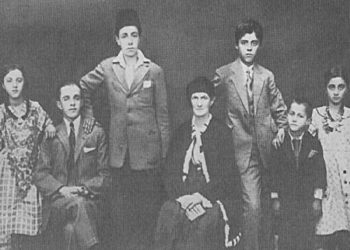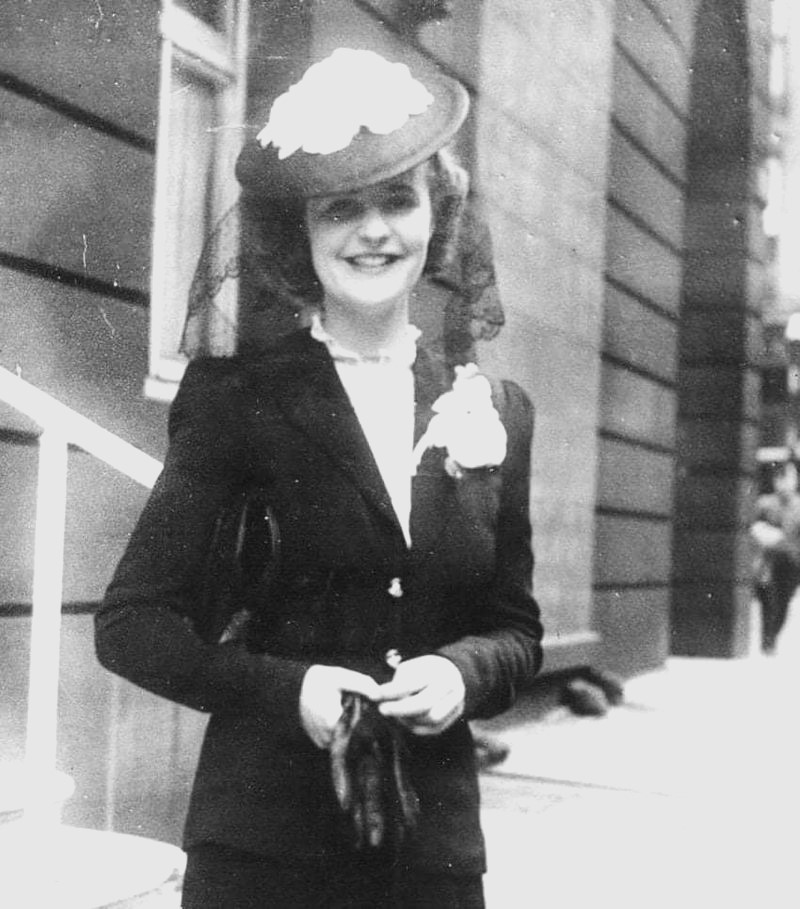
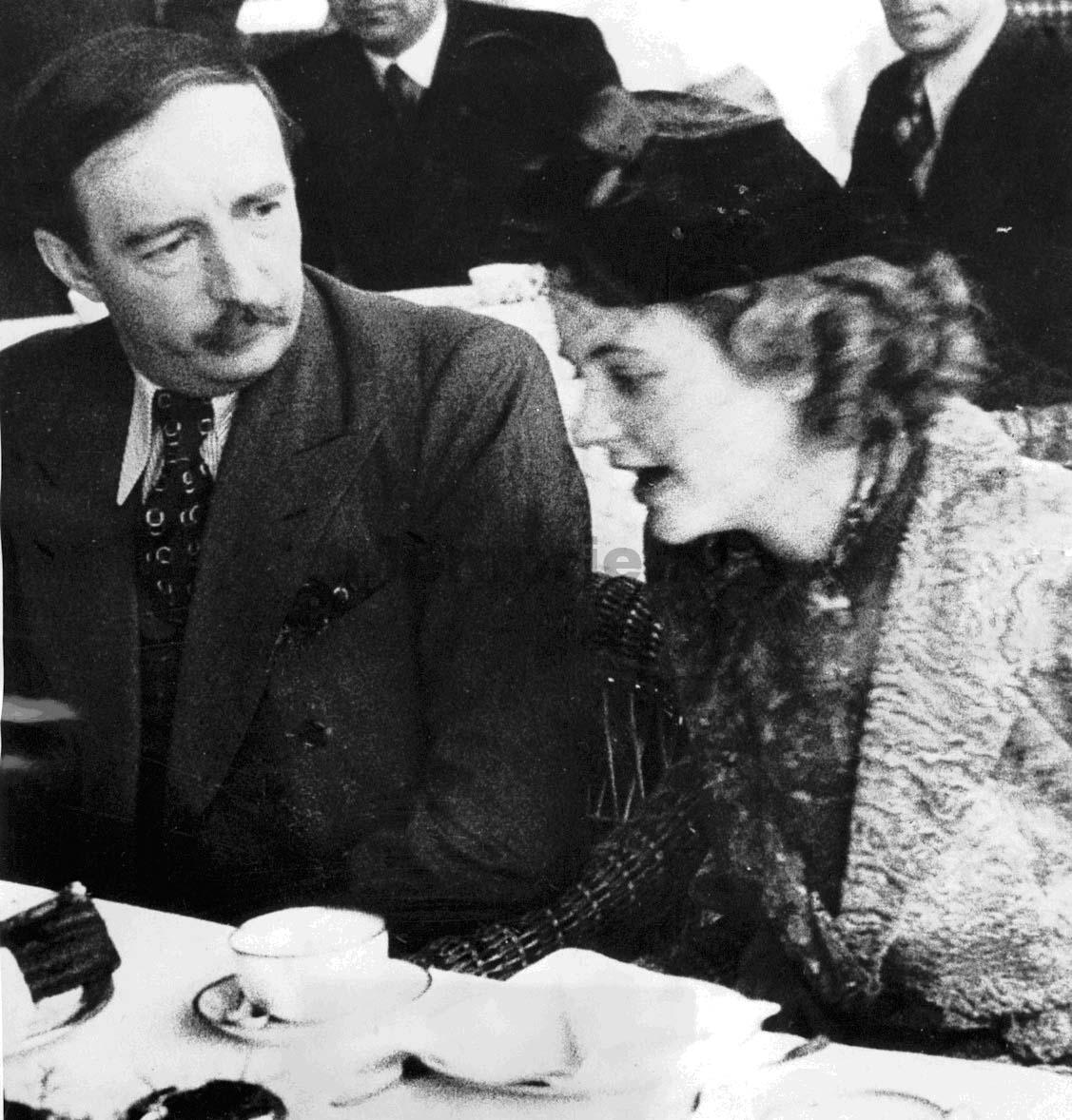
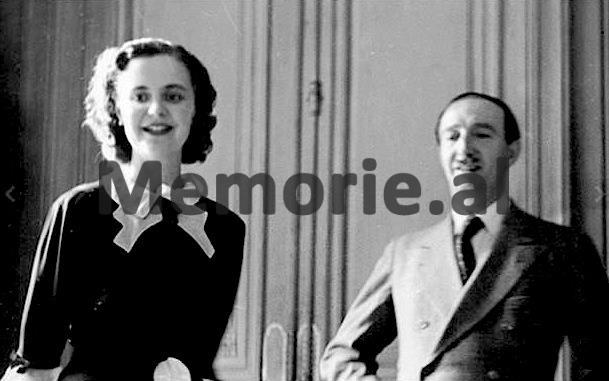
Memorie.al / Perhaps in the beginning, everything was born out of curiosity. It’s not often that you have a King and a Queen as neighbors. Neil Rees, an amateur writer passionate about Albanian history, happened to live near the famous castle of Lord Parmoor, which King Zog bought during his years in England. These are the journeys of the entire royal family, starting from the wedding organized according to the Albanian Civil Code, chosen specifically on the day that coincided with the anniversary of Skanderbeg’s marriage to Donika (Marina Andronika), on April 27, 1938. Only a year later, the pregnancy of Queen Geraldine was announced; she had an extremely difficult birth, and the child, only five weeks old and baptized with the name Leka, was losing weight day by day, which greatly worried the young mother.
The relocation with an escort toward Greece included an ambulance and medical staff accompanying the Queen, who had given birth only two days prior. The journey of the princesses, King Zog’s sisters, to Boston was aimed at securing reconciliation with Bishop Fan Noli, who had been a political opponent of the King since the first day he ascended the throne. The first place of stay after Greece was France, where the King would be most worried after learning that his sister, Ruhije, had cancer.
He provided her with a nurse for daily care under difficult physical conditions. Afterward, it was London and a stay of several days in the baths of the Ritz Hotel, followed by the King’s purchase of the castle. The care for chickens, goats, and pets, and the portrayal of Princess Adile – Zog’s sister – as the mother of the family, as she was the person primarily dealing with the governance of the household. Vague hopes for returning to the homeland after the end of the Second World War, and the hatred for the dictator Hoxha, about whom Queen Geraldine says it was Zog who had offered him a scholarship for university…!
The Date
The marriage of King Zog to Countess Geraldine Apponyi was set for April 27, 1938. King Zog chose this date because it was the anniversary of Skanderbeg’s wedding to Marina Andronika on April 27, 1454.
Austrian and Hungarian Friends
Geraldine’s close relatives arrived in mid-April and stayed with her. The main part of the Hungarian wedding party arrived on April 25 and stayed at the International Hotel. Queen Geraldine recalls: “Before the ceremony, which was conducted according to the Albanian Civil Code, I drove from the villa to the palace, where my mother was waiting to put the veil on my head, and then I entered the anteroom to meet the King and the princesses. The trumpeters played a fanfare, and I entered on the arm of my future husband, wearing a white silk dress with a two-meter-long train held by… the king’s nephews.”
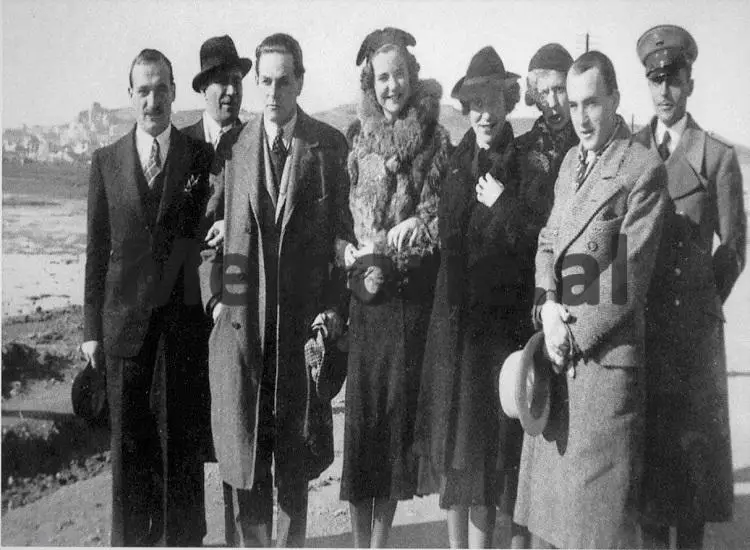
An Englishwoman named Ruth Mitchell described the wedding for the Illustrated London News: “In February, I had planned a trip around the world to study the issue of youth, in which I had always had the greatest interest, when I was offered a good payment to go to Albania to photograph King Zog’s wedding. I went without much enthusiasm. I went to the wedding of King Zog and his little Hungarian bride, Countess Geraldine Apponyi…!”
“It is Italy that has that small country completely under its thumb and is suffocating it…! But the horde of the bride’s Hungarian relatives who had descended upon that small country was truly magnificent…! Their clothes, especially the men’s, were from old family heritage, shining from head to toe with precious stones, velvet, and gold. They were truly the most graceful thing I had ever seen in Europe in terms of wealth. The old nobles, standing straight, proud, and unshakable, as if they had stepped straight out of a fairy tale book.”
April 5, 1939: Prince Leka
Geraldine: “In the fall, I found out I was going to have a child. Naturally, the King was looking forward to an heir…”. King Zog was building a palace for himself, while Queen Geraldine lived in Princess Sanie’s house in Tirana. Geraldine: “At half-past three on Wednesday morning, before Easter, on April 5, 1939, I gave birth to the child in the palace, who would be crowned Prince Leka…”. They named him Leka, which is the Albanian form of the name Alexander.
Queen Geraldine’s half-sister, Sylviane Muselier, recalls: “The royal baby was impressive when we saw him after they took us to the nursery. My sister, Geraldine, looked exhausted and was not recovering from a difficult birth. At the same time, war had reached our doorstep! …Within two days, the royal family had to leave immediately and cross into Greece, taking the Queen in an ambulance, while we were forced to return to France from the north.”
February-March 1938: The “Zogettes” journey to the USA
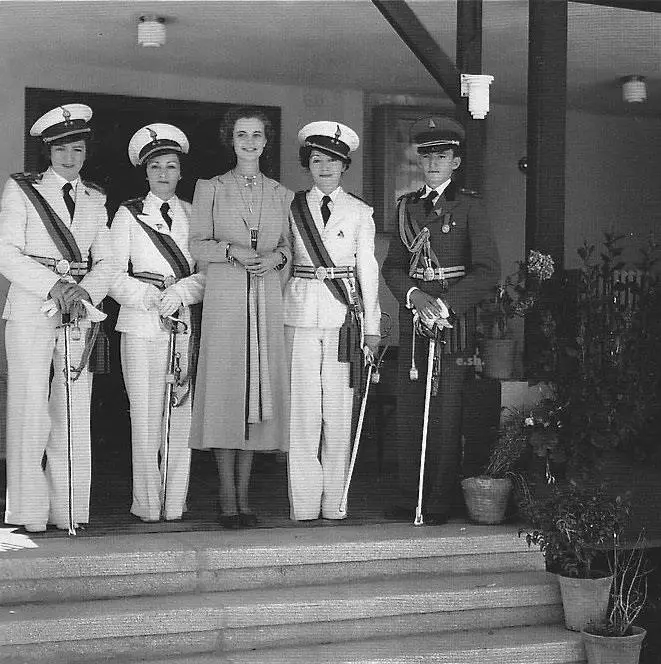
Following King Zog’s engagement in 1938 and before his wedding, the King’s three youngest sisters made a goodwill tour of the eastern United States and returned via England, France, and Italy. They departed from Naples, Italy, on February 20, 1938, on the Italian ship “Conte di Savoia” and arrived in New York on February 28. They were met by Faik Konica, the Albanian minister to the USA, who became their translator.
Their place of stay in the USA was the royal suite at the Ritz-Carlton Hotel in New York, and they traveled everywhere by train. The purpose of the trip was to ensure political reconciliation with Bishop Fan Noli, to guarantee American investments in Albania, and to raise Albania’s reputation in the USA. Public interest among Americans in King Zog had been sparked by his engagement to the half-American countess, Geraldine Apponyi. Consequently, the American media covered the trip with interest and nicknamed Zog’s sisters “The Zogettes.”
Boston
They traveled by train from New York to Boston, where they were greeted by 6,000 Albanians. On March 12, they were visited by Bishop Fan Noli, head of the Albanian Orthodox Church. Noli had been a political opponent of King Zog since Zog took power in 1924. They attended a morning service at St. George’s Cathedral on Emerald Street, where Fan Noli prayed for King Zog for the first time. This made such an impression that the audience did something unusual: they applauded. The reconciliation took symbolic form when Fan Noli publicly descended from the nave, shook hands with Zog’s sisters, and prayed for them. They left Boston on March 19.
April 7-8, 1939: Leaving Albania
The royal family hurriedly obtained new diplomatic passports on April 6, 1939. When the convoy of cars departed, Queen Geraldine had not recovered from the birth of her son two days prior. King Zog stayed behind and joined her later. Queen Geraldine left with bodyguard Zejnel Shehu. The baby and the nanny followed with bodyguard Muharrem Gjoka in another car. On the way, the Queen developed a fever and could no longer breastfeed the baby.
Geraldine: “They laid me lengthwise on a mattress in the ‘Chrysler’ car, next to me was a doctor, and within minutes we left. I didn’t even have time to say goodbye to my husband. The baby was in another car with one of Zog’s sisters, the nannies, and a midwife who had delivered the child…! The roads were slippery due to rain and mud in the plains, while they were dangerous with a layer of frost and ice in the mountains…! It was a terrible journey, and I still remember it with horror today.”
“The birth of the child was difficult and slow; I had been filled with medicine and was semi-unconscious. As we were leaving Tirana, where the streets were filled with worried people, the silence of the villages and towns struck me. Most of them had no radio or other means to find out what was happening on the coast and that we had already lost our freedom. Our convoy, surprisingly, sparked no interest. We entered Korça around midday and stopped for a hurried lunch.”
“My youngest brother, Gyula, a 14-year-old boy, was studying at the French Lyceum there. Someone ran to find him, searching class by class, until they burst into a room of small children learning arithmetic, who were stunned. Without saying a word to the teacher, he grabbed Gyula and ran toward the cars, while the schoolbooks were still in his hand. Finally, we approached the border at dusk, after an anxious journey of more than 14 hours. Our cars had turned red from the mud, and our faces were splashed and drawn from the hardships. The border crossing point was not used much, and therefore there was only one Greek soldier on duty… one of the soldiers raised the border gate, and we crossed into Greek soil.”
Exile April-September 1939: The request to go to England
In May 1939, King Zog contacted the British Foreign Office from the Albanian Legation in Ankara and requested asylum in England for himself and his entourage, which then numbered 32 people. After it was ensured that he had seven crates of gold and money in several bank accounts, his asylum was accepted on June 15. The conditions for acceptance were that he would be self-financed and would not engage in political activity.
Leaving Turkey
Most of King Zog’s entourage, including his brother, Prince Xhelal, with his family, decided to stay in Istanbul. On June 30, a group of 19 people, including King Zog’s three youngest sisters, left Istanbul for Romania. They made their way to France through Eastern Europe and Scandinavia, staying about a week in each state. The journey was made with a large convoy of cars traveling by land and ferry. Queen Geraldine and most of the royal family traveled by train.
France
On August 8, 1939, King Zog and his group arrived in a car convoy at “Chateau de la Maye” in Versailles. When they arrived, they were greeted by the families of Princess Adile and Princess Nafije, as well as by Queen Geraldine’s grandmother, Virginia de Strale d’Eckna, and her brother Gyula Apponyi, who were already living in Paris. When the lease for the castle ended, they moved to the “Trianon” hotel in Versailles. They stayed there until war broke out in September 1939. When King Zog returned from London, he moved the group from Versailles to Brittany to avoid potential bombings.
Then they lived in various places in northern France. King Zog employed a Swiss nurse, Miss Elizabeth Aegerter, to care for his sister, Ruhije, who had been diagnosed with cancer. On June 13, King Zog and the group of 35 people left Paris in a convoy of nine cars. They fled south toward Bordeaux to escape the Germans. The next day, the Germans occupied Paris. Queen Geraldine recalls: “Sometimes, kind French people opened their homes to us. I remember how in one such house, the young bride of the house was expecting her first child. The child was born a couple of days later; it was a girl, and as a memory of our visit, they named her Geraldine.”
London: The Ritz under the Blitz attacks
Queen Geraldine’s friend, Rosemary, remembers visiting King Zog’s entourage, who lived on the top floor of the hotel, while they often slept in the ladies’ bathrooms in the cellars, which had been turned into bomb shelters. Queen Geraldine recalls: “Our life in London, at the Hotel ‘Ritz,’ soon became something ordinary.” Teri Cooper remembers that the bodyguards caused concern at night by patrolling the hotel corridors and stairs. They used to gather at Lyon’s Tea Rooms, where two of them found English girlfriends, while Muharrem Gjoka found his partner, Mary Ward.
Going to Church
King Zog’s family was Muslims, but Queen Geraldine was a staunch Catholic. Additionally, most of the Austrian and Swiss maids, the French and Belgian wives of King Zog’s officials, and some of the Albanians were also Catholic, among them Queen Geraldine’s lady-in-waiting, Selma Zavalani. On Sundays, Queen Geraldine and the other Catholics went to hear mass at the nearby Catholic Church on Farm Street, Mayfair, and London W1. This Jesuit church accepted confessions in many European languages for the exile community in London.
While returning from mass with her American grandmother on September 3, 1940, they heard the first air raid siren. When a bomb fell on Piccadilly, opening a large crater near the “Ritz” hotel, most of the royal family fled to Chelsea, but King Zog and Queen Geraldine stayed there. Julian Amery wrote: “At a time when other exiled kings were inseparable from London’s restaurants and nightclubs, Zog rarely appeared in public…! He considered it inappropriate to be seen in places of public entertainment while his homeland was under enemy occupation.” On November 28, 1940, the 28th anniversary of Albania’s independence was celebrated with the Albanian community.
Leaving London
Queen Geraldine wrote: “In May 1941, the air raids became heavier. I usually lay down, protecting Leka with my body, and although he was two years old, he would say to me: ‘don’t be afraid, Mommy, don’t be afraid.’ Well, although he wasn’t afraid, I was, and since that time I have never lost my fear of bombings; therefore, I begged my husband to let us flee that place. Until then, King Zog had refused to leave London. He said we had already spent too much time on the run. But finally, he agreed that I could rent a house in Ascot. And so we did.”
On May 10, 1940, Queen Geraldine, her companion Selma Zavalani, Prince Leka, his nanny, and some of the entourage fled London and settled in Sunninghill, Berkshire. They took up residence at the Berystede Hotel on Bagshot Road while waiting to find a cheaper house. King Zog arrived the next day with his sisters and the rest of the group. With the group was also a former waiter from the “Ritz” hotel, Mr. Jim Evans, who worked as a butler, along with his Swiss wife, Katy, who worked as the Queen’s personal maid.
Keeping the Parmoor House
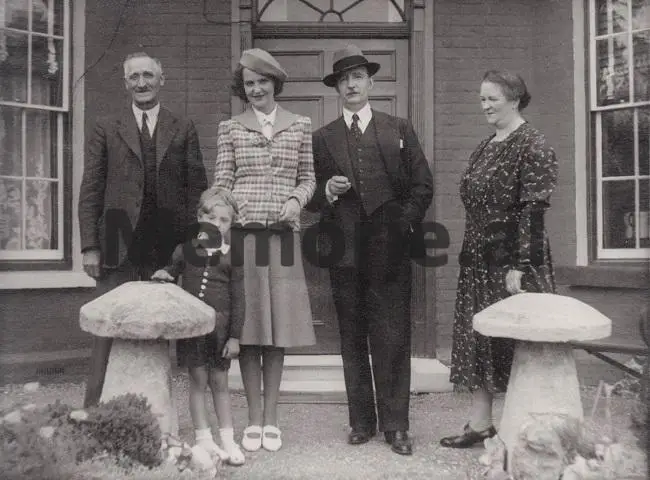
Queen Geraldine’s friend, Rosemary Trasenster, remembers that Princess Adile did most of the cooking, while Queen Geraldine worked more in the garden. They used Lord Parmoor’s kitchen garden and kept chickens for eggs and cows for milk. They also had a goat, two dogs, and a foal for the carriage. Teri Cooper remembers that Princess Adile often took them to London to go to an Italian grocery store in Soho to buy olive oil and pasta, which were not rationed. Sometimes they were also accompanied by Queen Geraldine. They also exchanged pork and chicken rations with the local residents.
Phyllis Gordon-Spencer recalls that Princess Adile “was a great lady of the house, but while the other sisters of the Queen and Zog had been educated in France and England and wore Parisian luxury clothes, she always wore a black knitted fabric dress, while she tied her hair tightly back like a tuft on her head. But one was left in no doubt about what influence she had over the family, as she did all the shopping and cooking herself. She was like a true piece of Balkan life that had come to the Chilterns!” Many people in Frieth remembered her as Zog’s mother! / Memorie.al