


By Dashnor Kaloçi
Part seven
Memorie.al / The history of parliamentary elections in our country, or more accurately the attempts at elections, have its origins as far back as the Ottoman rule, when Albania was part of the Turkish Empire. One of the first Albanian deputies elected to the first Parliament of Turkey, which opened its proceedings in December 1877, was Abdyl Frashëri. However, that parliament did not last long, as it was dissolved by the Sultan himself due to the outbreak of the Russo-Turkish War. After the dissolution of Turkey’s first parliament, there were several other attempts at elections, but they all failed for various reasons. The first regular elections in Albania were held only in 1908, when the Young Turks came to power in Turkey. Those elections were not direct, but through representation, or as they were otherwise known: with secondary electors.
The first Parliament of Turkey opened on December 10, 1908, and there, out of 266 deputies, 27 were Albanians elected in the four vilayets of Albania. At that time, members of the “Union and Progress” Committee in Turkey, which included many Albanians, split and grouped into three political factions. The first grouping was “Union and Progress” (the Turkish-Macedonian party) with 164 deputies, where 130 were Turks, 5 Arabs, 1 Greek, and 15 Albanians, who were led by Hasan Prishtina, deputy of Kosovo.
In the second group called “Liberal Union” (the Greek-Albanian party), which consisted of 45 deputies, there were 12 Albanians led by Ismail Qemali. Among other Albanian deputies in the Turkish Parliament at that time were Esad Pasha Toptani, Nexhip Draga, Rexhep Pasha Mati, etc. After 1908, there were several other elections where Albanians continued to vote for their representatives in the Parliament of Turkey, a situation that lasted until November 1912, when Independence was proclaimed and Ismail Qemali was elected head of the Government.
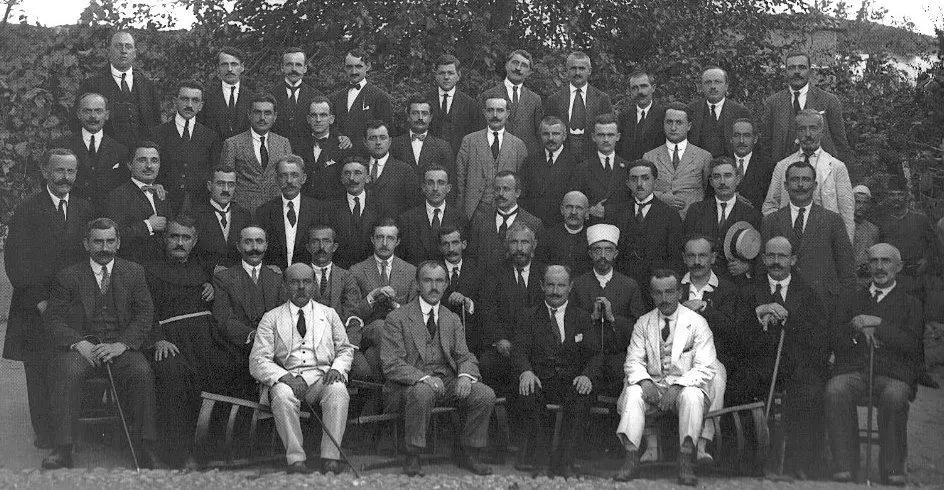
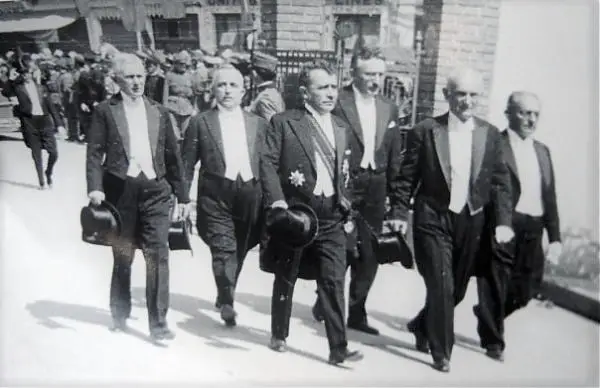
The first parliamentary elections in Albania, however, took place in the spring of 1921, as they had not been held until then due to World War I, in which Albania was involved. The first Albanian Parliament opened on April 21 of that year; the first building of the Albanian Parliament was located where the Academy of Sciences stands today. Participated in that parliament were 76 deputies, who were elected following a relatively regular process from the nine prefectures of the country: Berat, Durrës, Elbasan, Gjirokastra, Korça, Kosovo, Shkodra, Vlora, and that of the Albanian colony in the USA.
As in the past, those elections were conducted through a system of representation, or as otherwise known, with secondary electors, where based on territorial division, the representatives of each region had the right to elect their deputy. The above, as well as a brief history of parliamentary elections in Albania from that period until 1991, has been published by Memorie.al in previous issues; here we are publishing in full the Fundamental Statute of the Albanian Republic (Constitution) of 1925, where a special place is held by the parliamentary election legislation of that time, as well as the Regulation of Parliament, containing the rights and duties of deputies, published by the “NIKAJ” Printing House in 1925.
Fundamental Statute of the Albanian Republic (1925)
(Tirana, “Nikaj” Printing House, 1925)
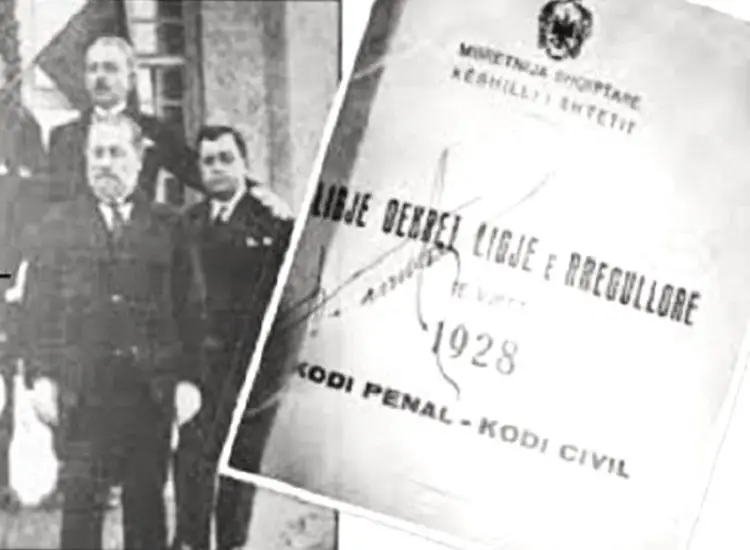
Penal Code 1928 – Book One
ARTICLE 66. – Circumstances and qualities that are permanently or accidentally linked to the person, and which aggravate the punishment of any of those who collaborated in the offense, if they were known by the accomplices at the time of the commission of the offense and facilitated its execution, shall also be charged to them; however, the punishment may be reduced by one-sixth, and the penalty of death or life imprisonment may be commuted to heavy imprisonment ranging from twenty-five to thirty years.
ARTICLE 67. – Material circumstances that aggravate the punishment, even if they change the nature of the offense, shall be charged also to those who were aware of such (circumstances) at the time they collaborated.
TITLE VII: Joinder of Offenses and Punishments
ARTICLE 68. – A perpetrator of two or more felonies that carry punishments against personal liberty for a term exceeding five years, one of which is life imprisonment, shall be subject to an additional term of continuous solitary confinement from one to three years; and if another offense also carries life imprisonment, the term of continuous solitary confinement shall be increased up to five years.
ARTICLE 69. – Except for cases where the law provides otherwise, a perpetrator of two or more felonies that carry the same type of temporary punishment against personal liberty shall be given the punishment designated for the most serious offense, with an addition equal to half of the total duration of the other punishments, provided that the term of heavy imprisonment or imprisonment does not exceed thirty years, and that of internment does not exceed twelve years.
ARTICLE 70. – A perpetrator of two felonies, one of which carries heavy imprisonment and the other imprisonment, shall be punished according to the following rules:
- If the term of heavy imprisonment does not exceed one year and does not reach one-third of the term of imprisonment, imprisonment shall be applied with an addition equal to half the term of the heavy imprisonment;
- In any other case, heavy imprisonment shall be given with an addition equal to one-third of the term of imprisonment, provided it does not exceed thirty years.
When more than two felonies are joined, before applying either provision of this article, the provisions of Article 69 shall apply to those offenses carrying the same type of punishment.
ARTICLE 71. – A perpetrator of two felonies, one of which carries heavy imprisonment or imprisonment and the other internment, shall be subject to heavy imprisonment or imprisonment with an addition equal to one-third of the term of internment where the applied punishment is imprisonment, and one-sixth where it is heavy imprisonment.
ARTICLE 72. – A perpetrator of two or more misdemeanors (contraventions) that carry light imprisonment shall be given the punishment for the most serious misdemeanor, with an addition equal to half of the total duration of the other punishments, provided it does not exceed three years.
ARTICLE 73. – A perpetrator of one or more felonies and one or more misdemeanors carrying light imprisonment shall be given the punishment designated for the felony or the punishment resulting from the joinder of two or more felonies according to the rules above, adding one-sixth of the total term of light imprisonment if the felony punishment is heavy imprisonment, and one-third in other cases.
ARTICLE 74. – In the cases provided for in the aforementioned articles, for the purpose of determining the effects of the criminal penalty according to the provisions of Articles 32, 34, 35, and 36, only the punishment that would be assigned for each individual felony shall be taken into account.
However, punishments involving temporary disqualification from public office, and the suspension of the exercise of a specific profession or trade for each offense, shall all be applied in their entirety, provided that the total duration does not exceed ten years for disqualification and four years for suspension.
ARTICLE 75. – Pecuniary punishments (fines) assigned for each offense shall always be applied in their entirety, provided that the total sum does not exceed fifteen thousand gold francs for felonies and three thousand gold francs for misdemeanors.
In the event that pecuniary punishments are converted into a penalty against personal liberty, the duration of such penalty cannot exceed three years; and in the event that a heavy fine (gjobë e randë) is joined with a light fine (gjobë e lehtë), the conversion shall always result in a penalty of imprisonment.
ARTICLE 76. – The rules contained in the aforementioned articles shall also apply in cases where, after a sentencing decision has been rendered, the convict must be tried and punished for another offense committed prior to that sentence.
Furthermore, the aforementioned rules apply in cases where the perpetrator commits an offense after being sentenced to a temporary penalty against personal liberty and before that penalty is served or while it is being served; however, the increase in punishment according to the preceding articles shall be, as the case may be: instead of one-half, two-thirds; instead of one-third, one-half; and instead of one-sixth, one-third.
To determine such an increase, only the remaining portion of the sentence to be served at the time of sentencing shall be considered, after having calculated the aggravation of the punishment due to recidivism in the penalty for the new offense, where recidivism exists.
However, if the sentence has been served or the penalty has been extinguished before the new sentence becomes final, the punishment for the new offense shall be applied in its entirety.
Regardless of the nature of the first sentence, the competent court for applying such an increase is the one judging the new offense.
ARTICLE 77. – Anyone who, in order to commit or conceal an offense, or on the occasion of an offense, commits other acts which in themselves constitute a separate offense—if these latter acts have not been considered by law as constitutive elements or aggravating circumstances of the former offense—shall be sentenced to the punishments that would be assigned for all offenses committed, according to the provisions contained in the preceding articles of this title.
ARTICLE 78. – Anyone who, by a single act, violates different provisions of the law, shall be punished according to the provision that prescribes the most severe punishment.
ARTICLE 79. – When a perpetrator violates the same provision of the law more than once, even at different times, through acts which execute a premeditated offense, all those acts shall be considered as a single offense, but the punishment shall be increased by one-sixth to one-half.
TITLE VIII:
Recidivism (Përsëritje)
ARTICLE 80. – Anyone who, after having been sentenced by a final judgment to a punishment exceeding five years, and after having served or had that punishment extinguished, commits another offense within ten years from the day the sentence was served or extinguished—and in other cases, if within five years from said date—cannot be sentenced to the minimum punishment prescribed for the new offense.
If the new offense is of the same type as the one for which the person was previously convicted, unless the law provides otherwise, the punishment shall be aggravated according to the following rules:
- If the punishment prescribed for the new offense is heavy imprisonment (burgim i randë), the ordinary duration (durée) of continuous solitary confinement shall be increased proportionally by one-sixth of the punishment assigned for the committed offense; and where, according to Article 14, heavy imprisonment must be served entirely in such solitary confinement, or if the extension of confinement cannot be made within the limit of the assigned punishment, then the duration of the punishment itself shall be increased proportionally to apply this extension.
- If the punishment prescribed for the new offense is other than heavy imprisonment, the punishment shall be increased by one-sixth to one-third.
In no case shall the increase determined in the above provisions be applied in a measure that exceeds the most severe of the punishments previously assigned to him. Where the punishment is internment, three days of internment shall be calculated as one day of heavy imprisonment, imprisonment, or light imprisonment; and where the punishment is a fine, the calculation for this measure shall be made according to the rules set in Article 20.
ARTICLE 81. – Anyone who, after having been sentenced two or more times to punishments against personal liberty exceeding three months for each instance, commits within the time limits set in the preceding article another offense of the same type, which also carries a punishment against personal liberty, shall be sentenced with an addition to the punishment for this offense of one-half of its duration when it is less than thirty months, and in other cases one-third, provided that the punishment does not exceed thirty years for heavy imprisonment and imprisonment.
If the punishment for the new offense is heavy imprisonment, continuous solitary confinement shall also be applied in the manner prescribed in the preceding article.
ARTICLE 82. – For the purposes of the penal law, offenses of the same type are considered not only those that violate the same provision of the law, but also those provided for within the same chapter of the code, as well as those specifically indicated below:
- a) Felonies against State security.
- b) Felonies committed by State officials, by violating the duties assigned to them or by abusing their functions.
- c) Felonies against political or religious liberty, abuses by religious figures in the exercise of their functions, felonies committed against State officials due to their office, and any other felony against the public administration committed by private individuals, as well as felonies against public order.
- d) [ç] Fabrication of offenses (simulasion), defamation, perjury, and malpractice by advocates and other representatives.
- d) Felonies against public integrity (tanësisë publike).
- e) Felonies against good morals and family order provided for in articles 364 to 388.
- f) Homicide and bodily injury.
- g) Theft, robbery (preja), coercion, extortion (rikatoja), fraud and other deceits, breach of trust, concealment and sale of stolen goods, fraudulent bankruptcy, as well as the felonies provided for in articles 232 to 235, 258, 282 to 289, 323 to 329, 350 to 353, 357, and homicide or bodily injuries committed for the purpose of profit.
ARTICLE 83. – The provisions of this title shall not apply: [Text ends here]
ARTICLE 83. (Continued) – The provisions of this title [Recidivism] shall not apply:
- To sentences for misdemeanors (kontravencione) compared to those for felonies (delikte), and vice versa.
- To sentences for felonies committed out of imprudence, negligence, or lack of skill in a trade or profession, or from non-observance of regulations, orders, or discipline, compared to sentences for other felonies, and vice versa.
- To sentences rendered for purely military offenses.
- To sentences rendered by foreign courts.
ARTICLE 84. – A person sentenced to life imprisonment who commits another felony shall be punished with a new term of continuous solitary confinement for a period ranging from six months to five years, if the felony carries heavy imprisonment or imprisonment for a term exceeding one year; and with a new period of no less than eight years, which may be extended for life, if the felony carries the penalty of life imprisonment.
ARTICLE 85. – In applying the rules for recidivism, the basis shall be the punishment resulting after the commutation of a more severe penalty.
TITLE IX: Conditional Sentencing
ARTICLE 86. – In cases where the court sentences the perpetrator to heavy imprisonment, imprisonment, internment, or light imprisonment for a term not exceeding three months, or to a penalty against personal liberty resulting from the lawful conversion of various fines for a total term not exceeding three months—provided the perpetrator has never been sentenced before, except for a fine, and has a past record of good conduct such that it is presumed they will continue such conduct hereafter—the court, except for cases where special laws provide otherwise, may decide to suspend the execution of the sentence for a period of two to five years for felonies, and for misdemeanors, for a period less than that prescribed by law for the statute of limitations of the misdemeanor punishment, stating the reasons for this suspension in the judgment.
The measure of punishment for which this favor may be granted is doubled for [elderly] and for minors under fifteen years of age, as well as for elderly persons who have reached the age of seventy.
These provisions shall not apply:
- In judgments in absentia or in cases where the defendant willfully evades trial;
- In felonies involving theft, incitement to prostitution and demoralization, insults and defamation, and pederasty.
- To indemnities, confiscation of items or court costs.
ARTICLE 87. – The court may make the suspension of the punishment contingent upon the payment of the indemnity liquidated in the judgment, or upon the payment, within the term set in the judgment, of a sum to be calculated toward the final liquidation of damages, or the deposit of a sum determined as compensation; in all such cases, the suspension may also depend on the provision of a guarantee by the convict for the aforementioned obligations, or on the payment of court costs.
ARTICLE 88. – If the court decides to suspend a punishment, after announcing this decision to the convict, it shall inform them that if they commit another offense within the term set in the judgment—excluding misdemeanors carrying only a light fine—or if they fail to comply with the obligations imposed, they shall then serve the suspended punishment according to the law.
ARTICLE 89. – Suspension may not be granted to a convict more than once, even if their rights have been restored through rehabilitation.
ARTICLE 90. – If the convict, within the terms set in the judgment, does not commit any felony or any misdemeanor carrying light imprisonment, and proves to have fulfilled all conditions imposed by the court, the sentence shall be deemed as if it had never been rendered.
Otherwise, the suspension of the execution of the sentence is revoked ipso jure (by the law itself), and the punishment shall be served according to the rules of Article 76.
Furthermore, the suspension is deemed revoked ipso jure if the defendant, within the aforementioned terms, is sentenced to a penalty other than a fine for a felony committed prior to the suspended sentence.
The revocation is declared by the court that rendered the conditional sentence, unless it has been revoked because the convict committed another offense; in the latter case, the revocation is declared by the court that rendered the conditional sentence if no subsequent sentence has been given, otherwise, by the court that rendered the final judgment.
The suspension of the execution of the sentence only concerns the serving of the assigned punishment and stops the statute of limitations of the punishment from running; it does not extend to and has no influence over any other criminal or civil effects of the sentence.
Criminal effects cease when the sentence is considered as not having been rendered according to paragraph I of this article./Memorie.al