By URIM ELEZI
The ninth part
Preface
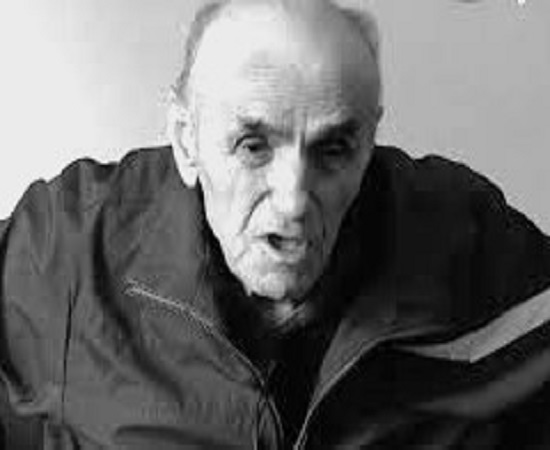
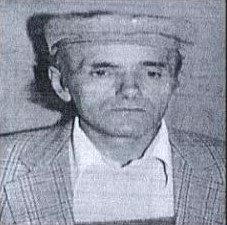
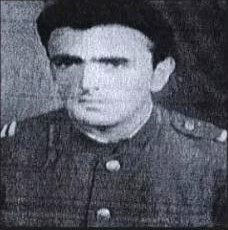
Memorie.al / Urim Elezi, born on 18.10.1941 in Floq, Korça, are among those convicted twice by the communist regime with many years of suffering. He was imprisoned on 26.10.1963 and was released from there on 10.2.1989. He entered at 22 years old and left at 48, even blinded. At the age of 18, he completed the Instruction school in Gjirokastër, where he was promoted to non-commissioned officer. During his first sentence, he was a soldier in Unit No. 9357 Gjirokastër. The first time he was accused based on Article 64, in combination with Articles 10 and 14 of the Penal Code. He was on military service, together with his friend Hekuran Shyti, in Gjirokastër. According to the court, he had proposed to Hekuran to escape because a good life was lived in capitalist countries and especially in the USA. Hekuran is released earlier from the army and during this time finds the other persons with whom they would carry out the escape. Hekuran sends a telegram to Urim in Gjirokastër, with the request to depart as his mother was ill.
Thus, Urim joins his friends, Hekuran Shyti, Durim Shyti, and Robert Morava. Poorly oriented, betrayed by a local resident, they were caught by border forces at the border post of Nikolica in the district of Korça. The Tirana Military Court, with decision no. 21, dated 27.2.1964, declared him guilty and sentenced him to 18 years of deprivation of liberty, confiscation of property, the removal of the right to vote for 4 years, and the loss of the rank of sergeant. It was upheld by decision no. 23, dated 31.3.1964, of the Military College of the Supreme Court. For the second time, he was arrested on 19.2.1980. He was accused based on Article 55/1 of the Penal Code with very aggravating articulations. The Fier Internal Affairs Branch, with letter no. 112, dated 15.1.1980, requested the Prosecution Directorate to approve the arrests for three citizens, among them the aforementioned Urim Elezi. He had been taken into active processing on 17.5.1979 because he was conducting propaganda among the convicts.
Reports about him were made by “The Penitent” and “The Technician.” He was said to have expressed: “The Sigurimi has painted its hands with the blood of this people. They have committed the most hideous crimes that can exist in history, the Sigurimi has treated the people and the individuals worse than the fascists and Nazis have treated them..! There is no one viler than the communists. I call communists all those who have a star on their forehead like a tomato, regardless of whether they believe in Marx’s beard or Stalin’s mustache…! The most monstrous crimes in Albania were committed when the communists came to power! Life for us is a prison.”
The Fier District Court, presided over by Sokrat Dautaj, with the participation of prosecutor Kiço Koçi, with decision no. 94, dated 18.4.1980, declared him guilty and sentenced him to 10 years of deprivation of liberty, as well as the removal of the right to vote for 5 years. Convinced of the futility of communist decisions, Urim Elezi did not appeal the decision. After having sent a letter to Enver Hoxha, where he described him as a “colorless monster, sick with persecution mania,” on 6.12.1981, he was beaten by the police of Burrel Prison until he went blind. He was released on 10.2.1989, from Unit no. 305 Përparim, of the Saranda district.
Continued from the previous issue
In memory of my unforgettable fellow sufferers
Despite being 79 years old, blind, and with many fractures in my skull, my memory at this moment recalls some of the Catholic clerics who gave me knowledge; but, out of the dozens upon dozens I met in Burrel, I am mentioning two priests whose actions and sayings have remained in my memory.
Father Pjetër Mëshkalla from Shkodra
In one of many instances, former Prime Minister Mehmet Shehu goes to Shkodra, to his parish, and tells him that Father Pjetër should become Prime Minister. The Father replies: “I am a priest and I cannot become Prime Minister to cooperate with those at the head of the country who are worse than the devil.” A short time after this, Father Pjetër was imprisoned. Father Pjetër would explain to me whenever I asked him about mythology and other sciences, and I would eagerly take notes of his words.
After undergoing many tortures during eleven years in prison, in room no. 10 in Burrel prison, Mehmet Shehu goes to meet the Father and says: “So, Pjetër Mëshkalla, who is worse, us or the devil?” The Father replies, groaning: “Eh, the poor noble people, look who they have at their head, with 11 years of evidence that even the devil himself hasn’t done, and he asks who is worse, us or the devil”?!
Mehmet’s hair stood on end and, infuriated, he gave orders like a tyrant (xhahil), which terrorized not only Father Pjetër but dozens of others, most of whom were taken and never returned alive. After many years, between 1974 and 1979, in Ballsh prison, I and three peers ask Father Pjetër about some mythology, in a corner of the barracks.
At this moment, the prison commander Sami Kamberi comes with 4-5 police officers and other officers and asks: “What are you doing?” One of us answers: “Mr. Commander, we are just sitting.” – “And that elder who is speaking to you, while you listen so attentively, was he a teacher?” – “No Mr. Commander, he is not a teacher, he is a Catholic priest.”
The commander approached and said to the Father: “You fight us communists a lot.” Father Pjetër replies: “Yes Mr. Commander, we fight you with this (putting his index finger on his tongue), while you fight us with this” (moving his index finger as if firing a gun). One of the brutes attempted to strike the Father and put him in a dungeon, but the manhood and character of the commander did not allow this ugly action, coming to the defense of Father Pjetër.
Dom Nikoll Mazreku
In room no. 5 in Burrel Prison, a few months before the killing of Mehmet Shehu, the mother of one of the fellow sufferers who had been a Sigurimi operative dies. The prisoners were looking each other in the eye, whether or not they should express their condolences. Dom Nikolla says: “Listen here, we must go for condolences to say ‘may her soul rest in peace’ (kryet shëndoshë), because we are not like them, who when a relative of theirs dies, they don’t go for condolences, but to snatch some rag or object.” These words reached the command, and in the room where over 30 of us slept, there also stayed a cleaner and a cook, former colonel D.G. of the dictatorship, who without a doubt snitched. After 2-3 days, the prison operative comes to the room with 5-6 brutes and goes directly to Nikoll Mazreku, to whom the operative says:
“Do you know that it is forbidden to go from one mattress to another that is not near you?” – “Yes sir, but we didn’t go to give him a lesson, as I know that is not allowed, but we went for condolences, because his mother died.” – “But why did you go?” – “I went because that’s how we have it; when a father dies, we go for condolences and not like you, who come to snatch some object.” At this moment the police rushed him, hitting him, broke his jaw and, smothered in blood, they put him for 30 days in a dungeon from where God knows how he came out alive. At the same time, I and six other friends who went for condolences were put in the dungeon for 30 days.
Hafëz Ali Zëmblaku
A distinguished theologian and with a special manly character, a politician and anti-communist with distinguished patriotic convictions. When he spoke in Burrel prison, all the intellectual prisoners, the Catholic clergy, and the two brothers, Koço and Arqile Tase, listened with great attention. I did not live with this figure or the two Tase brothers – theologians, politicians, philosophers – because they were elderly and many years before me in prison, but their sayings, their philosophies, even though the harsh regime had very strict censorship, went from memory to memory. I would ask them, listen with attention and pleasure, and take notes that I learned by heart.
Professor Gjergji Komnino
I had this polyglot, linguist, etc., for nine months in room no. 9. During WWII, he had been an advisor to the Anglo-American mission in Albania. He also gave me various lessons, even in astronomy, but when we separated from the room, he left me some of his manuscripts from the war period, where among other top secrets; he addressed the secret agent and adventurous actions of the dictator of the Albanian nation.
When we separated, he left me a message; taking my astronomy book he told me: “do not deal with astronomy anymore, because your type [of personality] greatly damages the nervous system.” This word made a great impression on me and I asked a Catholic named Viktor Kujxhia from Shkodra, who had done over 20 years in prison. I said: “Professor Gjergji left me a message, to not deal with astronomy anymore.” The gentleman said to me: “Astronomers in general, before they die, lose their minds (lajthitin).”
Kudret Kokoshi
He was from Vlora, very intelligent, who had completed high studies in Italy. Despite the fact that I did not live with him because he was in prison before me, from many of his sayings I recorded in my memory in Burrel a poem of his mother. Other Vlora people also told that she was a heroine mother, because she came to Burrel on foot, ragged and exhausted, to meet her son. My mother too – not because she is my mother – but she is a heroine because they humiliated her (prozvalur) and put extraordinary pressure on her, even the first secretary of Korça District, the heartless Mihallaq Ziçishti.
The red executioners, the political prisoner and the mouse
In one of the many cursed cells of the dictatorship, the impossible and the unbelievable happened, but R.A. and 5-6 of his former fellow sufferers inside the cell… every time they put a spoon in their mouth, they could not help but remember when 3-4 executioners came to the dungeon, no less than three times a day – roll call – and tortured them in the most bestial way. The dungeons were full of mice. The blood on the cement had a smell more terrible than the dead mice. When the executioners entered the cell with rubber sticks, some with wood and rubber tubes, they hurled them upon the bodies of the prisoners. In one case, a small mouse is killed.
The six prisoners were laying on the ground, bloodied, someone unconscious. R.A. had a hand broken and in front of his face was the small killed mouse. The executioner steps on the bloody and broken hand of the victim. With his black boot and the rubber stick on his head, he says: “Eat the mouse.” The victim screams in pain, but the executioner weighs down more on the damaged hand of the victim and lets the rubber stick fall upon the back of his neck. The victim, with his free hand blackened by the sticks, almost completely powerless, throws the mouse into his mouth, which passes into his stomach. The executioners leave very satisfied that they successfully carried out their duty./Memorie.al
SOME OF THE FELLOW SUFFERERS MAY THEIR MEMORY BE UNFORGETTABLE…
- HEKURAN SHYTI – KORÇË
- DURIM SHYTI – KORÇË
- SKËNDER SHAHOLLI – BILISHT
- BENJAMIN CAKRANI – FIER
- ESHEREF ZAGORÇANI – POGRADEC
- PJETËR ARBNORI – SHKODËR
- DHORI GËRNJOTI -KORÇË
- TODI NAKO – KORÇË
- FOTO PROKO -KORÇË
- MARKO PAPAPAVLLO – KORÇË
- MARKO VRETO – KORÇË
- VEHBI HOXHA -DIBËR
- SAKIP KALOSHI – DIBËR
- FAIK HOXHA –SHKODËR
- BEL STAROVA – POGRADEC
- HAKI SLATINA – POGRADEC
- SKËNDER BARIU –DURRËS
- JASHAR MEKA – BILISHT
- SELAMI MEKA – BILISHT
- RREXHAI, NJAZI DHE ZENI AGOLLI – KORÇË
- GËZIM MEDOLLI – KORÇË
- EDI KAPSHTICA – KORÇË
LONG LIVE AND LONG…
- ËNGJËLL FIDANI – KORÇË
- PETRIT BAZELLI – KORÇË
- YLBER MERDANI – KORÇË
- MINELLA ÇAMI- KORÇË
- KASTRIOT HASANKOLLI – KORÇË
- SAMI HASANKOLLI – KORÇË
- ILIR KAPO – TREN, BILISHT
- EDMOND HAXHIA – BILISHT
- SULEJMAN DEDE – BILISHT
- ZENI HADRI – KORÇË
- BEDRI ÇOKU- TIRANË
- KURT KOLA – TIRANË
- EDMOND HALIMI – TIRANË
- TOMORR MAÇI – TIRANË
- ADEM XHAFERI – TIRANË
- SHIK STËRMASI -TIRANË
- HALIT ZAIMI – TIRANË
- VLADIMIR BALLUKU – TIRANË
- VLADIMIR XHELO – TIRANË
- TANUSH KASO – TIRANË
- KUJTIM LUZI – VLORË
- KUJTIM MURATI – VLORË
- LEK BEJO – VLORË
- ENVER SHAQIRI – VLORË
- MURAT & BARDHOSH GJONZENELAJ – VLORË
- ETEM IBRAHIMI – VLORË
- PETRIT VELO – VLORË
- GJON LALA – DURRËS
- HYSEN HAXHIA – DURRËS
- AGRON HADRI – DURRËS
- NJAZI LULI – DURRËS
- MEHDI DEGOLI – DURRËS
- DEMIR & MET POJANI –ELBASAN
- ADEM ALLÇI – DURRËS
- RUZHDI KRAJA – SHKODËR
- PETRIT KRUJA – SHKODËR
- BAJRAM DERVISHI – BERAT
- BASHKIM NUREDINI – BERAT