

By Dashnor Kaloçi
Part Four
Memorie.al / The history of parliamentary elections in our country, or more accurately the attempts at elections, have its origins in the time of Ottoman rule, when Albania was part of the Turkish Empire. One of the first Albanian deputies elected to the first Turkish Parliament, which opened its proceedings in December 1877, was Abdyl Frashëri. However, that parliament did not last long, as it was dissolved by the Sultan himself due to the outbreak of the Russo-Turkish War. After the dissolution of Turkey’s first parliament, several other attempts at elections were made, but they all failed for various reasons. The first and regular elections in Albania were held only in 1908, when the Young Turks came to power in Turkey. Those elections were not direct but through representation, otherwise known as having “secondary electors.”
The first Parliament of Turkey opened on December 10, 1908, and out of 266 deputies, 27 were Albanians elected from the four vilayets of Albania. At that time, members of the “Union and Progress” Committee in Turkey, which included many Albanians, split into three political groupings. The first grouping was “Union and Progress” (the Turkish-Macedonian party) with 164 deputies, of whom 130 were Turks, 5 Arabs, 1 Greek, and 15 Albanians, led by Hasan Prishtina, deputy of Kosovo.
The second group, called “Liberal Union” (the Greek-Albanian party), comprised 45 deputies and included 12 Albanians led by Ismail Qemali. Among other Albanian deputies in the Turkish Parliament at the time were Essad Pasha Toptani, Nexhip Draga, Rexhep Pasha Mati, etc. After 1908, several other elections took place where Albanians continued to vote for their representatives in the Turkish Parliament, which lasted until November 1912 when Independence was declared and Ismail Qemali was elected head of the Government.
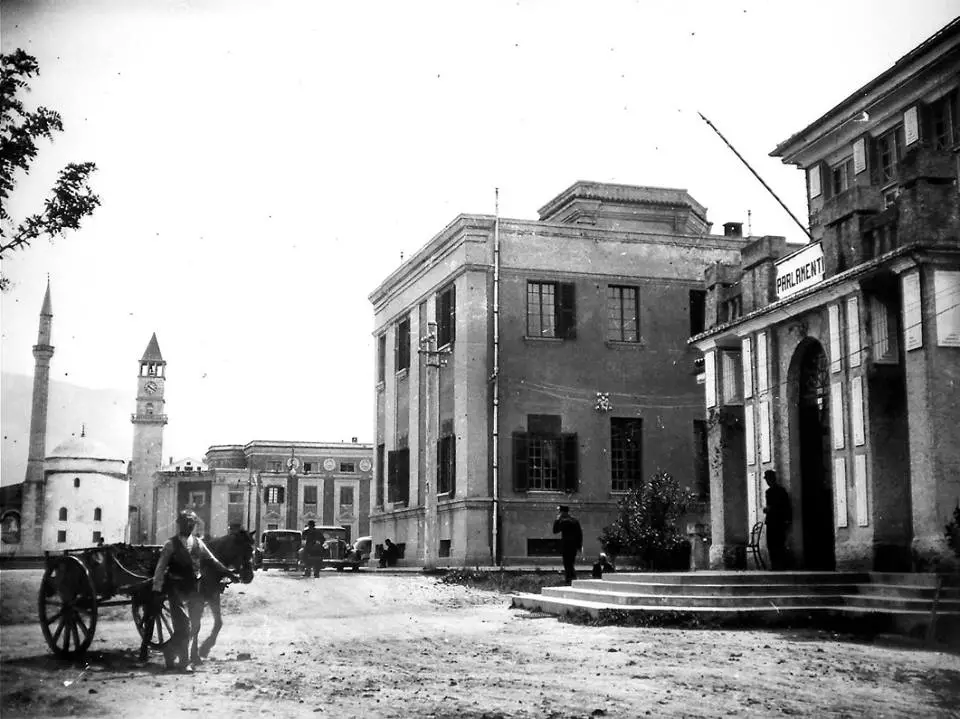
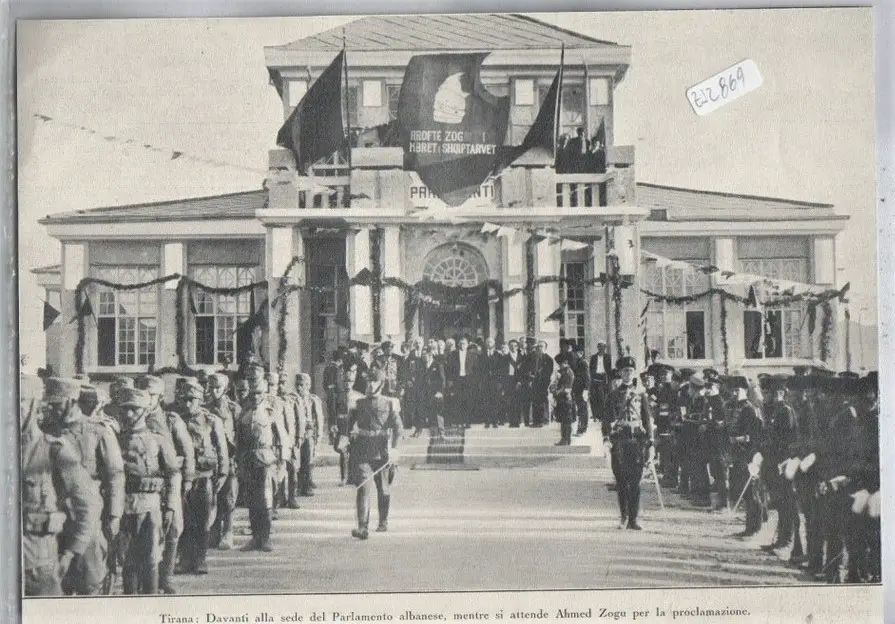
Meanwhile, the first parliamentary elections in Albania were held in the spring of 1921, as they had not taken place until then due to World War I, in which Albania was involved. The first Albanian Parliament opened on April 21 of that year; the first building of the Albanian Parliament was where the Academy of Sciences stands today, and 76 deputies participated in that parliament, elected through a relatively regular process from nine prefectures of the country: Berat, Durrës, Elbasan, Gjirokastra, Korça, Kosovo, Shkodra, Vlora, and the Albanian colony in the USA.
As in the past, those elections were held through a representative system, or as they are otherwise known, with secondary electors, where based on territorial division, the representatives of each region had the right to elect their deputy. As noted above, along with a short history of parliamentary elections in Albania from that period until 1991, which Memorie.al has published in previous issues, here we are publishing in full the Basic Statute of the Albanian Republic (Constitution) of 1925, where the legislation of parliamentary elections of that time and the Parliament’s regulations – including the rights and duties of deputies, published by the “NIKAJ” Printing House in 1925 – occupy a special place.
Continued from the previous issue
Basic Statute of the Albanian Republic (1925)
(Tirana, “Nikaj” Printing House, 1925)
Penal Code 1928
Book One: Crimes and Punishments in General
TITLE I: Application of the Penal Law
Article 1. – No one can be punished for an act that the law has not expressly foreseen as an offense; likewise, no one can be sentenced to punishments that are not specified in the law.
Offenses are divided into felonies (delikte) and misdemeanors (kontravenzione).
Article 2. – No one can be punished for an act that did not constitute an offense according to the law of the time it was committed.
No one can be punished for an act which a subsequent law does not punish; and, if one has been punished, the execution and legal penal effects of that punishment remain void.
If there is a difference between the law of the time when the offense was committed and subsequent laws, the law whose provisions are more favorable to the defendant shall be applied.
Article 3. – Anyone who commits an offense on the territory of the Republic shall be punished according to Albanian law; and if the perpetrator is an Albanian citizen, they shall be tried in the Republic, even if they have been tried in another state, if the Ministry of Justice so requests.
Article 4. – An Albanian citizen or a foreigner who, on the territory of a foreign state, commits a felony against State security, or a forgery of the State seal or counterfeiting of national currency having legal tender in the Republic, or other Albanian public credit documents or bank notes authorized by law – for which felonies Albanian law mandates the death penalty or a punishment against personal liberty with a maximum of not less than five years – shall be punished according to this law.
For these offenses, the citizen or foreigner shall be tried in the Albanian Republic even if they are in another state.
The provisions of the first part of this article also apply to felonies that bring a punishment against personal liberty with a maximum of less than five years, when the Albanian citizen or the foreigner is within the territory of the Republic.
However, those holding public office or state duty in a foreign country who commit a felony arising from this burden shall be tried on Albanian soil, and their offense shall bring the punishment indicated above.
Article 5. – An Albanian citizen who, outside the cases mentioned in the previous article, commits a felony in a foreign territory for which Albanian law sets a punishment against personal liberty with a minimum of not less than three years, shall be punished according to this law upon entering Albanian territory; however, the sentence shall be reduced by one-sixth, death shall be converted to life imprisonment, and life imprisonment to hard labor for not less than twenty years.
If the felony committed in this case carries a punishment of less than three years, no prosecution shall be made unless requested by the injured party or by the foreign Government.
In cases where the injured party is a foreigner, the act must also be punishable under the penal law of their country.
Article 6. – A foreigner who, outside the cases of a foreigner harming the Republic or an Albanian citizen, commits a felony for which Albanian law sets a minimum punishment of not less than one year, shall be punished under this law upon entering Albanian territory; however, the sentence shall be reduced by one-third, death shall be converted to no less than twenty years, and life imprisonment to no less than fifteen years of hard labor.
In this case, no prosecution shall be made except upon the request of the Ministry of Justice.
If the felony was committed to the detriment of another foreigner, the perpetrator shall be prosecuted upon the request of the Ministry of Justice and, in this case, punished according to the provisions of this article if:
– The committed felony is punishable by law with a sentence against personal liberty, the minimum of which is not less than three years.
– There exists no treaty for the surrender of criminals (extradition), or extradition has not been accepted by the government of the country where the offense was committed, or by that of the offender’s state.
Article 7. – A citizen or a foreigner who, in another state, commits a felony against the Albanian Republic or an Albanian citizen that is punishable according to the previous articles, shall be tried in the Albanian Republic even if they have been tried and sentenced there, and even if the sentence given by the foreign court has expired or they were acquitted.
If the punishment decided by the foreign court and served by the condemned is less than what Albanian law mandates for the committed offense, they shall serve the remaining part that fulfills the punishment mandated by Albanian law, according to the provisions of Article 8; and in the case where acquittal, dismissal, or expiration of the sentence was decided, if the reasons for such are not in conformity with Albanian laws, they shall be punished again in the Republic.
Retrial in the aforementioned cases is done only upon the request of the Ministry of Justice.
In all other cases provided for in Articles 5 and 6, no judicial prosecution shall take place if:
– Extradition for the committed felony is not accepted according to the provisions of point II, Article 9;
– The defendant has been tried in another state and has been definitively discharged, or has been sentenced and has served the decided punishment, or the sentence has expired.
Nevertheless, if a citizen is sentenced in another state for a felony committed in a foreign territory, but different from the one noted in number 1 of this article, and the sentence would carry under Albanian law, as a principal punishment or penal effect, a prohibition from public office or other capacities, the judicial Authority, upon the Prosecutor’s request, may declare that the judgment of the foreign state has power in the Republic for that cessation or incapacity; but in this case, the condemned has the right to request a review of the trial held in the foreign place before the court takes any action upon the Prosecutor’s request.
Article 8. – When, in the cases provided for in the aforementioned articles, the trial held in a foreign place is repeated in the Republic, the punishment served by the condemned in the foreign place shall be calculated, taking into account the type of punishment and applying, where necessary, the provisions of Article 41.
Article 9. – The request for the surrender (extradition) of an Albanian citizen is not accepted.
The request for the extradition of a foreigner is not accepted for political and military offenses, nor for offenses connected (konnexes) to them.
When the surrender of a person is requested by the Albanian State, the matter is first referred to the Court of First Instance, which decides on the citizenship of the requested person and the nature of their offense.
When the court decides that the requested person is an Albanian citizen or the offense committed is political or military, or an offense connected to them, the request for surrender is not accepted.
If there is a need to detain the requested person before the matter is referred to the court, the Prosecutor may stop them, and in this case, is obliged to send the matter to the court within three days.
Article 10. – The provisions of this Code also apply to matters regulated by other Penal laws, when those laws contain no different orders.
TITLE II: Punishments
Article 11. – The punishments established for felonies are:
- Death
- Life Imprisonment
- Hard Labor (Burgim i randë)
- Imprisonment
- Internment
- Heavy Fine
- Prohibition from public office.
The punishments established for misdemeanors are:
- Light Imprisonment
- Light Fine
- Suspension of the practice of a profession or a trade.
When the phrase “punishments against personal liberty” is mentioned in this law, it includes: life imprisonment, hard labor, imprisonment, internment, and light imprisonment.
Article 12. – The death penalty consists of ending the life of the condemned and is executed by hanging by the neck in the market square of the city where the condemned was tried, but not publicly.
This punishment is not executed on holidays or celebration days.
Pregnant women sentenced to death shall be hanged two weeks after giving birth.
When there is more than one person condemned to death, the hanging shall be done in a way that they do not see each other at the moment of execution.
The execution of the death penalty takes place after the decision is verified by the Presidency of the Republic and the judgment is read aloud at the place of execution by the Prosecutor or his deputy in front of the condemned.
The person condemned to death as a parricide or infanticide is brought to the place of execution barefoot, with head uncovered, and wearing a black shirt, and is thus hanged.
The body of the hanged person is handed over to their relatives and buried without any ceremony.
In cases where the relatives do not accept the body, it is buried by the Municipality, also without any ceremony.
Article 13. – The punishment of life imprisonment is served in special establishments, where the prisoner remains for the first seven years in a cell (cellule), continuously closed with a labor requirement; in subsequent years, they are permitted to work with other prisoners, with the obligation not to speak.
Article 14. – The punishment of hard labor is from three days up to twenty-four years.
This punishment is served in establishments destined for this with a labor requirement and in the following ways:
If it does not exceed six months, it is served in continuous cell confinement for a period equal to one-sixth of the total time of punishment, but this suffering cannot be less than six months nor more than three years; the remaining part is served by the condemned being locked in a cell only at night, and during the day with the obligation not to speak.
Article 15. – A person sentenced to hard labor for a time not less than three years, who has served half of the punishment, but not less than thirty months, may, if they have behaved well, be accepted to serve the remainder of that punishment in a penitentiary, agricultural, or industrial establishment, or by working in public or private works under the observation of the public Administration.
If the condemned does not maintain good behavior, the mentioned Administration revokes this favor, calculating into the principal punishment the time spent in that establishment.
Article 16. – The punishment of imprisonment is from three days to twenty-four years and is served in an establishment specifically designated for this, with a labor requirement during the day and closure at night.
The condemned may choose among the works accepted in that establishment the work for which they have skills or the work they were engaged in previously; they may also be permitted to perform another work.
If the punishment does not exceed six months, the imprisonment may be served in a special section of the judicial prison.
Article 17. – A person sentenced to hard labor or imprisonment for a time more than three years, if they have served three-quarters of the sentence – but not less than three years when the sentence is hard labor, or half, when the sentence is imprisonment – and if they have shown such good behavior that it is believed they have reformed, conditional release may be decided upon their request, provided the remainder of the sentence does not exceed three years.
Conditional release is not granted to:
- Those condemned for any of the felonies indicated in Article 274 and in Articles 450 to 455.
- Those sentenced to hard labor for thirty years, in the case provided for in Article 59.
- Recidivists of any of the felonies indicated in articles from 403 to 407 and 448.
- Second-time recidivists of any felony, if this last time they were sentenced to a punishment exceeding five years.
Article 18. – Conditional release is revoked if the condemned commits an offense that carries a punishment against personal liberty or does not fulfill the conditions imposed on them.
In such a case, the time spent on conditional release is not calculated into the time of punishment, and the condemned can no longer be granted conditional release.
If the entire time of the punishment passes without being revoked, the punishment is considered served, and the time spent on conditional release is calculated into the time of special observation by the public security Authority, which observation may have been decided along with the principal punishment.
Article 19. – The punishment of internment consists of the obligation of the condemned to stay, for a time not less than one month and not more than 10 years, in a city or village designated in the judgment; this place shall be not less than thirty kilometers away from the place where the felony was committed, as well as from the place where the injured party and the condemned have their residence.
If the condemned does not stay in that place, the punishment of internment is converted into imprisonment for the remaining time.
Article 20. – The punishment of a heavy fine is the obligation of the condemned to pay into the State treasury a sum not less than ten and not more than ten thousand gold francs (fr. ari).
In case the condemned does not pay the fine within two months from the day of notification for payment and has no power to pay it, the heavy fine is converted into imprisonment, calculating one day of imprisonment for every five gold francs or fraction thereof.
The condemned, when the fine has been converted to imprisonment, has the right at any time to cease the imprisonment by paying the remaining heavy fine, after deducting, in the manner set in point II of this article, that part of the fine corresponding to the imprisonment served.
The conversion of the fine to imprisonment cannot be made for more than one year.
Upon the request of the condemned, the imprisonment converted from a fine may be substituted with work designated for the service of the State or the Municipality, and in this case, three days of work take the place of one day of imprisonment./Memorie.al