
Part One
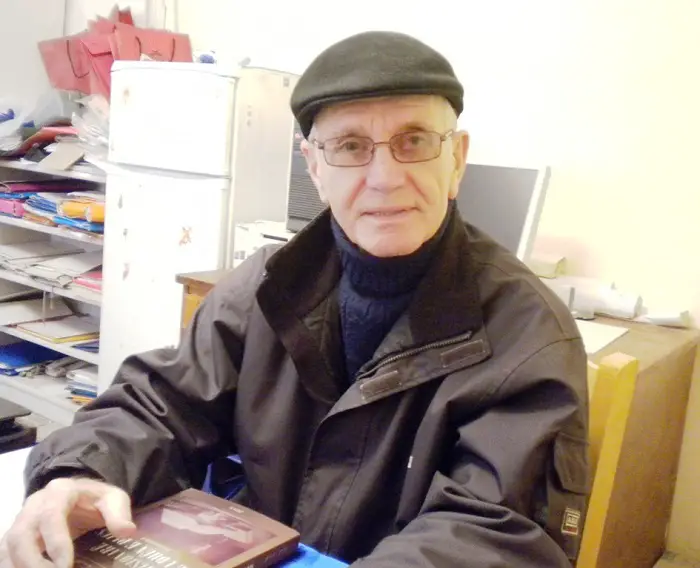
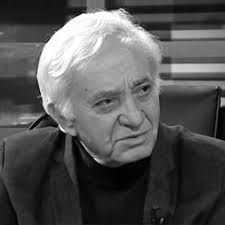
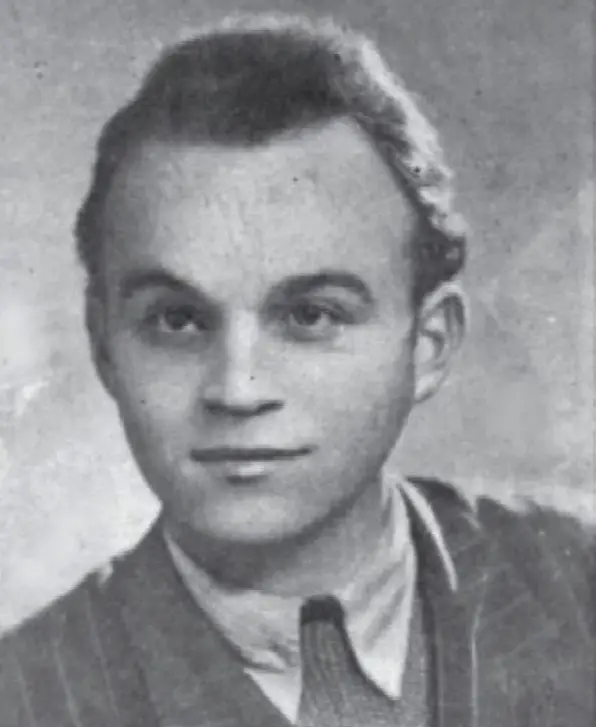
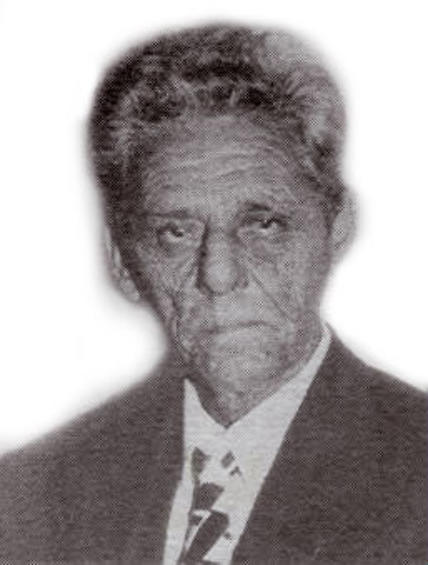
Memorie.al / Umberto Eco, author of the magnificent novel “The Name of the Rose,” quoting Visar Zhiti’s poetry collection “The Rhapsody of the Life of Roses,” stated: “Poetry causes fear in dictatorial regimes, even if it speaks, as in Visar Zhiti’s case, of roses.” Recognized by global critics as one of the best poets in the world, Zhiti has earned numerous international awards and has been accepted as an honorary member of the “Mihai Eminescu” International Academy. Zhiti: “I was accused of having written hermetic verses, / but they locked me up even more hermetically… / 10 years of imprisonment! / Even what you do not have, they take away. / They wanted us as slaves. / With verses, we created freedom.” / Art – the antipode of tyranny. On a festive day, November 8, 1979, they arrested him. An unpublished poetry volume, subjected to dictatorial expertise, sent him to prison.
The liberalism ordered by the dictator – a provoked, controlled, and surveilled freedom – transformed the 11th National Song Festival into a new theater of real tragedies, into a communist inquisition that began with the liberation of Albania and the enslavement of the Albanians, as well as their division through the monstrous class war. In the winter of 1972, people believed so much in a true spring. But it remained a beautiful, murdered dream.
The lyrics of the winning song, written by poet Sadik Bejko, expressed a prophetic doubt: “Near me someone said: Spring has come, / but I did not believe it…! / Pieces of distant hopes / flew into the blue skies.” A modern festival, along with its talented creators, was blown apart because there were no roses or songs for the dictator and the “socialist spring.” In 1969, Visar Zhiti had published his first poem, “As if you came to us, spring.”
In 1963, Trifon Xhagjika, author of the poem “The Homeland is Naked,” was executed and left without a grave. In 1965, the first and only tragedian, Et’hem Haxhiademi, died after torture. In 1968, the drama “Grey Spots” (Njollat e murrme) earned the festival flag and was even praised by Prime Minister Mehmet Shehu, but was later condemned by the dictator Enver Hoxha.
The creators were punished. In 1973, the author, playwright Minush Jero, was imprisoned. Meanwhile, in Pristina in 1971, the manifesto “Vox clamantis in deserto” was proclaimed by Ali Podrimja, Eqerem Basha, and Anton Pashku, bringing surrealism and the absurd. Thus, the method of socialist realism was rejected, a phenomenon that had begun there in 1953.
In May 1972, the famous Albanian actor Bekim Fehmiu came to Tirana and refused to perform in any Albanian film of socialist realism. In 1973, the Albanian “Chaliapin,” the “Merited Artist” Llukë Kaçaj, was arrested in the presence of students. In 1974, the playwright Shpëtim Gina died under mysterious circumstances; journalists Dashnor Kaloçi and Monika Stafa later produced the documentary “Gina’s Demons – the mysteries of a coded departure.”
In 1977, two poets were executed for unpublished poems that had undergone deadly expertise: Vilson Blloshmi and Genc Leka. This was the atmosphere when Visar Zhiti was also imprisoned. In his book “The Underground Pantheon, or Condemned Literature,” he states: “Albanian literature is a martyr literature.” The figures and types of punishments he lists are terrifying. In Albania, 200 personalities of culture, art, and literature were imprisoned and sentenced. Fifty people were executed, died under torture, or remained without graves.
The respective figures in Kosovo were 43 and 15 people. In an interview, Zhiti says: “Memory of communist crimes is being suppressed, or a wrong perception of it is being given. Significant steps have been taken for Memory, but they are not yet palpable.” Prof. Lori Amy seems to concretize his idea: “Albania under the dictatorship was a crime scene. A ‘Bunk’Art’ cannot serve as a symbol of national identity or a sign of pride! It is a symbol of shame, as 700,000 bunkers were built when the Albanian people had no bread to eat.”
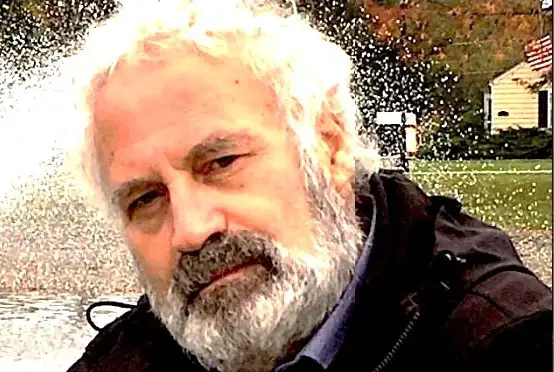
Visar Zhiti currently lives in Chicago, but spiritually he has never left Albania, which he views with love and pain. He has taken our history and tragedy with him: “I wanted to escape a nightmare, only to surrender to a dream. They needed our suffering, our ideals, our allies, and what we represented – but not us. They did not give us support to make a film about the prisoner uprisings in Spaç and Qafë Bari. In our country, a difficult, harsh democracy is being experienced.” On his 60th birthday, his two novels “The Circles of Hell” (Rrathët e Ferrit) and “The Broken Hell” (Ferri i çarë) were promoted in Durrës, for which I held the main presentation. In these and other novels, through a real autopsy of the dictatorial system, tragic fates and shocking facts are reflected.
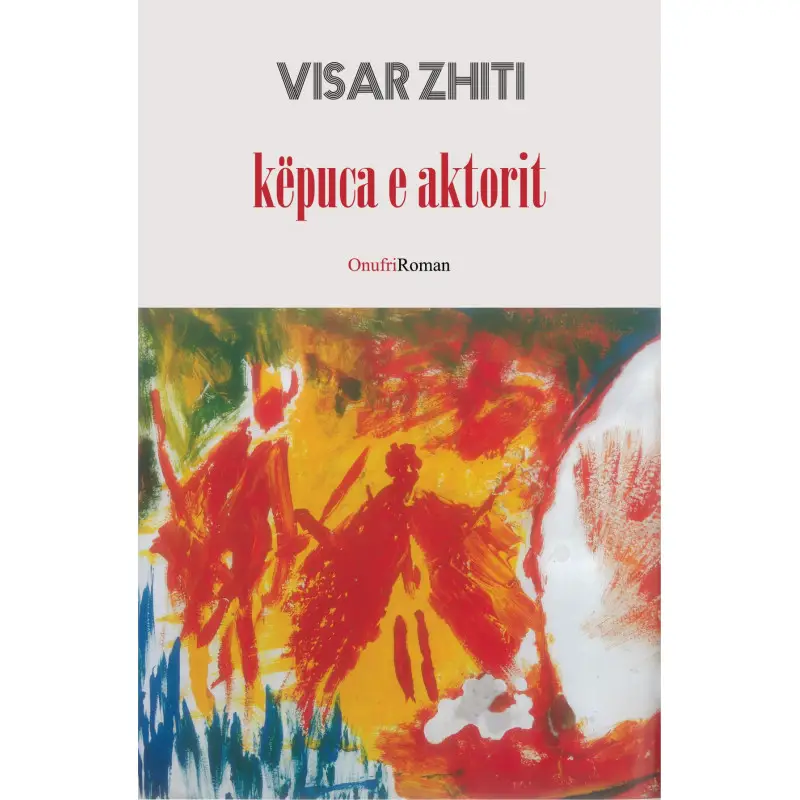
On the eve of his 70th birthday, Visar returned to Durrës, where he promoted his latest novel, “The Actor’s Shoe” (Këpuca e aktorit). On the cover of the novel is the painting by Atjon, the bright and talented meteor who was extinguished quite young. The novel is presented as an open structure, with a wide mosaic of episodes centered on the theater and the symbol of the actor’s shoe. Poetic sense, lyricism, and engaging humor (inherited) unite the events and emotions.
A dramatic journey through reality and dream, with real and fictional characters. A portrait of the homeland in three time periods. A mirror where thinking and living, love and hate, suffering and passions are clearly seen. A life story, real and retrospective, uniting the past and future in the present. The prose is graced by rich figuration, particularly highlighting the Orwellian style through the paradox of the oxymoron and the sarcasm of the grotesque.
The oxymoron, often used in daily speech, expresses the paradoxical connection of incompatible concepts or actions to create a new meaning that is an expression of an internal contradiction. It seems to disagree with common sense but can turn out to be true. A controversial narration – characteristic also of the style of the absurd. It provides a stylistic effect in the novel.
Examples: The tragic comedy “The Bride in the Sack” by Hekuran Zhiti. Hektor: a living-corpse-crawler. The theater is my life and death. A successful failure. The fierce enthusiasm of liberation. In order for us to misunderstand each other as best as possible, I want to provoke – in fact, to clarify. The oxymoron beautifully expresses the absurd paradoxes of our social, economic, political, media, and legal life. Albania aspires to enter the European Union; on the other hand, it rejects the help of “Europa Nostra” for the reconstruction of the theater, even at its own expense.
Existential nihilism in an uncertain reality where human rights and freedoms are ignored. It is said that communism was a repressive system, while totalitarian democracy is a depressive system. Zhiti: “The dictatorship has not left, and democracy has not arrived.” The absurd, disappointing situation of injustice, as well as the contradiction between dream and reality, creates in the well-known writer an attraction toward expressive magical realism and surreal narration. Dreams in sleep and daydreams are manifestations of life.
Time does not flow in a straight line, but in the refraction of narration, which, even when appearing as a mirage, in the displacement of realities, and in the connection of life with death – as in the dialogue with Atjon or with the ghost of his father – surrealism has roots deep in concrete reality and in real characters, described so beautifully and truthfully. The fantastic and the magical coexist naturally with the real. We have encountered such a perfect union of fantasy, imagination, and realism before in Kuteli. The imaginary implies the fantastic; consciousness is born from the subconscious. “Surrealism walks through the streets,” says Marquez. Our country today is a place with many dramas. The theater metaphor permeates the entire novel.
The novel opens with the “Pro-logue”: “It was past midnight, but before the dawn broke, they demolished the Theater. Under the ruins remained one of the actors. At that time, executions were taking place; because of who had spoken, or was it him himself?” We read, in “Proscenium”: “I must be alive, I’m not entirely killed, but where am I?… Even dead, you are in your role…! Regardless, the show goes on…! It started with a beam, a character fell on the back of my head…! I don’t know if I’m alive?!” In “It Started as a Monodrama,” it says: “The actor in the middle of that artistic mess is all of me, who will speak of myself as if of another. From the window appears a grey day. It is not today, but once upon a time… I am talking to myself… alone… about myself…! I’m not talking about death; no mask is needed there…! I want to defend life, I have no weapons or bombs; those belong to death, but I have the play, I am an actor.” In the rest of the introduction, “I am an (anti) actor,” it says: “I was, not that I am not, but when I see weak actors around me, even without a character of their own, let alone with other characters for the stage, and when the worst actors are the politicians in charge, I say I am not an actor, but an anti-actor.”
For the author, the theater is timelessness. “There, life itself is kept alive, as in a museum of the world. You see the greatness of man as a human, but also as a devil. Theater gives you immortality. Theater is so that life does not become theater, but theater becomes life. As an actor, you are always someone else. An actor is every man, but not every man is an actor – I mean, a good, brilliant one.” Existentialism is best understood with the actor and his stage, where there is only the present, and he is to others as an other – alienated/character.
The different construction of the phrase responds to the style of the absurd, which intertwines with the predominant realistic style. Historical and psychological situations are painted with colorful brushstrokes; bright tragic figures are portrayed. Sincerity, humanism, pain, and extensive culture characterize the polyphonic narration. The author is himself, but also the typification of those who, under the dictatorship, stood and acted with dignity, with civic and patriotic passion; for morality, right, and truth. Political prisoners are the pillars of democracy and resistance.
The treated theme is relevant to the country but also has universal resonance regarding the philosophy of life and its approach to theater. It typifies the fate, drama, pain, and efforts of the intellectual class. The protagonist’s self-discovery occurs through constant dilemmas. At the center is the Tomori family. The acquaintance and subsequent happy wedding with Erika.
The joy of Iris’s birth: “The first smile of Iris and Erika, like two wings of happiness.” Then, the shadow of the Sigurimi (Secret Police). Happiness is persecuted, just like the class enemy. Hektor provokes a fictitious divorce, often applied at that time to protect the family, which would also be targeted after the sentencing of the head of the household. Thinking of the risk of internment, Hektor (who embodies as a prototype Hekuran, the actor and creator) distances himself from the family but meanwhile experiences loneliness and abandonment. He says to Erika, his wife: “At least save you from me!” He experiences grief, doubts, and worries: “Erika endured me with pain.” The heavy scene of separation. Alone – freer, but more miserable. He also tries “educational” (correctional) labor at the amphitheater of Durrës, where Iris and Marin, who loved and practiced theater, come to perform. The actor’s shoe, as a symbolic character, permeates the real situation of national and family history and accompanies the description of events.
A character that follows the protagonist like a shadow is Anastas (Çaçoja), a vile “1200-lek” informant. He represents the immorality of a communist informant (a collaborator of the State Security). “Among the persecuted, there were more spies than among us.” his saying proves that yesterday’s spies have turned into today’s slanderers. He defends Northern Epirus. I think the sexual scenes with the two loose women, as well as the scenes with Çeço’s wife and daughter, could be reduced, enough to convey the message of an immoral family.
The symbol of the shoe, which knows nothing of the roads you wish to take it on, is also used heavily, very often. There is always room for laconism. A literary editor is also necessary, as spelling inaccuracies are encountered, such as the incorrect spelling of the words Evropë, Tomor, etc. Regardless, these remarks do not affect the value of the novel.
This work also testifies to full and dedicated engagement in the service of historical memory, truth, and freedom. Artistic truth is the highest truth. History is constantly corrected, whereas outstanding works always remain relevant. Focusing on the resisters, the author calls for the creation of a Museum of Resistance. The dictatorship has destroyed, altered, and retouched evidence and documents, but written and oral memory serves the truth. Memory constitutes testimony, accusation, and material for history.
Art, as a combination of truth and beauty, serves as a diagnosis but also as therapy. “Politics has no law, no rules, no morality; it is a chameleon,” writes Migjeni. But it directs everything. Mark Twain: “Politicians and diapers should be changed often, and for the same reason.” Even today, our parliament has turned into an ugly theater, with mutual accusations of being spies, communists, and corrupt, with endless slander and insults. These slanders are carried over into the written media. Hugo: “Bloodthirsty slanderers experience a dark happiness.” Justice does not punish them.
Division, a consequence of the class war, remains a permanent reality. Politics divides us on the issue of the theater. Politics also divides us in defining a single date of liberation, continuing the idiotic and senseless farce about the hour and day when the last German left. Enver Hoxha himself defined and later changed his mind, as he did all the time, by rejudging facts and personalities. On November 28, 1944, at 10:00 AM, as prime minister, he, along with the provisional government, paraded during the military parade in Tirana.
And on the afternoon of November 28, he participated in the festive ball at the “Dajti” hotel. The National Liberation War Bulletin, no. 53, dated Dec. 1, 1944, in the article “Shkodra was liberated,” considers November 28 twice sacred, completed by the liberation of Shkodra. In the center of the first page, photos of Enver Hoxha and Ismail Qemali were also placed. For Zhiti, what matters more is what regime that date brought, when the liberators turned into occupiers and brought the dictatorship.
Visar is for evolution, not revolution. Therefore, he deeply experiences the demolition of the Theater, which also divided the actors, and even expresses regret for the beautiful resort built with labor and expense. At both the beginning and the end of the novel, the focus remains on the theater. Its demolition is seen as a grim, dark act, performed at night and during a pandemic.
The only National Theater, a monument of culture and historical memory. The Alliance for the Protection of the Theater considered it an institutional crime in the middle of Tirana, committed after a calvary of legal and constitutional violations, about which SPAK is silent, while the Constitutional Court speaks in a half-hearted manner. / Memorie.al