Part Two
Memorie.al To some, it may seem astonishing: a martyr who is also the first record-holder of a nation’s sports! In truth, in this title or within these eight words, everything is as natural as it is true. Although it is only now being proven through this narrative for the first time in 2018. It is strange how it was possible that until today, in 2018, this truth remained unknown, unlearned, and unrecorded. And yet, we should not be surprised. History in Albania and sports history in particular, still moves very slowly, treated as something of secondary importance, filled with endless untruths, naive tales, and the distribution of even unmerited affirmations. It has reached a point where an honest professional historian must constantly correct the brutal behavior of unscrupulous writers who, surprisingly, continue to fill the pages of newspapers.
Continued from the last issue…
Never in the history of Shkodra sports would it happen that its team, “Vllaznia,” would win a Champion title with 60 percent of its lineup consisting of athletes brought in from another club! How had Shkodra – historically subjected to the overwhelming pressure of the capital and ministries in all fields of life – managed to claim these three stars for itself? The Tirana trio: Radoja – Guraziu – Lahi? It was a surprising force, one that Shkodra sports and football would only benefit from again in the early 1970s, with the return of talents who had been utilized by the capital. Rragami, Zhega, Bizi…!
One name was mentioned: Prof. Hamit Beqja – a pioneer of Shkodra basketball, but by then holding an important function in the Central Committee of the PPSH (Party of Labour of Albania). A liberal pedagogue and prominent sports enthusiast, he was also one of the leaders of the Basketball Federation at the time. He cunningly utilized both his popularity and his position. Thus, through the captivating “behind-the-scenes” maneuvers cooked up by the mind of Rifat Uruçi – one of Albania’s most distinguished sports journalists and a “Vllaznia” club employee -the clever Central Committee official had apparently spent two years dreaming of preparing a “homecoming” for Vllaznia.
Meanwhile, suddenly, on November 13, 1966, “Partizani” wins 53-47 in Shkodra, while a beautiful team from Durrës, “Lokomotiva” (led by the Hercek – Dollani – Profkola trio), leads the championship alongside “Partizani,” with “Vllaznia” in third place, trailing by one point. And at this precise moment, another drama begins. This time, it is more than just sporting! It is the drama of a merciless policy. Such would be the fatal year of 1967 for Albania itself…! Quite suddenly, as the second half of the Championship begins, the name of one of the primary protagonists is missing from the Shkodra team: Filip Guraziu! This is the fatal moment when a ruthless regime resumes its criminal vendetta. The first protagonist, as was known, had been a martyr: Pjetër Guraziu.
The other protagonist is a university student of mathematics, one of the best athletes of his homeland, and the son of the martyr: Filip Guraziu. The class struggle, ever-renewing! Years later, in 1990, the well-known journalist Namik Mehmeti would publish an excellent article in the “Sporti” newspaper, which I directed, dedicated to Filip Guraziu. I am extracting these lines, which are Filip’s own words published in that article: “…It was a training day, after lunch. I found my teammates gathered together with Esat, our coach. Everyone was in a bad mood. Something must have happened, but a ‘purge’ didn’t cross my mind. When I heard the words of my teacher, Esat Haxhi, who wasn’t speaking but stammering, I understood that I was banished…” Straight to Dukagjin.
“The shelter of exiled intellectuals. Teachers, doctors, economists. And so, the basketball player Filip Guraziu had to migrate across the Alps to experience spiritual isolation, the suppression of soul and talent.” In reality, he was the champion Filip Guraziu. He had played the entire first phase of the Championship. Through Namik Mehmeti’s writing, Filip Guraziu speaks to me: “..I came down from Dukagjin on the day ‘Vllaznia’ was declared champion. An electrifying atmosphere at the ‘Spartak’ corner. The Cup and medals were being handed out. I stood near the railings, feeling pleasure and pain together. I had contributed a phase to this victory. My name was not mentioned. I moved my feet as if without command, and only a few voices mentioned me when they shouted: ‘But you’ve forgotten Filip Guraziu!’” The pain of the noble coach of this champion “Vllaznia” – an irreplaceable founder of basketball in Shkodra and Albania, the unforgettable Esat Haxhi – was the most touching. These things happened in Albania. Beautiful and merited dreams were cut short…! In truth, not just dreams, but the life of a great athlete was ruined. Without a shred of mercy, the state excluded Filip Guraziu from sports – a man who, since childhood, had burst forth as one of the greatest talents in Albanian basketball.
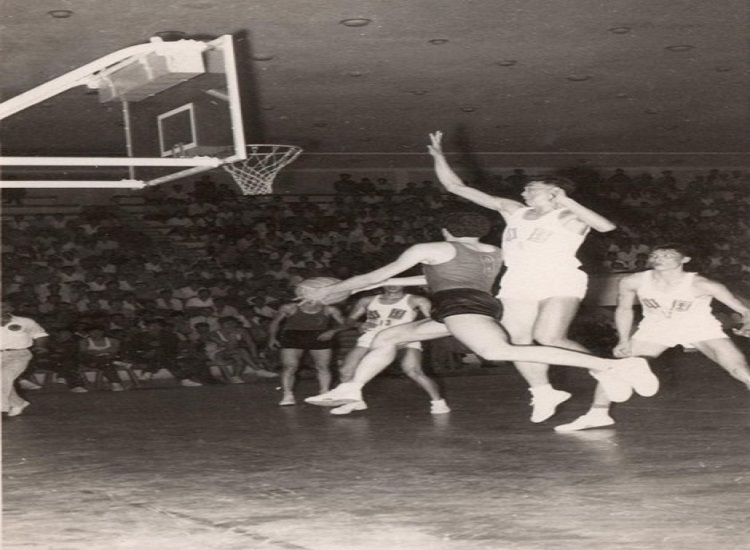
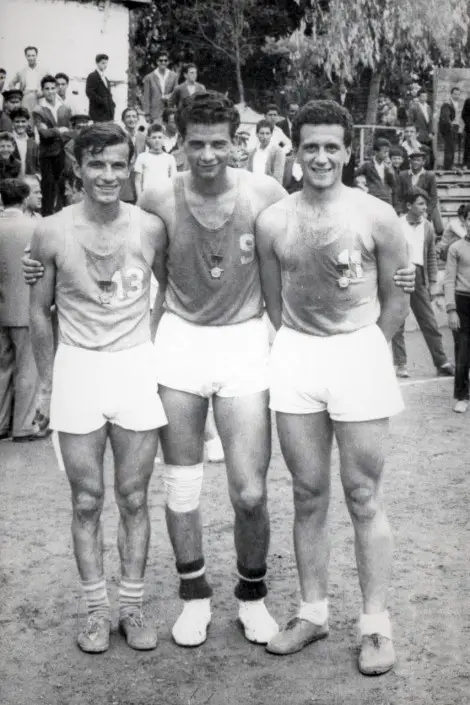
With Tirana, he was the champion of all high schools in Albania; an indisputable national player for Albania’s U-22 team; three times consecutively National Champion (1961, 1962, 1963) with “17 Nëntori” of Tirana – the team that revolutionized Albanian basketball; at age 19 (1962), a “Master of Sport” – an extremely rare case in collective sports in Albania; and at age 19, a national team player – part of the starting five in the 1965 Balkan Games, where he and his teammates won the well-known “Best of the Year” poll by the newspaper Sporti Popullor.
And all these unstoppable successes were achieved only up to 1966, when he was only 23 years old! These must absolutely be called rare feats for any basketball player in Albanian sports. Filip Guraziu was pursued by the tragedy of his father, whom today, after nearly a century, we discover and affirm, among other things, as a pioneer of Albanian sport in the first decades of the 20th century. Indeed, as we will show later in this narrative, Pjetër Guraziu is one of the leading founders of Albanian sport as a whole…!
The tumble of subsequent years is truly full of whims, as hopeful as they were ultimately merciless. Suddenly, after 18 months in Dukagjin, Filip Guraziu is returned to Shkodra, to his profession as a mathematics teacher and his role as an irreplaceable basketball player. With the physique of an athlete, tall, as explosive in dynamics and jumping ability as he was versatile in shooting from near and far – under the basket and in the clear vision of actions around it – the basketball player Filip Guraziu was the prototype of a modern basketball arsenal. As for what is called the competitive spirit, or the immense sporting courage of an unyielding will, he had no rival. Could it be that these qualities forced the regime to bring him back? It was a return of incomparable will. 18 months in the mountains of Dukagjin without playing basketball, followed by a sensational restart, practicing the sport almost like a victor. It seemed the curse of the dictatorship was now behind him…
But it was not so. Very soon, history repeats itself. Not only do they stop his basketball again, but they soon strip him of his right to the profession of mathematics teacher. Straight to being a worker at the Wood Combine in Shkodra! Completely contrary even to the laws of that time. And if later he aimed to work at least as a simple accountant, though a university graduates in mathematics, he had to undergo the evening economic school exam to secure a position as an accountant. Late, very late, Filip Guraziu would have his second great rebirth only in democracy, when his fellow citizens elected him as the Mayor of Shkodra (1992-1996).
From then until today, so to speak, is the second life of Filip Guraziu, who has an immense range of activities. Mayor, director of the “Jordan Misja” High School, leader of the Italy-Albania Friendship Association based in Florence and Shkodra, President of the “Vllaznia” Sports Club, “Honor of Albanian Sport,” vice-president of the Association of Former Political Prisoners and Persecuted based in Shkodra. And without forgetting activities in the fields of culture, ecological protection, tourism, art, and as an author of publications. An intersection extremely wide in its geographical variety: Florence, Venice, Gjakova, Shkodra, Laç, the Adriatic, the Alps, Albania, France, Austria, the USA. Even to being an “Honorary Citizen” of the city of Lincoln, Nebraska, in the USA. All of which, however, does not erase a dramatic history. As always, the cause of that entire drama in the first part of his life – with its ups and downs, its mercilessness, its sinking and temporary rising – for the great Albanian basketball player Filip Guraziu, had only one cause: his father.
The good man, the noble citizen, the distinguished professional of Western culture, who – fallen by the bullets of a bloody regime through no fault of his own – had left his son Filip and his daughter Elizabeta, children still almost in the lap of their mother, Ermelinda…! So, who was Pjetër Filip Guraziu – the father of Filip Pjetër Guraziu? In response to this question begins the second part of this history, which is surprisingly revealing for the history of Albanian sport itself, which belongs as much too Albanian life as a whole as it does to our national sport.
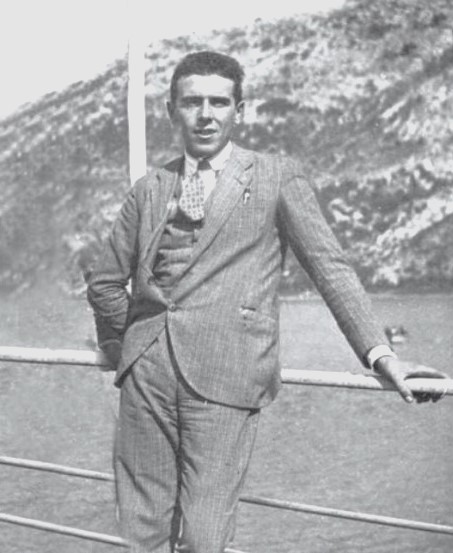
Pjetër Filip Guraziu was born in 1906, in Shkodra, on “Gurazezve Street,” in the historical “Gjuhadol,” from a well-known merchant family distinguished for patriotic activities. Distinguished names appear consecutively in historical archives. His uncle Shan Guraziu was elected a member of the “Mexhlis” as one of the representatives of the city’s Catholic neighborhoods. His grandfather Pjetër Guraziu was part of the Steering Committee of the League of Prizren branch for Shkodra. His father Filip was imprisoned by the Turkish occupiers for patriotic activities as a signatory of petitions that Albanians in the diaspora sent to the Great Powers in favor of an “independent” Albania. Finally reaching his brother Tonin – the founding pianist – to whom his nephew, today’s Filip Guraziu, has dedicated the book “Tonin Guraziu – A Life at the Piano.” Descended from and living among these distinguished names, in 1912, the six-year-old Pjetër Guraziu and his family found themselves in Bari, Italy, which provided his education, even completing a Commercial high school. This culminated in 1929 with a Doctorate in Economics from the University of Bari.
And more than that, it would also nurture his love for sports…! In 1930, Pjetër Guraziu returns to Albania and begins work as a teacher at the Commercial high school in Vlorë. Later he works at the Tirana Customs, while during the occupation years; he withdraws into the family’s private business directed by his father. In 1938, he marries Ermelinda Saraçi, daughter of the well-known Patuk Saraçi – a deputy of the first Albanian Parliament. They had two children, Elizabeta and Filipi. Meanwhile, the Guraziu family, living in Tirana, financially supports the National Liberation War, hoping and believing in the realization of a democratic Albania. Which, of course, would not happen? They invite him to participate in the formation of the new government in Berat as an uncompromised intellectual, which he is prevented from doing for health reasons. But he does not stop himself from accepting service in important duties in the central departments of the new state (Ministries of Agriculture and Finance) as a director of economic and finance sectors.
I have known people who worked with him in the ministry, and they told me he was a model for everyone and everything: in skill, behavior, profession, knowledge, and social circles. As his ministerial colleagues told me, he was among the few who, more than once, understanding the difficulties of the first years of that state, had even refused his salary. It seems unbelievable, but it is completely true. And with all this, Pjetër Guraziu would reach the fatal date of February 26, 1951, when he is arrested, and the next day, February 27, 1951, along with 21 other intellectuals, without any fault, he would be executed without trial. Forty years later, on August 11, 1991, the Plenum of the Supreme Court in Tirana publicly announced the decision of innocence for the 22 executed on February 27, 1951, in the so-called incident of the bomb at the USSR Embassy in Tirana. In 1993, the reburial of the 22 martyrs was solemnly organized at the Martyrs’ Cemetery in Tirana. In 2011, they were decorated with the Order “Honor of the Nation.” This is the tragedy of the “Honor of the Nation,” Pjetër Guraziu, whom today, after 93 years, we also recognize as the first record-holder in the history of Albanian sport. Interesting, indeed! Communist Albania is the only country in Europe that has executed three of its record-holders in the sport of track and field.
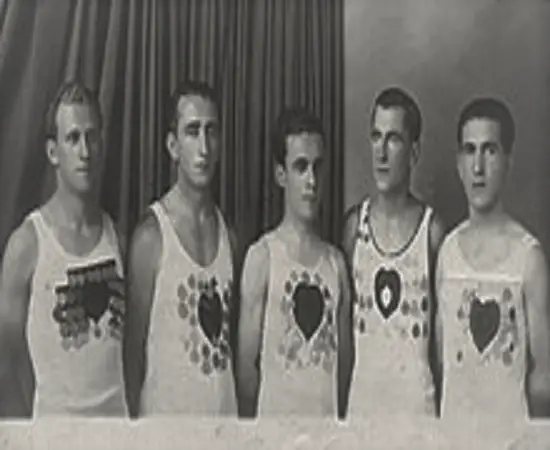
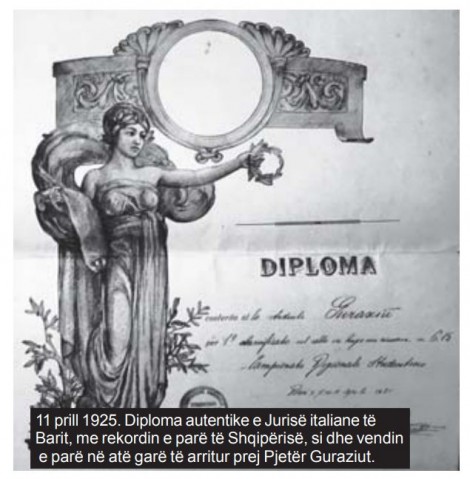
These are Sejfedin Biçaku, Pjetër Guraziu, and Abdyl Këllezi. Not ordinary athletes, then. But distinguished record-holders of their country, led by the European-level athlete Sejfedin Biçaku. A regime that is truly “original” in its crimes. Thus, one of this trios – which in its complexity or unique (one-of-a-kind) nature must be called legendary for Albanian sport – is Pjetër Guraziu. In a way, even the most unique. Because Pjetër Guraziu is the first record-holder, not only of track and field but of all Albanian sport. Another chapter of his life, the other side of the coin: he is also one of the first organizers of sports in Albania. The culmination of his history, to our great fortune, is documented in the most untouchable way. It dates back to April 11, 1925, in Bari, Italy.
This is proven by the authentic document that his son Filip Guraziu and his family preserve to this day as a separate medal of the truth of a time – specifically, the year 1925. Words here are superfluous. This diploma attached to our “dossier” speaks for itself, bright and worthy of the Olympic Games in its classic stamping of the goddess of victory, summarized in the sublime affirmation of these words: “Diploma conferred to the student Guraziu for 1st place in the long jump with a result of 6.15 m. Student Regional Championship. Bari. April 10-11, 1925.”
A confirmation with the seal and signature of the organizers. A documentation that, toward a positive direction of sensational news, even overturns much of the chronological progression of the Albanian record in the long jump. On the other hand, it gifts Albanian sport with its first official document of a winner’s competition – in this case, somewhat international – which belongs, therefore, to an Albanian athlete. If we look at the result through the eyes of a specialist, calling it extraordinary in its quality achievement is an understatement. Even more so because it was achieved by a young student who, on that April 11, 1925, of the competition, was exactly 18 years and 6 months old – which, on the other hand, also constitutes the first national track and field record for youth? And automatically, through technical eyes, Pjetër Guraziu’s 6.15 m of 1925 constitutes a result of an extremely high level for Albania at that time. Indeed, even daring to compare it with a peak result such as Italy’s national long jump record. And it is, therefore, truly interesting that only two days later, following Pjetër Guraziu’s first place and our record, on April 13, 1925, Italian athletics – after 13 years – broke its own long jump record, which had been set in 1912 by athlete Virgilio Tomasi with 7 meters. The author of the new Italian record of April 13, 1925, was Tonini of US Milanese with 7.17 meters. / Memorie.al