

By Prof. As. Dr. Thanas L. Gjika
Part One
— WHAT IF WE HAD LISTENED TO FAIK KONICA? —
Memorie.al / In the history of the Albanian people, the act of baptism of the young Faik Bey Konica – who converted to the Christian Catholic faith under the name Faik Domenik Konica – has neither been understood nor properly valued. This event took place in the summer of 1895, just as he had finished his higher studies in Dijon, France, in Romance Linguistics and Philosophy. This young man received his first lessons in the paternal palaces in Konica, where he was introduced to Persian and Arabic civilizations while learning Arabic, Persian, and Turkish from an educated hoxha, whereas he began learning Italian from a private tutor. Seeing his exceptional intelligence, his parents were suggested to send him for studies to the Jesuit Saverian College in Shkodër, where he went and lived for two years.
This decision to continue his studies at a Catholic Jesuit school demonstrates, on one hand, the religious tolerance of Faik’s parents and, on the other, that his private tutor must have been a Catholic (Jesuit), either Albanian or foreign. As shown by the published list of students of this school on the occasion of its 50th anniversary, Faik studied there in 1884 and 1885, when he was 9 and 10 years old.
In Shkodër, the capital of Albanian Catholicism, Faik mastered Italian and became more closely acquainted with the ideas of Western European civilization. As is known, he dedicated his entire life to the mastery and dissemination of these ideas among Albanians. After two years, he left Shkodër to continue his studies at the French Catholic school of Galatasaray in Istanbul, which he completed in 1890 at the age of 15. At this school, he met the young man from Tirana, Murat Bey Toptani, with whom he shared patriotic convictions.
Faik completed his full university studies in Dijon, France (1890–’95) and postgraduate studies in Paris (1895–’97); later, he also studied at Harvard University in Boston (1909–1912) during his early years of emigration to the USA. Throughout his academic life, Faik Konica achieved brilliant results, testifying to his exceptional intelligence and abilities.
His unique intelligence was manifested in his high academic performance, his journalistic, literary, and scientific writings, and in the case of his conversion from Muslim to Christian by his own free will. Such an act had not been conceived by any other Albanian before him.
The baptism of Faik Konica with the name Domenik is also evidenced by several letters from 1895–’97 sent to the Albanians of Bucharest, which he signed with his new name: Faik Domenik Konica. These letters are preserved today in his file at the Central State Archive of Albania. After 1895, he never denied the fact that he had converted to Christianity, even though he did not use the name Domenik for long in his writings.
We believe the primary impulses that drove this scion of a prominent Muslim family to be baptized as a Christian should be sought in his cultural and scientific formation in Catholic schools, as well as in his patriotic devotion, religious tolerance, and intuition. It seems Faik viewed the Ottoman yoke as an alienation of the European character of the Albanian people; therefore, he believed that to achieve national liberation, a spiritual rapprochement with Christian Europe had to be accomplished first.
In other words, he suggested an evolution of religious mindset – a break from the Muslim mentality through conversion to the faith of the ancestors, the Christian faith, which was the common faith of Albanians with their mother continent prior to the Ottoman occupation. Thus, according to him, the independent Albanian state should be identical in religious affiliation to the state of Gjergj Kastrioti Skënderbeu.
Indirectly, it is understood that he linked the process of national liberation from the Ottoman yoke to a process of catharsis for the Muslim part of our people, who ought to repent for abandoning the faith of their ancestors under the pressure of circumstances during the Ottoman occupation. In the re-Christianization of Muslim Albanians, this Renaissance figure saw one of the main factors for strengthening the national unity of our nation.
The religious division of the Albanian people into Christians and Muslims, created during the Ottoman occupation, did not, in his view, serve unity but rather national discord, thereby delaying the liberation processes. This opinion was also expressed by the patriot Mustafa Merlika decades later. However, we must affirm that Faik’s thought and his 1895 baptism, while visionary, were premature.
It is not a coincidence that Faik’s thought and action were not properly valued or given importance by various European consuls working on future policies in the capital centers of the Albanian vilayets of the Ottoman Empire. To our surprise, even Albanian patriots did not pay attention. Luigj Gurakuqi said: “Albanian Catholics did not gain much from the baptism of Faik Konica.” Even researchers of Konica before 1944 and after 1992 failed to appreciate this thought and action of his.
The impossibility of realizing this great psychological step for the Albanian people was shown by the failure of this Renaissance figure’s efforts to turn his own baptism into a movement among all Muslim Albanian intellectuals. After his baptism, Faik proposed to his close friend, Murat Bey Toptani that he too should be baptized, and together they would encourage other friends and colleagues to follow suit.
However, Murat replied that he could not take such a step because the Frashëri brothers, whose son-in-law he was, would expel him from the house. Murat thus made Faik understand that the baptism of Muslim Albanians living within the Ottoman Empire was an act that could not be carried out; consequently, he did not insist further on this issue…!
The young man from Tirana was right; the social and religious atmosphere in the Albanian territories of the Empire could not allow such a massive leap in the consciousness of Muslim Albanians, who had lived as Muslims for several generations or centuries.
Meanwhile, it must be added that the premature nature of Konica’s idea – to baptize Muslim Albanians into Christianity to strengthen their national unity and encourage the Europeanization of their mindset – does not diminish the visionary character of this thought.
The visionary character is evident in the fact that he was ahead of his time and opened a new era, as shown by the evolution of the religious mindset of Albanians from 1895 to the present, where we see that time has worked toward setting aside the Muslim mindset in favor of embracing a Christian or atheist one.
We present some facts, without wishing to offend the feelings of devout Muslim believers, because for us, good believers – whether Muslim or Christian – are equally valuable to Albanian and world society. Indeed, we believe that non-believers, i.e., atheists, are also valuable when their atheism stems from their convictions and does not devolve into anti-religiousness:
- Starting from the first decades of the independent Albanian state, patriotic Muslim families began naming children not with strictly Muslim names like Muhamed, Myftar, or Mehmet, but with names of mountains or rivers (Tomor, Korab, Drin, Vjosa); flowers or seasons (Lule, Vera, Manushaqe); animals or birds (Luan, Dash, Skifter, Pëllumb); and other names unrelated to the Quran like Drita, Dritan, Dritëro, or Liri.
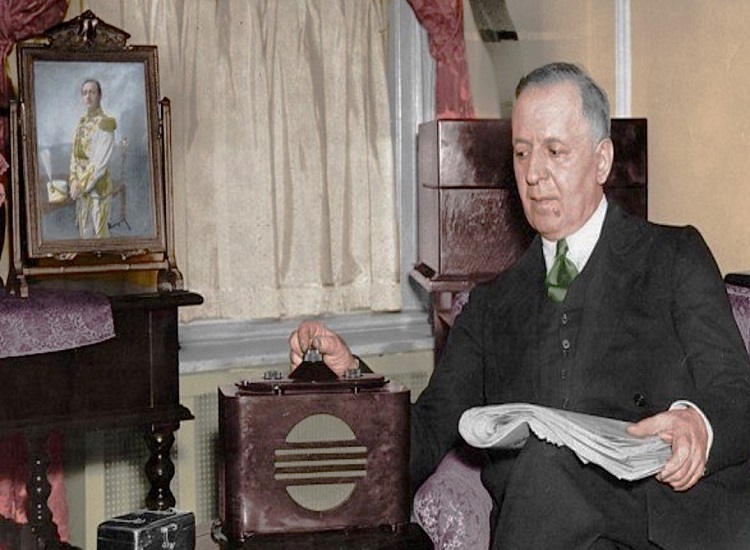
- Ahmet Zogu, after taking power in 1925, approved the European calendar as the official calendar of the state; he abolished the veil (ferexhe), opened jobs for women, and granted many scholarships for youth to study in Western Europe. These measures show his pro-European and not pro-Muslim-Asian aims – aims that became even more evident when he married a Catholic Hungarian daughter of a family of counts, rather than a daughter of kings or wealthy sheiks from the Muslim world.
This marriage of the King of Albanians to a European Christian woman did not stem from his education in Catholic schools, nor should it be understood as disdain for his parents’ faith. King Zog’s marriage shows that he sacrificed the Muslim faith for the sake of a better European future for his people.
- During the communist regime, anti-religious propaganda and the violent struggle against religious beliefs weakened religious faith among Albanians, but this process caused greater damage to Muslim believers, as their faith was newer and had shallower roots.
The Albanian people had embraced Christianity for nearly twenty centuries through great missionaries like St. Paul, St. Timothy, St. Astius, St. Constantine the Great, and St. Jerome. From the ranks of Christian believers, many distinguished sons had emerged over the centuries – clerics or otherwise – as well as writers and martyrs who gave their lives for the preservation and cultivation of the Albanian language and national freedom.
In contrast, the Muslim part of the Albanian people had been converted for only two or three centuries, and most had done so out of necessity. Despite being the numerical majority, the distinguished sons and martyrs of the Albanian language and freedom from the Muslim part were fewer.
- After 1991–’92, the collapse of communism required a process of catharsis. The former leadership of the Albanian Communist Party, which had led the people into a dead-end full of sacrifice and unnecessary crimes, should have asked the people for forgiveness.
Ramiz Alia, Nexhmije Hoxha, and company, being people who hated the Christian faith, also hated its essence: repentance and forgiveness. To make matters worse, the Hoxha and Alia clan worked to ensure their people filtered into the leadership of the new parties to continue the “crime” of holding power and enriching themselves under the new conditions of pluralism.
Even today, after 20 years, they do not ask the people for forgiveness for the crimes committed, but justify themselves by saying: “that was the social system.” Their bloody rule and this insistence on justifying their crimes show they never possessed the sensibility of a leader of the people.
Who does not know that with other people – such as Zai Fundo, Zef Mala, Nako Spiru, Sejfulla Malëshova, Drita Kosturi, Selfixhe Broja, Ymer Dishnica, etc., whom they sidelined – the communist system would have been implemented with tolerance, with less severe consequences, and finally, its collapse could have been accompanied by a process of repentance and a sincere departure from power./Memorie.al