
By Visar Zhiti
Part One
—When he would have been 90 years old—
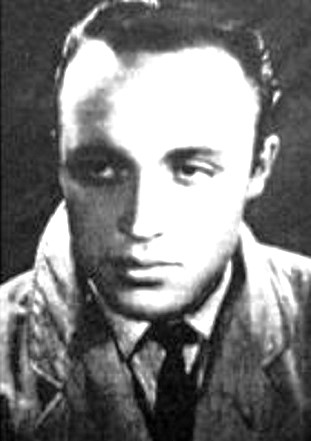
Memorie.al / It would have been greatly desirable, and joyfully normal, for Pjetër Arbnori’s family and friends, as well as Albania today, to have brought his birthday cake with 90 candles indicating his age, and for him to blow them out amidst joy and cheers, raising a glass of wine as a husband, parent, and grandfather, but also as a prominent fellow-sufferer in the severe prisons of a barbaric dictatorship, as a dignified deputy and chief parliamentarian later on, and as a unique writer. But he departed peacefully and with a mysterious silence 19 years ago, leaving everything behind, perhaps so as not to cause worry, but reconciled with himself and the world…!
THE RETURN OF THE STATUE
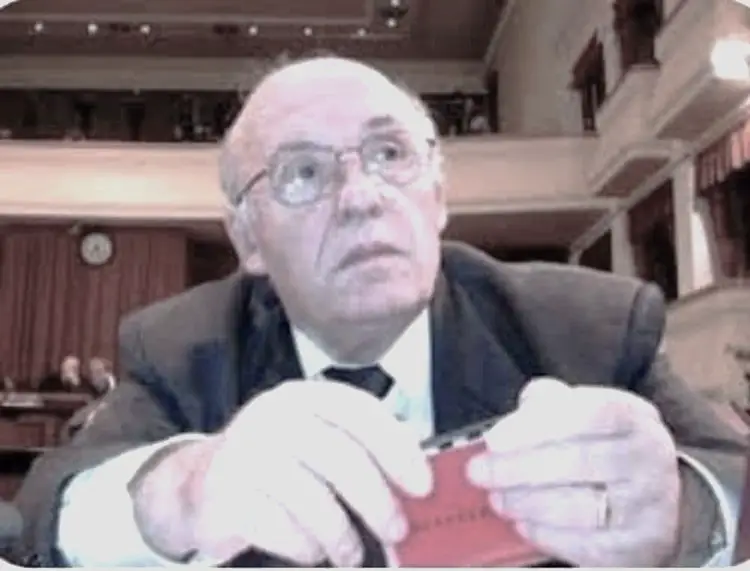
Pjetër Arbnori’s return as a statue in front of the Parliament, which he led as its first Speaker in post-dictatorial, pluralistic, and democratic Albania, was an event of importance, I would say, but not because his spirit returned; it was not a resurrection, despite the fact that in the hearts of his family, he is forever present, as he is for his friends, fellow-sufferers, and collaborators…! Even as a statue, Pjetër Arbnori is still the most marginalized, not to say the most “persecuted” of the statues around, placed after the flowerbeds in the narrow path where armed guards do not allow passersby, except for deputies, standing against the wall of the Parliament building, which appears low and quite diminished, not only because the largest mosque in the Balkans has been erected next to it, but also due to the quality of the deputies inside.
The statue of Pjetër Arbnori was needed, but no longer Pjetër Arbnori himself, and surprisingly, it was brought not by his collaborators or his party, but by his opponents, those from the party that imprisoned him when it was the only one. Now in bronze, the statue nonetheless (re)minds us of how much of a man he was, the opposite of bronze, deeply human, meanwhile an unwavering witness and opponent of evil, a steadfast resistor in prisons, and a triumph for all his fellow-sufferers. Was he attacked? Was he maligned? Yes. Was he loved and honored? Yes, and even more so…! They compared him to Nelson Mandela; he had it tougher than him, I say.
Mandela was told that if he changed his mind and stances, they would release him from prison. With Albanian prisoners, there were no such compromises, and ideas were strictly forbidden. Václav Havel had a typewriter in the room where he was confined in prison; for Albanian prisoners, there were only torture machines, and they worked as slaves in camps, in terrible mines, etc., etc.
Pjetër Arbnori is a phenomenon, we could say. As unique as he is exemplary. He emerged from the deep darkness of sentences and became known in the post-dictatorship, during the difficult transition that never seems to end, having joined the movement for democracy and becoming a wise leader. He remained so, dignified, with internal struggle, not revolutionary – which I believe he could no longer tolerate – but he still caused controversy, and not just from his opposition. Slow, but sure. Knowledgeable, without many words, but also a polemicist and orator. A writer as well. He gave more than he received. They wanted more from him, but those were the possibilities. To reality, he gave our emblematic presence.
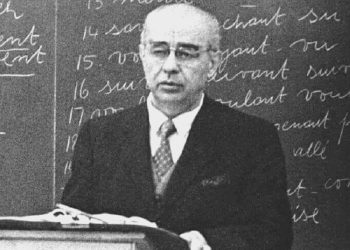
They wanted him to be forgotten; suddenly, when least expected, he returned as a statue. Which was also criticized? He, again, is silent, more and more. He has left us several books about which a scholar in Italy, Prof. Giuseppe Gradilone, who was Director of the Department of Albanology at the “La Sapienza” University in Rome, wrote that literature did not lead Arbnori to freedom, but captivity, prison led him to literature. 29 years in prison. More than the age of the writer, his fellow citizen, Migjeni. Arbnori’s resilience, his fate, his rise and contribution, his being forgotten and his return are of interest, they truly constitute a phenomenon, where more than Arbnori himself, we understand the time, its progression, and the others – those who shape the time and how.
And with Arbnori, today’s Albania is understood, its democracy, amidst traumas and hopes, deceptions and achievements, losses and forgetfulness, freedom and chaos at the closed doors of Europe. He, Arbnori, is part of contemporary history, just like those who knew and worked with him, who loved and attacked him, then and again, whom he faced wisely while alive, and even more wisely as a statue. His statue, thus marginalized, which seems to have been made more to be unseen than to be seen, still speaks and troubles memory – not only parliamentary memory, but that of the academy nearby, of the armed guards, of his party, which protests, and will deserve that victory when it had Pjetër Arbnori in its bosom – did they love him or did they need him (?!)
– Arbnori, nevertheless, troubles the government, even with that anecdotal saying that “Socialists are not socialists, but specialists,” meaning they lack ideals, etc., etc., but ultimately, Arbnori made them symbolically unite in front of his statue. But more than the statue, Albania needs the Spirit of Pjetër Arbnori’s fellow-sufferers, their ideals and their dream, because their opponents are also obligated and interested in the Albania for which they were persecuted but endured, martyred, but their ideal triumphed, and the Prime Minister can now fully state who was on the right side of history. Certainly not those who brought tyranny. Therefore, their anti-Kafkaesque metamorphosis was necessary and was not obstructed…!
ARBNORI THE MAN, ONE OF US
…I knew and worked with him, I would like to say something, and fragments of events that I think explain things further. His final resistance and despair call out to me, as do his triumph and disappointments, and his wisdom calls out just as much. First, I heard the name “Pjetër Arbnori” in Spaç prison; the singer Sherif Merdani told me… he is there in gloomy, thick-walled Burrel too… he knows a lot, he is wise…! His name resonated well with me, as if the sacred merged with the Arbëresh (Albanian). And how could that name be put in prison? He wrote and translated, they said. He attributed foreign authors’ names to his short stories and novels, as if they were translations.
He was also registered under a different name at the university because he was not allowed higher education due to his biography; his father had been executed by firing squad. Then, he himself was sentenced to death by firing squad because he wanted to found another clandestine, democratic party. The execution was commuted to life imprisonment…! A different university name, then a different secret party, and different names for his novels in prison – all to not be alienated as a person internally. But what else was his resistance in a life without life, the courage to be as human as possible even in hell, when it was forbidden, the defense of himself, the gluing of broken pieces, natural dignity, hunger strikes in prison and in parliament, his leadership with iron wisdom, facing the wild and diabolical attacks of opponents and his own people.
I want to bring back meaningful fragments of stories here, pulling them out of oblivion. One is from my prisonology work, “The Roads of Hell” (Rrugët e ferrit):
1.
PJETRI’S TOBACCO…!
A wise man in Burrel (in prison), they say, is Pjetër Arbnori. Is he a priest? No, he was a teacher. He writes novels. If Pjetri likes your writing, you know it has value.
-“Whoever writes the most beautiful poem about the moonlight, I will give them that 1 kg. of tobacco that came from my home,” – Pjetri tells his cellmates. Truly, what a cascade of light, golden tuberculosis was pouring in through the embrasure! But the moon was not visible, not because the clouds had covered it, but because of the cyclopean walls. The moonlight seemed to gurgle from that patch of night beyond.
The jury (made up of prisoners) was selected. The poems were collected – pieces of paper, pieces of leather, soul… some were ready, someone else wanted to adapt another or write a new one. And the one by Luan Burimi from Kolonjë was chosen as the most beautiful. “Yes, this one has poetry in his last name. In his first name, he has war. It is a bit like Alfred De Musset’s. No, no, it’s original. It has the popular spirit of his region. That is his style. Congratulations, Luan!”
“Your idea for this contest in prison is marvelous, Pjetër! No newspaper will write about it, the radios and television won’t talk about it. The poets outside, those of socialist realism, receive big prizes, with poems about the dictator, about communism, the Party; they are given decorations, money, studios, trips abroad. And they say nothing, not even a protest, and no, not even a murmur. At least remember this poetic contest in prison, and it’s not the first, for a moon that doesn’t hesitate to pour its light even upon us, the condemned…”!
2.
Later, when the communist empire fell and Albania took a different path, things happened to us that we did not even dare to dream of. Look, Pjetër Arbnori would be placed as the chief parliamentarian precisely in the office of the dictator Enver Hoxha, in the building where the Central Committee of the Albanian Party of Labour (PPSH) had been, now transformed into the Presidency of the Assembly. In my second prisonology work, “The Torn Hell” (Ferri i çarë), I recount this, my own experience:
PJETRI IN ENVER’S OFFICE!
When I entered the Dictator’s office for the first time in the Central Committee building, I felt anxiety and a strange, mysterious fear. I thought I would have to step over corpses to reach that door. I knocked. Yes, yes, from this office, the calamities came to Albania. The chandelier on the ceiling seemed like a severed head, grasped by bloody hair. Unbelievable. Seated in his armchair was the newly elected Speaker of Parliament, Pjetër Arbnori, after 29 years in prison. He still had a guard, once they guarded him as a prisoner, now…!
“Why, wasn’t this one shot?” – asked the ghost of Enver Hoxha. – “Or did he return here after his own death, a ghost like me? It was pointless to spare him that damned life; he wanted to found another party, he’s Catholic too, they must have deceived me, I only had traitors around me, not collaborators!”
– “I want us to work together,” – Pjetër Arbnori told me, – “take care of the library and the press here. Do you accept?”
– “Isn’t it terrifying?”… – and instead of saying ‘sir,’ I almost murmured: – Saint Pjetër. I looked at the telephones on his desk. They looked like torture devices.
– “I don’t know how to use them,” – he told me, – “especially these internal ones. The buttons still bear the names of Central Committee members and executed ministers. Who knows if he used to call them too, summoning the killed ones? Below the building is the labyrinth, the basements and underground tunnels. They lead to the villas of all the leadership. You must come to work wearing a tie.”
As he was seeing me out, I noticed that he dragged his white shoes, “because he wore shackles on his feet for a long time,” – I thought, – “and he constantly walked in prison slippers!”
– “Listen, if you want, take Enver Hoxha’s elevator down, it’s faster,” – and he shook my hands.
When the doors closed, I felt like I was in a confined room from which deadly gas would burst out. Enver was reflected in the mirrors. Not this closes to him, oh God! The elevator was descending to hell.
3.
BEFORE THEY MADE HIM A STATUE AND AFTERWARD
Between being a symbol of suffering and resistance in the dictatorship and becoming a statue in democracy is the time of Pjetër Arbnori – the man. Since he carries and unites these two eras, let us also call that time a “democrature,” with all the meanings we attribute to it…!
I have the feeling, I repeat, so that they understand that we understood and knew it, that ultimately, the symbol and the statues of the martyrs, of those executed, of those who died in prisons and were persecuted throughout their lives, throughout the entire cruel regime that ruled for half a century and continues in a different form, have been needed more than their spirit, ideals, and messages. The spirit of the persecuted, I often say, is the wind that brought the changes and the path to unite with Euro-Atlantic culture.
Such phenomena exist in other times and other countries, I believe, but not as trivialized to the point of ingratitude and infidelity as now in our country. I believe that people like Pjetri understood what was happening as promoters of democracy and devoted themselves wholeheartedly to helping the changes, grasping that they were also being used, but more important than withdrawing was giving their morality to the time, giving justice, collaborating with opponents, with the converted; there was no other condition, this was done for Albania.
I saw Arbnori as calm, which made him seem very silent, with a kind of inseparable veil of sadness, even when he smiled sardonically. “An excellent boss,” we used to say. – Tireless. Fair. As the first chief parliamentarian in democracy, the Presidency building still had employees from the past, when it was the Central Committee of the PPSH, whose fear was quickly receding from us. Pjetër Arbnori not only did not wage class warfare, but when delegations or groups went abroad, he personally made sure that everyone got a turn, including those who had worked there for 10 or 20 years and had never gone abroad under Enver.
Arbnori faced it. He rarely or never responded. I remember when Deputy Azem Hajdari once attacked him. The misuse of files, those remaining after the burnings, had begun. In the media, I defended Pjetri, not only as his fellow-sufferer, since we were the living files ourselves, but in defense of the truth. Azemi came to my office with great warmth, not only agreeing with me but also congratulating me. It was Pjetri’s radiance that emitted goodness. A dignified balancer of issues.
I remember he visited the dictator’s widow in prison, Nexhmije Hoxha, who was sentenced for the misuse of state funds in the “Bloc,” not for the misuse of power, the ruin of Albania, its isolation, the murders, and general persecution. The prison conditions for the dictator’s widow were many times better, even luxurious, when compared to those of Pjetri and all the Albanian prisoners of her regime.
Pjetri eagerly met the Saint Mother Teresa when she came to Tirana, but I had also seen him happily attend the meeting with that English comic actor, known as Pitkin, who had come for a visit to Tirana.
In Pjetri, one sensed the family, the care, his mother and sisters in prison, and now his wife, the delight of his two children, the daughter and son who bore the names of his parents – he had resurrected them, as the common saying goes. The smartness in his clothing was a woman’s touch, the light colors, the white collars, the white shoes. He was a good husband and a careful father to his two beautiful young children. He liked to talk about them.
I often went to the Speaker’s office and requested meetings for those who sought help, some group for properties they couldn’t reclaim, someone for school for the children of the formerly persecuted; another former prisoner wanted a job. “I want to work in customs,” one asked. “Why precisely there,” Pjetri asked me, “it’s enough just to get a job.”
I remember the poet Frederik Rreshpja, a fellow-sufferer of ours, my friend, when I was a student in our Shkodra, who asked me to tell Pjetri that his printing house was being confiscated because he had printed tracts calling for people not to vote in the referendum for the new Constitution and against President Berisha.
“What should we do?” – Arbnori asked me, – “he’s not even with us,” – he smiled mockingly. But handcuffs and suffering united us. And poetry… and he was right about that too. And Pjetër Arbnori as the Speaker of the Assembly (he could not tolerate the word “Popular”) gave a written order that Frederik Rreshpja should not be harmed, nor should political zeal or fines be used, no more than what the law contained, possibly less.
Deputies Uran Butka, Pjetër Pepa often entered his office, I remember the publisher Shefki Hysa as well, the next work was being prepared, etc., etc. I had traveled with Arbnori by helicopter for a broad cultural meeting in Saranda. On the way back, he was going to Shkodra, but I wanted to stop in Lushnjë, at my mother’s place, and he told the pilots to land wherever they could. The helicopter landed in the field next to the stadium. The young people playing football stopped…!
Under the rotor blades that created strong wind vortices, I descended, oh, who is this!… Arbnori came to Lushnjë himself, to see a play by my father in the theater, “Embraces of Two Opponents”, restaged after almost half a century, since the time of the war. “But we should decorate this author,” he said. In official meetings, he liked to say that he, as the Speaker of Parliament was Catholic, the Prime Minister was Orthodox, and the President was Muslim. A meaningful coincidence for us, he added. His head was heavy like Churchill’s. Memorie.al