
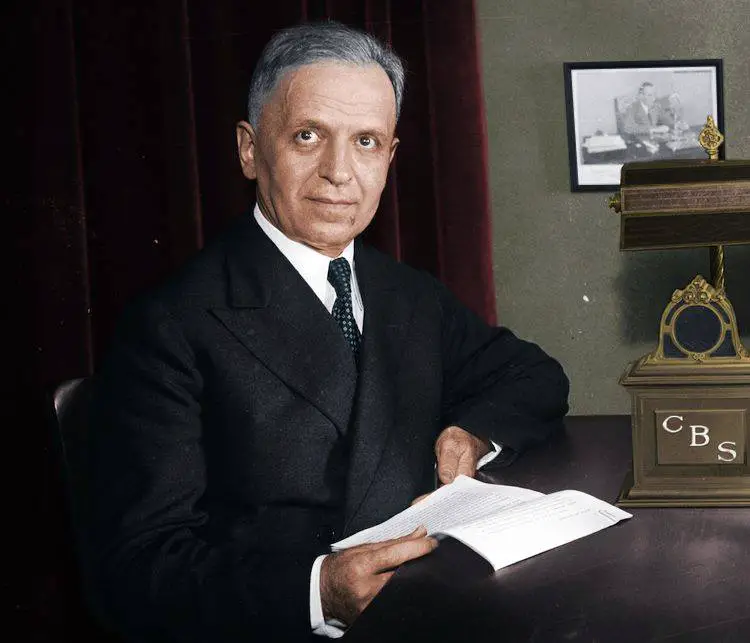
By Agron Alibali
Part One
Memorie.al / On the evening of December 15, 1942, at 7:30 PM, a completely unexpected phone call reached the office of the FBI Chief, Mr. J. Edgar Hoover, in Washington D.C. The caller, an individual with many titles, whose identity is still kept secret in the American archives, reported that Faik Konica had been found dead in his apartment in the American capital that day. The informant further declared that he “had received information that some unknown persons were removing Konica’s personal belongings from the house without proper formalities being carried out.” He said he had tried to contact the State Department, but his efforts “had not been successful.” For this reason, he requested the FBI “to intervene to stop these actions.” The official who took the call and noted the unusual request politely replied that “the Bureau had no jurisdiction in such matters.”
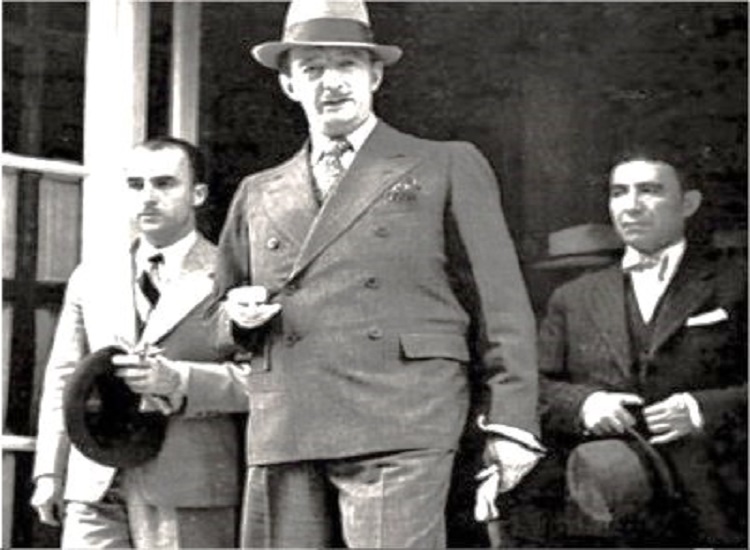
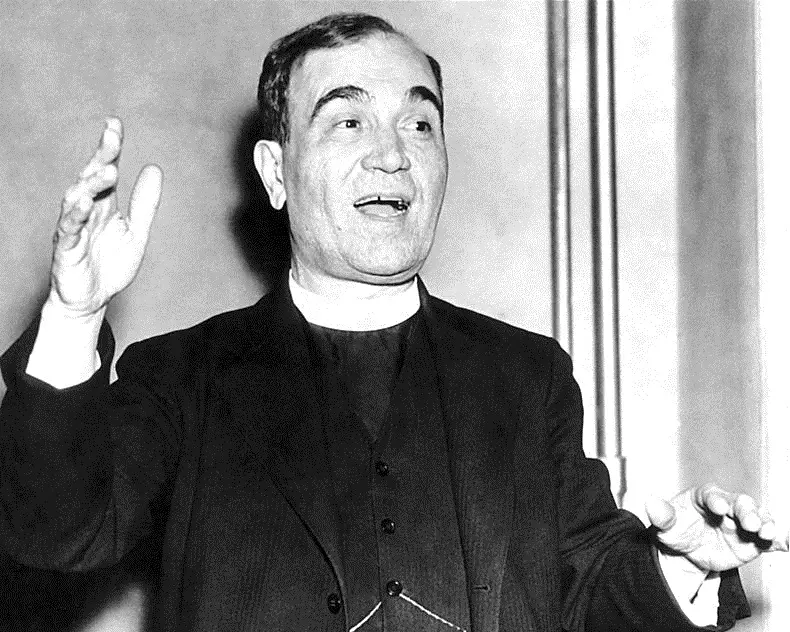
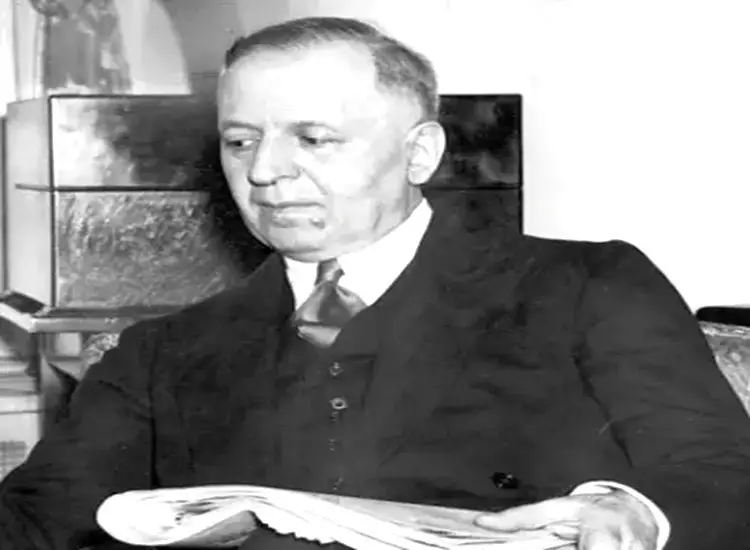
The life of Faik Konica, one of the nation’s revivalists and founders of the modern Albanian state, a personality of extraordinary knowledge and culture, a rare linguist and man of letters, one of the most distinguished diplomats ever to have worked in the capital of the United States of America, one of the greatest leaders of the Albanian diaspora in Europe and the USA – founder of VATRA and editor-in-chief of “Dielli” (The Sun), the publisher and editor of the famous magazine “Albania,” etc. – had ended on the evening of December 14 or the morning of December 15, 1942.
Faik Konica’s death occurred exactly four days after the historic declaration of December 10, 1942, by U.S. Secretary of State, Cordell Hull, in support of the independence and integrity of a liberated Albania. As will be recounted by the documents presented below, an extraordinary contribution to this declaration was made by Fan Noli and Faik Konica themselves, who had been in continuous contact and close cooperation with the American government regarding Albanian issues.
However, as will be explained on another occasion, Faik’s death would also mark the closure of the investigative file against him, opened about two years earlier by another branch of the American administration, more precisely the FBI. From this file, even though thin, we learn other details about the last two years of the life of the distinguished Albanian statesman and diplomat. And finally, Konica’s sudden death would open a wound that remains unclosed to this day concerning the historical and cultural heritage of the Albanian nation – that of Faik Konica’s unfulfilled last will, that his library and letters should be bequeathed and preserved by the National Library in Tirana.
Konica passed away when the Albanian issue was at one of its most difficult crossroads. Occupied by Fascist Italy, Albania had lost its sovereignty and its legal personality as a subject of international law. The Italo-Greek War had suddenly put the country’s territorial integrity at even greater risk, reviving the absurd territorial claims of its neighbors, also supported by England.
Konica’s final days were thus days of extraordinary intensity. With a rare energy, persistence, and clarity, Konica and Noli were fighting again, just as they had in Boston in 1912 when they founded “VATRA,” to save the homeland in danger. According to them: (I) Albania was again in danger of partition due to the intrigues of its neighbors, with London now getting involved; (II) the danger was compounded by the lack of representation and internal division; and (III) just as in 1919, at the time of President Wilson, Albanians, wherever they were, placed their hope in the stance of the United States.
Under the extremely complicated conditions of late 1942, when the situation in Albania was completely unclear, Albanian patriots – including Noli and Konica – saw hope in the support of the United States of America, and regarding the legal continuity of the Albanian state, in the personality and figure of King Zog. They thus joined Zog without hesitation, despite the extraordinary reservations, contradictions, and clashes they had had with him before. However, the mature stance of these two hommes d’état, who placed Albania’s interests above everything else, was confronted by fierce opponents of King Zog, led by Kostandin Çekrezi, once a friend and collaborator of Noli and Konica, who, like them, had studied at Harvard University and in 1942 was the chairman of the newly formed association in America, “Free Albania.”
The United States officially entered World War II after the attack on Pearl Harbor on December 7, 1941. This brought about major changes in the American administration. One of them was the establishment of the Office of Strategic Services (OSS), the precursor to the CIA, which had two main goals: (I) collecting accurate information; and (II) encouraging clandestine liberation movements in occupied Europe, which included engaging Americans of descent from those countries.
As events in Europe unfolded rapidly, the American government was closely monitoring developments in all theaters of the war, including the Balkans and Albania. One of the most interesting developments regarding Albania was the OSS’s effort to unite the Albanian diaspora and to provide moral support and military aid to the guerrilla forces on the ground.
Thus, “on November 18, 1942, the OSS invited representatives of Vatra and Çekrezi to discuss ways to consolidate the activities of the rival groups into a joint council.” Also, 27 days. In fact, the meeting took place on November 19, 1942 – that is, twenty-seven days before Faik’s death – between Faik Konica and Fan Noli on one side and Earl Brennan on the other. Not much is known about Brennan, except that he, along with a certain Philip Adams, was among the first officials at the OSS to deal with Albanian affairs. Konica himself provides the details of the meeting in a letter sent to Secretary Hull.
Faik writes:
1530 Sixteenth Street
Washington, D.C.
November 21, 1943
Sir:
Bishop Noli of Boston, formerly Prime Minister of Albania, and I were invited by Mr. Earl Brennan of the Office of Strategic Services, for an exchange of views on the situation in Albania. In the end, we handed Mr. Brennan a statement, two copies of which are attached for your information.
I take this opportunity, Sir, to reiterate the assurances of my highest consideration.
Signed:
Faik Konitza
Former Minister of Albania
The Honorable Cordell Hull
Secretary of State of the United States
Konica’s letter, although short, is a model of diplomatic communication. One can feel the weight of the historical moment, the spirit of authority – expressed by citing the state functions of Noli and himself; the need for unity: Konica had endlessly criticized Noli’s governance in 1924 and often Zog’s afterwards; yet now, when the homeland was in danger, he had reunited with his friend and fellow combatant from his Harvard and “Vatra” days, as well as with Ahmet Zog himself, whom he knew quite well.
The attached Noli-Konica Declaration is also in this line:
“We, the undersigned, were invited by one of the offices of the Government of the United States in Washington, for an exchange of views regarding the best way to organize an Albanian government in exile. During the conversation, we emphasized the following points:
- Only a united Albanian front that would include all possible Albanian personalities would have a chance to draw the entire Albanian people behind it and be useful to the United Nations;
- King Zog remains the most distinguished Albanian personality (the foremost living Albanian personality), and his exclusion would strip the proposed movement of its power;
- No member of this united front should be forced to give up his political ideology, but shall cooperate until the territorial integrity and independence of Albania are secured at the Peace Conference; thereafter, everyone shall regain his freedom of action;
- “Provisional governments” such as the one proposed by Mr. Çekrezi and his associates would be not only useless but worse than useless; they would not help either Albania or the United Nations, and would even further incite the plans of those neighbors who have officially declared that they want the partition of Albania; and
- We remain ready to cooperate wholeheartedly and at all times with the Government of the United States.
Faik Konitza
† F. S. Noli
Washington, November 19, 1942.
This rare document once again shows the essence of the political worldview of the two giants of the nation’s Renaissance and the Albanian state: for them, the independence of Albania, the preservation of its territorial integrity, and the well-being of the nation were above all else.
We do not yet have Brennan’s report on the November 19 meeting. However, Konica did not leave the contact at that. On November 28, 1942, Secretary of State, Cordell Hull, made his first comment on Albania at a regular press conference.
Referring to “some friends of Albania in the US, who were concerned about the country’s future,” a journalist asked the Secretary of State if he had any comment to make and especially “if he considered Albania as one of the countries that would be liberated by the Allied forces.”
In an offhand response, the Secretary said that “we all remember how the innocent and non-offending people of Albania were invaded and seized by the Italian armies by surprise and without the remotest pretext, and that some sort of government was imposed there by the Italian authorities. Under these circumstances, it remains the high duty of every Albanian and every other honest citizen to shoot at sight against any Italian soldier he might encounter in his country who denies that people the just rights and liberties they deserve.”
Konica was certainly well-known in the diplomatic and journalistic circles of Washington, where he had served for so many years and where he had forged true alliances and friendships. We do not know if the question was somewhat arranged, but what we can say for sure is that he and Noli were not entirely satisfied with Secretary Hull’s statement. / Memorie.al