From Dom Zef Simoni
Part eleven
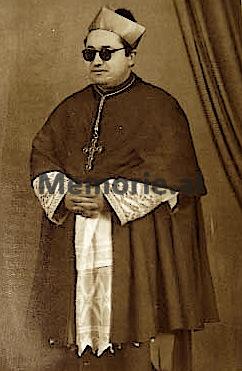
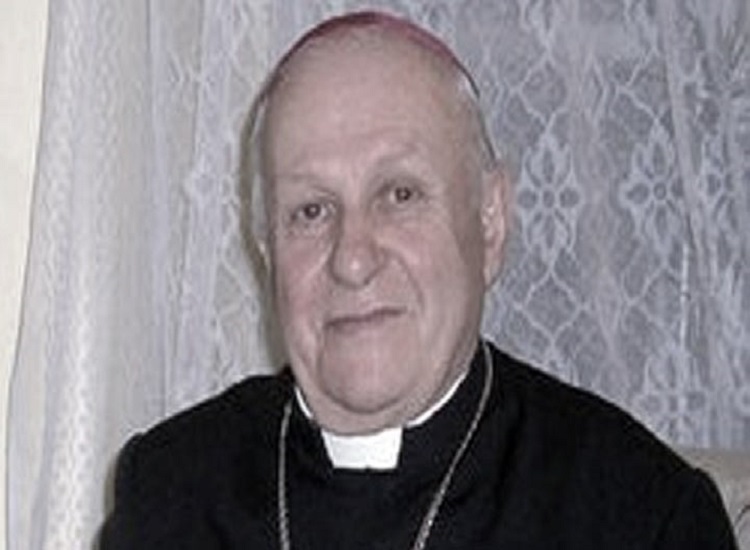
Memorie.al publishes an unknown study by Dom Zef Simoni, titled “The Persecution of the Catholic Church in Albania from 1944 to 1990,” in which the Catholic cleric, originally from the city of Shkodra, who suffered for years in the prisons of Enver Hoxha’s communist regime and was consecrated Bishop by the head of the Holy See, Pope John Paul II, on April 25, 1993, after describing a brief history of the Catholic Clergy in Albania, dwells extensively on the persecution suffered by the Catholic Church under the communist regime, from 1944 to 1990. Dom Zef Simoni’s full study begins with the attempts by the communist government in Tirana immediately after the end of the War to detach the Catholic Church from the Vatican, first by preventing the Apostolic Delegate, Monsignor Leone G.B. Nigris, from returning to Albania after his visit to the Pope in the Vatican in 1945, and then with pressures and threats against Monsignor Frano Gjini, Gaspër Thaçi, and Vinçens Prenushti, who sharply rejected Enver Hoxha’s “offer” and were consequently executed by him, as well as the tragic fate of many other clerics who were arrested, tortured, and sentenced to imprisonment, such as: Dom Ndoc Nikaj, Dom Mikel Koliqi, Father Mark Harapi, Father Agustin Ashiku, Father Marjan Prela, Father1 Rrok Gurashi, Dom Jak Zekaj, Dom Nikollë Lasku, Dom Rrok Frisku, Dom Ndue Soku, Dom Vlash Muçaj, Dom Pal Gjini, Fra Zef Pllumi, Dom Zef Shtufi, Dom Prenkë Qefalija, Dom Nikoll Shelqeti, Dom Ndré Lufi, Dom Mark Bicaj, Dom Ndoc Sahatçija, Dom Ejëll Deda, Father Karlo Serreqi, Dom Tomë Laca, Dom Loro Nodaj, Dom Pashko Muzhani, etc.
The 11th Festival, 1972
In early 1972, the dictatorship detected manifestations of a certain liberalism which would give rise to a new terror that would begin especially after the 11th Radio-Television Song Festival. This event aggravated the class struggle with new waves of arrests and executions.
Dom Shtjefën Kurti
Among the clergy, they had arrested and executed the priest Dom Shtjefën Kurti, whom they had charged with all kinds of accusations. He was accused of severe sabotage against the cooperative, being a foreign agent, poisoning wells, and performing a baptism. A deep, relentless analysis of foreign news and foreign press began, concerning many European stations and the “Voice of America,” lasting for almost a year. This news presented the horrors committed, the degraded economy, and the stormy socialist night. It spoke of the violence against faith and the efforts being made to preserve the religion.
Vatican Radio: D. Martin Trushi, May 8, 1973
On May 8, 1973, the Vatican Radio station in the Albanian language, through the announcer, Zef Pali, announced that major religious services were being held, mentioning the name of the zealous priest Dom Martin Trushi and my name. This news, mentioning names, was very strange and made a great impression, and the next day people looked at me with pain, concern, and sympathy. Less than a month later, specifically on June 8, I was summoned to the City Branch of Internal Affairs, where the Republic’s investigator spoke to me. He did not mention the Vatican Radio announcement at all, but told me to stop contact with priests and the public and to start working, threatening me with arrest.
Since the Women’s Congress was beginning during those days, which was to take place in the Cathedral Church, which had been converted into a gym, they ordered me not to leave the house. The religious service became difficult for me, and I had to change the format, especially when I went to the hospital, as they no longer allowed me to enter the old people’s asylum. To go to the hospital, I would make an agreement with the families of the sick and give them the Eucharist for them to give to the sick, after I passed by the patient’s bedside, usually during visiting hours on Sunday. I would first give them Absolution with the short formula, and when I approached the sick person, I would apply the Holy Anointing on their forehead and grant full indulgence.
The economic and social situation was deteriorating day by day. The youth in schools, within the framework of the Cultural Revolution, had a very bad direction. After the closure of institutions, a new school reform based on the revolutionary triangle: learning – productive work – physical-military education, caused students to lack zeal for learning and knowledge, and internally destroyed the lives of young people. Deceit was introduced among students and teachers or educators; it even reached the point where classes could be passed with money, through corruption. Evil became very much internalized. The youth wanted to be good, but lacking a life of virtues and with growing frivolity, they were losing their way. A new generation was being pitted against the past, including their parents. They called them ignorant and the old generation. The youth would say: “We know. You children and young people who have reactionary parents against the government, beware, they are your enemies.” Everything was against the decalogue, and the duty was only to protect socialist property.
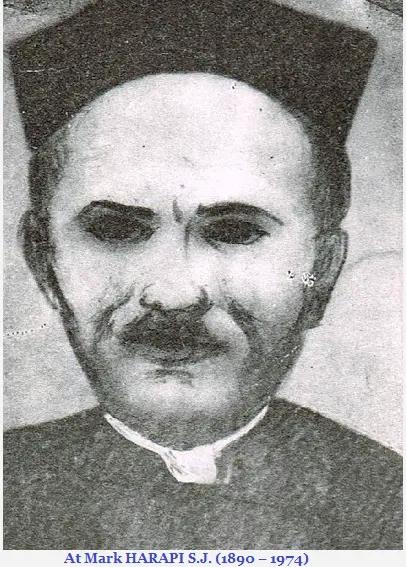
Father Ferdinand Pali and Father Gjergj Vata in court, for the burial of Father Mark Harapi in Shirokë
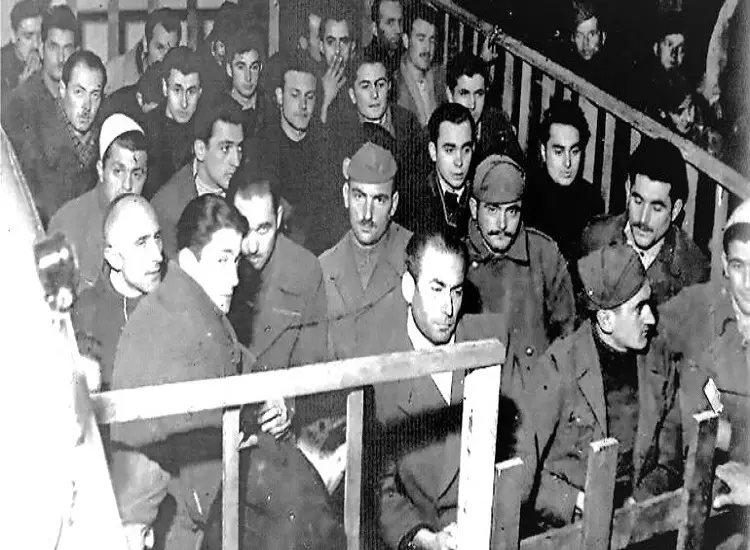
On February 10, 1974, Father Mark Harapi, a prominent cleric and figure of national culture, died. The burial was to take place in the afternoon, at 3:00 PM on February 11, the Day of Our Lady of Lourdes. He had left instructions not to be buried in the common cemeteries in Shkodër, but, since he was originally from Shirokë, to be buried in Shirokë. To carry out this formality, Father Ferdinand Pali, with Father Gjergj Vata, went to the funeral office. Father Mark was buried in Shirokë, but two weeks later, the Executive Committee created a problem with the burial, leading to a criminal charge against the two priests, as their intention was to bury him in a purely Catholic cemetery. There was uproar in the city over their innocent conviction, and a new attack began against priests, who were summoned to neighborhood councils, where the Security organs were also present.
I was summoned too. Their order was not to move and to start working. They assigned me again to the brickworks, but this enterprise did not accept me. New arrests of clerics and state cadres were slowly being prepared. For seven years, every two months I would go to Razëm, to regain strength, and then I would work for 10 months with intensity and joyful spiritual peace and priestly courage. It was God who worked and fought for me. My plan of three duties did not waver; I also had good physical strength and moral power. On September 9, 1975, a few days after I returned from Razëm, my father no longer got up from bed. My father suffered a paralysis. The doctor said it was a cerebral hemorrhage. My father lacked nothing – neither doctors, nor medicine, nor the care of my brother and sister, for all his needs. And above all, the last sacraments which he received with such zeal, just as he had received the Holy Eucharist every day for years in a row. I say: such was the life; such was the death of this good man. Dom Kolec Toni did not leave his side day or night.
The Religious Formula before our Father’s Last Breath
On September 23, a Tuesday, at 7:00 PM, he departed from us, like a patriarch, like a good Christian of Christ’s great era. At 3:30 AM on the 24th, I said the Mass of Light in the presence of the body. At 5:00 PM the funeral took place with the participation of many people in the common cemeteries, his body resting in the earth and his soul in Heaven. On the second day after the burial, I began to celebrate the Masses of Saint Gregory. Our very dear father passed away without seeing the other stormy struggles that would occur a few months later in Albania, both in the city and in our house.
New Arrests
The history of a country and a city is often linked to that of a personality. Therefore, also to that of a bishop. The Church and the State are two institutions founded by God. Both should have coordinated work, even when they are against each other. The Church often suffers from the state, which thinks it should have everything under control. Even the conscience.
In the middle Ages, the state loved the church, but also interfered beyond its rights in its affairs. A tendency to dominate it. The Communist state in Albania, with people without God and against Him, insults the church, offends it, limits its rights and freedom; it demolishes churches, imprisons, tortures, murders priests, and tells them they are the evil of society and the future.
The Arrest of Monsignor Çoba (April 2, 1976)
On April 2, 1976, Monsignor Çoba slept at home for the last time. Around 11:00 AM on the third, the Security’s ‘Gaz’ vehicle took him from his residence and brought him to a new dwelling, the Branch of Internal Affairs residence. This was the arrest of Monsignor Ernest Maria Çoba. It was a sunny Saturday. “Is it true,” people anxiously asked each other, “that they arrested Dom Ernesti?” (as many called him due to his fame even before he was ordained Bishop). Yes, rumors were heard. The nephew of Dom Ndoc Nika, Zef Nika, an old political prisoner, a man of fine taste who lived and breathed to know everything about political events, very clever and with an easy gait, even though he was elderly, brought me the certain news of the Monsignor’s arrest that sad afternoon and said these words: “This is as far as he got. It’s over,” emphasizing the term, “even his career.” The people were saddened. “How will they never stop with these terrible things?” people expressed to each other.
Hour by hour, I expected my arrest as well. So did Dom Koleci and others. They would not leave the Monsignor alone. They would form a group. I prayed with devotion to Our Lady of Good Counsel, not that I should not be arrested, because I considered that certain, but rather that things should go as they should. My mother, brother, and sister said nothing. They kept a secret fear and courage, saying, “We leave everything in the hands of God.” I had told my family several times that they would not arrest me. This might happen if the day came to arrest the Monsignor. Weeks passed, and nothing. No arrest. The months of April, May, and June passed. The thought came to me, perhaps the Security would summon me and say: “We will convict the Monsignor, and you will testify against him, as we know your relations with him. Choose, either to testify, or we will arrest you too.”
This very bad idea came to mind, but I did not suffer much, as I would accept, with God’s help, even death, but by no means perform such an action. I was now 46 years old and, truthfully, on no occasion, at no moment, had I been troubled by the State Security organs, asking me to be at their service, their agent, in these dirty matters. I thank God that I have never fallen into such faults in my life.
My Arrest and that of Dom Kolec Tona (July 13, 1976)
On July 13, Dom Kolec and I, who had gone to Razëm to spend the summer, were arrested. With a Security “Gaz” vehicle of the Branch, its deputy chairman, Ndue Gjini, with six police officers, after searching the rooms where we were each staying, putting fear into the landlord and the families who had come to rest brought us to Shkodër. At two o’clock, we arrived at the City Branch of Internal Affairs. A group of officers and investigators welcomed me with open arms, quickly putting my hands under my armpit and saying: “Welcome, may God have brought you to our new, great, and generous house. We have been waiting for you for a long time. This is what men do.”
They put me in an interrogation room, with a large barred window, a table, a chair, a brown shelf, and an immovable chair attached to the wall. Immediately, questions began non-stop, one after the other, in the presence of four or five investigators, who rotated in groups, all with serious and enraged faces. Question after question, I understood the main ones: they told me to talk about my relations with the Holy See through the Italian Legation. Who else knew about these connections? You will give us quick and accurate answers, because we have a lot of work and will not deal long with your crimes, with you, the sworn and permanent enemies of the people’s power. You will tell us with whom you have spoken against the government. Where have you hidden your materials in the house, in the garden? Where do you have the book ‘Cuneus Prophetarum’ by Bogdani, where are your writings against us?
I denied everything. I stood leaning against the wall for a moment, but they didn’t allow me to stay like that. Loud, wild screams right in front of my face. I started to break down from the heat, from the great fatigue. They did not stop for a single moment: “Speak about your connections, and where your writings are,” the attacks continued. They moved on to ideological questions. The people did not love you; the people, the youth, rightly closed the churches. Questions to see my stance and to let me know that they knew everything. And I understood a lot, if not everything. Who was I to be in the chain of more than half a million prisoners? What number? And how many millions of events of existing and fabricated forms, countless questions in the black departments of interrogations in the era of dictatorship, which has plans, projects, with destructive goals, with insults that are violence, growling, electricity, blood, sticks, broken ribs, bones, heads – physical and moral deformation of beings?
What kind of building is this where forces qualified for horrors enter and exit, where persecutions spend days, weeks, and whole months in torture chambers, inventions conceived by an earthly hell, where abusers and those who protect personal and collective evil without any reservation vent their rage?! This destructive office called a Branch differs partly from the large and small ministries of this monstrous state. The Branch, first of all, has a lot of work; it cannot postpone any of its actions for later; it has haste, urgency; it is the center of the informational network inside and outside Albania, an office that controls every person even without them knowing. It mobilizes, activates, and contaminates with a network of agents, more accurately spies or informers, to follow step by step the movements of hands and feet, of mouths, of consciences, of ideas that are against the only idea, the idea of the dictatorship.
An office that works day and night with electric lights that never go out, because it is a zone of darkness and electricity. The strong hand and the vigilant eye of the Security have entered everywhere. In every ministry, every office, every workplace, cooperative, school, cultural center, restaurant, club, shop, in so many families, to the point where couples fear each other. Every neighborhood had its own security operative, every rural and mountainous area, which controls every movement through hidden tools – who comes and goes, what is felt and said – and everything is reported to protect the government from any hostile infection from the land and from the air. This duty becomes a rule, discipline, and necessity. Even the party and its people are controlled, up to the Central Committee, and the Security itself. This black disaster is summarized in the saying: “out of every three people, one is doing security work.”
The fixed idea is to protect this super idea with fanaticism, with the severity of violence. Man would no longer be human, and what would destroy this man is, first, the ideology of the communist manifesto party, the theory of dangerous materialism, and second, the State Security, which is the grinding and tearing machine of the human being from birth to death. It is your plague. You are not free for anything. Your head was not yours. There is no life, because there is no heart. Art is decided by the party and the Security, school scholarships as well, and their selections are made according to class and political understanding, and tastes, music, approvals of shows, talents are in their hands, and with severity, appointments to key jobs. This is where we were, this is where I was too.
The first day of arrest, that afternoon, passed with noise, with entrances and exits of investigators and officers, with shouts, with threatening expressions, and this lasted until after twelve o’clock at night. Ten hours standing in that shock and effort. In the room they took me to, room number 14, I found a faint electric light, and only one red blanket. Instead of a pillow, I folded my jacket. I made the sign of the cross and said one Our Father, one Hail Mary, and one Glory Be to the Father. Exhausted, sleep took me. I continued to have good sleep all nights, even in prison, which helped me stay calm.
Cell: Basri from Tepelena!
The cell supervisor, named Basri, from Tepelena, a stern-faced man, opened the door in the morning with a loud squeak, and gave me the broom to clean the room. He stood close to me, and finding a reason, that I was sweeping this way and not that way, he hit my face with its stick. Then I remembered that nothing had really been accomplished. For three days, they left me in complete peace. No summons to interrogation, no action. They would bring me a glass of tea in the morning and lunch at 12:30. Lunch consisted of a small bowl of stew, and since it was summer, it mostly had greens – a mix of eggplants, tomatoes, and a little onion in it. We only had 600 grams of bread for the whole day. Nothing in the evening. Every two weeks, a quantity of cheese, good bread, biscuits, and some other food that came from the family was allowed. Everything by weight. There was the food and clothing warehouse to deposit the materials. Every action was performed either by opening the door when personal actions were needed, or through the small hatch that the duty officer would open. Written on the wall was the content of the duties and rights of the arrested person. One would be struck by their sense of justice.
The Investigator Shyqyri Çoku
After three days, on Saturday, at 8:00 AM, the cell door opened, with the harsh and heavy clanging of the bolts. They tied my hands with handcuffs, tightening them strongly, and the two guards, so well trained in the knowledge of arrests, took me to the interrogation room, where I only found the investigator Shyqyri Çoku. He ordered the guards to untie my hands, and they immediately left. He did not leave me standing, but let me sit on the chair attached to the wall. I gave him a light greeting, saying Good morning/day, because he was also from Shkodër. He answered with the words; “Welcome,” and told me not to greet anyone. Me, yes. The lone investigator was telling me: “Have you realized that you are arrested?” I said nothing. The interrogation began. “Your activity against the government is documented,” and he told me: “You have nothing to object to,” and surprisingly, without asking me a question in this instance, he immediately took a signed document from the desk, which he read to me and gave me to see: that I had had a connection with Monsignor Çoba, in his relations with the Holy See, through the Italian Legation in Albania.
The document had a distant source, that of an initial denouncer, about whom I have strong suspicions, but whom I still does not know for sure today. The Monsignor had said that: “I informed Dom Zefi about the connections, but not that he collaborated with me.” He had tried to avoid the collaborative link, which was true and would have burdened me. Once my trial was prepared, it was signed by me. This day had only that much. The interrogation worked tactfully with me. After two days, on Monday, still handcuffed, they quickly took me to the interrogation room. The investigator, always calmly, asked me about the time when this activity had begun, who else knew besides me, what the relations consisted of, what the signals were like. Before the Monsignor was arrested, they had arrested and convicted his sister, Gjyljana, with 20 years of deprivation of liberty. She had performed this activity by taking notes from the Monsignor on cigarette papers to present them to an employee of the Italian Legation, where she often went to receive her monthly pension, which her husband sent her, as she was married to an Italian whom the communist government had expelled from Albania as a foreign national.
For all these things, the typewritten and signed indictment was prepared, also affirming that this activity had begun several years ago and had not been performed more than four or five times, that no one else knew about this except me, Dom Kolec, and some other good priest, whom I knew had been denounced, but who surprisingly was not arrested, because the Monsignor might not have continued it for several years, and that the materials had been only about religious and not political, military, and economic issues, on which they insisted strongly. From time to time, I was summoned to interrogation, which became heavier because now I was not dealing with one investigator, but with many investigators, five at once, and with rubber clubs in hand. The interrogation worked methodically, to destroy me. It was a long interrogation, which lasted eleven months. The investigator told me one day that; “We have treated you in a democratic way.” Externally, it was so, but internally, no. The investigator could not act differently either.
The investigator behaved gently with me. The tortures began. I did not receive any blow with clubs, beatings, kicks, electric current, or other tortures. But after two weeks of arrest, the use of dangerous and strong medicines began, which they put in my food. The food became difficult to eat. These acted heavily on me; I was transforming myself. My spirit and body suffered. I ran out of blood and strength. There were times when I was unable to stand, and to walk, I would hold onto the wall of the room. A month or more before I went to trial, I was very weak. I lay on the bare wooden floor with my arms spread open for many hours of the day, with strong pain. Torture all day. I was very hungry. In winter I was cold because they did not allow us to lie down in bedding and blankets. The medicines also had this effect, because from them I even reached the point of not caring what I revealed. My mind, however, seemed to remain fresh./Memorie.al