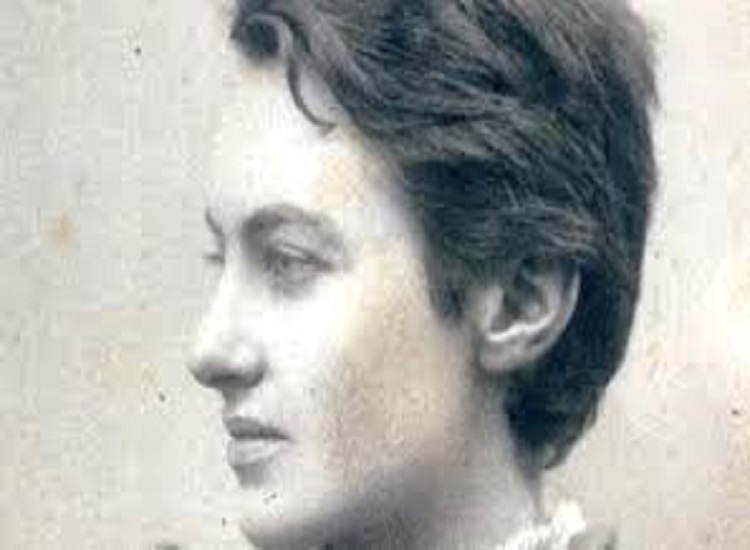
Memorie.al / She did so much for Albania. When I say so much! So much! But even if not, just one instance, one singular and symbolic act of hers is enough for her to be honored and respected as a heroine: when on the day of the fascist occupation, April 7, 1939, at the age of 76, with a cardboard sign hung around her neck that read, “Hands Off Albania!” “Help Albania!” – she protested alone for hours in front of the British Foreign Office, an action she repeated for days on end, so much so that it forced high English authorities to pay attention to her, and perhaps-perhaps it influenced the revision of their stance.
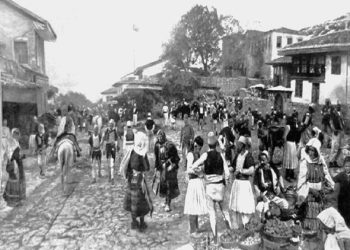
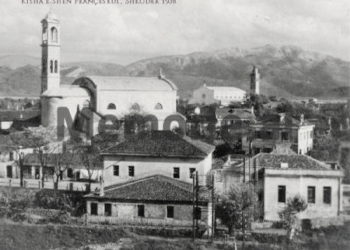
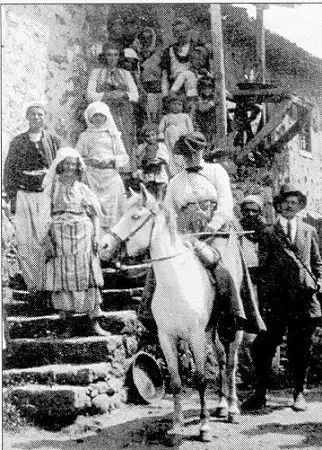
“God has sent you to save us,” was written in the message of the citizens of Berat to Edith Durham, who had arrived there in 1904, as the first English woman to set foot in this part of Albania.
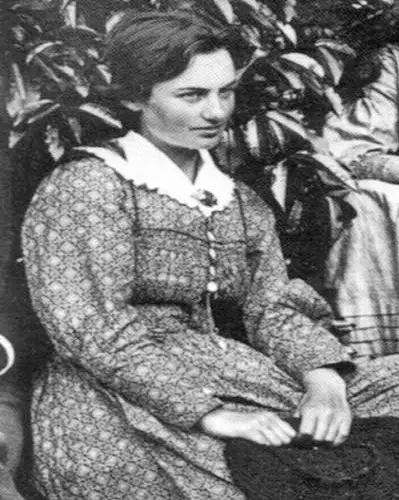
Edith Durham’s activity in and for Albania – as a traveler, as an artist, as an ethnographer, as an anthropologist, as a writer, and as a humanist – is vast and unique.
For nearly half a century, she tied her life’s destiny to the fate of the Balkans and especially to Albania. Besides other activities of a political, social, and scientific nature, she wrote 7 books about Balkan issues, of which “High Albania,” written in 1909, is the most well-known and accomplished.
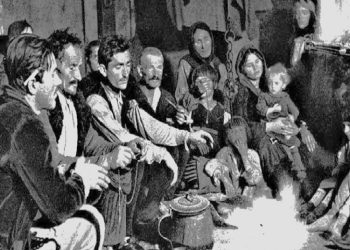
This book, even to this day, is a good guide to the culture and traditions of the highlanders of Northern Albania. It is worth emphasizing that her articles for the magazine “Man” made her a recognized member of the Royal Anthropological Institute.
With a bright and generous mind, she quickly understood the spirit of the Albanians. Without fear or compromise, she showed the world and its laws what she had learned. The Albanians have not forgotten and will never forget this Englishwoman.
In the mountains of Albania, which she knew very well, the news of her death at the time caused a stir among her many acquaintances, but also among those who had only heard of her.
“You who gave me bread, shelter, and besa (pledge of honor), you did not disappoint me!” From the numerous notes and evaluations of Edith Durham about Albania and the Albanians, we would single out this paragraph from her book, “Albania, the Burden of the Balkans”:
“I believed in the Albanians; they deserved the European destiny they are building with such momentum today. You who gave me bread and bedding, shelter and besa, you did not disappoint me. The Gods had blessed that soil where the preservation of certain human values is the secret. That place and those people surprise you.
Their exoticism, almost natural, sometimes surpasses superficial modernity. The air in the mountains and seas there is a different air. The Albanian language has a different music. The word ‘welcome’ comes straight from the soul of those people.
Europe without Albania and the Albanians would be incomplete in its identity of ancient and modern history. The Balkans without considering and understanding the Albanians is without identity and without a future!
Even in the universe of the spirit, I feel respected by the Albanians of the earth and the sky; I am among them like them, an Albanian woman who continues to walk those epic and humane spaces without tiring; I am under their besa.”
Gratitude, Durham!
You deserve more from us for your sublime nobility! The truth is that Albanians have honored and still honor Durham, as she gave her heart to them, while they gave her deep gratitude. Therefore, they consider her studies as an authentic and inseparable part of their history.
Indeed, she is described and honored as one of the most prominent foreign figures of the last century who fought for the independence and freedom of Albania, both by the Presidency and by the high authorities and scientific institutions of our country.
However, she needs to be appreciated more. First, to be better known, as many of her works have not yet been translated into Albanian. Second, although there are many of her materials and documents preserved in several academies around the world, but mostly in three museums in London, no scientific institution has taken the trouble to at least look at them out of curiosity, let alone study them and present them to the Albanian public.
Third, within the framework of future evaluations of historical figures, she should also be given a more deserved place of honor as a direct “Albanian” protagonist and fighter. Because this way, we honor ourselves more than her!…/ Memorie.al