• Rreth Nesh
  • Kontakt
  • Albanian
  • English
Monday, December 15, 2025
Memorie.al
No Result
View All Result
  • Home
  • Dossier
  • Interview
  • Personage
  • Documentary
  • Photo Gallery
  • Art & Culture
  • Sport
  • Historical calendar
  • Others
  • Home
  • Dossier
  • Interview
  • Personage
  • Documentary
  • Photo Gallery
  • Art & Culture
  • Sport
  • Historical calendar
  • Others
No Result
View All Result
Memorie.al
No Result
View All Result
Home Art & Culture

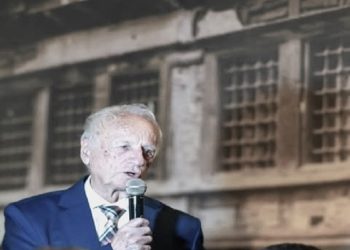
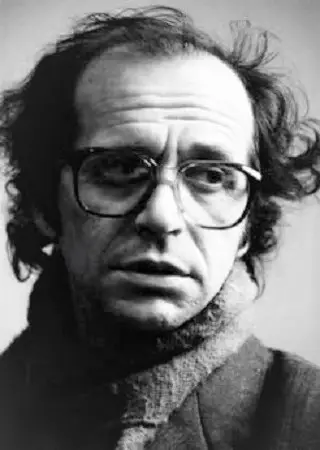
Dr. Ibrahim Rugova first introduced Kosovar readers to the persecuted Albanian writer Musine Kokalari, when in the literary magazine “Jeta e re”, No. 2, March–April 1983, he published four of her short stories.

Nderim përherë Presidentit Rugova
“Ildishane Kalo na tha se; kryetari i Këshillit urdhëroi të mbyllej dera e së vdekurës me çelës, deri sa të vinin ata të Degës, të cilët i morën Musinesë, rreth…”/ Dëshmia e ish-të burgosurit politik
“I mërzitshmi dhe i padurueshmi R.P., i jep Kadaresë një lajm gati të pabesueshëm; ‘Lasgushi, ka pasur këtë verë, një histori dashurie…”/ Ngjarja e panjohur e dy kolosëve të letrave shqipe
“Ditën që vdiq Musine Kokalari në banesën e saj në Rrëshen, unë gjeta të shkruara me dorën e saj…”/ Dëshmia e rrallë e i fqinjit dhe varrmihësit të saj, vlonjatit të internuar
Porosia e Komitetit Qëndror në vitin 1974: Mos i acaroni marrëdhëniet me profesor Rexhep Qosen…
“Në Shkollën e Vizatimit, nxora një nxënës jashtë, se bënte zhurmë, por ai filloj të qajë dhe kur e pyeta për emrin, më tha; Ramiz Alia…”/ Dëshmia e rrallë e piktorit të njohur, për bisedën me Lasgushin, në ‘84-ën

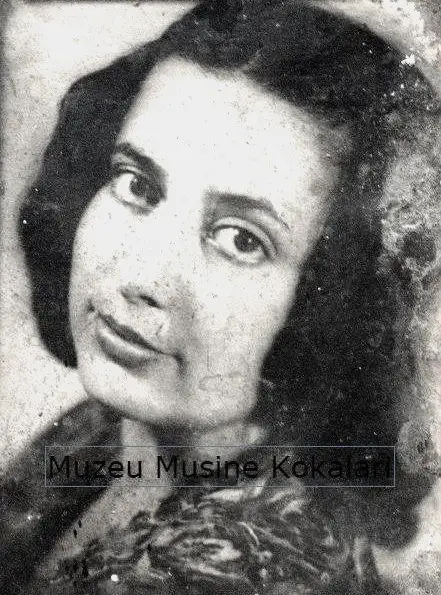
Memorie.al / Ibrahim Rugova was the first to introduce Kosovar readers to the persecuted Albanian writer Musine Kokalari. In the literary magazine “Jeta e re”, No. 2, March–April 1983, Rugova published four of her short stories (*Mos qofshin vjehrrat e zeza; Kulloi odaja; Për mustaqet e Çelos; Ulërima e qenit*), which he accompanied with a note about this author, who was unknown in Kosovo. Strangely, in that same year, in the month of August (August 13), this Albanian aristocrat, after having defied prison, internment, and solitude, could not defeat cancer either, and died in Rrëshen.

After the overthrow of communism in Albania, the name of the writer and intellectual Musine Kokalari was revived both as a creative writer and as a political dissident, and in a sea of writings, studies, publications, TV programs, and documentaries – and likely in Kosovo as well (among other things, a special issue of “Jeta e Re” was dedicated to her) – no one mentioned this presentation by Ibrahim Rugova of Musine Kokalari!

Rugova’s writing, if it does not go beyond an introduction, at least has the value and stamp of the time it was published, because years had passed since this writer, among the first Albanian women, was mentioned, let alone published, neither in Albania nor in Kosovo. What prompted Rugova to do this work, we can only speculate now?

In the following, we present Rugova’s writing on Musine Kokalari.

Gjithashtu mund të lexoni

 “Director Hysen Hakani cast me in the film ‘Ndërgjegjja’ (The Conscience) where I was in the role of a young teacher, but there were love scenes there and…” / The rare testimony of the well-known actress Roza Anagnosti.

“The magazine ‘DRINI’, as an organ of ‘Albanian Tourism’, began to be published in the first months of 1940, in the form of a News Agency and…” / The unknown writing of Demir Alizoti, in January ’44

NOTE

Musine Kokalari is one of the rare women who wrote between the two wars, in the period 1912-1945. We do not know much about her in detail, except that in 1940 she published a book of stories and sketches titled ‘Siç më thotë nënua plakë’ (As My Old Mother Tells Me).

We add that besides Musine Kokalari, two other women were active in this period: Androniqi Zengo in painting and art criticism, and Elvira Tarro in literary criticism, both from Korçë.

Zengo had completed the art academy in Athens, and in her painting, the impressionistic emphasis on landscape is quite felt. The activity of these creators speaks to the fact that in this period, the integration of women into Albanian culture also begins, which after the war will be even more active and visible.

It is good to know that Kokalari wrote her stories in the Cham dialect, that is, of the Chameria region, and at the same time she is one of the rare Albanian writers who wrote purely in this dialect, even with artistic intent. Because as we know, in the history of Albanian literature, many of our writers have written in their own dialect, feeling it as a general language, and if that were the case, then M. Kokalari would have written in literary Tosk.

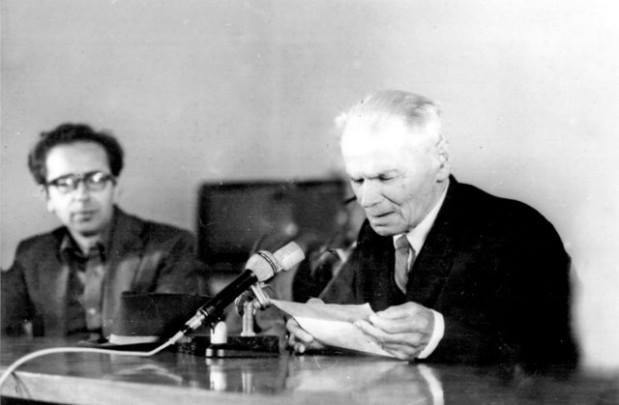
Also, here we are not considering those writers who use dialect within the framework of the language of the work and literary language for the typification of characters. For her book, in 1940, in the newspaper “Bota e re”, No. 1 of July 30, our well-known poet Lasgush Poradeci wrote a very interesting review. This is how Poradeci essentially evaluates Kokalari’s prose: “Original creation. Capturing life, its immediate grasp in essence and form, and its immediate page, without any mediation, through art—this is originality—literary originality. Capturing life at the critical moment, which is the great moment of every manifestation of human life, which summarizes and displays, in one point of totality, the entire true meaning of life manifested incidentally, while he calls her style a substantial style, which adapts to the subjects.” (p. 6.)

The very fact that Lasgush decided to write about this book, although he wrote very rarely about any author or book, and especially this poet with a fine sense for poetic language and a developed, rich concept of that language, indicates that he saw this issue realized in this book.

Moreover, his observation that the author captures life at the critical moment means when it manifests itself in its highest form, thus placing Kokalari’s writing ability first, that is, life at the peak of its development, in its true moments.

A good and interesting evaluation is also given by Maximilian Lamertz, the well-known German Albanologist, in 1948, in the book “Albanaiches lesebuch”, Leipzig 1948, from where we took these stories by Kokalari. He says that the author, in the Cham dialect, brings us folk scenes in the form of dialogue and appreciates her language and talent.

Continuing these evaluations, we add that M. Kokalari, through the Cham dialect, elevates her own speech into prose, narrative speech, and through this speech gives us the mentality and life position of the characters of that milieu, and not through any sociological description of life.

That is to say, the characters in her stories are women, into whose world she enters through their dialogic narratives, and thus we understand their life problems: human and material conflicts, the family reality of a time, the position of women, kurbet (migration for work), mourning, weddings, in short, human fate in general. Thus, the author gives us a phenomenology of the Albanian woman’s spirit in a given time, which takes on the value of art in which it is elevated and realized.

At the same time, we emphasize that these stories are also of interest to our linguists, even for elements of historical linguistics, because the dialect used by the author contains many linguistic forms that we encounter in the works of well-known Arbëresh (Italo-Albanian) authors, such as De Rada, G. Dara, Serembe, Santori, etc., because many of them were originally from these regions and had taken the language of that time with them, even as a fact of how language is preserved and developed within a dialect and within a language in general, which should be viewed as a phenomenon.

For example, such forms are golë (gojë/mouth), fëmijë (fëmijë/child), bilë (bijë/daughter), ill (yll/star), etc. Thus, Kokalari’s stories prove the fact that even a dialect in literary writing, used skillfully, can be quite productive alongside the literary language within which it is realized, just as it is productive in the living development of the language, in our linguistic and life existence./ Memorie.al

Ibrahim Rugova. “Jeta e re”, Prishtinë, 1983, March–April, No. 2, pp. 398, 399.

Prepared by: Munish Hyseni
ShareTweetPinSendShareSend
Previous Post

“When I announced that I would become a priest, a meeting was held with all the educators, and the second secretary of the Party Committee, Gac Mazi, had said about me...” / The memoirs of the former Bishop of Shkodra, Zef Simoni

Next Post

“The virtuoso musicians, the Starova brothers, products of the most famous Italian school, were highly sought after in the luxurious venues of Tirana, where the fanatic communists entertained themselves...”/ The testimony of the former Spaç prison inmate

Artikuj të ngjashëm

 “Director Hysen Hakani cast me in the film ‘Ndërgjegjja’ (The Conscience) where I was in the role of a young teacher, but there were love scenes there and…” / The rare testimony of the well-known actress Roza Anagnosti.
Art & Culture

 “Director Hysen Hakani cast me in the film ‘Ndërgjegjja’ (The Conscience) where I was in the role of a young teacher, but there were love scenes there and…” / The rare testimony of the well-known actress Roza Anagnosti.

December 8, 2025
“The magazine ‘DRINI’, as an organ of ‘Albanian Tourism’, began to be published in the first months of 1940, in the form of a News Agency and…” / The unknown writing of Demir Alizoti, in January ’44
Art & Culture

“The magazine ‘DRINI’, as an organ of ‘Albanian Tourism’, began to be published in the first months of 1940, in the form of a News Agency and…” / The unknown writing of Demir Alizoti, in January ’44

December 8, 2025
“The cult of the individual, the image of Enver Hoxha, was featured in the works of artists G. Madhi, R. Përmeti, and Z. Shoshi, masters of painting…”/ The former head of the Gallery, on the “Socialist Realism” that was exhibited in Turkey
Art & Culture

“The cult of the individual, the image of Enver Hoxha, was featured in the works of artists G. Madhi, R. Përmeti, and Z. Shoshi, masters of painting…”/ The former head of the Gallery, on the “Socialist Realism” that was exhibited in Turkey

December 4, 2025
“They captured the first images of Albanian photography, the figures of independence, but their names are barely known, as they died in misery, or in old people’s asylum, like…”/ The unknown history of the masters of celluloid.
Art & Culture

“They captured the first images of Albanian photography, the figures of independence, but their names are barely known, as they died in misery, or in old people’s asylum, like…”/ The unknown history of the masters of celluloid.

December 3, 2025
“Those letters are possessed by a beauty, a graceful madam named Zeinep Vlora, the wife of Xhemil Vlora, who, for her part, quite well completes…”/ The reflections of the well-known writer.
Art & Culture

“Those letters are possessed by a beauty, a graceful madam named Zeinep Vlora, the wife of Xhemil Vlora, who, for her part, quite well completes…”/ The reflections of the well-known writer.

November 25, 2025
“Unlike the renowned Swiss photographer, Fred Boissonnas, who would photograph Epirus and the Albanian South, Eugène Pittard came to Albania with…”/ The reflections of the renowned writer and translator
Art & Culture

“Unlike the renowned Swiss photographer, Fred Boissonnas, who would photograph Epirus and the Albanian South, Eugène Pittard came to Albania with…”/ The reflections of the renowned writer and translator

November 28, 2025
Next Post
“The virtuoso musicians, the Starova brothers, products of the most famous Italian school, were highly sought after in the luxurious venues of Tirana, where the fanatic communists entertained themselves…”/ The testimony of the former Spaç prison inmate

“The virtuoso musicians, the Starova brothers, products of the most famous Italian school, were highly sought after in the luxurious venues of Tirana, where the fanatic communists entertained themselves...”/ The testimony of the former Spaç prison inmate

“Historia është versioni i ngjarjeve të kaluara për të cilat njerëzit kanë vendosur të bien dakord”
Napoleon Bonaparti

Publikimi ose shpërndarja e përmbajtjes së artikujve nga burime të tjera është e ndaluar reptësisht pa pëlqimin paraprak me shkrim nga Portali MEMORIE. Për të marrë dhe publikuar materialet e Portalit MEMORIE, dërgoni kërkesën tuaj tek [email protected]
NIPT: L92013011M

Na ndiqni

  • Rreth Nesh
  • Privacy

© Memorie.al 2024 • Ndalohet riprodhimi i paautorizuar i përmbajtjes së kësaj faqeje.

No Result
View All Result
  • Albanian
  • English
  • Home
  • Dossier
  • Interview
  • Personage
  • Documentary
  • Photo Gallery
  • Art & Culture
  • Sport
  • Historical calendar
  • Others