
– Tepelena, a letter to the children who never grew up –
Memorie.al / I hope you have never cried out ‘why was I born?’ I hope you have come to the conclusion that it was worth it: at the cost of suffering, at the cost of death. I am so proud that I brought you out of nothing, at the cost of suffering, at the cost of death”. I am reminded of Oriana Fallaci and the words she addressed to the child who was never born, while I am among the five barracks of the former Tepelena camp. I am surrounded by survivors, now grandparents, as the children who never grew up would have been, because they never left the camp alive. Fallaci’s child, with the children who never grew up, is not so much united by a title as by the cut in the middle of life.
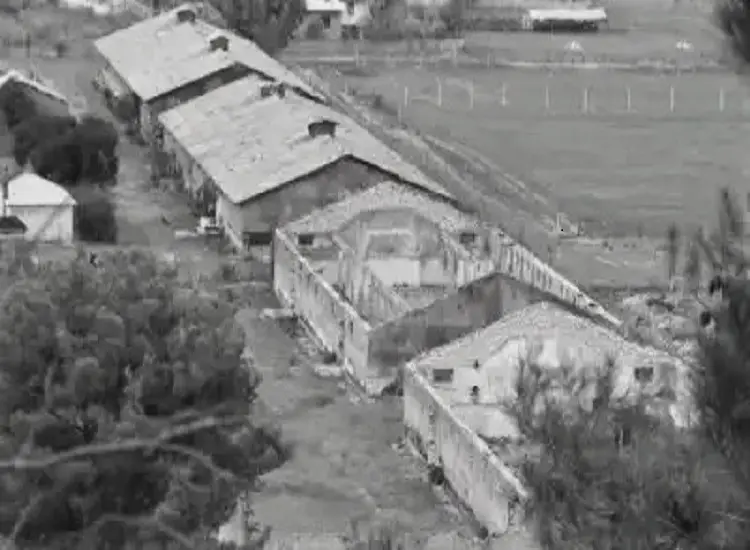
Even though it is late August, the wind blowing in the camp of death almost takes your breath away. “Winter must have been very harsh,” I say to Simon Mirakaj.
“It was too much. There were frosts. Our mothers washed us outside, in that barracks over there. In the evening, we went to sleep, but in the morning, not all the children woke up. They had frozen in their sleep.” Mirakaj lived several years in this camp.
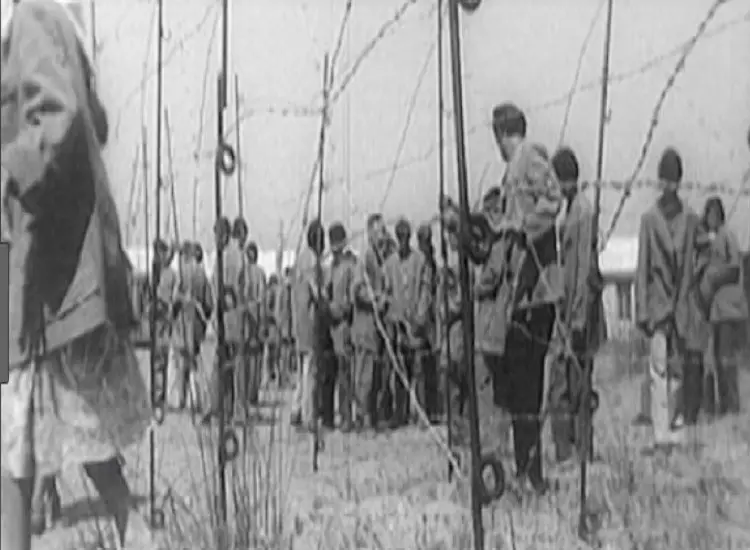
He thought this was life, a large field with sheds, surrounded by barbed wire, with police conducting roll calls; with bowls of ‘soup’ that barely contained anything but water.
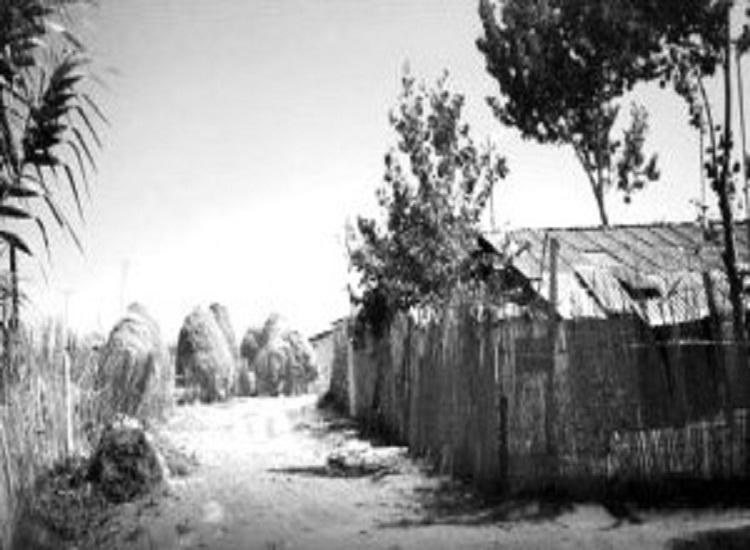
They stacked mines and shells, they walked to the fountain. They couldn’t play in the camp, there were no balls, and there weren’t even shoes. At night, cries of little ones asking for bread could be heard. There wasn’t a single crust. He recalls the horse stable, the women lighting fires to wash clothes in cauldrons. Sometimes a mine left over from the war would explode.
There were dead people, in the children’s eyes. The bodies were buried beyond the perimeter. Life in the camp revolved around daily wails, daily violence, and daily hunger. A gray backdrop, an Auschwitz, military footsteps, weapons, hunger, violence, and also torture.
Gentiana Mara Sula, director of the Authority for Information on Former State Security Documents 1944-1991, emphasizes in her speech on the Day of the Missing (August 30) that their story is untold; “there is a lack of information, but fortunately there are still those who live and testify.”
“I will give you just one example. In just one night, 33 small children died. Only 1 survived. They started calling her ‘Beba’, and she still has that name today,” says Lek Pervizi, a painter in his 90s, who remembers everything he experienced in Tepelenë.
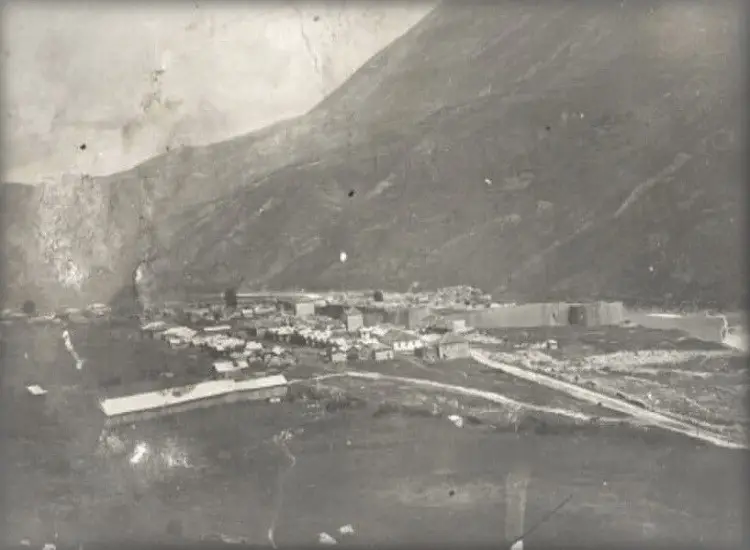
As a witness, he visited the sketches of what the camp looked like back in the 1950s: 600 people in one barracks, 4500 in the entire camp. Wooden bunk beds filled the barracks that functioned as undivided halls. Only those who had sheets divided the space, but sheets were a luxury.
I ask Mirakaj why the children died?! “This was an extermination camp here, 300 children died. Death had several causes, mainly lack of food and hygiene. Both of these led to diseases that, without the possibility of treatment, led to death. The lives of the little ones were unjustly cut short.”
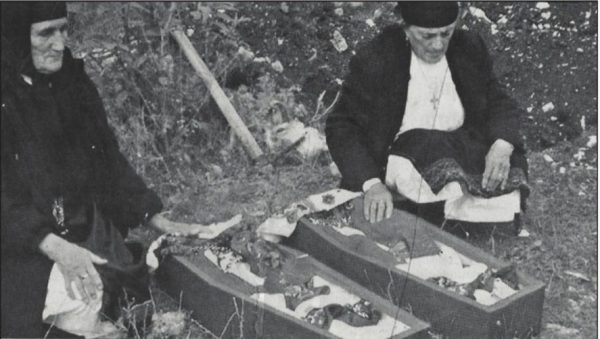
The survivors say that the children and the elderly who died were buried outside the camp. The burial site has changed three times. From beyond the camp, it was moved to the Bënça Bridge by the river. In winter, the overflowing river would sweep them away.
Are there remains still there? The 300 deceased children have no grave, and even today, they have no names. If a letter were written to them, whom would it be addressed to? Who were they? Where are they, without names and without graves? Their parents have passed away, no one is looking for them anymore. Life, death, remains, and names have been denied to them, even 27 years after the fall of the communist regime.
In Albania, cinematography has not managed to produce films like “The Son of Saul” or “The Boy in the Striped Pyjamas,” which would ‘photograph’ the history we did not see and for which words are not enough, nor have we been told enough except as statistical figures.
Nevertheless, I can imagine the “Saul” who searches for his son’s (remains) on all four sides of the Tepelenë camp, I can imagine the madness of the Albanian “Saul” wandering desperately with fragmented stories received with a hundred thanks from persecutors who pretend to be persecuted, I can imagine “Saul,” but I cannot imagine his son, nor his remains in a white, small coffin in his father’s hands.
“The boy in the striped Pyjamas” (read the children of the leadership who had the fate of those they condemned), perhaps paid for the sins of their parents, but they have a name. The 300 sons of Saul do not. Amik Kasoruho and Robert Shvarc would say that no one can bring back the years of childhood, but everyone has the right to ask today, who stole their childhood?
In 30-something years, we have mentioned victims, dead, killed, interned, persecuted, executed, but rarely have the names of the killers, persecutors, and investigators been found alongside their names.
“In this museum, I would like the persecutors to be included alongside the victims, as they are in foreign museums, with photos and names. We cannot continue to talk only about victims. The perpetrators have a name,” a young researcher addressed Gentiana Mara on Wednesday, when the project for a museum center in the Tepelenë Camp was discussed.
The truth was also sought by the Deputy Head of the OSCE Presence, Robert Wilton, when he said that its discovery “is key for the families of the missing, for society to move forward. Families need the truth, they need to mourn and remember their relatives in peace.”
Gjon Radovani has conceived a project where 300 cypresses commemorate the 300 children without graves in a memorial in the camp. Those cypresses are the unwritten letter to the children, they are the missing apology.
Fallaci writes to her own child: “I feel cold and I say that life exists, I sleep and I feel life. Look, I see a light. Someone is running, crying, despairing. But somewhere else, thousands and hundreds of children are born, and mothers of the children of the future: life does not need you or me. You are dead. Perhaps I will die too. But that doesn’t matter. Because life does not die.”
Every comparison is flawed, but these phrases come to mind when I see the former children who survived Tepelenë: they have overcome the horror, they have found peace, they have built life without bitterness or hatred, they have found the strength to laugh, to return to the camp as old men and women, to confess, to tell in their name and in the name of the children who never grew up, that in Tepelenë there was a death camp where their childhood friends disappeared.
It is almost night when we leave Tepelenë. On the left side of the road, the former camp disappears into the darkness. I imagine that if I close my eyes, I will hear the cries of little ones asking for bread on a cold winter night, where the frost has swallowed everything. After moments of silence, they breathe their last./ Memorie.al