

By DASHNOR KALOÇI
Part Two
Memorie.al / Just like all wars, wherever and whenever they have occurred, the one now known as the “National Liberation Anti-Fascist War” in the years 1939-1944 also has its dark side. Since that time period and afterwards, but mainly after the 1990s with the collapse of the communist regime of Enver Hoxha and his successor Ramiz Alia, there have been many testimonies, and hundreds of archival documents have emerged that shed light on many unknown events, the majority of which constitute what is now considered by many scholars and historians to be the dark sides of the “National Liberation Anti-Fascist War”! Such as the killing of some of the most prominent names, well-known personalities of the Anti-Fascist Movement like; Qemal Stafa, Vojo Kushi, Ali Demi, Raqi Qirinxhi, Ramiz Aranitasi, Jorgo Plaku, Mustafa Gjinishi, Fejzo Gjomema, etc., the majority of whom were communists who hold the high title “Hero of the People,” for which there are many controversies about the manner and circumstances in which they were killed or disappeared without a trace. Such is the case of “Martyr of the Fatherland,” Raqi Qirinxhi, from the city of Korça, former partisan quartermaster of the District Operational Staff, who, at the moment of his disappearance, had with him the finances (gold) of the partisan unit he belonged to.
While the killing of Qirinxhi still remains shrouded in mystery, for the majority of the names mentioned above and for many, many others, there are accusations and testimonies with concrete names and facts, as well as archival documents discovered after the 1990s, which cast shadows of doubt over their murders, such as; “settling of scores,” “robbery,” “personal revenge,” “struggle for power,” and even for “romantic stories,” or various other banal causes.
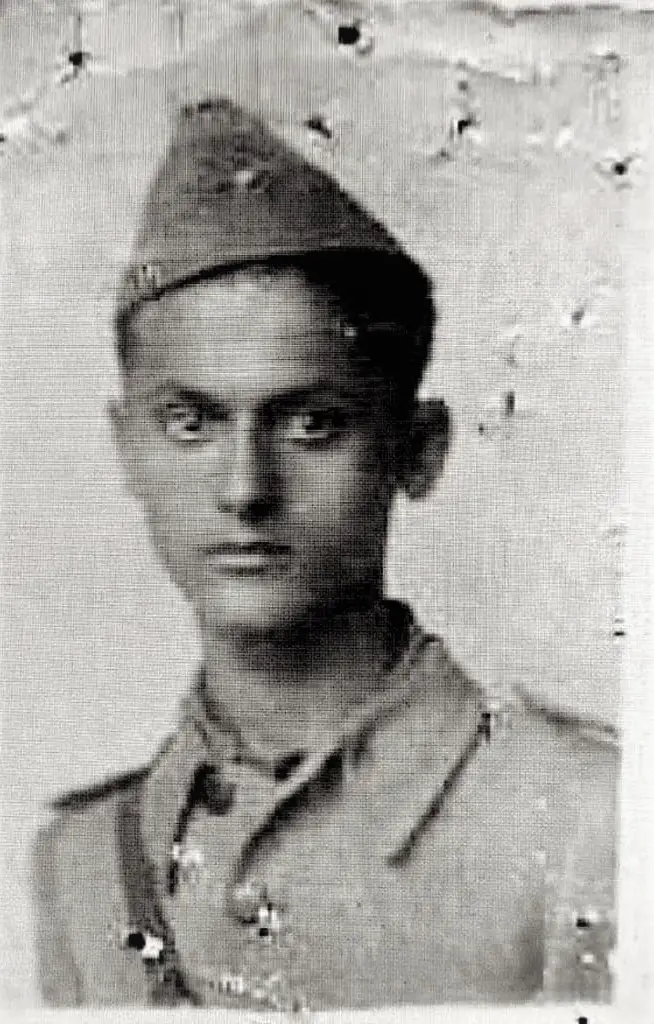
One of these murders, which has been discussed after the 1990s, is that of Sulo Tragjasi, originally from Vlora, (“Martyr of the Fatherland”), who was killed by Kasem Trebeshina, former member of the guerilla unit of the Fier district and later a partisan with functions in the ranks of the National Liberation Army (deputy commissioner of the XII Assault Brigade), who after the end of the War, after serving several years in the ranks of the State Security with the rank of Captain, went to study in the Soviet Union and after returning home, worked for a long time as an actor in the People’s Theater and then as a freelance writer, until he was arrested and sentenced to prison in 1954 and released in 1955.
After his release from prison, he was interned for years, suffering in many remote villages, until he was arrested again in 1980 and sentenced to 8 years in prison for “agitation and propaganda against the people’s power.” The well-known writer Kasem Trebeshina himself admitted to the killing of Sulo Tragjasi, and even treated it in detail in some of his books published after the 1990s, giving his version of the murder, which he is said to have suffered greatly, even with severe spiritual trauma, until the end of his life.
While all of the above is already well-known, in this article we are publishing several archival documents of the former State Security (taken from the Archives of the Ministry of Internal Affairs), which contain the testimonies of people from the Fier district, former members and veterans of the Anti-Fascist War, given to State Security investigators in the years 1982-1983, which speak not only about the murder committed by Kasem Trebeshina, but also about many other murders and assassination attempts carried out in the Fier district in the years 1942-1944, where always according to the documents in question, the person who ordered them appears to have been Myzafer Trebeshina, the political leader of that district at the time, and after the end of the War until the early 1980s, as First Secretary of the Party Committee and chairman of the Executive Committee in several districts.
These testimonies taken at the time (1982-1983), when Kasem Trebeshina was arrested in the cells of the State Security Investigation (Prison 313) in Tirana, and his brother Myzafer Trebeshina was serving as the Chairman of the Democratic Front of the Fier district, constitute one of the three sole investigative processes that Enver Hoxha’s communist regime opened for events of the War period, after that of the killing of Qemal Stafa and the Councillors of Hekal. Files that were only closed with the collapse of the communist regime of Enver Hoxha and his successor Ramiz Alia, without any concrete result.
The time period when the investigative process to uncover the killing of the “Martyr of the Fatherland,” Sulo Tragjasi, took place, is after the event of the “suicide” of Prime Minister Mehmet Shehu, and the accusation against Trebeshina, or more accurately the opening of that file precisely at that time, casts a shadow of doubt that it was also done because he (Kasem) was the first cousin of Fiqret Sanxhaktari Shehu, the wife of the dead prime minister, who at that time was also arrested in the investigation cells (Prison 313), along with her two sons, Skënder and Bashkim.
But even this version raises doubts again, as Kasem Trebeshina’s arrest was made in 1980, when Prime Minister Mehmet Shehu was at the height of his power. Regarding these and other issues surrounding this case, there is scope for much research and analysis. In this article, we are publishing the archival documents in question (which, as we emphasized at the beginning of this article, shed light on some of the darkest sides of the “National Liberation Anti-Fascist War”), which are being published for the first time with corresponding facsimiles by Memorie.al
Continued from the previous issue
ARCHIVAL DOCUMENT WITH THE STATEMENT OF LONI KRISTO ÇUKO FROM FRASHËR VILLAGE OF FIER, GIVEN TO THE STATE SECURITY OPERATIVE WORKER GJERGJI STEFO, REGARDING THE KILLING OF THE MARTYR SULO TRAGJASI, BY KASEM TREBESHINA, IN HIS PRESENCE,
Frashër, 25.12.1982
STATEMENT
I, Loni Çuko, son of Kristo and Patre, born in 1920, born and residing in the village of Frashër, unorganized, with primary education, married, with children, of Albanian nationality and citizenship, declare under my responsibility as follows:
During the National Liberation War, my house served as a base for the movement where partisans were sheltered and supplied with food. The martyr Sulo Tragjasi also came to my house. Regarding the circumstances of his killing, I will explain the following:
I remember it was winter in 1943, it must have been February. Three partisans, Kasem Trebeshina, Sulo Tragjasi (Dukati), and another partisan whom I recall must have been Gramoz Zaloshnja, came to my house at dinner time.
After these partisans ate at my house, they told me they would go to Fier. After I found the boat, I took all three of these partisans, and we set off for the location where the boat was.
Sulo Tragjasi and I were walking side by side, while Kasem Trebeshina and Gramoz Zaloshnja were a few steps behind us. At this moment, I saw Kasem bend down to tie his shoe and he approached Gramoz again, a few steps (2-3 steps) behind us. In these moments, I heard a loud rifle shot coming from behind us, which deafened my ears.
At this moment, I saw Sulo Tragjasi fall, killed, without uttering a single word. I turned and saw that Kasem Trebeshina and Gramoz Zaloshnja were two or three steps away, and I do not remember whether they had their weapons on their shoulder or in their hand.
I addressed them, asking what they had done?! Kasem replied: “Oh, poor Sulo, he stumbled and his rifle went off, is that why he was killed?” I told him that Sulo did not stumble, because he was right beside me! Kasem insisted; he stumbled, he stumbled, but you did not see anything. But now take Sulo and bury him here.
I remember that the place where Sulo Tragjasi was killed is called Gropa e Rahes. I saw that Sulo had a wound behind his temple, the spot where the bullet had entered, and parts of his brain fell to the ground. Kasem Trebeshina and Gramoz Zaloshnja, after disarming Sulo, took his weapons with them and left in the direction of the village.
I immediately returned home and met Vangjel Dime. I told him the entire event I explained above and the two of us together buried Sulo Tragjasi in the place called Gropa e Rahes and returned home that evening.
I want to emphasize that Sulo Tragjasi was killed by Kasem Trebeshina and Gramoz Zaloshnja, but I did not see who shot at that moment, as they were 2-3 steps behind us (me and Sulo).
I remember that around 1970, some relatives of Sulo Tragjasi came to Frashër and I showed them the place where we had buried this partisan. Work was done there and some bones were found and taken away.
The explanations given above are true, and I take responsibility. After the statement was read to me, I have no remarks, and I sign it. Memorie.al
OPERATIONAL WORKER Declarant
Gjergji Stefo Loni Çuka