• Rreth Nesh
  • Kontakt
  • Albanian
  • English
Monday, May 25, 2026
Memorie.al
No Result
View All Result
  • Home
  • Dossier
  • Interview
  • Personage
  • Documentary
  • Photo Gallery
  • Art & Culture
  • Sport
  • Historical calendar
  • Others
  • Home
  • Dossier
  • Interview
  • Personage
  • Documentary
  • Photo Gallery
  • Art & Culture
  • Sport
  • Historical calendar
  • Others
No Result
View All Result
Memorie.al
No Result
View All Result
Home Dossier

“In June 1987, when Albanian authorities rescued an American yacht from sinking, with four people on board, and released them, Washington…”/ The unknown event that surprised the State Department

“Më quajnë këlysh i Enver Hoxhës dhe do më vrasin apo më marrin vajzën peng…” / Dokument sekret i ‘86-ës për njeriun që shpërndante video-kasetat e regjimit komunist, në SHBA
“Komandanti Bino Binaj, pasi qëlloi dhe vrau Vatën, i tha ushtarit Hysni Syla; futi një plumb kokës, ktij tjetrit, mos e lër të përpëlitet, por skafisti, Bashkimi,…”/ Ngjarja makabre në Velipojë, maj ’90-të
Kur kongresmeni amerikan, Joseph Kennedy, biri i kandidatit për president të SHBA-ve, debatonte me ambasadorin Pitarka, që s’i jepte vizë për Shqipëri…/Dokumentet e panjohura të ’89-ës
“Në hotelin ‘Theresa’ në ‘Harlem’, Fidel Kastro pati ‘vizitore’ një bionde të kolme bukuroshe, kurse Mehmet Shehu…”/ Historia e panjohur e liderëve komunistë botëror, në OKB, shtator 1960
Memorie.al

By ELAINE SCIOLINO

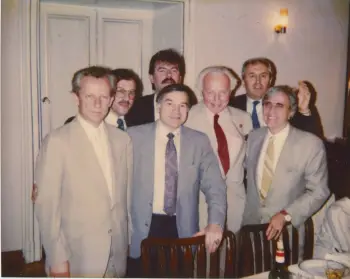
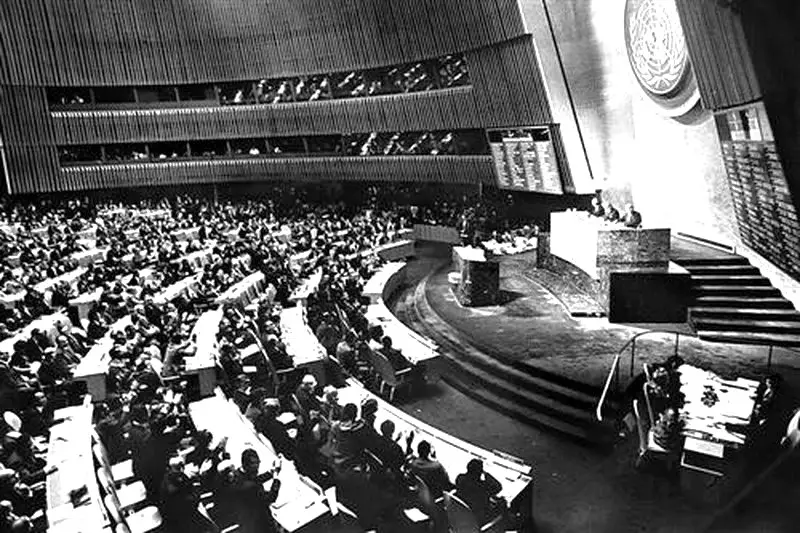
Memorie.al / When the new head of the Albanian delegation to the United Nations, Bashkim Pitarka, arrived at a lunch given at the apartment of the head of the French delegation, he seemed agitated as he looked at the three American diplomats. “I will not shake hands with the Americans and the Russians,” the Albanian diplomat said loudly and clearly. “I have been ordered not to.” Joseph V. Reed, the deputy head of the American delegation, extended his hand as a “member of the human race,” but Pitarka turned away and, nervous about the reserved reception, seemed certain that they had not been seated in a dismissive row in the dining room.

Some delicate actions in diplomacy are resolved through connections via countries that do not have formal relations. The United States, like other countries, uses complicated arrangements, which vary according to the degree of friendship or even practical needs. For example, Washington was represented in Iran through the Swiss Embassy at the time the Islamic radicals occupied the American Embassy in 1979. Due to Iranian intentions and fears for their safety, none of the American diplomats worked there anymore. In Washington, Iran is technically represented by the Algerian Embassy, but it also operates with offices in several cities. The United States allows Iranians to work there to cooperate with the requests of partners of hundreds of Iranians in the United States of America. Iranians have represented Tehran in Washington.

They were equipped with passports or residence permits. These channels usually do not function fully, because Iran was suspicious of Swiss neutrality. During the negotiations last week for the release of the “Wall Street Journal” correspondent, Gerald F. Seib, the Swiss authorities were unable to get any response from the offices of the Ministry of Foreign Affairs. Turkey and Pakistan, which have good relations with both sides, helped realize this agreement.

Gjithashtu mund të lexoni

“The inability of Albanians to change their individuality is tragically reflected in the existence of…”/ How Albanians appeared in the eyes of the West at the beginning of the last century

“Vladimir Petrov’s film ‘Kutuzov’ was made with the sole purpose of convincing the Soviets that victory over Nazi Germany was possible, to…”/ New book by journalist and diplomat Bashkim Trenova

The United States of America severed diplomatic relations with Lebanon after a crowd of people burned the American Embassy in 1979, and Belgium represented the interests of that country. Anti-American demonstrators often marched in front of the Belgian Embassy in Tripoli.

In the case of Albania, which excludes any contact with either superpower, and several other governments that the United States of America does not recognize, for example, North Korea, Vietnam, Cambodia, and Angola, without formal ties, relations are represented through third-party states.

But American and Vietnamese officials meet regularly in Hanoi and Ho Chi Minh City, where they discuss the fate of Americans missing since the time of the Vietnam War. Angola is another delicate case. State Department officials admitted that only an informal agreement with Western embassies helped protect American citizens there.

In Cuba, American business is again involved through an interests section under Swiss circumstances and care, which operates more like an embassy. It has about 20 American diplomats inside. Havana and Washington have used their regional interests for negotiations on objectives such as the punishment of plane hijackers and the emigration of Cubans to the United States of America.

But some issues, like the Cuban troops in Angola, have been discussed at the highest levels. In Nicaragua and Afghanistan, although Washington also finances anti-government rebels, it still maintains diplomatic relations and an embassy. But the ambassador’s post has been vacant in Kabul since 1979, when the American ambassador, Adolph Dubs, was murdered.

Perhaps the most suitable venue for connections between countries that had hostility, or no relations, was the United Nations, where many countries kept their representatives. Discussions on re-establishing relations between the United States and Mongolia last month were led by the head of the American delegation, Vernon A. Walters, and the deputy head, Herbert S. Okun, who spoke Russian, the language mostly used by the overwhelming majority of Mongolian diplomats.

State Department matters were governed by detailed instructions setting out the protocol for officials meeting with diplomats from adversary countries. “I nod to them twice,” he says, “When they don’t react, I withdraw.”

The Yacht Rescue, Interpretations of “Thawing Ice”

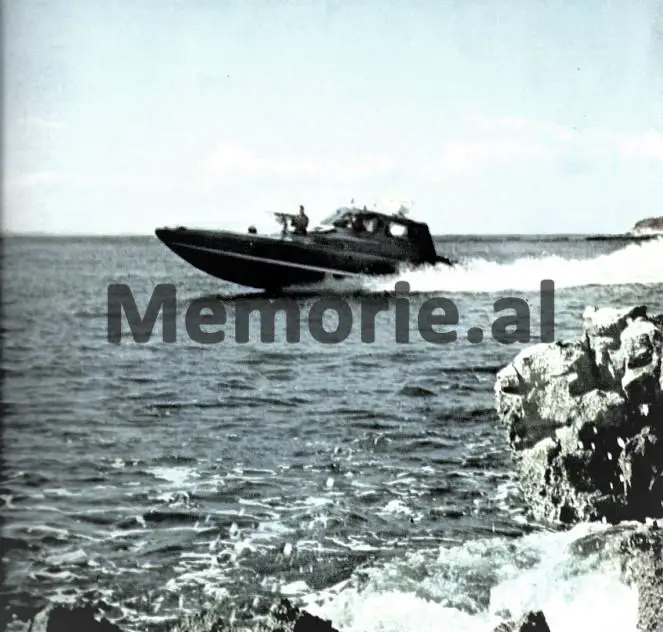
The rescue and release of an American yacht with four people on board by the Albanian authorities brought a strange confusion to official Washington in June 1987. Since the rupture of diplomatic relations, there had been no sign of rapprochement.

The provision of assistance and their release without any problem brought different reactions among the American authorities, some of whom interpreted it as a sign of the “thawing of the ice” between the two countries.

The entire event and the interpretations related to it, which occurred in June 1987, are brought in the next article of the “New York Times” that the newspaper offers to readers, which also discusses speculation about a possible opening of Albania to the West, as well as the different opinions of various diplomats. Memorie.al
ShareTweetPinSendShareSend
Previous Post

“When the bullets ran out and the tower door was broken, the Montenegrins rushed toward the second floor of the tower, she pulled Sadrina behind the door and...”/ The unknown story of Kaja Gale–Selmanja

Next Post

"‘You demand freedom, huh? You want democracy? The people's democracy is more than enough for us; we will offer you up in the sewer pits! You wanted Albania in Helsinki, too...?’ / The rare testimony of the former protagonist of the Spaç Revolt."

Artikuj të ngjashëm

“The inability of Albanians to change their individuality is tragically reflected in the existence of…”/ How Albanians appeared in the eyes of the West at the beginning of the last century
Dossier

“The inability of Albanians to change their individuality is tragically reflected in the existence of…”/ How Albanians appeared in the eyes of the West at the beginning of the last century

May 24, 2026
“Vladimir Petrov’s film ‘Kutuzov’ was made with the sole purpose of convincing the Soviets that victory over Nazi Germany was possible, to…”/ New book by journalist and diplomat Bashkim Trenova
Dossier

“Vladimir Petrov’s film ‘Kutuzov’ was made with the sole purpose of convincing the Soviets that victory over Nazi Germany was possible, to…”/ New book by journalist and diplomat Bashkim Trenova

May 24, 2026
“The shepherd from Vajza in Vlorë, sentenced to 25 years for an assassination attempt against Khrushchev, would recite verses from Homer, Dante, the tragedies of Shakespeare, Goethe’s Faust, Schiller, etc.,…”/ The rare testimony of the former political prisoner about the “encyclopedia” of the prisons
Dossier

“The issue of the 900 million rubles we owe was raised by Comrade Enver at the meeting in Moscow, to the extent that Comrade Khrushchev said; Albania is in a catastrophe, therefore…”/ Politburo Meeting in ’56

May 24, 2026
“Even the 1967 film ‘The Commissioner’, by Aleksandër Askoldov, did not escape the blows of the Soviet government, it was banned and the author was expelled from…”/ New book by journalist and diplomat Bashkim Trenova
Dossier

“Even the 1967 film ‘The Commissioner’, by Aleksandër Askoldov, did not escape the blows of the Soviet government, it was banned and the author was expelled from…”/ New book by journalist and diplomat Bashkim Trenova

May 25, 2026
“In ‘Sov-Eksport-Film’, the organization responsible for distributing Soviet film around the world, KGB officers constituted and controlled…”/ New book by journalist and diplomat Bashkim Trenova
Dossier

“In ‘Sov-Eksport-Film’, the organization responsible for distributing Soviet film around the world, KGB officers constituted and controlled…”/ New book by journalist and diplomat Bashkim Trenova

May 24, 2026
“Among the Anglophobic films produced by the Nazi German film industry, one can also mention ‘Uncle Krüger’ of 1940, made…”/ New book by journalist and diplomat Bashkim Trenova
Dossier

“Among the Anglophobic films produced by the Nazi German film industry, one can also mention ‘Uncle Krüger’ of 1940, made…”/ New book by journalist and diplomat Bashkim Trenova

May 23, 2026
Next Post
Enver’s order: “The death sentence of Leonardo Tomasso and ing. Niazi Pilku, as anti-patriots, therefore I order their execution …”/ Document of 1945

"‘You demand freedom, huh? You want democracy? The people's democracy is more than enough for us; we will offer you up in the sewer pits! You wanted Albania in Helsinki, too...?’ / The rare testimony of the former protagonist of the Spaç Revolt."

“Historia është versioni i ngjarjeve të kaluara për të cilat njerëzit kanë vendosur të bien dakord”
Napoleon Bonaparti

Publikimi ose shpërndarja e përmbajtjes së artikujve nga burime të tjera është e ndaluar reptësisht pa pëlqimin paraprak me shkrim nga Portali MEMORIE. Për të marrë dhe publikuar materialet e Portalit MEMORIE, dërgoni kërkesën tuaj tek [email protected]
NIPT: L92013011M

Na ndiqni

  • Rreth Nesh
  • Privacy

© Memorie.al 2024 • Ndalohet riprodhimi i paautorizuar i përmbajtjes së kësaj faqeje.

No Result
View All Result
  • Albanian
  • English
  • Home
  • Dossier
  • Interview
  • Personage
  • Documentary
  • Photo Gallery
  • Art & Culture
  • Sport
  • Historical calendar
  • Others