By Fazli Hajrizi
Part One
Memorie.al / For several months I had been persistently searching for Ago Agaj and no one could help me find his address. I called in all four directions of the continent where Albanians lived, asked individuals and associations in New York and other cities, but without success. Some told me he lived in New York; others advised me to ask Baba Rexhep, because he might lead me to Ago’s trail. – “Two years ago he settled in Florida,” the head of the Teqe told me on the phone. – “Florida? Just a word of mouth. South or north? Good luck finding which part of that state he lives in!” But they don’t say it for nothing: chance is often the king of everything.
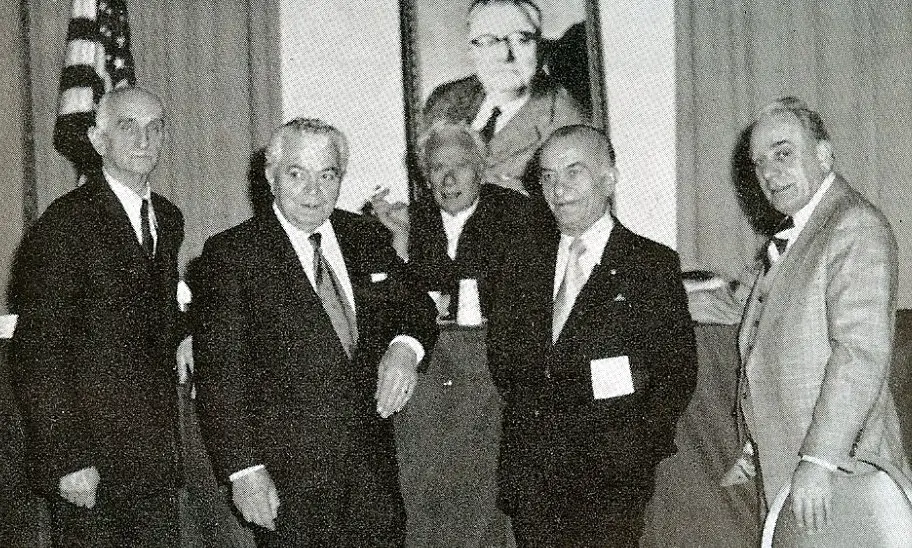
It was June 1993, when I went to Clearwater, Florida, to write something about the community living there. We had started a conversation at the “Palace Family Restaurant” with a group of compatriots. I asked here too, as I had done many other times, if anyone knew where Ago Agaj lived.
– “I do,” said the restaurant owner, Shemzi Balla, quickly. “He lives in a nursing home, about four miles from here. If you want, I can drive you there…”.
I could hardly believe my ears. I felt as if a heavy weight had been lifted from me, after such a long search.
– “As soon as possible,” I said without a second thought.
The car sped forward, leaving behind vehicles, houses, and trees that passed by like on a screen. Shemzi Balla, hands on the wheel, occasionally threw out a word just to break the silence:
– “Ago Agaj is old, 96 years old, but he still looks strong. His eyes are not good, but his mind is as clear as a lake. He will be very happy with the visit you’re going to make…”.
The electric lights in the street told that the day was breaking.
– “We’ve arrived. This is the nursing home,” Shemzi gestured toward a building that seemed lost among those surrounding it.
Night was falling when we reached its doors on Betty Lane. Two old men, at two ends of the entrance to this house, sitting in wheelchairs, were talking to themselves as if they had a crowd of people in front of them listening attentively. Their words were accompanied by moans and uncontrolled hand movements. After we announced who we were looking for, they went to fetch him. After a while, Ago Agaj came in a wheelchair, with a distant look, accompanied by the house caregiver. The woman pushed the wheelchair, but he tried to do it himself as well.
– “Where are they?” he asked as the first wheels of the chair kissed the concrete outside the building.
– “We are here,” we answered at once.
After he embraced us, he took out his handkerchief, removed his thick-lensed glasses, and wiped his tears. Then, with his right hand, he took a cigarette from the pack in his left shirt pocket, a thin wire, and a cigarette holder.
– “I will not die without Kosovo being freed,” he said as he prepared to light the cigarette. “No night passes without me shedding tears for that part of ethnic Albania, which is being crushed under the Serb’s hoof. So tell me, what news we have there these days?” he asked in a faint voice that was barely audible. We spoke about the situation in Kosovo. He listened attentively. He seemed to be overcome by a feeling of satisfaction at the Albanians’ resistance. When I stopped speaking, he took a deep breath and let out a long groan:
– “My eyes have failed me. I can barely see. Until a few months ago, I spent my time reading books and newspapers. Now my nephew and my brother, who come here every day, give me the daily news. Today, I think the newspaper ‘Illyria’ has arrived. So tell me, who is that man who publishes the newspaper?”
I told him briefly about the publisher, the work of the editorial staff, and its distribution to the four corners of the world. He seemed insatiable with what he was hearing and wanted more.
– “Give my congratulations to the publisher and the editorial members for the newspaper. I tell you without reservation that you have an excellent newspaper. It is a great fortune that we have it.”
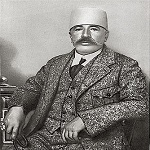
Thus began the conversation with Ago. After he drank a glass of water and finished the cigarette he was inhaling with such relish, I asked him to tell me something about his own life. I was unprepared for this interview, because I did not expect to meet this man who had been born in the last century and was now approaching the end of this one. He was silent for a few moments. Then he cast his gaze somewhere, as if kindling memories, far from his birthplace:
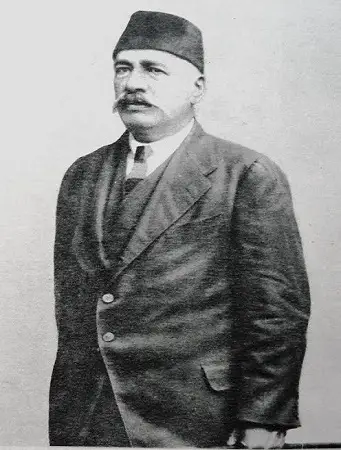
– “I was born in the Highlands of Vlora, in Labëria, on March 7, 1897. I received my first lessons in my birthplace, and my higher education in Vienna, in the Department of Agriculture. I went to Vienna in 1909. ‘Forget the silver-embroidered weapons of your ancestors! You no longer have to do with those,’ they told me there. ‘You will devote yourself to work, striving for yourself, for your family, and for your homeland. You must learn.’ When I finished Agricultural School, I could not return to Albania because of the war. I worked one year in Moldova and one year in Poland. I returned to Albania only in 1919. Immediately I joined the patriots of that time who were fighting against the Italian occupier.
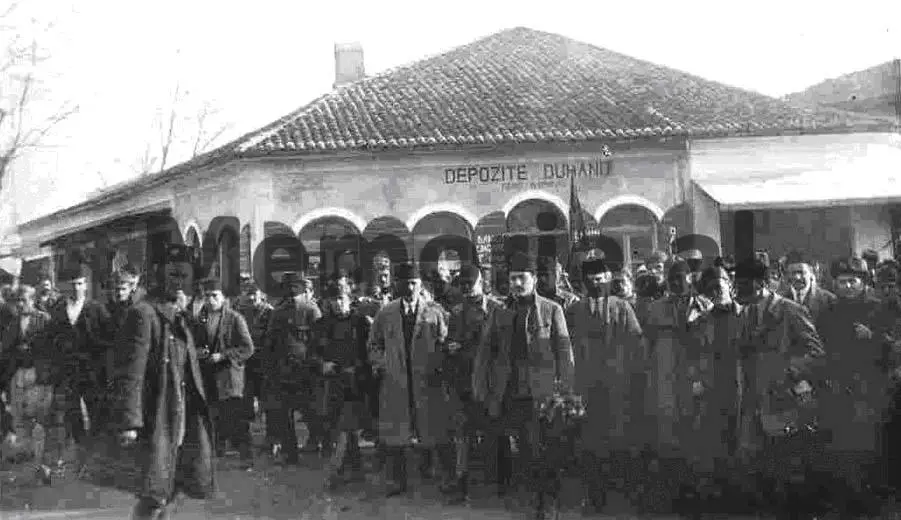
I took part in the Congress of Lushnja and in the bloody War of Vlora in 1920. I supported the Democratic Revolution of June 1924. For several years I worked as an agronomist in Albania and in Kosovo. During World War II, I was Minister of Agriculture. When the Germans controlled part of Kosovo, I went voluntarily to Mitrovica, where I was appointed prefect of the city. In June 1944, I took part in the Second Meeting of the League of Prizren. That same year I fled my homeland. I lived twenty years in Egypt, from where I immigrated to America.”
Ago Agaj told his biography briefly and in one breath, without refinements, without details, without boasting. But I wanted more. I had barely waited to meet this man who had lived through all those important events. Therefore, I was not sufficiently satisfied with his overly telegraphic style. I began to question him again, trying to dig up more details from his long and rich life. Ago Agaj listened to me attentively and agreed with pleasure. He was extremely precise. He had no need to “correct” himself. He confused neither dates nor people. It was truly astonishing: a 96-year-old with such a memory! The conversation flowed calmly down the river of events that our character had lived through. Here is how he told me an incident that happened immediately after his return to the homeland:
– “It was November 28, 1920,” he said. “The Italian carabinieri clashed with the unarmed people of Vlora. They wanted to take the Albanian flag from them, which a man from Kumanova was holding in his hand. The carabinieri knocked the man from Kumanova to the ground and tore the flag to pieces. One of the officers took a piece of the flag, tied it to his dog’s tail, and paraded it through Vlora. Then the people of Vlora exploded. The resistance for the salvation of Vlora began, because Vlora and Tepelena had remained as inseparable parts of Italy. Italy had gained these parts when it betrayed the Austro-German alliance and turned to the Allies. All of Albania declared itself independent, but always with a pro-Italian government in Durrës.
In January 1920, the Congress of Lushnja took place. The Congress decided on Albania’s independence and the overthrow of the Durrës cabinet. The Congress of Lushnja was an act of great importance, because it overthrew the Italian cabinet of Turhan Pasha. At this meeting, Mustafa Kruja spoke with tears on his face: ‘I,’ he said, ‘vote for Turhan Pasha, that is, for Italy, because Italy is in danger and will eat us slowly, whereas the Serb will exterminate us immediately.’ Then Mehmet Konica rose and said that Italy must leave Vlora, because if she stays there, Greece will take the South, and then what remains for Albania? And he resigned together with Dr. Turtulli. Then the War of Vlora began.”
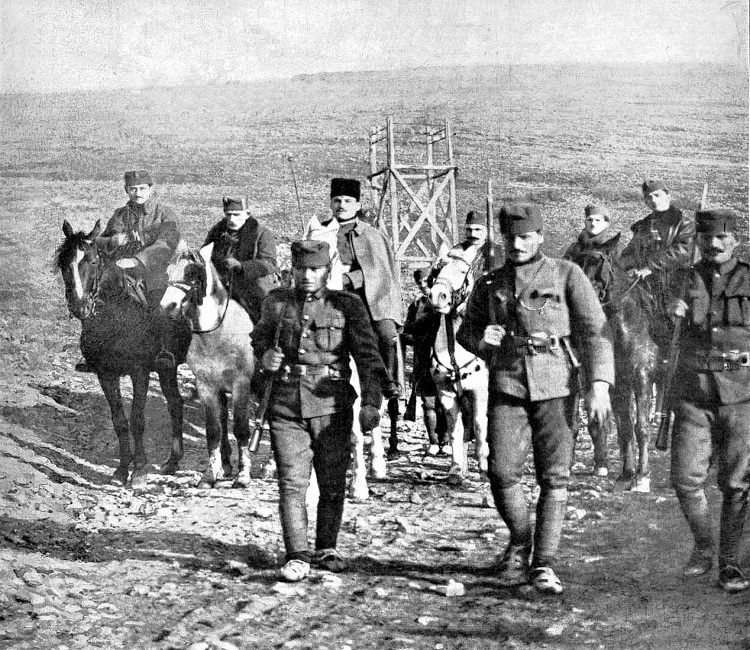
– “I took part in that war,” Agaj relates. “The heroes of the war against the Italians were mainly the people of Vlora. Hysni Toska from Mallakastra also came to our aid with his men and took the northern front. The southerners held the other fronts. We were in great need of food. That year the people of Vlora did not work the land, because they were at war. The wheat remained in the fields waiting for the sickle, unharvested. Xhafer Ypi, the prefect of Berat, sent us corn by cart, and this somewhat alleviated the danger of famine. The people of Vlora had nothing except their courage, their desire for freedom and homeland. So, the War of Vlora is and remains a bright page of history. I have written a book about this event,” said Ago Agaj.
– In 1924, the Democratic Revolution of June took place. How did you experience that event? – I asked Mr. Agaj.
– “I, although I admired Zog for his actions, saw that Noli was our idol of freedom along with Gurakuqi, Fishta, and Koculi. And I joined them. They invited me and tasked me with organizing the regions of Vlora. I called the Labërians, and they came, they listened to me, and they did not turn me down. The battalion of Vlora was formed, and my comrades elected me secretary. Thus organized, we reached as far as Tirana. The goal, as it seemed to me at the time, was for the southern wing to take power, not the northern wing. Noli was a good historian and poet, but he failed due to political ineptitude. Zogu came near Tirana, and he, the prime minister of the country, was playing the flute.
When Monsignor Noli went to the League of Nations to seek financial aid, they told him to hold elections. The people must give you their confidence. He returned to Albania and turned to Russia for help. Russia was waiting eagerly for this. Moscow had no representatives in the European states, but one of 10-15 Russian organizers came to Tirana. Recently, it has been heard from Noli’s supporters that they were brought by the Foreign Minister, Gurakuqi. This movement worried Italy and other states, which intervened with Serbia to support Zog. And they supported him with money from kerosene companies.
– Who killed Luigj Gurakuqi and Bajram Curri?
– “For Luigj Gurakuqi, the matter is this. As it appears from reserved British documents, the British ambassador tried to prevent the 1924 uprising in Albania and saw that the key to the uprising was Shkodra. He went to Shkodra, spoke with Gurakuqi, and reported: ‘I tried, but Gurakuqi is on Italy’s side.’ Luigji (Gurakuqi) fled to Italy, and Zog thought that, as a friend of the Italians, he would overthrow him from the throne. Gurakuqi was killed by a man from Shkodra, the brother of Tom Stambolla. I don’t know his name.”
– And Bajram Curri?
– “Zog had no hand in his killing. He would not kill Bajram Curri, a patriot admired in the Highlands of Gjakova. Indeed, he sent a group of gendarmes to take him into surrender. He was killed by the beys of Gjakova in treachery, in a cave. The killers met in Gjakova with a simple officer, a graduate of an Italian school named Ibrahim. They told the officer that the beys had promised them a thousand napoleons, but they kept 500 for themselves and gave us 500.
I want to take this opportunity to give an assessment of the great figure of Ahmet Zogu. His place in history is at the highest level. You know that song: ‘Long live Ahmet Zogu, long live the savior of the motherland / May he be remembered generation after generation / Grandson and great-grandson of Skanderbeg…’ This song was sung when Zogu was Minister of the Interior. A citizen of Korça wrote this poem, which later became a song.”
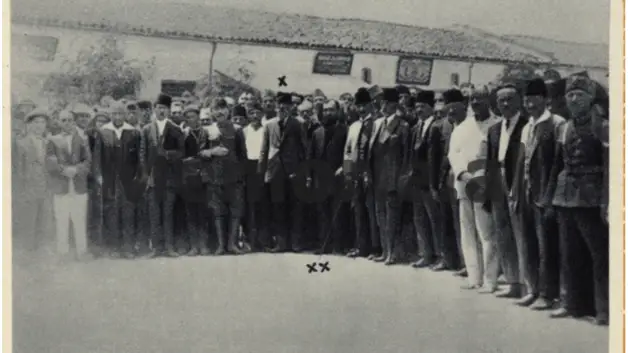
We change the topic of conversation. Ago Agaj wishes to return to Kosovo. As if there is hardly any other living witness who can describe the situation of that region under German occupation, or the wars of Shaban Polluzha against Drazha Mihajlović’s Chetniks. Our interlocutor took part in the war himself and saw its horrors with his own eyes. He was at the head of the administration of Mitrovica and a close associate of Xhafer Deva.
– “I wanted to take this opportunity to tell you as well about the bravery of Kosovars against the Serbs, especially Shaban Polluzha and Mehmet Gradica. They were good and brave men. We fought together. When I was prefect of Mitrovica during World War II and the Germans came to Kosovo, these patriots came to my aid, because Mitrovica could not wage the war alone. Here, it’s all in this book,” said Agaj, handing me the book “Xhafer Deva – His Life and Activity”. He has described all his activity during World War II in Kosovo in a warm style over several pages of the book.
“In the year 1924, at the end of my first journey around, mountain after mountain and gorge after gorge of Albania, I also reached the top of Bishtrik Mountain, from where I gazed with binoculars, with longing, at Kosovo,” his writing begins, and continues: “The love for this land was planted in my soul when I was still almost a child, by Kolë Margjini, who became like an older brother to me in Vienna and later would become a professor – a martyr of Albanianism in Prizren, a victim of Slavo-communism. He and Dervish Hima told me of the bravery of the lion of Dardania, Isa Boletini, who by then had become a living legend throughout Europe.”
Thus was born Ago Agaj’s love for Kosovo. When it was united with Albania during World War II, its northernmost part, the prefecture of Mitrovica, had remained as an autonomous province under Serbia. This province also included three sub-prefectures: Vushtrri, Podujeva, and Novi Pazar, with an Albanian-majority population. The reason it had been separated from Kosovo was the rich Trepča mines, which Germany, especially during the war, had great need of and could not leave in the hands of Italy, which ruled Albania together with Kosovo after their unification.
The German authorities, energetically urged by Xhafer Deva, had granted this Albanian province, led by Ferhat Draga, Rexhep Mitrovica, and Bedri Pejani, an autonomy that existed on paper but had never been implemented for many reasons. One reason was the lack of prepared Albanian elements for the administration. Ago Agaj, together with a group of volunteer specialists from Albania – veterinarians, doctors, teachers, finance clerks, etc. – decided to go there to help organize the prefecture.
In this book, he has also written about many other events of that time that could be of use to historians to illuminate this period, until recently obscure or treated in a one-sided manner. There we can learn about Xhafer Deva, ‘the most outstanding Albanian of his generation’; about Shaban Polluzha, ‘the giant with tied hair like the men of Rugova, with a gloomy face whose expression would not let you get a word in edgewise’; Asllan Boletini, the youngest son of Isa Boletini, who was ‘a renewed Isa, with large fiery eyes’; and about many other honored sons of this region; about the Albanians’ war against the Chetniks and their heroism; about Ago Agaj’s efforts to expose Serbian intrigues in the eyes of the Germans, etc.
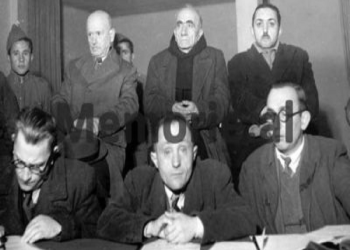
A few days after arriving in Mitrovica, Ago Agaj witnessed a trial of three Albanians accused of having allegedly killed some German soldiers. The lives of the three villagers depended on the decision that the German judges would make, while, as Agaj would observe, the translation of the defendants’ words was erroneous.
– “The attitude of the officers grew ever harsher, while the villagers, on the other hand, grew ever more worried and disturbed. As soon as I understood the situation and realized that the tension was arising from the erroneous translation, I could no longer bear not to point out this mistake aloud, a mistake that could cost the Albanians their lives. Then they asked me to translate. The trial began again, and the villagers were found innocent. The people rose to their feet with joy. What impressed and pleased me was the understanding shown by the Germans. It seemed they bore no grudge against us and did not want innocent Albanians to be condemned,” Agaj related, who day by day was becoming more popular among the Kosovars with whom he cooperated so well that today, when he remembers that time, he cannot contain his emotions.
Until now, he had told these events to no one. For many years he had been living with himself and his memories of the past in this house, alone, immersed in thoughts, night and day. His contemporaries are no longer in this world.
– “Forgive me for being emotional,” he said and began to wipe the tears streaming down his face. “Old age does its work. You know what they used to say? ‘As old as a hundred years.’ I live here alone. I have no one to talk to. My companion is myself, no one else. I feel as if I have been like this for a hundred years…!”
– “We are all a little emotional,” Shemzi Balla replied.
– “Albanians have always considered me more as a Kosovar than as a man from Vlora, and many of them have called me ‘the man from Vlora from Kosovo.’ I think Ismail Qemali was right to strive more for the Vilayet of Kosovo than for that of Janina. King Zog once told me that if he had Kosovo with him, Italy would not have dared to attack him. Albania has Kosovo as a shield. It has three gorges: the gorge of Ibër, Çakorr, and Kaçanik. If you hold those, there is no reason to worry! When Albania’s independence was declared, representatives from all parts of ethnic Albania were there. The representative of Kosovo was appointed Mit’hat Bey Frashëri. Isa Boletini was there too, the one who said: ‘Whoever touches Ismail Qemali touches me. Whoever tries to kill him, I will exterminate him,’” Agaj recounted. / Memorie.al
Clearwater, Florida
To be continued in the next issue