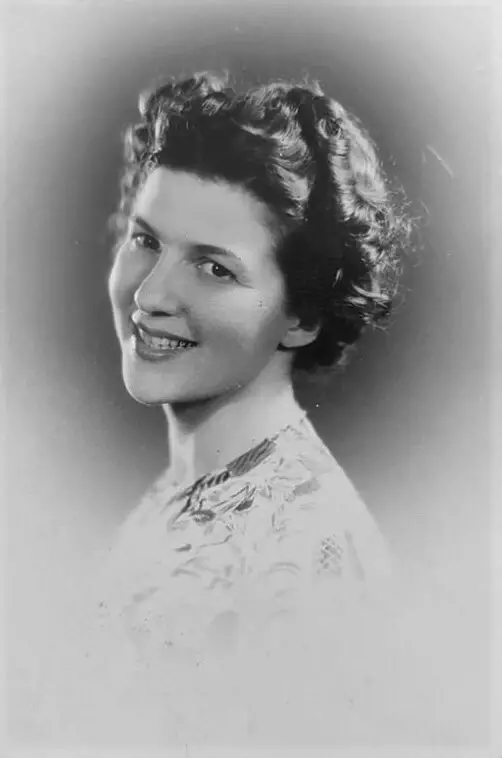
Memorie.al / Diti Biçaku had just turned 25 when, on the night of February 26, 1951, she found herself behind the bars of the Tirana prison, among the group of those arrested for the bombing of the Russian Embassy. She was a young woman whose dreams would be imprisoned forever in the terrible camps of the communist dictatorship. One of the most difficult moments would remain the parting from her friend of those dark days, the prominent intellectual Sabiha Kasimati. Moments before Sabiha was executed by firing squad, the last hand she squeezed in this world was Diti’s hand. When the communist executioners came to take her, Sabiha tried to resist; she did not want to part from Diti because she feared for her – she was afraid to leave her alone. Sabiha perhaps did not know that this would be their last meeting.
She did not know why Diti was still remaining behind the bars of the cold prison and why she was being taken away. Sabiha perhaps did not know that this would be her last meeting with her close friend and that she would never see her again. Sabiha did not know that by leaving behind her friend of those difficult days, she was heading toward an even more terrible fate; she would be covered in cold earth after the bullet the dictatorship had reserved for her and the unborn child in her womb…!
The murder of Sabiha Kasimati is one of the most horrific crimes of the communist dictatorship. Diti Biçaku recounted that last night of Sabiha in the cold cells of the Tirana prison and her final moments before she went toward the firing squad. In an interview given several years ago, Diti Biçaku recounts the days in the Tirana prison and the parting from Sabiha Kasimati before she was shot.
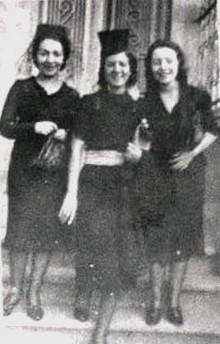
She is one of the female intellectuals imprisoned during the communist regime. She is one of those women who suffered the ordeal of the terrible camps of the communist dictatorship. She was a friend of Musine Kokalari, Sabiha Kasimati, and other intellectual women who were imprisoned in the early days of the communist dictatorship.
Mrs. Diti Biçaku Maliqi, you are the only eyewitness to the arrests, imprisonments, and killings that followed the event of the bomb thrown at the Soviet Embassy. How do you remember that night?
It was 12:00 at night when the door of my house was struck. There were three State Security (Sigurimi) officers, who entered armed. They came and asked me: “Who are you?” – “I am Diti Biçaku,” I told them. – “In the name of the people, you are under arrest!” They put me in handcuffs. They did a thorough search of the house for over an hour, but they found nothing. While bound, I looked at my parents, who were crying with tears. I told them not to worry, for I was innocent and would return again. In those moments, I do not know why, but God gave me strength. I went out with those of the Security, who were three men; one stood to my left, the second to my right, and the third in front. I spoke to the one at my side: “Where are you taking me?!” – “Do not speak!” – he shouted at me.
You said it was 12:00 midnight. Where did they take you?
Straight to the city center, where the Clock Tower is. Then they directed us to the “New Prison” (that’s what they called it then). But when we emerged at “Skanderbeg Square,” there was a swarm of prisoners. The streets were filled with those arrested, and everyone’s direction was toward the big prison. Every prisoner was accompanied by three Security officers, and thus we could not turn our heads left or right to see each other. At the “New Prison,” we waited a long time because the line of prisoners did not end.
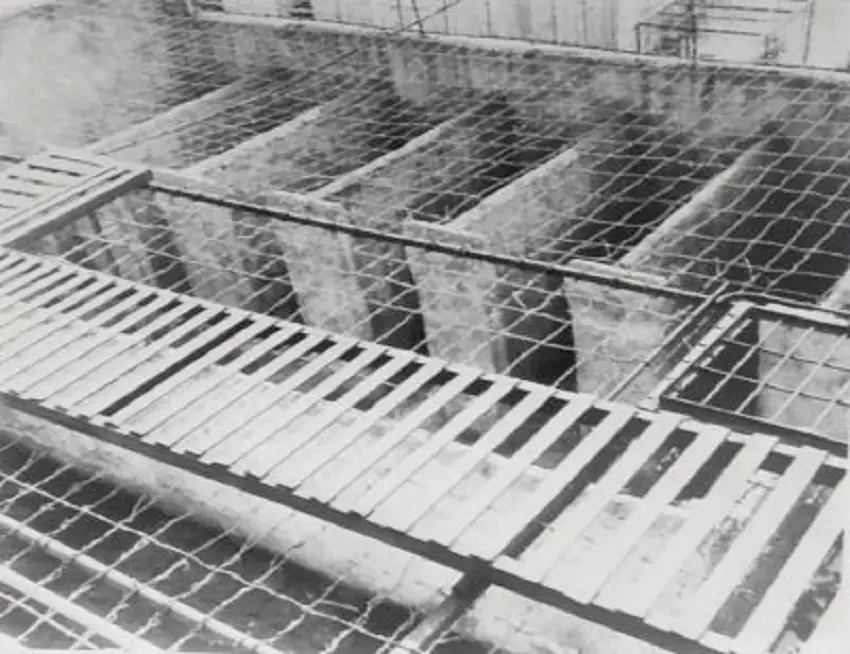
I do not know if I was the last or the penultimate. When my turn came, I entered the first door. A terrifying clatter came from behind. Behind it was a very dark tunnel, illuminated by a faint light. We passed the second door, and then they put me in a dungeon (birucë). The dungeon was like a well. There was no light at all. They left me there and bolted the door. I did not know where I was. At that moment, a match was lit in the middle of 5-6 people who were all women. Among them was Sabiha Kasimati. It was she who lit the match. “Who are you?” – she said, because she couldn’t see well. – “I am Diti Biçaku,” I replied. Instead of saying “Oh no” because I had been arrested, she said “Oh, thank God,” because a familiar face appeared to her in that horror. I had known Sabiha Kasimati since I was in Elbasan.
How long were you kept in the cell?
I do not know, because you couldn’t understand when it was day and when it was night. Because it was very cold, I got into Sabiha’s mattress, and we huddled together to stay warm. She had a fever. While we were talking, the door creaked. Those of the Security arrived. They entered and called the name of Sabiha Kasimati. Sabiha was shivering from the cold because she was sick. I took off my large coat and threw it over her shoulders.
With that coat, she was executed. Sabiha went out. After a while, they came and called my name too. Both of us together were put into a room where there were several other people. They were from the interrogation department. They sat us at a table illuminated by a lantern. It was Mehmet Shehu and some others I didn’t know then, but I know now. Mehmet Shehu banged his hand on the table, saying: “These are enemies of the people. These wanted to overthrow our people’s power. We must have no mercy for them, but give them the maximum punishment because we have won the people’s power with blood.” At this moment, Sabiha and I squeezed each other’s hands and understood that we were in great danger.
What happened after that, with you and Sabiha?
After we finished there, they removed us from the room. A little later, we heard the sound of a large truck. That truck always came there covered.
Even to this day, it seems I still hear the sound of that truck. The truck came to the door, and they put everyone in, tied up. They couldn’t even lift their heads. We never imagined they were taking them to be executed; we thought they were saved and were being released. We were all innocent. They came and took Sabiha too and put her in that truck. At that moment, she was pulling me to go with her. I wanted to go with Sabiha, but one of the guards pulled me back and the truck set off. Apparently, I was not on the list to be executed.
I do not know how I survived, but at that time I asked: “O God, why didn’t I go with Sabiha too?” – because I thought she had been released. Sabiha Kasimati finished the Liceu of Korça (in the same class as the dictator Enver Hoxha). The Albanian state granted her scholarship to the University of Turin, in the Faculty of Biological Sciences, which she completed successfully with grades of 30/30, with honors (trenta su trenta con lode). In the summer of 1941, she also defended her doctorate.
The department offered her the position of assistant in fluvial ichthyology, but she did not accept and returned to her homeland. After several years of passionate work, she was forced to go to Italy for health treatments in a Turin sanatorium. After healing, around 1945, she returned to her homeland. She began work at the Institute of Sciences, as the first scientific core was then called, which was led by Prof. Selaudin Toto. Sabiha was a complete intellectual who had studied in the West, a philosopher and biologist who well knew the essence and the unnatural, inhuman manifestation of the communist totalitarian system being established in Albania.
She was deeply despondent over the heavy blows being dealt to the country’s intellectuals, particularly those who had studied in the West, many of whom were her colleagues. Military courts were sentencing the Albanian elite to execution and heavy imprisonment. She was particularly shaken by the execution of her director, the scientist Selaudin Toto, as well as by the opposition intellectuals; Gjergj Kokoshi, Suad Asllani, Sulo Klosi, Shefqet Beja, Prof. Stanislav Zuber, etc., and especially by the sentencing of the first Albanian female writer, Musine Kokalari.
Thus, Sabiha began to express her dissatisfaction with the regime and with Enver Hoxha, her classmate at the Liceu of Korça. This dissatisfaction of hers, as well as her origin from a great, entirely intellectual and democratic family, caused Sabiha’s name to be included in the blacklists of the State Security as an “opponent of the regime.”
A cross was placed beside her name
Sabiha was arrested on February 20, 1951. She was part of the list from the Second Sector of the State Security Directorate, compiled by Captain Rasim Dedja. Beside her name, a cross had been placed, which meant she would be executed by firing squad. The compiler of the blacklists recounts: “The evaluation of the persons who would be executed, and who were in fact executed, was done directly by the leadership of the Ministry, which at that time was Mehmet Shehu with his two deputy ministers – Kadri Hazbiu and Mihallaq Ziçishti. I mention the latter because they covered the State Security. Mehmet Shehu was the Minister of Internal Affairs, directly interested in the event.”
“He proposed at the meeting of the Politburo that 10–15 people be executed without trial, and the Politburo approved it, so he had a free hand. But not without the Commander. Without the approval of the dictator, nothing was done. Enver Hoxha approved all the actions and the names of the victims that had been selected. But Enver added on his part the names of Sabiha Kasimati, Reiz Selfo, Manush Peshkëpia, and Qemal Kasoruho, who were from the Gjirokastra region and whom he knew personally.” For her execution and that of 22 other intellectuals, the Politburo of the Central Committee of the PPSH had decided, by the decision dated February 20, 1951. There is no example in all the countries of the communist East where the Politburo decided to kill people, moreover, without trial and by violating even the laws of that time!
Did she not accept the charge of terrorist acts?
She did not accept the charge of terrorist acts, of participation in terrorist organizations, or of being in service to foreign agencies, but she bravely accepted that, as an intellectual, she was against the totalitarian power and its communist ideology: “I have been against the people’s power because it does not reconcile with my ideology. I have never been of the opinion that social revolution could be achieved through revolutionary acts. I have been connected with a group of friends who were enemies of the Communist Party…”!
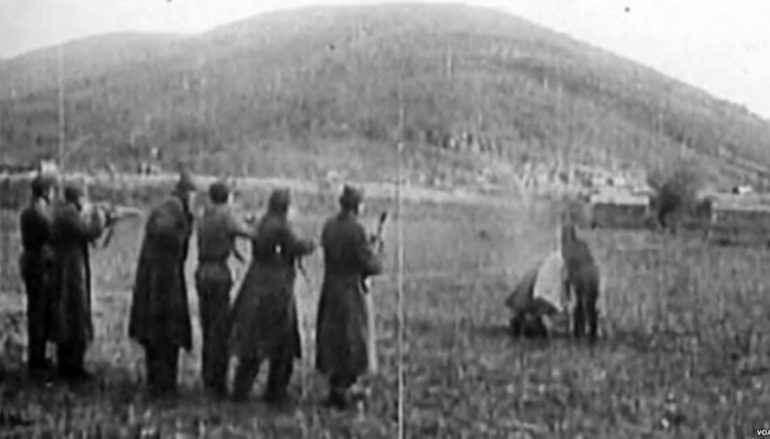
Sabiha was a true European democrat. In the midnight of February 26, 1951, bound with barbed wire along with 21 men from all over Albania, they were shot and thrown into a common pit near the Beshiri Bridge. Villagers heard her screams until she breathed her last. Her remains today rest in the Martyrs of the Nation Cemetery, in a common grave with the 22 martyrs executed on that bloody night. / Memorie.al