By Dashnor Kaloçi
Part twelve
Memorie.al / The history of parliamentary elections in our country, or more accurately, the attempts at elections, have its origins in the era of Ottoman rule when Albania was part of the Turkish Empire. One of the first Albanian deputies elected to the first Turkish Parliament, which opened its proceedings in December 1877, was Abdyl Frashëri. However, that parliament did not last long, as it was dissolved by the Sultan himself due to the outbreak of the Russo-Turkish War. Following the dissolution of Turkey’s first parliament, there were several other attempts at elections, but they all failed for various reasons. The first regular elections in Albania were held only in 1908, when the Young Turks came to power in Turkey. Those elections were not direct but were held through representation, otherwise known as the two-tier voting system (secondary electors).
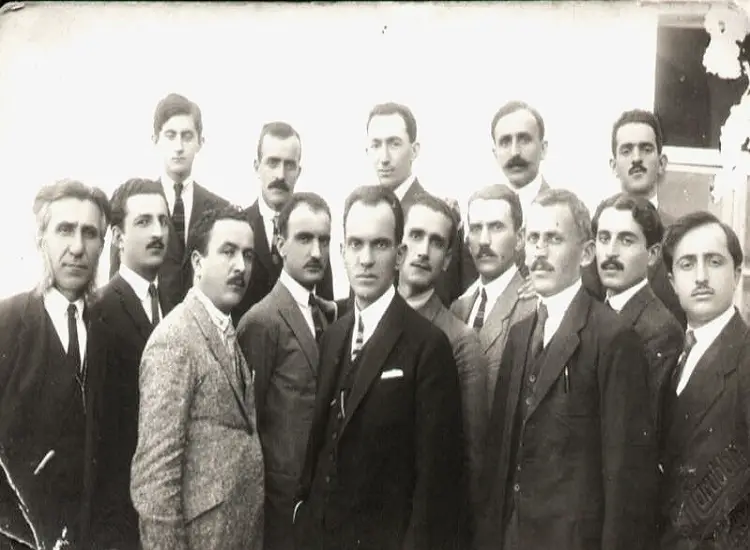
The first Turkish Parliament opened on December 10, 1908, and out of 266 deputies, 27 were Albanians elected from the four vilayets of Albania. At that time, members of the “Committee of Union and Progress” in Turkey, which included many Albanians, split and grouped into three political factions. The first group was “Union and Progress” (the Turkish-Macedonian party) with 164 deputies, consisting of 130 Turks, 5 Arabs, 1 Greek, and 15 Albanians, led by Hasan Prishtina, a deputy from Kosovo.
The second group, called “Liberal Union” (the Greek-Albanian party), consisted of 45 deputies and included 12 Albanians led by Ismail Qemali. Among the other Albanian deputies in the Turkish Parliament at the time were Esad Pashë Toptani, Nexhip Draga, Rexhep Pashë Mati, etc. After 1908, there were several other elections where Albanians continued to vote for their representatives in the Turkish Parliament, a process that lasted until November 1912, when Independence was proclaimed and Ismail Qemali was elected head of the Government.
Meanwhile, the first parliamentary elections in Albania took place in the spring of 1921, as they had not been held until then due to World War I, in which Albania was also involved. The first Albanian Parliament opened on April 21 of that year; the first building of the Albanian Parliament was located where the Academy of Sciences stands today. In that parliament, 76 deputies participated, elected following a relatively regular process from the nine prefectures of the country: Berat, Durrës, Elbasan, Gjirokastra, Korça, Kosovo, Shkodra, Vlora, and the Albanian colony in the USA.
As in the past, those elections were conducted through a system of representation, or secondary electors, where based on territorial division, representatives of each province had the right to elect their deputy. The aforementioned, along with a brief history of parliamentary elections in Albania from that period until 1991, has been published by Memorie.al in previous issues. Here, we are publishing the complete Basic Statute of the Albanian Republic (the Constitution) of 1925, where a special place is held by the parliamentary election legislation of that time, as well as the Parliament’s regulations regarding the rights and duties of deputies, published by the “NIKAJ” Printing House in 1925.
Continued from the previous issue
PENAL CODE OF 1928
BOOK THE SECOND
Misdemeanors
CHAPTER V
Misdemeanors against the inviolability of secrets
ARTICLE 204. – Any State official who fails to carry out the orders of his superior, without any legal justification, as well as any official who behaves harshly toward interested parties, shall be punished with a heavy fine ranging from fifty to five hundred gold francs; and in case of recidivism, in addition to the punishment as a judicial recidivist, the court may also decree temporary prohibition from public office.
If from the failure to execute the superior’s order as stated above, any damage is caused to the State, the punishment shall be imprisonment from fifteen days to one year, and a heavy fine from one hundred to two thousand gold francs, along with temporary prohibition from public office.
ARTICLE 205. – Any military personnel or agent of the public force, who refuses or delays, without any reasonable cause, the execution of a request legally made to him by the competent Authority, shall be punished with imprisonment for up to two years.
ARTICLE 206. – Any State official who, in the exercise of his duties, has gained knowledge of a crime – the prevention or suppression of which falls within the duties of that office and for which prosecution is mandatory – should he omit or, without any reasonable cause, delay in referring it to the Authority, shall be punished with a heavy fine from fifty to one thousand gold francs.
If the offender is an official of the judicial police, the punishment shall also include prohibition from public office for a period of up to thirty months.
ARTICLE 207. – State officials who, being three or more and having reached a prior agreement, abandon their office without any reasonable cause, shall be punished with a heavy fine from two hundred to three thousand gold francs, and with temporary prohibition from employment.
The same penalty shall apply to any official who leaves his office in order to prevent the completion of a task or to cause any other damage to the public service.
ARTICLE 208. – The competent State official who performs marriages prohibited by law or without the completion of legal formalities shall be punished with imprisonment for up to one month and a heavy fine of up to three hundred gold francs.
The same punishments shall apply to those guardians or trustees who incite their wards to contract an unlawful marriage.
ARTICLE 209. – Any State official who engages in trade within the district of his office in essential food items of primary necessity shall be punished with a heavy fine from fifty to three thousand gold francs and shall be temporarily prohibited from employment.
CHAPTER V
Abuses by Religious Officials in the exercise of their function
ARTICLE 210. – Any religious official who, in the exercise of his function, publicly insults or humiliates the institutions, the laws of the State, or the acts of the Authority, shall be punished with imprisonment for up to one year and a heavy fine of up to one thousand gold francs.
ARTICLE 211. – Any religious official who, by taking advantage of his status, incites another to humiliate the institutions, laws, or orders of the Authority, or to disregard the laws, orders of the Authority, or the duties pertaining to a State office, shall be punished with imprisonment from one month and a fine of up to one thousand gold francs.
If the act is committed publicly, the imprisonment may be extended to two years.
The same penalties shall apply to the religious official who, by taking advantage of his status, compels or persuades someone to perform acts or declarations that are against the law or to the detriment of rights acquired according to the law.
ARTICLE 212. – When a religious official, by taking advantage of his status, commits a misdemeanor other than those provided for in the aforementioned articles, the punishment prescribed for the committed misdemeanor shall be increased by one-sixth to one-third.
However, if the law has already taken his status into account in determining the penalty, this increase shall not apply.
CHAPTER VI
Usurpation of public functions and of honorary titles
ARTICLE 213. – Whoever, without right, assumes or exercises a public function, civil or military, shall be punished with imprisonment for up to three months and a heavy fine of up to two thousand gold francs.
The same punishment, along with temporary prohibition from public office, shall apply to any official who, after having received official notice of his dismissal or suspension from function, continues to exercise it.
The court may order that a summary of the judgment be published at the expense of the convicted person in a newspaper of the place where he resides and of the place where the crime was committed; both newspapers shall be specified in the judgment.
ARTICLE 214. – Whoever, without right and publicly, wears insignia or the official attire of an office or position, or wears decorations, medals, or other insignia that have not been granted to him, or thus attributes to himself titles, ranks, dignities, or public charges, shall be punished with a heavy fine from fifty to one thousand gold francs.
The Court may order that a summary of the judgment be published at the expense of the convicted person in a gazette designated in the decision.
CHAPTER VII
Violence and Resistance to Authority
ARTICLE 215. – Whoever uses violence or intimidation against a member of the Legislative Chambers, or a State official, to compel them to perform or omit an act of their function, shall be punished with rigorous imprisonment from three to thirty months.
Rigorous imprisonment shall be:
- From six months to five years, if the offense is committed with a weapon.
- From three to fifteen years, if the offense is committed by a group of more than three armed persons, or by a group of more than seven persons acting by prior agreement, even if unarmed.
ARTICLE 216. – Whoever uses violence or intimidation to prevent or disturb the meetings or the exercise of the functions of Judicial, political, or administrative Bodies, or their representatives or other authorities, Offices, or public institutes, or to influence their decisions, shall be punished with the same penalties as set forth in the preceding article.
ARTICLE 217. – Whoever participates in a gathering consisting of more than seven persons, aimed at committing the offense provided for in the preceding article by using violence or intimidation, shall be punished with rigorous imprisonment from one month to two years and a heavy fine of up to five hundred gold francs. If the offense is committed with a weapon, the rigorous imprisonment shall be from three months to three years and the heavy fine not less than one hundred gold francs.
If the gathering disperses upon the order of the government, the persons who participated therein shall not be punished for the offense provided for in this article; however, the leaders and chief instigators shall be punished with the penalty prescribed for the offense committed, without the application of the increase provided in Article 221.
ARTICLE 218. – Whoever uses violence or intimidation to resist a State official in the performance of their official duties, or those who, upon the official’s request, provide assistance, shall be punished with rigorous imprisonment from one month to two years.
Rigorous imprisonment shall be:
- From three to thirty months, if the offense is committed with a weapon.
- From one to six years, if the offense is committed by a group of more than three armed persons or by a group of more than seven persons acting by prior agreement, even if unarmed.
In cases where the offense is committed to save oneself or a near relative from arrest, the punishment for the case indicated in point I of this article shall be rigorous imprisonment or imprisonment for up to twenty months, or internment for a period of three months to three years; for the case indicated in number 1 of this article, rigorous imprisonment from two months to two years; and for the case indicated in number 2, from six months to five years.
ARTICLE 219. – For the purposes of the penal law, the term “near relative” shall include: the spouse, parents (ascendants), descendants, uncles, nephews/nieces, brothers, sisters, father-in-law, mother-in-law, their parents, son-in-law, daughter-in-law, and brothers-in-law or sisters-in-law.
ARTICLE 220. – When the State official has provoked the offense by exceeding the limits of their competence through arbitrary acts, the provisions of the aforementioned articles shall not apply.
ARTICLE 221. – When the offenses provided for in the preceding articles involve chief instigators or leaders, the punishment for these individuals shall be increased by one-sixth to one-third.
CHAPTER VIII
Insults and other Misdemeanors against persons holding Public Authority
ARTICLE 222. – Whoever, by words or actions, insults in any manner the honor, reputation, or dignity of a member of the Legislative Chambers or a State official, in their presence and by reason of their function, shall be punished:
- With rigorous imprisonment for up to six months or a heavy fine from fifty to three thousand gold francs, if the offense is directed against an agent of the public force.
- With rigorous imprisonment from one month to two years or a heavy fine from three hundred to five thousand gold francs, if the offense is committed against any other State official or a member of the Legislative Chambers.
ARTICLE 223. – Whoever commits the offense provided for in the preceding article through violence or intimidation shall be punished with rigorous imprisonment from one month to three years and a heavy fine from one hundred to one thousand gold francs.
The same penalties shall apply to anyone who otherwise uses violence or intimidation against a member of the Legislative Chambers or a State official by reason of their function.
ARTICLE 224. – When any of the offenses provided for in the preceding articles is committed against a State official not by reason of their office, but while they are exercising their function, the penalties prescribed in those articles shall apply, reduced by one-third to one-half.
ARTICLE 225. – When any of the offenses provided for in Articles 222 and 223 is committed against a State official by reason of their office and during the exercise of their function, the penalties prescribed in those articles shall apply, increased by one-sixth to one-third.
ARTICLE 226. – Whoever, by any means, insults the honor, reputation, or dignity of a judicial, political, or administrative body during a meeting, or of a judge during a trial, shall be punished with rigorous imprisonment from three months to three years.
If violence or intimidation is used against the body or the judge, the rigorous imprisonment shall be from six months to five years.
Legal proceedings shall only be initiated upon the authorization of the offended body.
If the misdemeanor is committed against a body not formed as a Council, proceedings shall only be initiated upon the authorization of its hierarchical Superior.
ARTICLE 227. – It is not permitted for the offender of any of the misdemeanors provided for in the preceding articles to prove that the facts or qualities attributed to the offended party are true or of public knowledge.
ARTICLE 228. – The provisions contained in the preceding articles shall not apply when the State official has provoked the offense by exceeding the limits of their competence through arbitrary acts.
ARTICLE 229. – In all cases not provided for by a specific provision of the law, whoever commits a misdemeanor against a member of the Legislative Chambers or against a State official by reason of their function shall be punished with the penalty prescribed for the committed misdemeanor, increased by one-sixth to one-third.
CHAPTER IX
Breaking of Seals and Removal from Public Repositories
ARTICLE 230. – Whoever, by any means, breaks seals affixed according to a provision of the law or by order of the Authority to ensure the preservation or identity of an object shall be punished with rigorous imprisonment from three months to two years and a heavy fine from fifty to one thousand gold francs.
If the offender is the State official who ordered or executed the sealing, or the person who has the secured object in their custody or possession, the rigorous imprisonment shall be from thirty months to five years and the heavy fine from three hundred to three thousand gold francs.
If the offense is committed due to imprudence or negligence by the official or the custodian, they shall be punished with a heavy fine from fifty to one thousand five hundred gold francs.
ARTICLE 231. – Whoever removes, disappears, destroys, tears, or alters evidence, acts, or documents kept in a public office or with a State official by reason of their status, shall be punished with rigorous imprisonment from one to five years.
If the offender is the State official who, by reason of their office, had the evidence, acts, or documents in their possession, the punishment shall be rigorous imprisonment from two to six years and permanent prohibition from public office.
When the damage caused by the offense is minor or the offender returns the act or document unaltered without having benefited from it and before being sent to trial, the punishment in the first case shall be rigorous imprisonment from six months to three years, and in the second case, rigorous imprisonment from one to five years and temporary prohibition from public office.
ARTICLE 232. – Whoever removes or converts for their own benefit or that of another, or refuses to deliver to the rightful party, items placed under pledge or seizure and which have been left in their trust and custody, shall be punished with rigorous imprisonment from three to thirty months and a heavy fine from one hundred to two thousand gold francs.
If the offender is the owner of the pledged or seized item, the punishment shall be rigorous imprisonment for up to one year and a heavy fine from fifty to one thousand five hundred gold francs.
If the value of the item is small, or the offender returns the item or pays its value before being sent to trial, the punishment shall be reduced by one-sixth to one-third./Memorie.al