By Dashnor Kaloçi
Part nine
Memorie.al / The history of parliamentary elections in our country, or more accurately, the attempts at elections, have its origins in the era of Ottoman rule when Albania was part of the Turkish Empire. One of the first Albanian deputies elected to the first Turkish Parliament, which opened its proceedings in December 1877, was Abdyl Frashëri. However, that parliament did not last long, as it was dissolved by the Sultan himself due to the outbreak of the Russo-Turkish War. Following the dissolution of Turkey’s first parliament, there were several other attempts at elections, but they all failed for various reasons. The first regular elections in Albania were held only in 1908, when the Young Turks came to power in Turkey. Those elections were not direct but were held through representation, otherwise known as the two-tier voting system (secondary electors).
The first Turkish Parliament opened on December 10, 1908, and out of 266 deputies, 27 were Albanians elected from the four vilayets of Albania. At that time, members of the “Committee of Union and Progress” in Turkey, which included many Albanians, split and grouped into three political factions. The first group was “Union and Progress” (the Turkish-Macedonian party) with 164 deputies, consisting of 130 Turks, 5 Arabs, 1 Greek, and 15 Albanians, led by Hasan Prishtina, a deputy from Kosovo.
The second group, called “Liberal Union” (the Greek-Albanian party), consisted of 45 deputies and included 12 Albanians led by Ismail Qemali. Among the other Albanian deputies in the Turkish Parliament at the time were Esad Pashë Toptani, Nexhip Draga, Rexhep Pashë Mati, etc. After 1908, there were several other elections where Albanians continued to vote for their representatives in the Turkish Parliament, a process that lasted until November 1912, when Independence was proclaimed and Ismail Qemali was elected head of the Government.
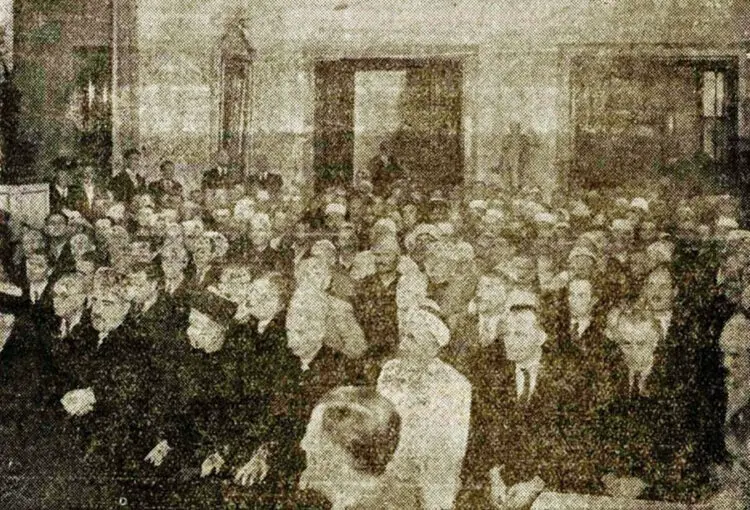
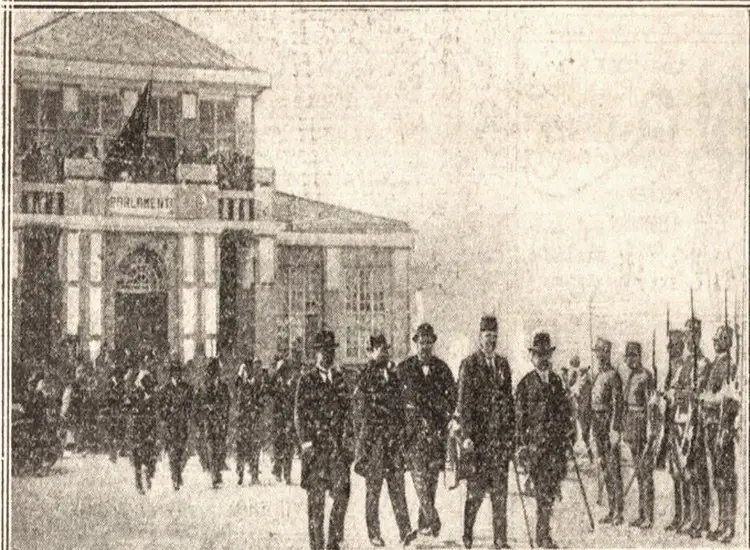
Meanwhile, the first parliamentary elections in Albania took place in the spring of 1921, as they had not been held until then due to World War I, in which Albania was also involved. The first Albanian Parliament opened on April 21 of that year; the first building of the Albanian Parliament was located where the Academy of Sciences stands today. In that parliament, 76 deputies participated, elected following a relatively regular process from the nine prefectures of the country: Berat, Durrës, Elbasan, Gjirokastra, Korça, Kosovo, Shkodra, Vlora, and the Albanian colony in the USA.
As in the past, those elections were conducted through a system of representation, or secondary electors, where based on territorial division, representatives of each province had the right to elect their deputy. The aforementioned, along with a brief history of parliamentary elections in Albania from that period until 1991, has been published by Memorie.al in previous issues. Here, we are publishing the complete Basic Statute of the Albanian Republic (the Constitution) of 1925, where a special place is held by the parliamentary election legislation of that time, as well as the Parliament’s regulations regarding the rights and duties of deputies, published by the “NIKAJ” Printing House in 1925.
Continued from the previous issue
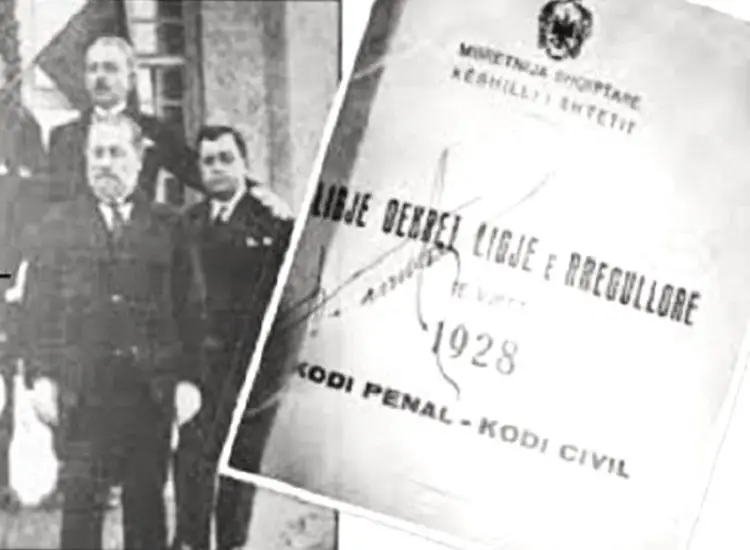
Criminal Code of 1928
Book Two: Offenses (Delicts)
TITLE I: Offenses against State Security
CHAPTER I: Offenses against the Homeland
ARTICLE 111. – Anyone who commits an act intended to place the State or a part thereof under foreign rule, or to diminish its independence, or to sever a part of it, shall be punished by death.
ARTICLE 112. – An Albanian citizen who takes up arms against the Republic shall be punished by life imprisonment; this punishment also applies if the perpetrator has lost Albanian citizenship due to entering the military service of a foreign State.
If the perpetrator, before committing the offense, has lost Albanian citizenship for any other reason, they shall be punished by heavy imprisonment of no less than fifteen years.
ARTICLE 113. – Anyone who treacherously, in time of war, surrenders to the enemy of the Albanian State military sites, fortified cities, fortifications, fortresses, ports, arsenals, weapons, ammunition, factories where these are produced, means of communication or correspondence, food supplies, depots, land, sea, or air forces, or causes these to fall into enemy hands, or burns, destroys, or breaks weapons or other war materials, military depots, aircraft hangars, or renders them unusable, or, to the detriment of the State’s military power and for the benefit of the enemy, destroys bridges, railways, roads, walls, or water currents prepared for defense or attack, or prevents or delays military operations, or in any way aids the enemy’s occupation or entry into the Homeland, or for these or other similar acts enters into an agreement with the enemy or their agents, or favors the military operations of an enemy state, or commits espionage, or accepts or hides spies, or facilitates their actions, or assists them, or commits other acts that cause hostilities or war from another state against the Albanian State – in all these cases, even if the act is an incomplete offense (full initiative), they shall be punished by death; but in case it is only a partial initiative, they shall be punished by life imprisonment. If all these acts are committed in favor of a foreign state, but not in time of war, the perpetrator shall be punished by heavy imprisonment of no less than ten years.
ARTICLE 114. – Anyone who opposes the orders or decisions issued during wartime for the security of the homeland shall be punished by heavy imprisonment from two to six years.
ARTICLE 115. – Contractors under agreement with the State who, during wartime, use craftiness (deceit) in the delivery of necessary items for the Armed Forces shall be punished by heavy imprisonment of no less than five years.
ARTICLE 116. – Anyone who reveals political or military secrets belonging to State security, whether by making them known or by publishing documents, facts, drawings (dessins), plans, or other information regarding fortification materials or military operations, or by facilitating in any way their disclosure, shall be punished by imprisonment from one to three years and a heavy fine of more than two thousand gold francs (Fr. ari).
The punishment is:
- By heavy imprisonment or imprisonment from five to ten years, and a fine of no less than four thousand gold francs, if the secrets have been revealed to a foreign State or its agents.
- By heavy imprisonment or imprisonment of no less than fifteen years and a heavy fine of no less than ten thousand gold francs, if the secrets have been revealed to a State at war with the Albanian State or its agents, or if the act has disturbed the friendly relations of the Albanian Government with a foreign Government.
If the perpetrator, as an official, had the drawings, plans, or documents in their possession, or knew the secrets by other means, or obtained knowledge of them through force or craftiness, the punishment is increased by one-third.
ARTICLE 117. – With the punishments specified in the above article, as the case may be, anyone who, for the purpose of gain, achieves (obtains) by any means the disclosure of secrets or obtains knowledge of them in any manner, shall also be punished.
ARTICLE 118. – When any of the secrets indicated in Article 116 come to the knowledge of another due to the imprudence or negligence of that official who, in such capacity, held the drawings, plans, or documents or knew those secrets, that official shall be punished by imprisonment from six months to two years and a heavy fine of up to two thousand gold francs.
ARTICLE 119. – Anyone who, without being duty-bound, produces (reléve) or copies plans of fortifications, ships, establishments, roads, or other military works, or with such purpose enters secretly or by craftiness into those places where public entry is prohibited, shall be punished by heavy imprisonment or imprisonment from six to thirty months and a heavy fine from two hundred to three thousand gold francs.
Anyone who enters those places secretly or by craftiness, for this act alone, shall be punished by imprisonment for up to six months.
ARTICLE 120. – Anyone who, being charged by the Albanian Government to negotiate with a foreign Government on State matters proves to be unfaithful (infidéle) to that charge (mandate) in a manner that may damage the public interest shall be punished by heavy imprisonment or imprisonment from three to fifteen years
Criminal Code of 1928
ARTICLE 121. – The punishments established in articles 113, 115, 116, 117, 118, 119, and 120 are also applied when the offense is committed to the detriment of a foreign State that is an ally of the Albanian State, both during wartime and upon its conclusion.
ARTICLE 122. – Anyone who, by recruiting soldiers or performing other hostile acts not approved by the Government, committed inside or outside the Republic, places the State at risk of war, or causes the breach of its neutrality, shall be punished by imprisonment of no less than sixteen years.
If the acts not approved by the Government place the State or the people only at risk of hostile reprisals or disturb the friendly relations of the Albanian Government with a foreign government, the perpetrator shall be punished by imprisonment from three to thirty months; and if those reprisals occur, by imprisonment from three to five years.
ARTICLE 123. – A citizen, or a foreigner residing in Albania, who, without treasonous intent, provides directly or indirectly to an enemy State or its agents during wartime, food or other means that may be used to the detriment of the Albanian State, shall be punished by heavy imprisonment or imprisonment from one to five years, and a heavy fine from one thousand to eight thousand gold francs (Fr. ari).
ARTICLE 124. – Anyone who, with the intent to humiliate, removes from its place, destroys, tears, or by other means dishonors in public places or places open to the public, the Flag or any other State emblem, shall be punished by imprisonment from three to twenty months and a heavy fine from one hundred to two thousand gold francs.
ARTICLE 125. – An Albanian citizen who accepts decorations, pensions, or other benefits from a State that is at war with the Albanian State, shall be punished by a heavy fine from one hundred to three thousand gold francs.
CHAPTER II: Offenses Against State Powers
ARTICLE 126. – Anyone who commits an act directed against the life of the President of the Republic shall be punished by death; however, when this act remains an incomplete attempt (incomplete initiative), the court may commute this punishment to life imprisonment.
ARTICLE 127. – Anyone who, without the intent foreseen in the above article, commits an act against the integrity or personal liberty of the President of the Republic, unless the law establishes a greater punishment for the committed offense, shall be sentenced to heavy imprisonment from ten to twenty years.
ARTICLE 128. – Anyone who by words or deeds insults the President of the Republic in his presence, shall be punished by heavy imprisonment from three to twenty years and a heavy fine of no less than one thousand gold francs.
If the insult is committed not in his presence or is directed against the Presidency of the Republic, the punishment is heavy imprisonment from one to three years, and a heavy fine of no less than five hundred gold francs.
For the cases foreseen in this article, prosecution is initiated only with the authorization of the Ministry of Justice.
ARTICLE 129. – Anyone who commits an act intended to prevent the President of the Republic from his functions, wholly or partially, even if temporarily, or commits an act intended to change by force, wholly or partially, the Constitution of the State or the form of Government, shall be punished by death.
However, when these acts remain an incomplete attempt, the perpetrator shall be punished by life imprisonment.
ARTICLE 130. – The punishments indicated in the above article also apply to anyone who commits an act intended to forcibly prevent the Legislative powers from exercising their function.
ARTICLE 131. – Anyone who publicly, by words or deeds, humiliates the Legislative Chambers or the Army, or the moral person of the State, or the Nation, shall be punished by imprisonment from one month to two years and a heavy fine of no less than one hundred gold francs; if the contempt against the Legislative Chambers occurs during their session, the imprisonment shall be from six months to three years and the heavy fine from three hundred to three thousand gold francs.
Regarding humiliation against the Legislative Chambers, prosecution is initiated only with the authorization of the Presidency of that Chamber.
Criminal Code of 1928
ARTICLE 132. – Anyone who, on Albanian soil and without Government authorization, collects or arms citizens with the intent to place them in the military service of a foreign State, shall be punished by heavy imprisonment from one to five years; the punishment is imprisonment from thirteen months to six years if among those collected there are members of the military.
ARTICLE 133. – Anyone who commits an act intended to incite the people to take up arms against the State powers, shall be punished by heavy imprisonment of no less than fifteen years.
If the rebellion occurs, the leaders or the chief instigators shall be punished by death. Those who have only participated in it shall be punished by imprisonment from three to fifteen years.
ARTICLE 134. – Anyone who provides to a rebellious or disruptive society: arms, ammunition, bombs, or other destructive means, as well as those who prepare, bring from abroad, or manufacture, or hide such items for the aforementioned societies – provided these acts do not constitute cooperation as defined in Article 65 – shall be punished by heavy imprisonment of no less than five years and a heavy fine of no less than two thousand gold francs (Fr. ari).
ARTICLE 135. – Anyone who, without any right under the law or any mandate from the State, assumes command of the army, fortresses, centers, military posts, ports, cities, warships, or air forces, shall be punished by imprisonment from five to ten years.
ARTICLE 136. – Anyone who conducts propaganda to draw the army, gendarmerie, police, and other Armed forces of the State away from discipline, as well as anyone who delivers speeches or distributes printed or unprinted writings, or journals with this intent, shall be punished by heavy imprisonment of no less than one year.
ARTICLE 137. – Anyone who, by spreading articles, deters the people from military service or conducts propaganda for this purpose in open places, shall be punished by imprisonment from two months to two years and a heavy fine from five hundred to two thousand gold francs.
ARTICLE 138. – Anyone who publicly humiliates the constitutional institutions of the State shall be punished by imprisonment for up to six months and a heavy fine of up to three hundred gold francs.
ARTICLE 139. – Anyone who spreads, by themselves or by attributing it to another, false or altered news or writings, as well as anyone who alters official speeches and writings – if these acts can cause public alarm – shall be punished by imprisonment from one to six months and a heavy fine from fifty to five hundred gold francs.
If these acts have caused the disturbance of public peace, the punishment is imprisonment from six months to two years, and a heavy fine from two hundred to one thousand gold francs.
ARTICLE 140. – Those who, in order to disturb the State’s peace, use religion or the sacred elements of a religion as a tool, as well as those who with that intent excite religious feelings, shall be punished by imprisonment from three months to three years and a heavy fine from one hundred to one thousand gold francs.
Criminal Code of 1928
CHAPTER III: Offenses against Foreign States and Their Heads and Representatives
ARTICLE 141. – Anyone who, on Albanian soil, commits an offense against the head of a foreign state shall be sentenced to the punishment established for that offense, increased by one-sixth to one-third.
Whenever this act is against life, integrity, or personal liberty, the increased punishment according to the aforementioned provision cannot be less than five years of heavy imprisonment.
In any other case, the punishment against personal liberty cannot be less than three months, and the fine no less than five hundred gold francs (Fr. ari).
If the offense is of those prosecuted upon the request of the injured party, prosecution is initiated only upon the request of the foreign Government.
ARTICLE 142. – Anyone who, with the intent to humiliate, removes from its place, destroys, tears, tramples, or by other means dishonors in public places or places open to the public, the flag or any other emblem of sovereignty of a foreign State, shall be punished by imprisonment for up to one year.
In this case, prosecution is initiated only upon the request of the foreign Government.
ARTICLE 143. – For offenses against the plenipotentiary representatives of foreign States accredited to the Albanian Government, which are committed because of their function, the punishments established for offenses committed against State officials because of their function shall apply.
Whenever the act is an insult, prosecution is initiated upon the request of the insulted party.
CHAPTER IV: Common Provisions for the Foregoing Chapters
ARTICLE 144. – Anyone who, in order to commit any of the offenses foreseen in articles 111, 126, 127, 129, 130, and 133, forms an armed band, or exercises therein a high command or a special function, shall be punished by heavy imprisonment or imprisonment of no less than ten years.
All others who have participated in that band shall be punished by heavy imprisonment or imprisonment from thirty months to ten years./Memorie.al