



By Dashnor Kaloçi
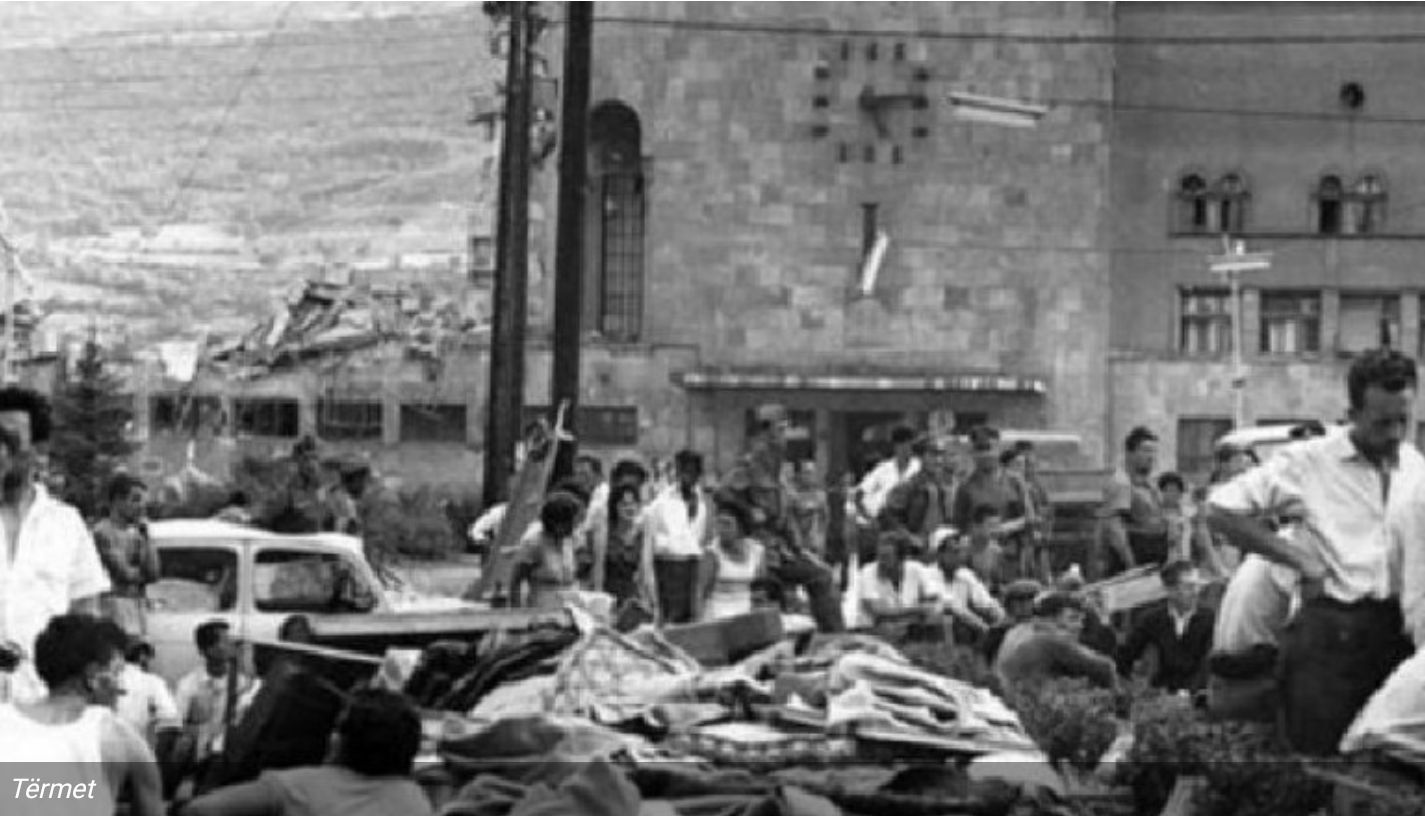
Memorie.al / It were the first days of June 1979. The city of Shkodra and its surrounding villages had not yet recovered from the great misfortune of the catastrophic earthquake on April 15 of that year (magnitude 7.25, one of the most powerful in the Balkans last century). That earthquake caused dozens of victims and extensive material damage in Shkodra and Lezha, leaving the entire country in stress due to a series of aftershocks. Suddenly, another severe event would shake the city once again.
At noon on June 3, 1979, a grim rumor spread throughout Shkodra: somewhere near the pier by the old metal bridge (where the Buna River meets Lake Shkodra), a small boat belonging to the Municipal Enterprise, used for tourist excursions on the lake, had sunk. The shocking news of a large number of drowned or missing persons caused hundreds of residents to pour toward the Buna River from every street in the city.
Many were relatives of those on board, while others were onlookers racing on foot, bicycles, or carts to see what had happened, identify the victims, or assist in the search. The reports from the scene were contradictory; the boat had taken on passengers far beyond its capacity, and it was said that around 50 people fell into the water after the motorboat “Mitro Xhani” tilted. The exact number of those who failed to resurface and lost their lives remained unknown.
Even today, 46 years after that tragedy, no resident of Shkodra or relative of the victims can provide an exact figure for the death toll. This was never clarified before the 1990s because the communist regime of the time never went public with such events or accidents, keeping them hidden from the North to the South.
Strangely, even after the 90s, not a single line was written about this accident until now. From an archival document we found (marked “Secret” but long since declassified), it is learned that in the event of June 3, 1979, between 40 and 50 people fell into the water, and seven of them lost their lives.
This document, dated June 4, 1979, was compiled just one day after the event. It lists the full identities of the victims – name, surname, age, workplace, and residence – but provides no further details on how or why it happened. In the following days, apart from a brief notice regarding the arrest of the boat’s captain (Kol Zen Ragjoni), nothing else was made public.
The official figure of seven victims is likely inaccurate. Our investigations and testimonies from Shkodra residents present that day suggest the number was nearly double. For instance, the brother of the Secretary of the Shkodra District Court, named Kraja, drowned that day, yet his name does not appear in the official Ministry of Internal Affairs communique. This discrepancy exists because several bodies were recovered days later, and some were even carried by currents across the border into the territory of Montenegro (then part of Yugoslavia).
A City in Mourning and the Vllaznia Conflict
Alongside these tragedies, Shkodra – a city of culture – was further saddened by news that hit its passionate “sports fans” hard. The football team “Vllaznia”, which a year prior had shined in the European Cup (playing worthily against Austria Vienna), would not participate in the competition that year. The draw had matched them with an Israeli team, and the Albanian regime refused to allow its teams to play against Israel.
Despite the heavy shadow of the April 15 earthquake and the June 3 boat disaster, the people of Shkodra did not abandon their humor. They lived with their famous jokes (barsoleta) against the regime as “daily bread.” While many were attributed to the famous caricaturist Tef Palushi, the real authors were often anonymous citizens. These jokes flourished as hundreds of workers and volunteers from across the country were stationed in Shkodra and Lezha for earthquake reconstruction.
Toward the end of June 1979, just days after the “Mitro Xhani” tragedy, the Tirana Variety Show (Estrada e Shtetit) arrived in Shkodra to perform. Staying at the “Rozafa” Hotel, the famous comedian Skënder Sallaku met Tef Palushi. According to accounts, their conversation went as follows:
Skënder: “Tefë, what were all these misfortunes hitting Shkodra – the earthquake in April and now this boat sinking in the Buna?”
Tefa: “Ah Skënder, these misfortunes were truly heavy. They came from ‘the one above’ and there is nothing to be done. But we Shkodrans have been hit by a third misfortune, even greater than those two!”
Skënder: “What misfortune, Tef? We haven’t heard anything!”
Tefa: “Ah Skënder, people haven’t told you because they are afraid to speak!”
Skënder: “Tell us then, Comrade Tef, what is this great misfortune?”
Tefa: “Is there any greater misfortune, Skënder, than the Tirana Variety Show coming here to try and make us Shkodrans laugh?! Woe unto us, the things one hears!”
Beyond the sharp humor, we are publishing the archival documents (facsimiles) below. These were not mere administrative reports but reflections of a bitter reality protected by the “iron shelter” of the regime.
SECRET OPERATIVE COMMUNIQUES
DOCUMENT 1: THE APRIL 15, 1979 EARTHQUAKE
PEOPLE’S SOCIALIST REPUBLIC OF ALBANIA SECRET
MINISTRY OF INTERNAL AFFAIRS April 16, 1979
OPERATIVE COMMUNIQUE NO. 89
TIRANA SEISMOLOGICAL CENTER: On April 15, 1979, at 07:19, a very strong earthquake with a magnitude of 7.25 Richter occurred 130 km northwest of Tirana, with its epicenter in the Adriatic Sea. The intensity at the epicenter was over 9 degrees MSK-1964. It is among the strongest earthquakes recorded this century in the Balkans.
In our territory, the intensity was around 8 degrees. The earthquake caused 35 deaths and 167 injuries in the districts of Shkodra and Lezha. In these two districts, 1,738 houses were destroyed and 5,415 were damaged. Tremors were felt throughout the country and as far as Yugoslavia, Greece, Bulgaria, Italy, Austria, and Southern Germany. 206 aftershocks were recorded by 21:00.
Reports show that 80% of houses in Velipoja, Bushat, and Barbullush were damaged. In the Dajç area and Pentarë village, 80% of houses were completely ruined. Heavy damage occurred in border points at Reç, Pulaj, and Rrushkull. In Lezha, the city bakery and water reservoir were put out of service.
DOCUMENT 2: THE “MITRO XHANI” BOAT TRAGEDY
PEOPLE’S SOCIALIST REPUBLIC OF ALBANIA SECRET
MINISTRY OF INTERNAL AFFAIRS June 4, 1979
OPERATIVE COMMUNIQUE NO. 130
SHKODRA: On June 3, 1979, at 11:30, while traveling from the Buna Bridge to Shiroka, the motorboat “Mitro Xhani” (belonging to the Municipal Enterprise) tilted due to overcrowding. 40-50 people fell into the water. The following individuals have not yet been found and are suspected drowned:
- Agim Liman Meta, age 21, soldier from Peshkopi.
- Halime Halil Kallogjeri, age 25.
- Mitat Eqrem Ymeri, age 11.
- Halil Haxhi Piraniqi, age 29, engineer.
- Sabah Faslli Dini, age 20, worker.
- Fatmir Hasan Dani, age 18, student.
- Lulzim Mehmet Brocaj, age 20, worker.
DOCUMENT 3: THE ARREST OF THE CAPTAIN
PEOPLE’S SOCIALIST REPUBLIC OF ALBANIA SECRET
MINISTRY OF INTERNAL AFFAIRS June 15, 1979
OPERATIVE COMMUNIQUE NO. 130 (Cont.)
SHKODRA: On June 14, 1979, Kol Zen Ragjoni, age 54, resident of Shiroka/Shkodra and captain of the motorboat “Mitro Xhani”, was arrested for violating maritime regulations, resulting in the drowning of 7 people on June 3, 1979./Memorie.al