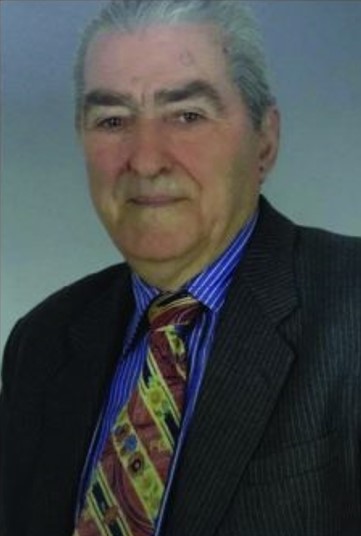
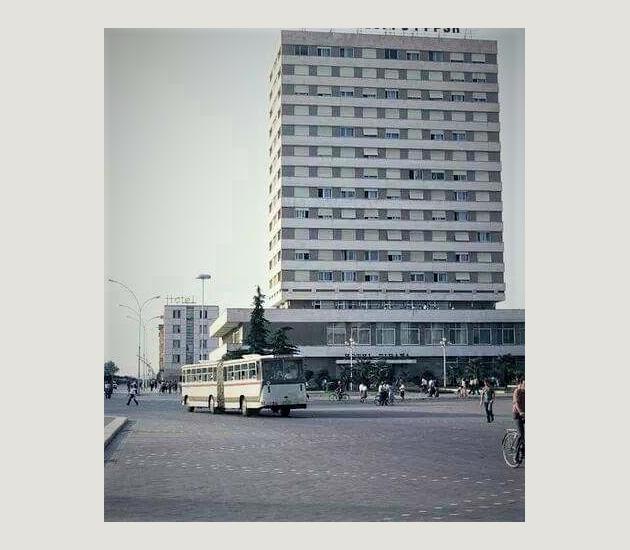
Memorie.al / In the art of Albanian construction, Hotel “Tirana International,” or the “15-story building” of the pre-90s era in the center of Tirana, can be considered today as the “embryo” of the high-rise towers that have been and are being erected on almost every street of the capital. This is also due to the tribulations experienced by the engineering and technical staff that designed and supervised the implementation of the 15-story building’s works. These are best explained by Eng. Adem Kormaku, the former site director of the “21 Dhjetori” (December 21st) enterprise.
In his 400-page encyclopedic book, “I Grew Up with My Mother’s Tears,” he writes, among other things: “Toward the end of 1972, an analysis was conducted by high government bodies in Tirana, where it emerged that at the current stage, the construction of several important objects for Tirana was necessary.
These objects were: A 15-story hotel in the center of Tirana; Hotel ‘Arbëria’ where the Ministry of Justice is today; the National Gallery of Arts; the school across from the State Archive; the seven-story residential building in front of the Ministry of Justice; the Residence of the Chinese Embassy; the construction of the Chinese hotel – today the State Police; the construction of the Antibiotic factory, etc.”
Eng. Kormaku, who has left his mark on almost all these works after having led the construction works of the Metallurgical Plant in Elbasan with the “21 Dhjetori” site, was entrusted with the difficult task of implementing the 15-story project – an object of specific dimensions and difficulties, being realized for the first time in our country.
As one of the renowned masters of the art of construction in our country, Eng. Kormaku emphasizes that for the construction of this unique object in Albania – at that time and later – the best specialists were concentrated and summoned, grouped into a brigade of 300 people: masters in the professions of carpentry, ironwork, plastering, finishing, plumbing systems, rebar bending, woodworking, electrical work, etc.
The debate with Manush Myftiu over the upper floors of the 15-story hotel
At the time when the most difficult moments had been overcome, the project implementers faced the unexpected, because the crane purchased for this purpose could not facilitate the construction of the upper floors. This was the reason why Manush Myftiu urgently summoned Adem Kormaku to a confrontation, demanding that he provide a guarantee for the construction of the 15-story building.
“The construction and architecture of the 15-story hotel were carried out by experienced engineers and architects, such as the seasoned structural engineer Ferit Stërmasi and the architect Valentina Pistoli. There is no doubt about the structure implemented from the foundations, technical floors, columns, and beams, while the concreting part of the hotel consists of concrete walls with double reinforcement grids and high-quality, high-grade concrete.
Thus, there is a full guarantee, and even if the hotel were to fall, it would remain like a matchstick without breaking!” – this was the guarantee given to the former Politburo member Myftiu by the talented engineer originally from Stebleva of Peshkopi.
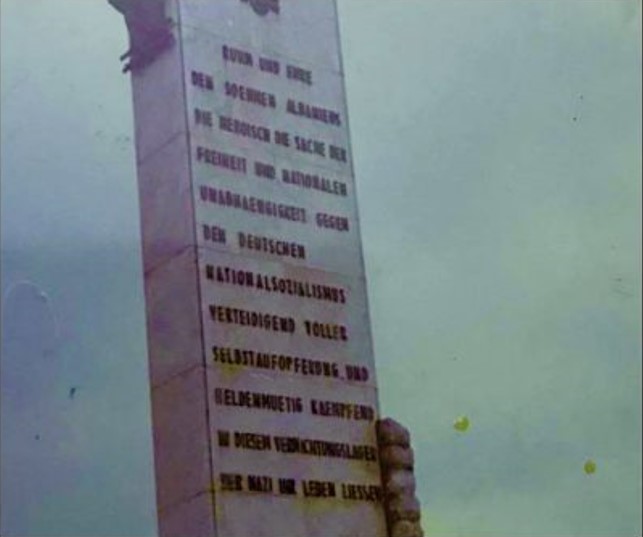
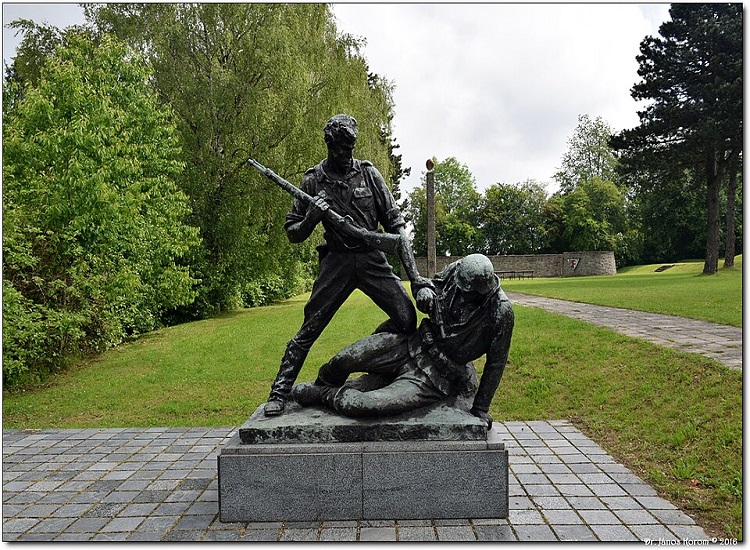
Thus, Adem Kormaku has left a mark with the builder’s art, not only on Hotel “Tirana – International,” or the pre-90s 15-story building in the center of Tirana, but also in the raising of the foundation for the Freedom Fighters’ monument in Mauthausen; in the erection of the Great Palace of Culture in Tirana; in the National Gallery of Arts; in the construction of the Chinese embassy complex, today the Ministry of Foreign Affairs of Albania, earning gratitude and appreciation from hundreds of workers, technicians, engineers, and from the highest social and state leaders and institutions.
One only needs to read his book “I Grew Up with My Mother’s Tears” to understand with what love he writes about the great generation of builders – about those who sacrificed in the reconstruction of the country for five decades. Just as with the art of construction, in this book, he has also poured the art of writing with quality and feeling.
The Albanian engineers who implemented the works of the Mauthausen memorial
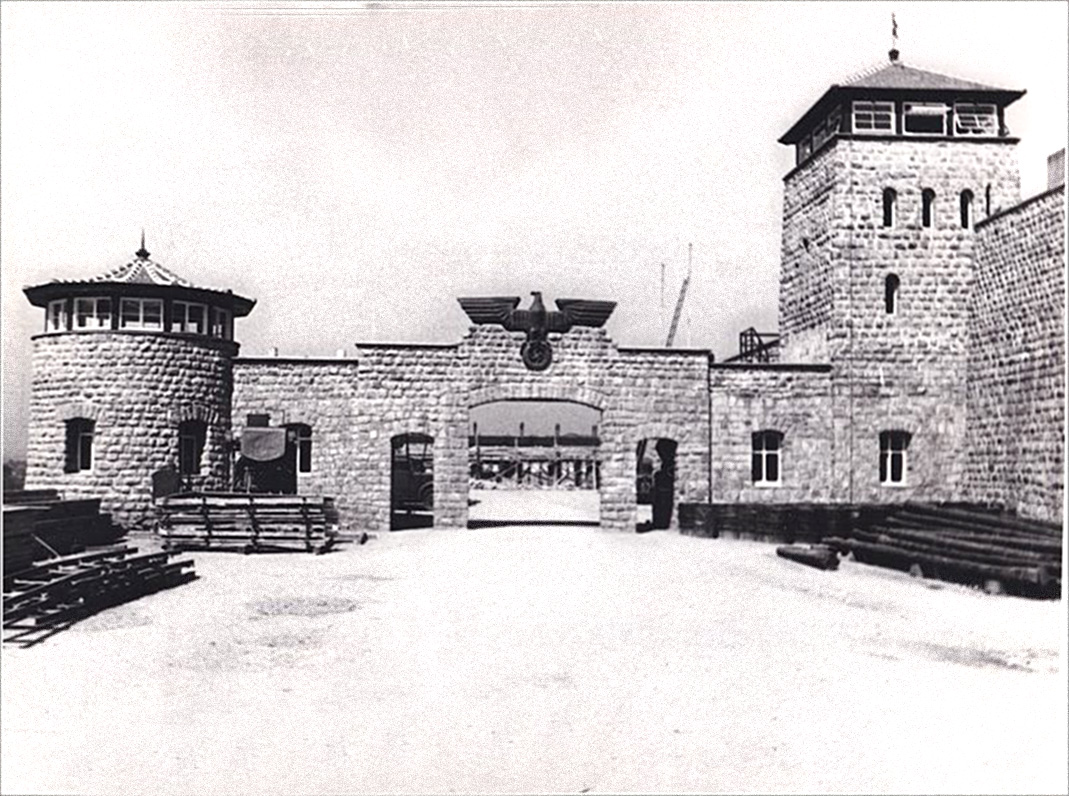
In March 1968, when Adem Kormaku had just earned the title of assistant-engineer, he was assigned to a task force to prepare the material base for the implementation of works on the monument dedicated to the fallen at the infamous Mauthausen camp in Austria. In this highly responsible task, the engineer from Stebleva was joined by Taqo Miho and Llazar Mazniku.
It was truly one of the happiest moments of his life, as the boy who had grown up an orphan (fatherless since early childhood), with countless difficulties in a very poor area, had been selected to represent the Albanian state in a monumental work in one of the main states of Europe. Conscious that he would leave a mark on a work that would immortalize the martyrs of freedom fallen in the infamous extermination camp at Mauthausen, he dedicated himself to the task with maximum responsibility.
“After everything was prepared, on September 23rd we left for Austria, and in December 1968 we returned from Austria with the task accomplished,” he writes on page 155 of his book. His memories, lovingly recorded in the pages of this book, are moving, especially regarding the time when the construction of housing through voluntary labor began and was realized in Tirana. He writes about the years 1966-1970, when the decision-making bodies of the time saw it necessary for constructions with voluntary contributions to be concentrated.
And precisely for this purpose, the Directorate of Objects with Voluntary Contribution was created, through which 2,000 apartments would be built in 1970 alone. Later, Adem Kormaku would be present in the construction of important works in Tirana, where his dedication and sacrifice in fulfilling his duties would stand out.
In July 1976, the talented engineer Adem Kormaku was appointed Director of Construction Enterprise No. 10 in Tirana. “To be honest, in my heart I did not welcome this promotion in responsibility. This was because we had returned with great momentum from Elbasan, where we worked and sacrificed so much to worthily represent Tirana in the construction of the Metallurgical Complex, and for the duration we worked there, we had very good results.
Even the construction of capital objects in Tirana, we started from zero and succeeded thanks to hard, exhausting work, but one that also gave us satisfaction,” he writes modestly in his book (pp. 173-175). In this book, he also writes about the construction of objects of special importance, among which he lists Department 101-K for State Reserves, the Ministry of Internal Affairs, as well as the Radio Television building…!
The fiery love for his birthplace and its people
It is not without reason that he dedicates the first chapter of this book to his birthplace and the personalities of Stebleva. Referring to books by local and foreign authors who offer various reasons for the naming of his birthplace – such as Vahid Kormaku, Ramazan Hoxha, Ilmi Sadiku, Kujtim Boriçi, Velo Cfarku, Mehmet Hasani, Artan Lila, Agim Çadri, etc. – he competently gives the correct etymology, according to which the variant of the origin from “s’të bleva” (meaning “I did not buy you”) prevails, from which the name Stebleva was adapted.
The worthy son of this Golloborda region, raised an orphan under the care and love of his mother (whom he held and holds as an idol, describing her with grandeur in this book), referring to Barleti, expresses pride in the fact that Oranik (today’s Stebleva) was one of the strongholds and bases of Skanderbeg in the battles against the hordes of the Turkish army.
The author of this work also expresses legitimate pride in the origin of Mustafa Kemal Atatürk from Stebleva, Albania. Just as he beautifully describes the natural beauty of this area adorned with high mountains and beautiful plateaus amidst centuries-old forests that resemble a magnificent amphitheater, Adem Kormaku speaks of the people of this area, whose virgin nature has educated them to love work and knowledge; wherever they have worked and lived, they have left an impression and a good name.
“In this virgin village with patriotic traditions, known for historical values over the centuries, the people of Stebleva with high human virtues are honest, sincere, loving people, enviable for creating harmony generation after generation.” As such, he masterfully profiles popular leaders and local personalities like Hazis Lila and Islam Hoxha; Adem Bojaxhiu, who was the headman of Stebleva for 30 consecutive years; as well as the beloved and unforgettable teacher, Gani Vaid Kormaku.
Though he has passed 80 years of life, with human sentiment, he brings back memories of his father, Hamit Musa Kormaku (the Tailor), and the accounts of his mother and others. In this impressive book, one learns about the ordeal of a man of labor with rare human and intellectual virtues, who from an orphaned child in 1959 would be selected as a member of the Army Band, only to reach his two-year post-graduate diploma in Civil Engineering on July 5, 1970, which bears number 96 in the official register.
In this book, we also learn how the intellectual with national contributions to the art of construction, Adem Kormaku, succeeded in creating a solid family and today enjoys his two sons, his only daughter, as well as his grandsons and granddaughters. The well-known writer and publicist Kujtim Boriçi, in the preface of this encyclopedic work, among others, highlights Kormaku’s modesty, which thus elevates the man of labor and great works to a pedestal.
“I believe the author’s modesty regarding this product (the book) should be highlighted, which is emphasized from the first page to the end. Although he says that the memories and documents collected in this book were written to leave fragments of the decades on his shoulders to his children, relatives, and acquaintances, in fact, the book as a whole is much more than that,” writes editor Boriçi.
This is also due to the fact that the reader of this book will see that Adem was a specialist or leader in several very important works – which are not few, but the pride of construction in Albania. As such, for them and about them, we today, but also the generations to come, must know or have documented not only the projects but also the living work done to materialize them, the sacrifices of thousands of people who did everything to raise them. With this encyclopedic work, Adem Kormaku has given something of value to society. / Memorie.al