
By Ali Buzra
Part Twenty-Seven
– LIFE UNDER PRESSURE AND SUFFERING –
(ASSESSMENTS, COMMENTS, NARRATIVES)
Memorie.al / At the request and wish of the author, Ali Buzra, as his first editor and reader, I will briefly share with you what I experienced in this encounter with this book, which is his second (after the book “Gizaveshi through the years”) and which naturally continues his writing style. The sincerity and frankness of the narrative, the simple and unmodified language, the accuracy and precision of the episodes, or the lack of a refining, intentionally subsequent imagination or its non-utilization, I believe have served the author positively, who comes to the reader in his original form, inviting us to at least get to know unknown human fates and pains, randomly or not, leaving us to reflect as a starting point for awareness towards a catharsis so necessary for the Albanian conscience.
Bedri Kaza
Continued from the previous issue
MEFAIL BIÇAKU, THE SHELTERER OF JEWS DURING THE WAR, FACES THE INVESTIGATION OF THE COMMUNIST STATE
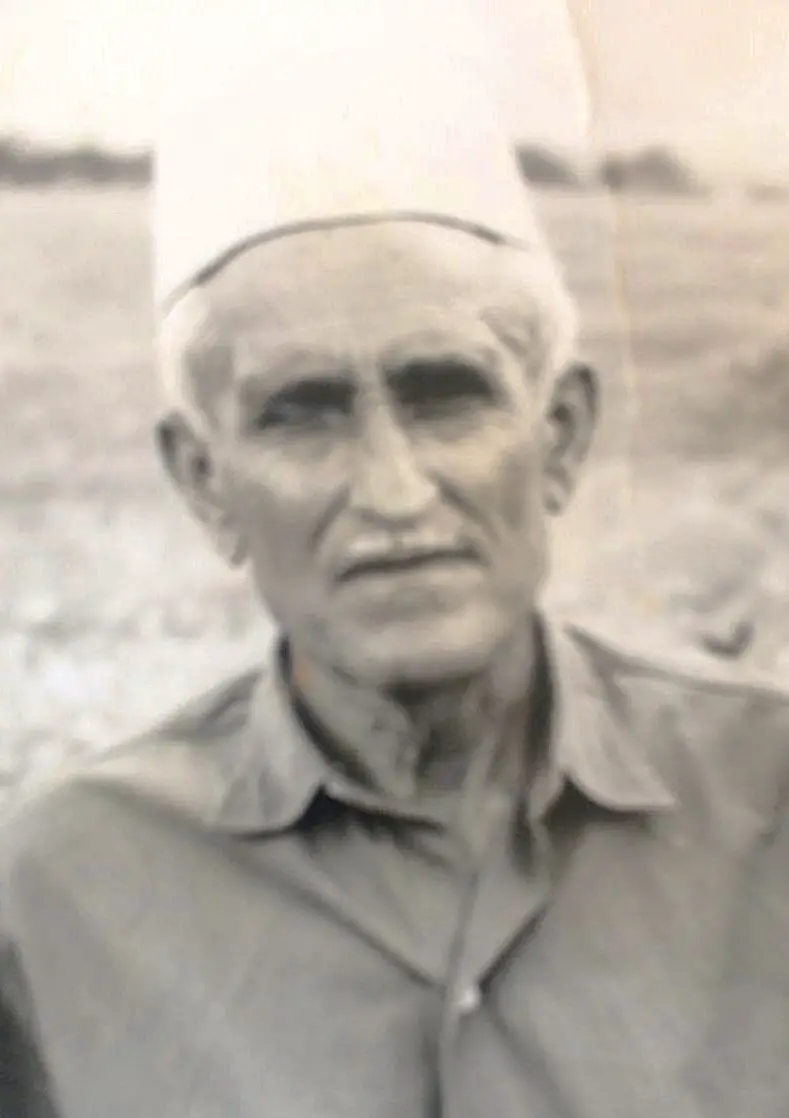
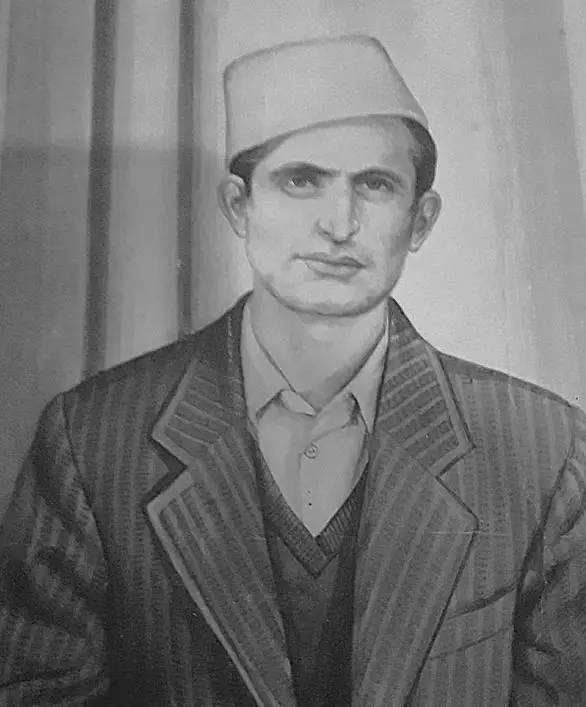
Mefail Biçaku, from the village of Qarrishtë, was the son of Mahmut Biçaku. The latter was the brother of Sheme, Sadik, Emin, and Kapo. Mahmuti was a well-known person in the region for his manliness, honor (besa), and hospitality. He had many friends and acquaintances in Macedonia, not only among Albanians there but also well-known figures of Macedonian ethnicity. Mahmuti had five sons: Jaho, Nebiu, Shaban, Mefail, and Izer.
The first four lived in Qarrishtë, engaged in livestock farming and ensuring generally good living conditions, while the last immigrated to Turkey and never returned to the village. After their father’s death, the brothers separated, each starting their own family. For his time, Nebiu stood out, known as a clever man of words and a good connoisseur of the political situations the country was going through. Mefaili was mainly engaged in agricultural work and livestock farming. He was a sincere, humane, hospitable, and honorable man.
The Biçaku family in Qarrishtë kept their friends even after Mahmuti passed away. At the end of October 1943, a friend of theirs, named Pop Stojçe, a Macedonian, came to the Biçaku family in Qarrishtë. It is said that the latter had been a deputy in the Yugoslav parliament before the war, while during the war period he was being pursued.
Meanwhile, he had also served as a cleric in Velçan, Macedonia, and maintained friendship with the Biçaku family. This Macedonian citizen came there with 12 Jews and asked his friends to shelter them, as their stay in Macedonia had become impossible due to the German forces. The friends from Qarrishtë accepted his request, and Mefail Biçaku took it upon himself to carry out this mission.
Mefaili was around 45 years old. He stood out not only for his honor (besa) and bravery but also had a powerful physique and could handle possible difficulties. Mefaili placed the Jewish families in a forest on the outskirts of the village, a very suitable place to avoid the attention of passersby. Initially, he built them a shack with planks, well protected from wind and rain. Later, other shacks were built, including a kitchen and sleeping quarters.
Usually, once a week, Mefaili would go to Struga to a merchant named Spiro Gozhda, where he would get supplies according to their order with an invoice. While Mefaili went to Struga with horses, facing difficulties and risks dictated not only by the occupying forces but also by bands of robbers ambushing the roads, his eldest son Njaziu, then 14 years old, would check the road crossings in the village to protect with arms the Israeli families taken under his father’s honor (besa).
Family members recount that the Israelis began to learn a little Albanian. When Mefaili was late returning from Struga, they would worry and repeat, “Hopefully nothing happens to him,” and when he came, as soon as they saw him, they would shout, “Here comes father, God bless him.” Mefaili often helped them also with traditional foods, such as meat and dairy, considering them friends, so that they would feel as well as possible.
In the spring of 1944, their leader, named Simon Aroesti, told Mefaili that if he could, he should go to Tirana to get another group of Jews and bring them there, since they were in danger there. It was wartime, yet Mefaili, with the courage that characterized him, set off for Tirana.
He went, according to their instructions, to the neighborhood then called “Ceno Sharra”, No. 17, on “Rruga e Barrikadave” (Barricades Street), found them and gave them the letter, which he kept with great care in an inside pocket of his vest (xhamadan). The next day, the group of Jews, consisting of 14 people, set off with him, under his honor (besë). Mefaili brought them safe and sound to Qarrishtë, to their relatives. He communicated with them almost every day. He usually went there at night, meeting their possible needs.
The danger was evident at all times, because a tip-off to the German forces stationed in Babje could massacre not only his family but also the entire village. Naturally, there were reactions from specific individuals in the village, who asked Mefaili to remove the Jews in the face of possible danger to the village, but he cut them short, saying they were under his honor (besë), and that without him being killed first, no one could touch his friends.
When he went to the forest, he often took his children with him, who remember the beautiful scene created there. The forest was dense, and among the trees, the Jews had hung kerosene lamps for lighting, communicating with each other from one shack to another. A small town had been created, which in the evening had a stunning appearance. Most of the Israelis were educated, with professions such as engineers, doctors, etc. There they stayed until December 1944.
At the end of December, or the beginning of January 1945, Mefaili accompanied the Jewish families, including women and children, to Struga. They were placed in a hotel. After five days, he parted from them, receiving all their sincere thanks for what he had done, and returned to Qarrishtë. According to the account of his son Njaziu, one of the Israeli women, who was very elderly and unable to endure the winter journey, he left at home, and then took her to Struga in early spring.
After the liberation of the country, as I described above, his uncles Emin and Kapo were arrested and sentenced to prison, while their sons and families were persecuted. But, oh, would Mefail Biçaku be forgotten by the State Security (Sigurimi)?! He had married his daughter to the son of Selim Gurra, a family of wealthy peasants (kulaks) from Dragostunja. They left him in peace for a few years. But, finally, a pretext was found.
Relatives say that the State Security, around the end of 1960, intercepted two letters at the post office sent by Israeli friends. As far as is known, the letters came from two of the Jews, but who were now residing in Russia. Thus, in 1961, they arrested him, accusing him of collaborating with the Yugoslav UDB and maintaining contact with foreigners. They kept him under investigation for nearly three years. They demanded he name his “accomplices.”
Mefaili was a devout believer. He could never slander others to save himself. He endured for three years starvation and the most inhuman tortures used in the dungeons of the prison, without admitting to any accusation. He was now 65 years old. In the hands of merciless executioners, also threatened with the lives of his sons, he fell ill, suffering from stress. When it became clear that his health condition was extremely serious, they sent him to the hospital.
His cousin, Bilal Biçaku, learning of his condition, went to meet Haxhi Lleshi, at that time Chairman of the People’s Assembly, whom he had known since the war, perhaps even earlier. Lleshi received Bilal and asked him how much schooling Mefaili had. He explained that the person was illiterate, he could not read or write. “Go home,” he told Bilal, “We will release him.”
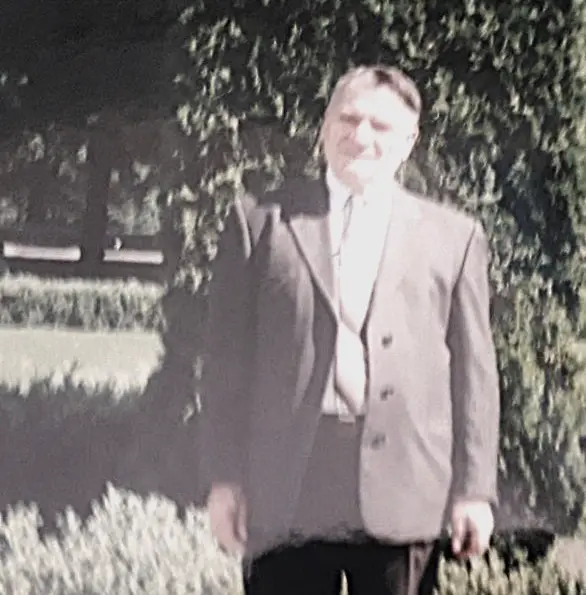
Thus, at the end of 1963, he was released and returned to his family. His sons took maximum care of him, and his health condition improved. Mefail Biçaku, the courageous and loyal man, protector of 26 Jews pursued step by step by the Germans, passed away in 1969 at the age of 71, surrounded by his family, escorted to his final home by his fellow villagers from Qarrishtë and many friends he had everywhere.
In the 1970s, the Albanian state was almost isolated from the outside world. It had no relations with Israel. In 1974, their family in Qarrishtë received a letter from Argentina, sent by Simon Aroesti, who was one of the Jews who lived in Qarrishtë during the war years, together with his wife. The letter was written in English. His son Muhamet went to Elbasan to his brother Njaziu, and together they inquired and had it translated by a teacher who knew English.
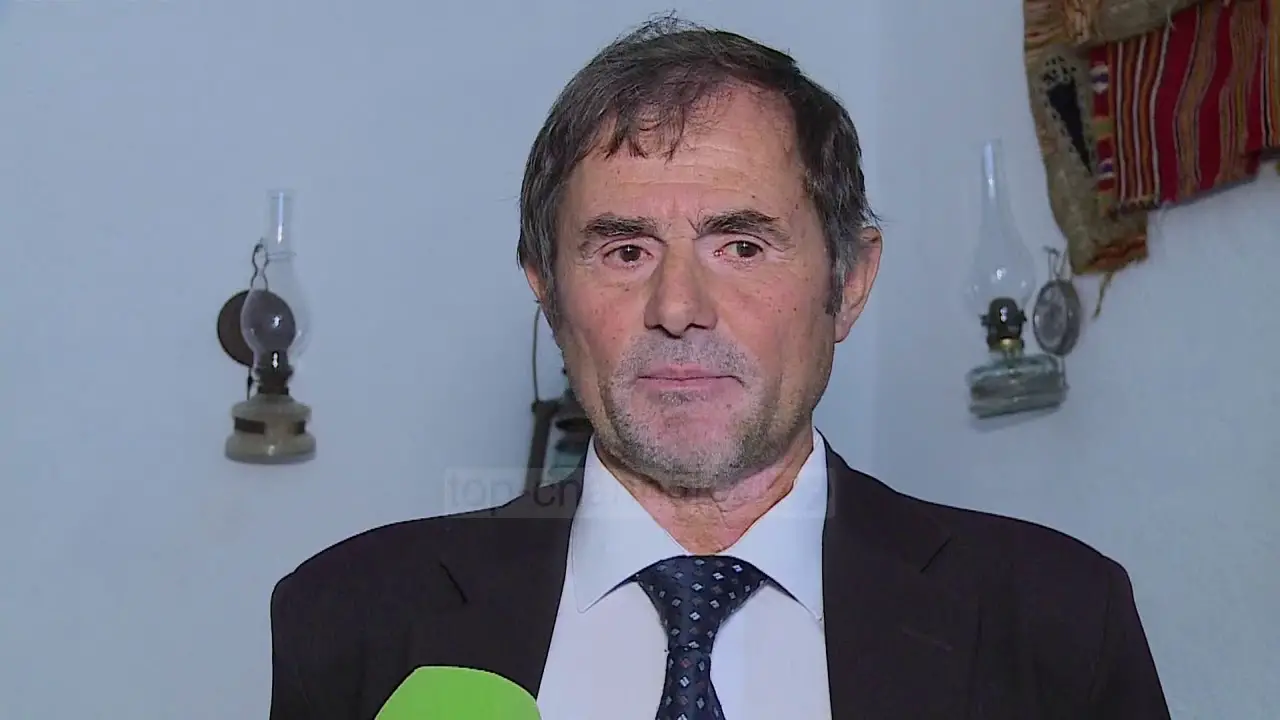
Among other things, he wrote that while walking with his wife in Buenos Aires, he remembered Qarrishtë and Mefail Biçaku. I cannot forget, he continued, and it still seems to him that he has the taste of the cornbread baked in Qarrishtë in his mouth. “Whatever you need,” he writes further, “tell me and I will send it to you.” To get details regarding this matter, on November 5, 2019, I personally met in Elbasan with Elida Hazbiu (Biçaku), the daughter of Njazi Biçaku, now 64 years old.
She was a dentist by profession, and for many years had been part of the Elbasan women’s volleyball team. Elida, granddaughter of Mefail Biçaku, preserved with fanaticism and emotion the memories of her father about the Jews sheltered in Qarrishtë. “We wrote a reply letter to Simon Aroesti,” she recounts, “to the address they had,” meanwhile Elida also put in a photo album; “Elbasan in the struggle for liberation.” It was known that letters were controlled and would certainly fall into the hands of the State Security.
So, in response, they wrote that they were very well and did not need anything. “In truth, we were in great need,” she explains, “because there were over 10 people in the family, but this was very dangerous.” It is not known whether the letter reached the Israeli friend or not, but apparently not, because they had no further contact with him. Elida fanatically preserved the photos sent by Simon, showing him with his wife and only daughter he had in Argentina.
After the overthrow of the communist regime in Albania, interstate relations took the right direction. Naturally, after 45 years, many of the Israeli hosts from Qarrishtë were no longer alive. In 1993, the chairman of the Albania-Israel association, Refik Veseli, went to Israel. There he met Rafael Falagi, who was still alive. Rafaeli asked him if Njazi Biçaku from Qarrishtë, Librazhd, was alive.
He was the same age as Njaziu and, when he was in Qarrishtë, he socialized a lot with him. Refiku told him that after returning to Albania, he would give him an answer. And so it happened. The late Refik Veseli contacted Njaziu in Elbasan. The latter, now being elderly, sent his 42-year-old son, Qemal, to Israel. At the Israeli airport, he was met by Rafaeli, who was holding a placard with the inscription in Albanian “Biçaku”. They met, and he took Qemal to his home, where he stayed for 18 days, as long as his leave from work in Albania allowed.
Rafaeli expressed extraordinary gratitude to Qemal for their family. Among other things, he told him: “We used to tell Mefaili to let us work too, because there were 26 people, and his family was spending for us, but Mefaili would answer; we don’t put friends to work.” Qemal saw in Rafaeli’s house simple objects taken from Qarrishtë, from the time they were there, which Rafaeli kept with great care.
In Israel, in the place called Yad Vashem (The Memory Wall/Mountain), there is a library with writings about the Holocaust. There is also the book “Besa,” with a collection of writings by Israelis about the Albanian families who sheltered Jews. Precisely here, in 1996, as a sign of remembrance and gratitude for the families who sheltered the Jews, a commemorative ceremony was held, where a medal was given to Mefail and Njazi Biçaku. For this purpose, 26 trees were planted, as a symbol of survival, while the names of Mefail and Njazi Biçaku are engraved on the “Wall of Memory.”
In 1998, at the House of Culture in Librazhd, the announcements returned, and in a special ceremony, the Israeli decoration was handed over personally to Njazi Biçaku himself, now elderly. In 2007, the Israeli lobby in the USA invited the families of Mefail and Njazi Biçaku to New York, where a commemorative ceremony was held, and in their presence, among other things, it was said that: “a Muslim family sheltered and protected 26 Jews.”
There, the “Award of Gratitude” was also given for the high act of honor (besa) and generosity of the Biçaku family. Decorations have also been given to family representatives by Presidents Bamir Topi and Bujar Nishani. Today, at the entrance to the village of Qarrishtë, there is a memorial dedicated to Mefail and Njazi Biçaku. In memory and respect for her grandfather and father, Elida Njazi Hazbiu (Biçaku) holds the position of Chairwoman of the Elbasan-Israel association.
Family members today express that Mefail Biçaku passed away taking with him the memory of his Israeli friends, without being able to meet them again, or see and hear the appreciations given to him and his eldest son for their noble and humane act. Personally, I cherish a memory of Mefail Biçaku. It must have been the year 1965. I was there around the age of 12.
In April of each year (April 25th as far as I remember), the Border Festival was organized in Qarrishtë. People from surrounding villages would go there on that day in an organized manner, understandably under strict control by the police and border authorities. The village of Gizavesh, which had been included in the cooperative, had its artistic group established at the House of Culture. I was a student and part of the group, with a recitation and in songs with the group.
We participated in the festival and gave a concert for those present. It had become a tradition that after the ceremony, those who came from other villages were hosted for lunch by local families. The family members who were present there would take several people, sometimes based on acquaintance, but also without knowing them. There were families that would take even 12-13 people, or more, as the distribution was done to houses located as close as possible to the winter border post.
I ended up going to Mefaili’s house. His son, Muhameti, took us, and he grabbed me by the arm first, as the youngest. At that time, he might have been around 26-27 years old and stood out for his tall and handsome physique, but also because he wore civilian clothes. Their house was near the post, about 40-50 meters away. We went inside; understandably, I, as the youngest, was almost at the back.
Mefaili, who that year must have been 67 years old, was standing in the middle of the room (konak) and greeted us all. He was completely gray-haired, but they don’t say it for nothing: “Snow suits the mountains.” He looked very dignified. I curiously watched his attire with the vest (xhamadan), shirt, and snow-white cap. Even his woolen undershirt was white, because when we sat down at the low table (sofra) to eat, he, standing at the front of the fireplace, took off his vest, turning his back to the crackling fire. / Memorie.al
To be continued in the next issue