


From Dom Zef Simoni
Part Eighteen
Memorie.al publishes an unknown study by Dom Zef Simoni, titled “The Persecution of the Catholic Church in Albania from 1944 to 1990,” in which the Catholic cleric, originally from the city of Shkodra, who suffered for years in the prisons of Enver Hoxha’s communist regime and was consecrated Bishop by the head of the Holy See, Pope John Paul II, on April 25, 1993, after describing a brief history of the Catholic Clergy in Albania, dwells extensively on the persecution suffered by the Catholic Church under the communist regime, from 1944 to 1990. Dom Zef Simoni’s full study begins with the attempts by the communist government in Tirana immediately after the end of the War to detach the Catholic Church from the Vatican, first by preventing the Apostolic Delegate, Monsignor Leone G.B. Nigris, from returning to Albania after his visit to the Pope in the Vatican in 1945, and then with pressures and threats against Monsignor Frano Gjini, Gaspër Thaçi, and Vinçens Prenushti, who sharply rejected Enver Hoxha’s “offer” and were consequently executed by him, as well as the tragic fate of many other clerics who were arrested, tortured, and sentenced to imprisonment, such as: Dom Ndoc Nikaj, Dom Mikel Koliqi, Father Mark Harapi, Father Agustin Ashiku, Father Marjan Prela, Father1 Rrok Gurashi, Dom Jak Zekaj, Dom Nikollë Lasku, Dom Rrok Frisku, Dom Ndue Soku, Dom Vlash Muçaj, Dom Pal Gjini, Fra Zef Pllumi, Dom Zef Shtufi, Dom Prenkë Qefalija, Dom Nikoll Shelqeti, Dom Ndré Lufi, Dom Mark Bicaj, Dom Ndoc Sahatçija, Dom Ejëll Deda, Father Karlo Serreqi, Dom Tomë Laca, Dom Loro Nodaj, Dom Pashko Muzhani, etc.
A miracle was unfolding in this room, a dimension where the friends of Fishta, and Fishta himself, had once been massacred. Now, new and true words were emerging, as if saying to Fishta: Rise from your grave, for you knew better than us. They needed the Fishta of the “Highland Lute,” of the “Nymphs’ Grove,” of “Babatas’s Donkey,” and of “The Wasps of Parnassus.” In that moment, the artist appeared to me as great as his own sarcasm – a Fishta with the steady face of a thinker, with the agility of one who knows all the world’s deceits. It felt as if he were there, saying: “You shall pay for all your debts.” They had entered like a shadow into this room, and yet, I continued to love them. Fishta is an Albanian incarnation, just as the race itself is. “Speak of Fishta,” Mr. Qemali told me, “tell the truth even when you leave (I understood then that I would be released). Say he is a patriot, an artist,” he repeated with delicacy, “but also mention that he was a member of the Academy of Italy.”
I spent two intense hours in conversation. He had decided to clear the way for me. My situation had changed. The government was accustomed to tactics. What was happening? The eyes of the world were fixed on Albania. The international press, radio, and television were announcing a revolt in Shkodra. Above all, “they” claimed it was a “fabrication of Belgrade, a slanderous invention of Tanjug.” “Confirm it,” the chief of investigations told me in our final meeting in the late hours of the day, wanting me to sign a statement declaring that “Belgrade has made forgeries.” “In these last two nights,” I told them, “the Yugoslav news seems to have been refuted by them. Shall we tell the truth?” He would accept what I said. He would accept it in this circumstance, given the situation. God had brought me good fortune. “So is it!” the investigator replied quickly. “Are you aware,” he asked me, “of any revolt having taken place in Shkodra?”
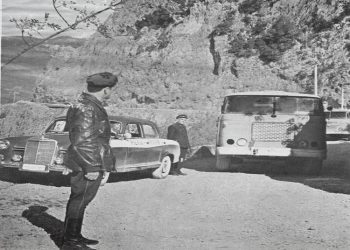
I denied everything. I repeated: “On January 11th and 14th, I was at home. No one spoke to me, and I spoke to no one. News agencies have pointed out a revolt, but I do not know of such a thing happening.” A real revolt had not yet occurred. I, the prisoner, issued the document denying the revolt, and everything came to an end. The investigator informed me that I would be released in half an hour. It was around 7:00 PM. I was ready to go. The Rosary and the Cross, which they had taken from my pocket at the start of my arrest, were returned to me with an outward show of respect; the investigator even bowed slightly. A “Fiat” car was waiting to take me to Shkodra. A policeman sitting next to the driver was there to accompany me, to keep watch over me. From irons to a “Fiat” in twenty-four hours. This car, beautiful in appearance, glided through the tempting curves of the journey with a rhythm like late-night music.
In the density of that night, as we passed through the lights of our small towns every half hour – quickly turning our backs to them without anyone stopping us – the car became a messenger of the troubled pre-dawn. Shortly before, I had been not on the periphery of the state, but in its very heart, for its heart is the Sigurimi. No stops on the road. People who caught a glimpse of only the driver and the policeman might have thought it was a ministry car, an emergency in these sleepless nights, carrying an important person. The darkness of the night does not strip the cloak of secrecy from the state’s affairs, whether small or great.
No one could solve this riddle without a single clue! Inside the car sat a person going to his home, which only twenty-six hours prior had been brought in Spanish-type irons. A priest. This elegant car stopped me at the Grand Hotel Turizmi in Shkodra at ten in the evening, in the stillness of those dangerous January nights. I walked alone across the so-called “Martyrs’ Square,” passing before the bust of the man who had become the obsessive scourge of a part of the world, causing turmoil day and night in the camp of a terrorized Europe. Stalin’s bust was still there. Stalin’s bust, with a black face and black cheeks.
The Resurrection (1990)
The year 1990 began – the year of great events. In the monthly press, new writings with pluralistic content appeared. There was a “half-freedom” of words. It was May 16, 1990. Albania awaited Javier Pérez de Cuéllar, the UN Secretary-General, through whom a force of peace would penetrate. Then came the beginning of July, the summer heat, and a rush of young people imagining a free world. Thousands found themselves before the doors of embassies, seeking entry as a painful liberty of exodus, waiting for ferries to take them to Italy. Youth demonstrations in Tirana were directed toward the bust of the idol.
The year 1990 closed more happily than any other, for a day erupted with a sudden power we had not even dared to dream of. It was a day that had been lost, gone, vanished, hidden in the misfortunes of centuries, and hung on hooks. In that sunless, overcast autumn weather, the 4th of November felt like a light freshness. From the sea, a soft rain began to fall – a drizzle that moistened a field where the dead lay as witnesses to the unforgettable history of this city, having kept even their blessed crosses for all those years.
With the speed of faith, another cross was placed – this time on a small table covered with a white cloth. A Host and a little wine, held by Father (Dom) Simon Jubani, were elevated and consecrated after 11:00 AM in the presence of more than five hundred people who had gathered to decorate graves and say a prayer on that first Sunday of November. Others, who came, as soon as they heard the news of the Mass, reached nearly a thousand people. They stood amazed, frozen as they gathered near the altar. A Mass was being said – it seemed like a miracle. Many began to weep, and almost everyone expressed with popular and Christian joy the fortune of being present, of being witnesses to that mysterious and blessed event for the first time in twenty-three years.
As soon as the Mass ended, the people dispersed through the city, instinctively charged with the mission of spreading the joyful news, just as Mary Magdalene gave the true news of the Risen Christ on Easter Day. Resurrections that met in history. Shkodra felt the news of the Mass everywhere. It was the loud event of the day in streets, homes, cafes, and shops. What began as a whispered rumor became, within hours, a confirmed truth. By the end of the day, the villages, the highlands, the cities, the capital, the sky, the earth, and the air knew what had happened in Shkodra! The towering mountains of Cukal, Maranaj, and Veleçik seemed to stretch their peaks to see and hear, standing together with Tarabosh as sentinels at the entrance, a crown around the city, while the castle of events recorded everything far and near.
The great news that Mass would be held again on Sunday, November 11th, at 10:00 AM in the Cemetery Chapel, sparked a massive movement. Young people stepped forward to help rebuild the church and prepare it for that powerful day. All week, youth, workers, and craftsmen – including Muslims – rose to their feet. They worked day and night under lit lamps, bringing saws, hammers, nails, boards, bricks, stones, sand, and lime. Thousands of people came and went from the Field of Rmaj, full of joy, placing bouquets of flowers that the autumn had somehow preserved. There was an ache in their faces and a fear of how the coming mysterious Sunday would go. The security forces, filled with fifty years of rage that was now breaking so unexpectedly, stood by with a forced restraint, moving like restless clouds in winter or like pestering flies that bite your neck in the summer.
The Great Awakening and the Return of Mother Teresa
Dom Simon was not to be seen during the week. People asked at his home, but they could not find him. Several young people were hiding him in their own houses until the day designated for the scheduled Mass would arrive.
On Wednesday, November 7th, a police officer came to our house, politely notifying me to report to the Shkodra Department of Internal Affairs in the afternoon. They had also summoned three other priests, though we did not meet each other there. After discussions about the events, they calmly told me that the churches would be opened, but questioned why it had to be done with such noise and clamor. Around me were five or six Sigurimi officers who were restless, occasionally shouting: “Who gave Dom Simon Jubani permission to act like this?” My words were these: “You said that the youth and the people closed the churches. Now, the youth have called Dom Simon to say Mass.”
“We must wait,” they claimed. “Everything must be done calmly.”
“The people,” I continued, speaking to the Chief of Police, “have been thirsting for this day and will not wait.” I was speaking with a newfound ease, for I felt the times were changing.
The Second Mass: November 11, 1990
Sunday came with a powerful movement of people. Numerous groups traversed every street of the city like a river, heading toward the 10:00 AM Mass on November 11th. There was no place more interesting or chosen in the world than the Field of Rmaji that day. This second public Mass was held in the presence of nearly fifty thousand people amidst the graves. Here, the dead and the living were linked in a sacred silence so deep it felt as if the field were empty.
A triumphant vitality and adoration filled the air. Tears of joy flowed. Dom Simon, alone, celebrated the Mass. In a historic sermon, he spoke of this extraordinary day. It felt as if the Heavens had opened. Shkodra’s appearance changed; the streets became joyful, and the very walls of the city seemed to regain their historical majesty. The “Field of Rmaji,” usually a place of mourning, became a place of light and victory, proving that with religious freedom, all other liberties follow. The binomen “Faith and Fatherland” was reborn.
Public Ministry and the Christmas of 1990
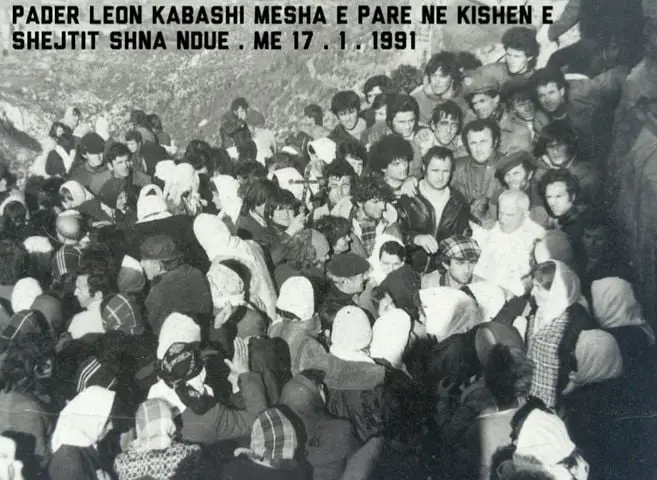
On Monday, the confessions, communions, baptisms, and confirmations began. Dom Simon was initially alone, but soon Dom Ndoc Ndoja and Father Leon Kabashi joined him at the Cemetery Chapel. I was also called by Dom Simon. Before starting, I went to Dom Mikel Koliqi, the parish priest of Shkodra, and received his blessing. On November 21, 1990, I began my public service. Though I was still young and strong, I served without a schedule – baptizing, hearing confessions, and teaching catechism to children and adults alike.
On November 28th, Flag Day, I celebrated Mass at the Cemetery Chapel for the first time in public before 30,000 people. It was a national holiday, and the atmosphere was electric. But the Midnight Mass on Christmas Eve was truly extraordinary. Despite the freezing cold, over 30,000 people gathered. For the first time, Western journalists and about twenty camera crews arrived to document the event. It was a scene unique in the world: a Christmas Mass celebrated in an open cemetery, surrounded by the graves of martyrs. People cheered and greeted each other loudly and freely, as if to make up for all the silent years of communist bitterness.
The Opening of the Cathedral and Mother Teresa (March 1991)
The opening of the Great Cathedral (Kisha e Madhe) on March 7th was another monumental event. Word spread that Mother Teresa was coming to Shkodra and wished to see Mass in the Cathedral, which was still being used as a sports gymnasium. I was summoned to the Executive Committee by Mrs. Marubi to be informed of her arrival.
On March 7th, we received the keys. A procession led by a large cross, including priests from Kosovo like Lucjan Augustini and Dom Dodë Gjergji, marched from the Cemetery Chapel to the Cathedral. We entered to the sound of applause and prayers of thanksgiving. The sight of the Cathedral filled with people was a rare moment in history.
Mother Teresa arrived on Sunday, March 10th. The entire city was awake. It was nearly impossible to enter the church due to the crowds. When she entered, the applause lasted for over ten minutes. I was chosen to lead the concelebration and deliver the homily. Beside her were Father Zef Pllumi, her secretary Sister Ancila, and Dr. Xheni Petri.
Before the end of the Mass, after giving her the Eucharist, I presented Mother Teresa with a gift from the persecuted Church: a chalice that had been kept buried in the ground since March 1967 by a faithful devotee of the Franciscan Assembly. After the service, for her safety, she was escorted out through a back door to the home of her nephew, Tonin Shpati. That day of joy remains an indelible mark of beauty in our national history. /Memorie.al