




By Ali Buzra
Part Thirty-Two
– LIFE UNDER PRESSURE AND SUFFERING –
(ASSESSMENTS, COMMENTS, NARRATIVES)
Memorie.al / At the request and wish of the author, Ali Buzra, as his first editor and reader, I will briefly share with you what I experienced in this encounter with this book, which is his second (after the book “Gizaveshi in the years”) and which naturally continues to develop his writing style. The sincerity and frankness of the narrative, the simple and unmodified language, the accuracy and precision of the episodes or the absence of a refining imagination, intentional and subsequent, or its non-utilization, I think have served the author positively, who comes to the reader in his original form, inviting us to at least get to know unknown human fates and pains, coincidentally or not, leaving us to reflect as a starting point for awareness towards a catharsis so necessary for the Albanian conscience.
Bedri Kaza
Continued from the previous issue
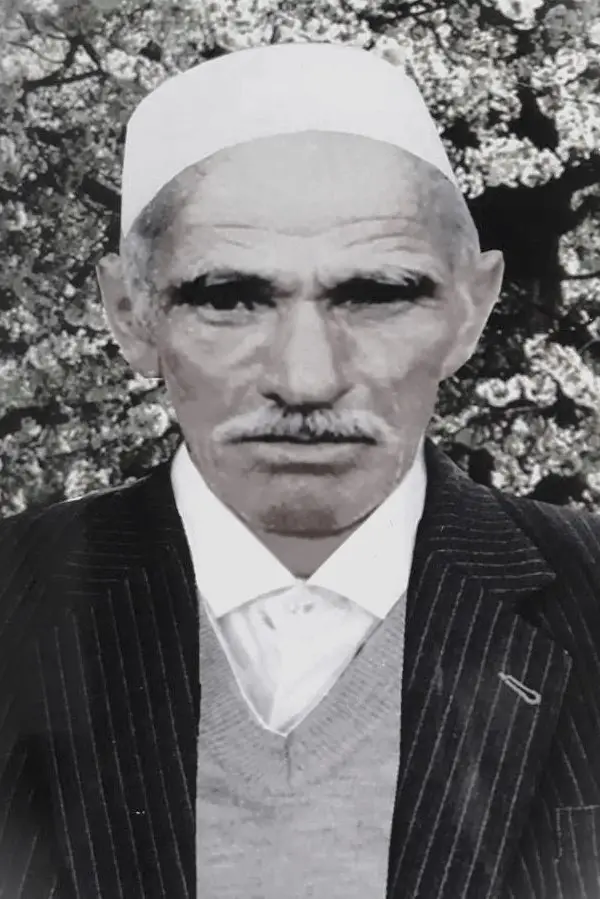
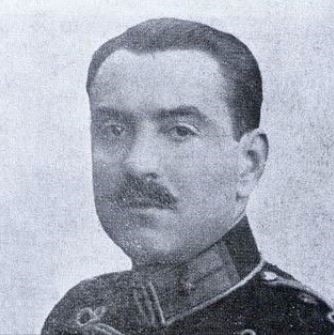
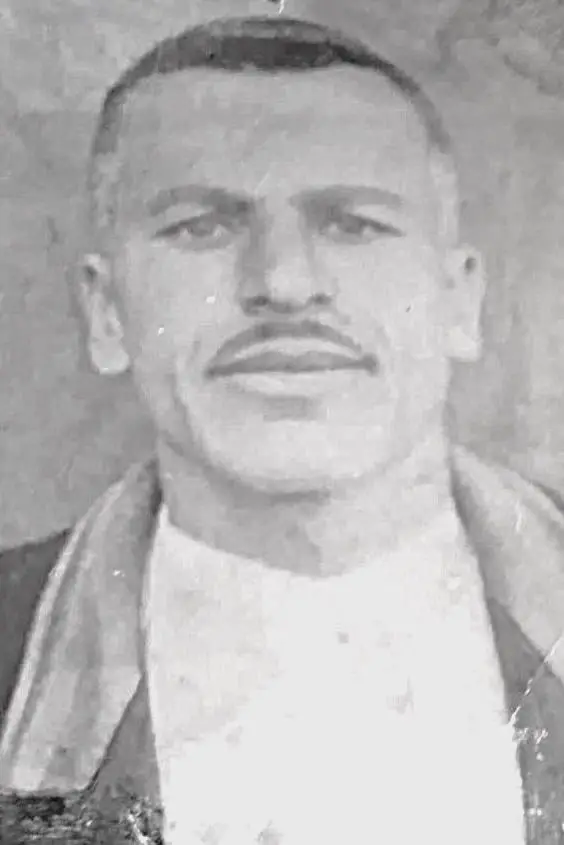
THE NATIONALIST GURRA FAMILY IN DRAGOSTUNJA SURVIVED THE SUFFERINGS AND COMMUNIST PERSECUTION
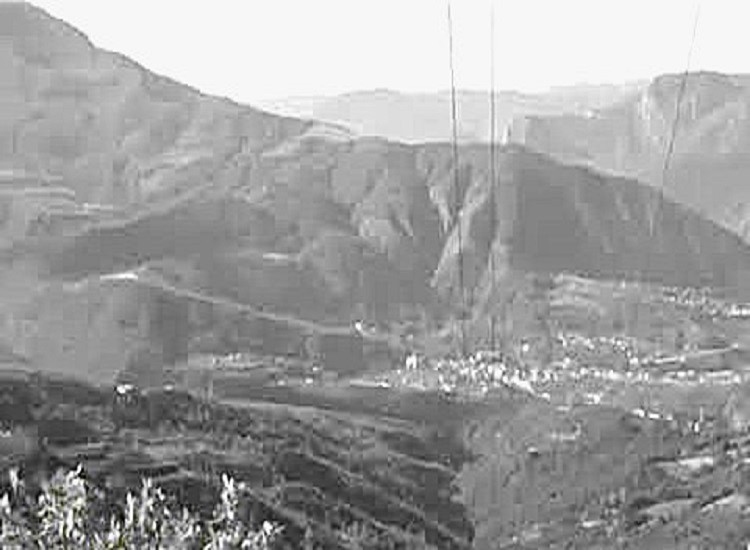
Dragostunja is a village with a considerable territorial expanse, stretching from the city of Librazhd to the foot of Mount Shebenik. The vast arable lands and meadows have been utilized by the local residents, who engage in farming and livestock breeding. Dragostunja has a mountain with the same name, where they raise their livestock during the summer months. In a place called Val, there are two beautiful glacial lakes, with a breathtaking view. One of the clans that have made a name for itself in the history of the village of Dragostunja is that of Gurra.
The family of the elder Et’hem Gurra had four sons: Daut, Selim, Abaz, and Shaban. Around the end of the 19th century, they lived together and had a stable economy. They rose over 500 heads of small livestock, 15-16 heads of large cattle, and used 5-6 pack animals, horses and mules, for transport. Around the end of the 19th century, they also began to engage in trade. They had set up their shop in the Gurra neighborhood, where their house was also located. The elder Et’hem, as well as his sons, developed the trade well, where besides food items, they also traded in cloth, satin, and homespun wool.
They received their supplies from caravans coming from Ohrid and Thessaloniki. Regarding this, the younger Et’hem, son of Daut Gurra, 98 years old, whom I contacted in 2014, recounts that he remembered when the caravans with goods used to come. “Their mules and horses,” he narrates, “which passed along the tracks of the old road, had bells on them, and we could hear them from afar. We would slaughter meat and make halva to welcome the caravanners, who would stop at our house, and then continue their journey towards Elbasan.” Abaz was more involved in trade, but the other brothers also contributed as occasion demanded.
After 1900, up until the First World War, the Gurra family, feeling very well-off economically for the time, significantly increased their land area by purchasing more. It happened that certain individuals would incur debt at the shop, and not being able to repay it, they would settle it with land. Since a lot of land was bought, the expression was often used: “You Gurras, you had a shop and bought all the land of Dragostunja.”
During the First World War, when the armies of the occupying states entered Albania, supply became difficult and trade declined. In Dragostunja, there was also armed resistance against Serbian and Bulgarian forces. In these circumstances, where the Gurras were an important part of the armed resistance, the foreign armies burned down their house and shop. After the war, the brothers separated, two by two, and then individually, engaging mainly in farming and livestock breeding. Through work, by increasing production, especially livestock products which they took to the market, their families were economically well-off.
10.1 Daut Gurra, Patriot and Nationalist
The most prominent figure of the family, who made a name not only in the village but also in the region and beyond, was Daut Gurra, who was born in 1880. At a young age, as a child, he was educated in Ohrid, where he received religious education. Later, he continued his studies also in Bitola, where by coming into contact with figures of the Albanian National Renaissance (Rilindja), he also learned Albanian. In Ohrid and Bitola, it is said that he studied for eight years. Afterwards, he was educated in Istanbul, where he stayed until the eve of the Declaration of Independence in 1912. From information obtained from his relatives, it appears that he completed about 20 years of schooling, mainly religious. Daut Gurra mastered the Turkish and Arabic languages. He was among the rare ones for that time in the Librazhd area, except for Bërzeshta, who could read and write in the Albanian language.
His two nephews, Bexhet and Ismet Gurra, recount that when he taught them for the imamate, he would explain the Arabic alphabet, showing them how the letter corresponded in Albanian. Around the year 1911, Daut finally returned to his village, Dragostunja. Like many other patriots, he welcomed the Declaration of Independence with pleasure. We say this because at that time, there were also personalities who, having lived and worked for a long time in Istanbul, and seeing the unfavorable political circumstances of the time, viewed the separation from the Ottoman Empire with reservations.
Even after the Act of Declaration of Independence, neighboring chauvinists surged into Albanian lands. Serbia attacked and occupied Kosovo and the north-eastern regions of the country, Greece occupied the southern regions, while Montenegro kept Shkodër under siege. The population of the occupied areas began armed resistance against the foreign occupiers. The fragile Albanian state extended its authority only along the Vlorë-Lushnjë-Elbasan line. The external political situation was extremely tense. This was further aggravated by the positioning of Esat Pasha Toptani, who left the Government of Vlorë, creating the so-called “Council of Elders of Central Albania,” parallel to the Government of Vlorë.
Meanwhile, hundreds of volunteers, particularly from Central Albania, set off towards Shkodër, to aid the forces fighting against the Montenegrin armies. Among them was Daut Gurra, 33 years old, who became the leader of a unit of the Librazhd Battalion, engaging in fierce fighting with the Montenegrin forces. During the battles, Daut was wounded by a mortar shell. An episode is also told about this, with slight humorous notes. In the Battle of Shkodër, there was also an Egyptian from Dragostunja, reportedly named Ahmet Kurti, or “usta Ahmeti,” who had lined up for battle together with other volunteers from Librazhd. The latter carried out transport with mules, delivering ammunition and food for the army.
One day, he sees Daut, who was being moved on a stretcher to be taken for medical treatment. Seeing the horrors of war, as well as the uncertainty of returning home again, he addresses Daut: “Take care of my children, I entrust them to you, o Daut A!” (Daut Aga). However, Daut, who was being carried on the stretcher, answers him laughing: “Who is in a position to leave children as an amanet (trust /entrustment), me on the stretcher, or you on your feet?” Fortunately, both returned after the war to their families. From the testimonies of the elderly, it appears that Daut Gurra, after returning from the Battle of Shkodër, was at the head of the resistance against Serbian and Bulgarian forces during the First World War. This is also evidenced by the burning of his houses by the latter.
Daut Gurra is known as one of the most renowned scholars of his time for the Librazhd area. During Zog’s time, he ran for deputy and received many votes, but by agreement, he gave them to Selaudin Blloshmi. Regarding this, Daut tells Selaudin: -“This is more a job for you, than for me…”! Selaudin was educated, he had completed a military academy, while Daut was a brother-in-law (married to sisters) with Hajdar Blloshmi, and Selaudin was his wife’s nephew. The reasons are not clear, but in certain circumstances, he was also an opponent of Zog, where apparently he was aligned with the Elbasan bey, Shefqet Vërlaci. Regarding this, relatives narrate that Zogu proposed to give him a rank, but he did not accept.
The time is not entirely clear, but an arrest warrant was also issued for him, yet he did not surrender. His son, Et’hemi, in the meeting I had with him, told me that Daut became a fugitive (in hiding) during Fan Noli’s time. He was surrounded by gendarmerie forces, but he escaped the encirclement in the “Mërqizë” neighborhood of Dragostunja, by dressing as a woman. While in hiding, Et’hemi recounts, he was supplied with food by Azis Hysa, from Librazhd-Katundi. This event did not pass without consequences. His property was confiscated, taking 40 lambs and a mule. These are facts that testify that Daut Gurra often found himself in opposition to the governments of the time.
Thus, in a meeting with the Elbasan bey, Shefqet Vërlaci, apparently when the latter was prime minister, Daut does not enter his office first, but puts another man in front. In fact, the Bey addresses Daut saying: “What’s up over there, o Daut”? – “What could be up!”, he answers, “they’ve put the pack saddle of the mule on the donkey”. – “And what does the donkey say?”, continues the bey laughing. – “What could it say!, either power, or a bump on the head”! It was about the burden of taxes on the peasantry. Thanks to the authority he enjoyed, as well as the knowledge he had, for some time Daut was appointed commune mayor in Librazhd with Petrit Hakani as secretary, with whom he worked in the same office.
Daut was a simple man and a perfect family man. When the brothers were not yet separated, he did not lead the family himself, but left his brother Abaz as the “head of the household”. He himself traveled with his mule, and often visited his many friends and relatives. Nevertheless, the family of the Gurra brothers, during Zog’s time, was economically well-off. They rose over 400 heads of small livestock, over 10 heads of cows, pack animals for transport, etc., going to market with dairy products and live animals.
10.2 Daut Gurra Placed at the Head of the Balli Kombëtar Band for Dragostunja
The fascist occupation of the country, as for many prominent nationalist figures of Librazhd, was also met with deep indignation by Daut Gurra. In conversations during gatherings (“mexhlise”), where all those present followed his words attentively, he expressed that Zogu, indeed, was betrayed by Italy, but he should have been more cautious in relations with Italy. Those who knew him say that Daut was communicative and measured in conversation. But, although he stood higher than others in levels of understanding regarding the political situation of the time, when asked, he did not disdain, did not insult, but would take the floor, giving simple answers, according to the level of his contemporaries.
A few months after the Italian occupation, which was now an accomplished fact, Daut was appointed post commander in Librazhd. This was insistently requested of him by the notables of his village. It is said that the most prominent men in Dragostunja, such as; Mahmut Kaca, Ali Qosja, etc., asked him to take this duty to secure and help the village. “It will be done by someone,” they expressed, “better it be our Daut.” After the German occupation, again the village notables asked him not to break with the Germans, because the village, located alongside the motor road and near Librazhd, risked being burned.
“You speak well,” he tells his fellow villagers, “but know that my house will be burned by the partisans.” – “A house can be rebuilt by the village,” they answered him. Although at that time, the evil of communism was spoken of, it was not thought that after the war, a government would be established in Albania which, throwing itself with all its ferocity upon families opposing the regime would not spare even children, women, or the elderly. So, there could be no question of helping these families rebuilds their burned houses; on the contrary, those who maintained relations with them would also be persecuted.
As in the other surrounding villages, the Balli Kombëtar band was also formed in Dragostunja, at the head of which was placed Daut Gurra. Daut had numerous acquaintances and friends everywhere. The authority and trustworthiness he enjoyed in the region and beyond was also known to representatives of the National Liberation Front. Bearing this fact in mind, the envoy of the General Staff and the Party Circuit for Elbasan, Sami Baholli, came to his house, staying there for two days. He asked Daut to join the Front and the partisans. Regarding this, his son Et’hemi, among other things, says that; his father answered Sami: “The Quran does not allow us to join you. You are with Bolshevism, which recognizes neither property nor religion. You will destroy the mosques, because you are connected to the Russian. I am sorry, because I consider you friends, but I cannot come with you.”
Years later, Sami Baholli expressed that Daut Gurra was a skilled diplomat. In the spring of 1944, units of the partisan army attacked German forces on the Librazhd-Korçë road. The clashes took place at a place called “The Walnuts of Gurra” up to Hotolisht. The German retaliation, in case they were attacked, was known. They would burn the inhabited centers in that area. In this particular case, the German command decided to burn the villages of Dragostunja, Spathar, and Hotolisht. Daut, being aware of this, sent his brother Selim, together with his son Xhemal, to the Germans. They made contact with the German command, telling them that we are sent by Daut Gurra, and that Dragostunja and the other villages have no hand in this fight.
The German commander placed officer armbands on them, so they would not be harmed. The two men walked together with the German convoy as far as Qukës. Thus, through the mediation of Daut Gurra, the villages of Librazhd alongside the motor road were not burned, as he stood as guarantor to the Germans. From a radical leftist perspective, communication with the Germans is seen simply as “their collaborator”, or as “traitor and enemy of the nation”. The fact is different. Daut Gurra was not a traitor; on the contrary, he loved his homeland, his district, his village, and his family very much. His collaboration, and not only his, but also that of many other nationalists with the Germans, never went against the national interests. With this, I do not mean that there were no elements in Albania who sold out to the Germans, acting against the interests of the population.
Such elements were ordinary people, sold-out spies, but not among the nationalist leaders. In this specific case, I want to say that none of the nationalist leaders of the areas I write about acted against the national interests. During the German period, there is no fact to prove that Daut served them, to the detriment of the country’s interests. No person connected with the National Liberation Movement was pursued or killed by the Germans, to Daut Gurra’s knowledge; on the contrary, he influenced saving people and villages from killings and burning. During the movement of German forces from Librazhd towards Qukës, the villages along the motor road could have been burned and destroyed. Well, how many innocent people could have been killed? What would the balance have been?
Not only regarding the stance of Daut Gurra, but also that of many other nationalists during the war period, I must comment on some conversations with our suffering compatriots from Kosovo over the centuries. Personally, I have had the opportunity to talk with many Kosovars, whom I intentionally asked about their stance on Ibrahim Rugova. They all express themselves clearly and decisively about him, saying: “Ibrahim Rugova, there will be no other like him born in Kosovo”! – “But, was he not for armed struggle against the Serbs, even though Kosovo was occupied by them!” – I have told them during the conversation. – We have also experienced war, we know it, but Ibrahim Rugova’s loyalty to the nation and Kosovo surpasses the dimensions even of the KLA leaders. “When Ibrahim Rugova was asked by the radical wing to just give the call for war,” they expressed, “he answered: I do not want Kosovo, without Kosovars.”
Perhaps, it is not exactly the right occasion to draw parallels, but nonetheless, we have no right to accuse even one of the Balli leaders from the areas I have written about in this book of treason. I say this because, if we are to analyze treason and loyalty to the people, or the national cause, it must be viewed in a more complex way. Events must be analyzed, not only on the side of Balli, but also of the Communist Party of Albania, and particularly the influence of Dushan Mugosha and other Yugoslav emissaries, who were not only collaborators but also leaders of the CPA, in the civil clashes in Albania, in the elimination of many important figures of the war even within the Front.
At the moment of the passage of the First Assault Brigade, Daut Gurra kept the Germans in Dragostunja, until the partisans passed towards Qarrishta. The elderly people of Dragostunja, who were witnesses to the event, have spoken about this. They have narrated that Daut gave orders for every family to cook and give bread to the partisans. Meanwhile, he sent people to contact the Brigade Commander, to whom they conveyed Daut’s words, that; “may the morning not find them there,” as they were at risk from the German forces. Although, in 1944, the open conflict between the Front and Balli Kombëtar was evident, Daut Gurra, in his role as commander of Balli Kombëtar for Dragostunja, not only did not enter into armed conflict with them, but by displaying his noble and manly character, saved the lives of partisans. / Memorie.al
To be continued in the next issue
![“After the ’90s, when I was Chief of Personnel at the Berat Police Station, my colleague I.S. told me how they had once eavesdropped on me at the Malinati spring, where I had said about Enver [Hoxha]…”/ The testimony of the former political prisoner.](https://memorie.al/wp-content/uploads/2024/09/admin-ajax-4-350x250.jpg)

