
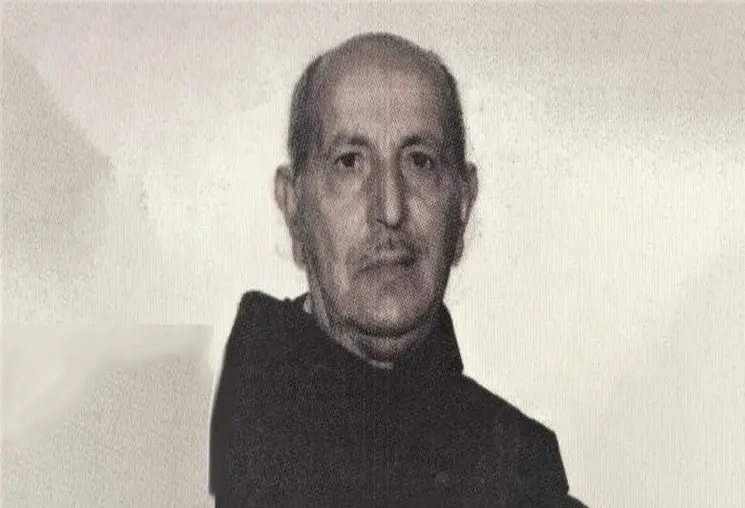
By Dom Zef Simoni
Part Nineteen
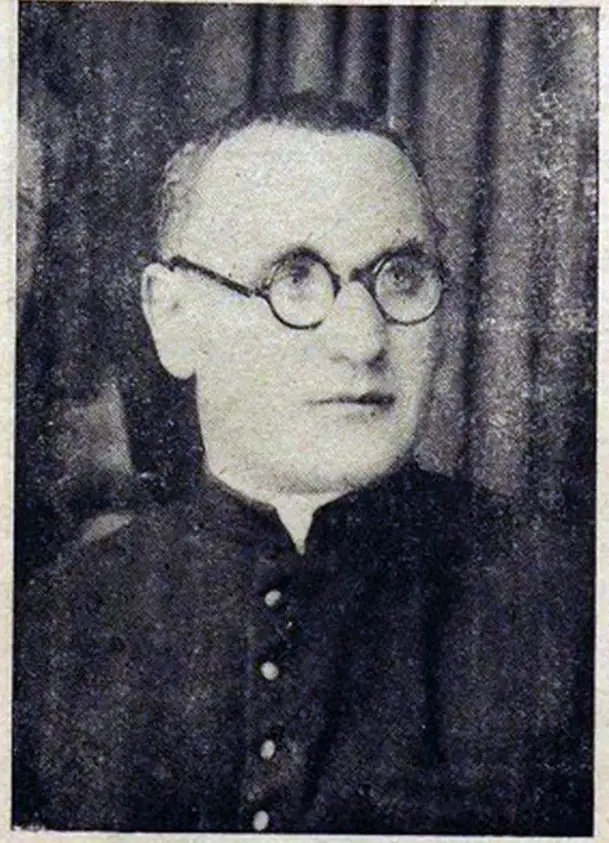
Memorie.al/Memorie.al publishes an unknown study by Dom Zef Simoni titled “The Persecution of the Catholic Church in Albania from 1944 to 1990.” The Catholic cleric, originally from Shkodra, suffered for years in the prisons of Enver Hoxha’s communist regime. On April 25, 1993, he was ordained a Bishop by the head of the Holy See, Pope John Paul II. In this study, after describing a brief history of the Catholic Clergy in Albania, he focuses extensively on the persecution the Church endured under the communist regime. The study covers the Tirana government’s early attempts after the war to detach the Catholic Church from the Vatican – initially by banning the Apostolic Delegate, Monsignor Leone G.B. Nigris, from returning to Albania in 1945, and later through pressure and threats against Monsignor Frano Gjini, Gaspër Thaçi, and Vinçens Prennushi. These leaders flatly rejected Enver Hoxha’s “offer” and were subsequently executed. The study also details the tragic fate of many other arrested, tortured, and imprisoned clerics, including: Dom Ndoc Nikaj, Dom Mikel Koliqi, Father Mark Harapi, Father Agustin Ashiku, Father Marjan Prela, Father Rrok Gurashi, Dom Jak Zekaj, Dom Nikollë Lasku, Dom Rrok Frisku, Dom Ndue Soku, Dom Vlash Muçaj, Dom Pal Gjini, Fra Zef Pllumi, Dom Zef Shtufi, Dom Prenkë Qefalija, Dom Nikoll Shelqeti, Dom Ndré Lufi, Dom Mark Bicaj, Dom Ndoc Sahatçija, Dom Ejëll Deda, Father Karlo Serreqi, Dom Tomë Laca, Dom Loro Nodaj, Dom Pashko Muzhani, and others.
Continued from the previous issue
TERROR
They realized late that the Midnight Christmas Mass would not be held, out of fear of any disturbances that might arise from the profound changes occurring at the end of that November. The Great Church (The Cathedral), in all its majesty, stood silent and imposing in the mysterious night that fell over the city until dawn. The city waited midnight, and the people had not lost their joy or the inner vitality that this hour brings. It was too early for true sadness and horror to set in.
The churches and streets fell silent for several hours. The Great Church, standing likes a harbinger of events beneath the vault of heaven – an inspiring structure that never lost its grandeur or memory regardless of the circumstances – possessed a power and a presence full of insight. Always distinguished by its historical color, it stood as a permanent witness to everything.
With a round window high on its façade – through which parents told their children that angels entered and exited – the church possessed life; it communicated. Through that “great eye,” it peered into the depths of time, watching over the living as it guided them to the grave, and the dead as it led them to glory. It was difficult to define this church on this particular night. It felt that something was missing. No one was yet angry with it. But it was accustomed to welcoming eight or ten thousand people and then sending them off with heavenly blessings and memories of Bethlehem until the faithful closed their eyes for the last time. Amidst the silence, reasons, and signs, that Cathedral preserved itself and everything precious within. Inside it resided a life beyond this earth.
On this night, there was no immediate danger, no storm. There was simply a wisdom coming from the Church’s side – a type of fear that there might truly be disturbances in the late hours. This surprised the new power. This regime, knowing exactly what it was, found itself in a tight spot. Since their anthem had been: “War without distinction of religion, region, or idea,” it seemed their pride was wounded.
Thus, the unsolidified state was determined that the mass must be held. They intervened with the Archbishop of Shkodra, Monsignor Gaspër Thaçi, and took it upon themselves to inform the people. Christian “liberator nationalists” and even some Christian communists rushed to spread the word.
Even though it was late – around four o’clock – they knocked from door to door, saying: “The mass will be held tonight; do not be afraid, for faith is free.” They called it “slander” if anyone dared say that faith would not be free, adding that anyone spreading such “reactionary slogans” could be punished. This news was confirmed by the ringing of the bells – a true sign that there was no deception. The great malice inherent in their doctrine did not reveal itself immediately.
The regime would know how to act later, now that it had emerged victorious. But for now, they had no time for such heavy matters; they had other work to do. The narrow streets filled with people, caught in the movement of the Great Night. Any lingering vanity of fear vanished, as the people breathed a sigh of relief as soon as the obstacle was removed.
Did this tactic hide the Great War that would surpass all slaughter and murder? Was it a sinister signal that everything would begin and continue with betrayal and deception? The Mass was said beautifully. The holiday was celebrated freely, just as in every year past.
The Reign of Terror: Betrayal and the First Martyrs
But who could trust a godless doctrine and those people who annulled in the darkness of the evening what they had affirmed in the morning? They did not know the freedom of which the Apostle writes: “Where the Spirit of the Lord is, there is freedom.” They were set on destroying others to fulfill their own anxieties and plans. Surely, within, there was a sense of ill-fortune – a crisis, like a dark omen – because every subsequent celebration would lack something grand. Not a religious reality, but a religious freedom; its absence alone was enough to blacken the sky and ruin all affairs.
They could not endure for long; they could not exist without their lies permeating everything. Interestingly, people continued to go to church; they were filled to capacity. There was no immediate thought of stripping the people of their faith, but rather of stripping the church of its priest. They made a distinction: “Our war is against the reactionary clergy, not to prevent the freedom of belief.” During a visit Mehmet Shehu made in the early days to the Society of Jesus in Tirana, he stated: “We fight the reactionary clergy, not the feelings of the believers.” Father Meshkalla replied to him: “You will act against both.”
The regime began to fulfill the first truth. A gloomy cloud filled the sky and winds brought storms amidst lightning and thunder, like a Noachian tempest, toppling designated trees and extinguishing lights – for darkness are required for wicked deeds. Thus, the beginning started on the still-cold morning of Palm Sunday with the execution of Dom Ndre Zadeja. Arrests and executions would continue relentlessly, time after time. “This happens,” they would say, “because priests involve themselves in politics.”
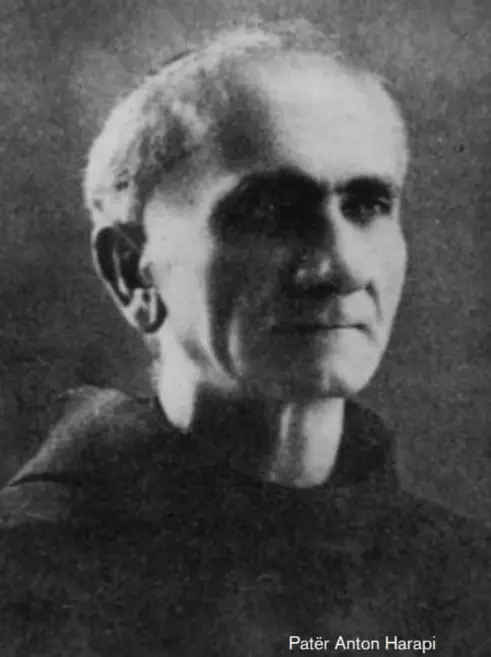
Dom Lazër Shantoja was subjected to incredibly inhuman tortures. His legs and hands, nearly severed, were left untreated. His body became like that of a child. This broken body, carried by hands, was brought before the firing squad. Following torture, the Regent Father Anton Harapi was also executed. The Apostolic Delegate, Monsignor Nigris, was barred from entering Albania upon his return from Rome. Without any link to the Postriba Movement – which sought to overthrow the “People’s Power” in the second year of the new regime – the Vice-Apostolic Delegate Monsignor Frano Gjini and Monsignor Gjon Volaj, both Bishops, were arrested.
Alongside Monsignor Nikoll Deda and thirteen civilians, the execution – the final act – became a form of salvation for them. The nationalist organization “Bashkimi Shqiptar” (Albanian Union), composed of Christians and Muslims, had its roots in the Seminary. Driven by patriotic zeal, the seminarists acted without the knowledge of their superiors through press actions; this led to the execution of Father Gjon Fausti and Father Danjel Dajani. Along with them, the courageous initiator, the seminarist Mark Çuni, was shot. But even before Fausti and Dajani, the zealous Jesuit Father Jak Gardini saw the prison door. After twelve years of apostolate in Shkodra, he would complete another ten years of prison and exile, a model missionary.
As for Father Gjon Shllaku, a truly distinguished intellectual – as the mocking revolutionary songs danced in the city square during the horrific trials suggested – he was executed on the false accusation of forming the Christian Democratic Party. In the files of the priests and civilians, the words of the Christian mind, heart, and soul were found: “Long lives Christ the King! We forgive our enemies!” These words were also found with Father Mati Prennushi and Father Çiprian Nikaj, the Provincial and the Guardian, among others, who were accused of hiding weapons under the church altar.
Father Donat Kurti and Father Aleks Balqi were sentenced and suffered severely in prisons. The Franciscan Convent of Gjuhadol was transformed into a bloody interrogation center and a prison. The convent became a prison housing nearly seven hundred souls – seven hundred spirits, including many heroes. Fra Ndou, the church sacristan, and the distinguished Jesuit brother Gjon Pantalia, died under torture inside. A girl named Drita, a prisoner herself, served those suffering from wounds and agony with purity and nobility. The prisoners who lived with him know that what the Archbishop of Durrës, Monsignor Vinçenc Prennushi, suffered was worse than being executed.
Drita Kosturi was like a good sister to Father Pal Doda. Arshi Pipa was like a true brother to Monsignor Prennushi. Dom Anton Muza, tortured to the brink of death, was released alive but in a wretched state, only to live for a few months in the Archdiocese. Dom Dedë Maçe, warm-hearted and unshakable, was executed before a military regiment. Among those who died under severe torture without trial were Father Bernardin Palaj, Dom Dedë Plani, and Dom Luigj Bushati. Dom Luigj Prendushi was executed; Father Bernard Llupi was tortured and executed in Peja. Dom Alfons Tracki and Father Zef Maksen, Germans working for the Church in Albania, were executed – foreign yet close to the heart. Dom Pjetër Çuni and Dom Lekë Sirdani, the citizen of Shkodra and the highlander of Boga, remained for Christ until the end, even in the underground sewers where they gave their lives. The Franciscan Father Serafin Koda passed away with his windpipe torn from his throat.
Both “Papas” – Papa Pandi and Papa Josifi – met tragic ends. Papa Pandi, a priest of the Oriental rite in Korça, had his severed head placed upon his murdered body. Papa Josifi, a priest of the Oriental rite in Elbasan, was buried alive in the mud at the Maliq labor camp. High examples of life even before death. When the day of freedom comes, let them be the leaders of the growth of Catholicism in the South, where the Apostle Paul once traveled. Calamity and glory were seen in Dom Mark Gjani. While torturing him, they demanded he deny Christ. Amidst those tortures, he gave the great witness: “Long lives Christ the King.” Hung by his shoulders, he died. They threw his body to the dogs and his remains into a stream. His soul found rest in God.
Virtuous schools with the seriousness of knowledge, the established press, and religious societies that maintained spiritual and social life with good customs and the essence of pure civilization were dispersed and banned initially, even before the constitution. The churches were full, but the functions were meager. There was no one to lead them. The Archbishop, the clergy, and the deacons were missing. Even the small remaining choir had weakened voices. People watched the mass and entered and exited in silence. There was fear – the situation, the streets, the air, the gaze, the waking, the dusk – it was all a black terror.
The Great Church had also experienced war. Cannonballs from the time of the war with the Serbs and Montenegrins were still lodged in its walls. It had welcomed and sheltered citizens, allowing dining tables and mattresses near the altars. It had known the danger of fear. Now, it was the fear of danger. Danger itself. One wondered if another church would be closed, and as people walked, they wondered if even the last priests had been taken. They took the Archdiocese. They moved officers’ families in – officers from the mountains. They left only one room on the ground floor.
Dom Ernesto and Father Berisha had much work; they would face the needs of the entire city, from those coming into this world to be baptized to those they would accompany to the grave. Sunday differed little, if at all, from the weekdays. Only an occasional sermon and a mass. When the great bells tolled, they reminded you of a holiday, but no holiday was held. Brother Ljarja tried to keep the church alive with decorations. Brother Ndou and Brother Salvatori did the same in the Franciscan churches.
The altars were filled with candles and flowers, yet everything felt impoverished. Life in the church became closed off, and many people, with a kind of fear and repentance, entered the church in a hurry, wanting to finish their business. They had a great need for the priest whom they might not have tomorrow, or very soon. “The great trial has come,” they said to one another, “because we did not appreciate God.” It was a movement toward the truth. And when people saw each other, they seemed different – perhaps better. They entered the church and walked with quiet, devout steps. They found two large basins of holy water and after touching their foreheads and genuflecting; they made the sign of the cross.
They began a new life. And they would begin their prayer with the “Our Father.” Say: “Our Father.” With this, you greet God and all the brothers nearby, and with this, you keep all of humanity in mind. Without consciously thinking that you had left the streets, the squares, the visits, the problems, and the profits behind, people took on a different appearance – surely a time had come to analyze oneself. “O Great Lord, in this hour of work!” And it had to be done like this: I am praying for myself, my parents, my brothers and sisters, my relatives, my loved ones, for my friends, and for those who do harm – that we may forgive them from the heart and love our enemies.
For Those Who Suffer
It is for everyone, for those who suffer. For us who suffer because needs are not counted, not gathered, not synthesized, while the stars in the sky and the grains of sand on the shores of inexhaustible waters are numbered. In every instance in the church, your mind is filled with the urge to kill, to slay – and you do it, for you kill and slay sins in the confessional. There, rows of consecrated men wait; and since a priest at twenty-four is considered “old” by the Church, these silent elders wait for eternity to offer reconciliations, reparations, and the ideal “bloodshed” to strengthen you on your righteous path.
“Now, where are the priests? Is Dom Ernesto there?” people would ask one another. “No, only Father Berisha is there. Dom Ernesto has gone to visit the sick,” they would say. In a city that once had nearly fifty priests, only these remained: Father Justin Rrota, paralyzed in bed; Father Marin Sirdani, grey-haired; Father Zef Saraçi, blind in both eyes; and Father Pjetër Tuçi. The zealous Father Marjan Prela and Father Ferdinand Pali continued their work.
Thus passed six long years of anxiety, disappearances, terror, and the “freedom” to do evil. Where did the priests go? To bullets, tortures, and prisons. The reasons? Very simple, they said: they had formed organizations were linked to the Postriba Movement, weapons were “found” at the altar of the Franciscan Church, or they had sheltered fugitives. They were accused of agitation and propaganda. This was a persecution branded as a fight against crime. Until when? This was only the first phase. Other persecutions would follow later. But how much later? And when?
THE CAPTIVITY (ROBNIA)
The rupture of relations with Yugoslavia and Tito came entirely unexpectedly. The discovery was made by the “Great Stalin,” far away, thousands of kilometers away. The culprits of the crimes – the “agents” – were also discovered. “Now there will be a turn for the better, for many dark things have been done,” people whispered. The regime itself admitted: “Mistakes have been made.” They discussed this in meetings and conferences. “The time of Koçi [Xoxe],” they said easily, “went too far, even with the church. Now a change is needed.” Thus, an agreement was proposed. “Everything will be regulated by laws, by a statute. The State will help the church. A subsidy.”
It began with deceptive wisdom. “Present a statute,” they were told. This matter was left in the hands of Tuk Jakova, who negotiated with Father Marin Sirdani. The Church presented its own code. The officials’ faces soured; they rejected it completely. “This is entirely Vatican-aligned,” they said. “What have we removed from it?!” They demanded another version with restrictions. The cauldron was boiling. Amidst this, there was death, pain, and loss: after months of harsh interrogation and suffering, Dom Kolec Prennushi was released only to die in Shkodra.
A second version was presented. Now, the officials’ faces were stern; they were deeply offended. “We will not allow foreigners to interfere in our affairs.” An ultimatum was given to the Church: “This is the limit. No more. Faith is free, but only within the walls of the church,” the dictatorship commanded. “Here, this is your statute with us,” were the blunt words of the fierce Prime Minister, Mehmet Shehu, given to Bishop Bernardin Shllaku. The Bishop refused. “Here I am,” he told Mehmet in the Prime Minister’s office. “Let the handcuffs be put on my hands if the appointment of bishops by the Holy See is not guaranteed.” The statute eventually declared only religious ties under the leadership of the Pope.
Every contact with the Holy See – and these were very few, only three: to request the appointment of bishops, a telegram of condolence for the death of Pope Pius XI, and one of congratulation for John XXIII (and later the acceptance of certain offices) – had to be conducted strictly through the Prime Minister’s office. The four Bishops who were chosen – Monsignor Ernest M. Çoba, Monsignor Pjetër Dema, Monsignor Antonin Fishta, and Monsignor Nikollë Troshani – were appointed by the Holy See. There was no schism.
Monsignor Ernest Çoba made an elegant move against the government. Through the Italian Legation in Tirana and with the help of his sister, Gjyliana, he maintained secret religious relations with the Holy See for years. During the dictatorship, there was no Catholic press; only a religious calendar was printed in the state printing house. The Seminary was permitted, but it was dangerous to belong to it. No priest could be assigned to duty without state approval. Five were ordained secretly by Monsignor Çoba. The Church was in chains. A subsidy was granted, but it grew smaller over time. Religious life existed only within the church walls.
Processions that once traversed the city with two bands were now confined to the church courtyard, with songs sung by nuns and devout women. The Month of May filled the churches, and the faithful gave life to religious practice. Without fully understanding the difficulties faced by their leaders, a sense of vitality was renewed, especially during the Great Days and Nights. The construction of a new altar, the decoration of the Cathedral with murals, and the consecration of the church for the centennial of the start of its construction were major events during the era of the dictatorship.
There were songs, music, and devotions; great crowds attended. But soon – not long after, within a year – a swift, lightning-fast attack occurred. Dom Ejll Kovaçi was executed. The fiery Dom Dedë Malaj was also shot. Father Konrad Gjolaj was sentenced to twenty-five years. Noise and turmoil filled Albania; the “class struggle” was at its zenith.
Near the Prime Minister’s office was an office for clerical affairs covering all faiths? To reach it, one walked through a beautifully paved corridor into a medium-sized room with nothing special about it. There were carpets, large armchairs, a table, and a lamp. On the wall hung the portraits of Lenin, Stalin, Enver, and Mehmet. At the table sat an official with thinning hair, in civilian clothes but holding the rank of colonel. He was a measured man who delicately exchanged news and spoke softly, almost in a whisper, as the room dealt with people of prayer. The State invited the representatives of the faiths to be present at holidays. Thus, on May 1st, and November 28th and 29th, they would be found on the great grandstand in Tirana. In return, the officials would come to offer greetings on the occasion of Easter./Memorie.al