
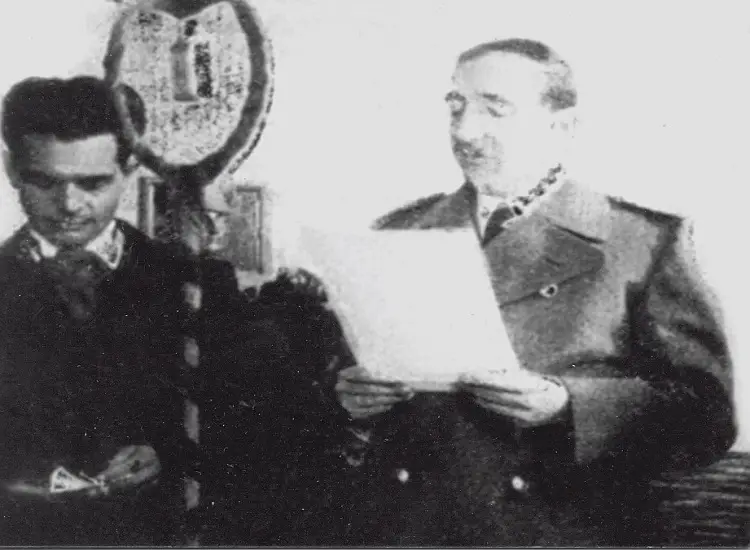
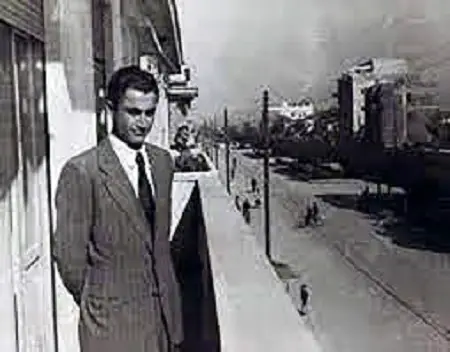
Memorie.al / In the jubilee of the 80th anniversary of the creation of Radio Tirana, the decoration of Gjergj Bubani stood out, with the title “Knight of the Order of Skanderbeg,” awarded by the President of the Republic, with the motivation: “With gratitude for his known contribution as a distinguished personality in the field of culture, who gave an important contribution in the field of publicism, as well as the creation and consolidation of Radio Tirana, as its first director.” This decoration, made at the proposal of the General Directorate of RTSH (Albanian Public Radio and Television), also restores a missing evaluation for this personality who is still not very well known to the general public. It is a fact that in the history of Radio Tirana, whenever its beginnings are discussed, the name of Gjergj Bubani is mentioned.
Not only for the fact that this distinguished personality of Albanian publicism in the first half of the last century was its first director, but because the work he did left a mark and created the foundations for the future, especially in the radio’s programming policy, as a media serving the public.
Decreed as the director of Radio Tirana by King Zog, as early as July 1938, Gjergj Bubani managed in a short time, just one week after the inauguration on November 28, 1938, to give the radio a profile that was both national and all-encompassing, succeeding in conceiving a range of programs and shows such as; “Literary Hour,” “Merry Hour,” “Doctor’s Advice,” “Requested Music,” etc. Tefta Tashko Koço, Marie Kraja, Kristaq Antoniu, Doctor Hamdi Sulçebe, or later Mihal Stefa, Evanthi Ciko-Zoraqi, Vitori Xhaçka, and many artists and art personalities were brought to the radio microphone.
In his book, “Tirana Speaks to You (Memories, History, and Characters),” published in 2010, the well-known journalist and former director of Radio Tirana, Agron Çobani, write: “…I think the first chronicler of Radio-Tirana must have been Gjergj Bubani. He is known as the first director of Radio-Tirana, right at its opening…! Even while being the director, Gjergj Bubani often took a place near the microphone and spoke about specific problems that worried Albanian society…!
Gjergj Bubani, a clever and passionate young man, who was also educated outside Albania, knew how to attract the few and patriotic intellectuals of the time…! Apparently, the director Gjergj Bubani, a man with vision and also a capable organizer, decreed as the director of the Radio as early as July, had taken measures and prepared so that the November of the inauguration would not find him unprepared. This explains the fact that from the very first week of radio broadcasts, lectures by various professionals were ceaseless.”
A year later, Radio-Tirana had managed to create a clear, highly distinguishable, and national profile, albeit under not entirely normal conditions, such as the fascist occupation. In his memoirs, Professor Myzafer Xhaxhiu, a young man at the time, left these impressions: “Gjergj Bubani was a very active person; he created a very compact and passionate team at the Radio. I was very impressed by the fact that Gjergj Bubani also created a group of very good singers around Radio Tirana, such as Merita Sokoli, Liza Vorfi, Bardhyle Katundi, Paulina Nikaj, and many others, or Zihni Berati, Kel Sata, etc. With that intense activity of the radio, a very good impression was created that listeners of the Radio, and friends often told me that they preferred listening to Radio-Tirana more than other foreign stations.
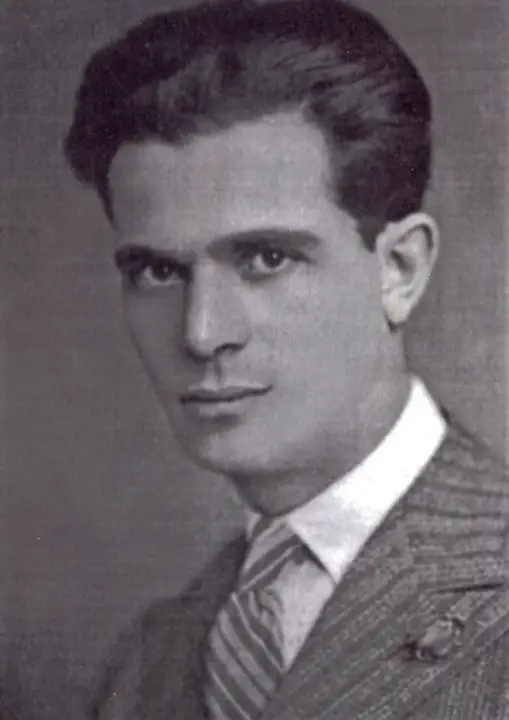
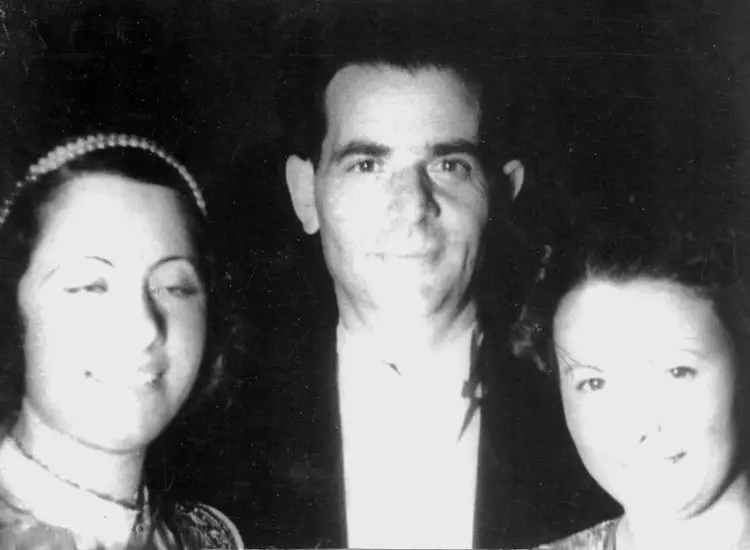
Gjergji was truly a very passionate, very fair, very kind person, and won the sympathy of all employees, but also of a broad audience of intellectuals, who were very interested in Albanian culture and art becoming known through radio channels. Gjergji’s physical portrait: He was a very handsome, very charming man, with a very expressive face, with thick, black eyebrows. He sometimes reminded me of Aleksandër Moisiu’s face. From an ethical, moral, and human point of view, he was very, very kind, very close to his subordinates, he invited them to his office, consulted with them, and even expected suggestions from his subordinates in different sectors of the Radio, and of course, he also gave advice, as he was the director and had a general vision of the work at Radio-Tirana. He was a democrat in his soul, extremely humane… always smiling, always approachable, and very communicative with his subordinates.”
His dedication to work at the Radio is also evident in a letter Gjergj Bubani wrote to his brother-in-law and sister, who lived in Bucharest.
“Tirana, 20. XI. 939
My dears Niko and Urani,
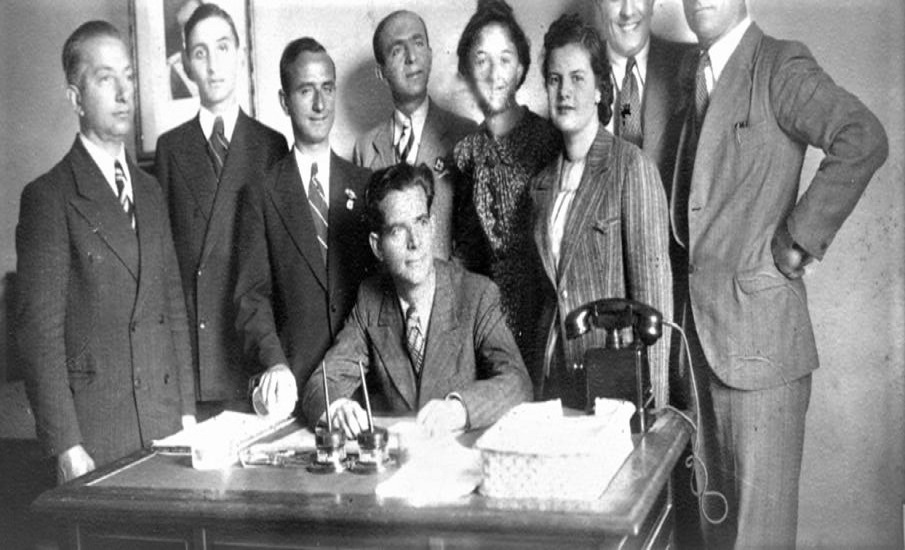
The excuse: ‘I have been very busy with work, which is why I haven’t written to you,’ is very banal. Nevertheless, this is what happens to me; if they don’t believe me, it means I suffer like the shepherd who cried ‘wolf, wolf,’ but the villagers didn’t trust him because he had lied many times. In these six months, I have been very busy with work at the Radio, 14 hours a day, including Sundays. When I started, a year ago now, there were only five of us. Now we have a staff of 65 employees, and until the work is mechanized, I, as the director, am obliged to oversee everything.
Don’t be scared, it won’t be like this forever, but every beginning is difficult for those who lead. So, don’t misunderstand me for not having written until now. I started so many times, but I couldn’t finish the letter. Even now I’m writing to you hastily, because I have to be at the Radio in 10 minutes. And I’m writing to you from bed. It’s useless to try to express with cold words the love I have for you and the gratitude for everything you have done and continue to do.
I kiss you hastily, Gjergj”
A passion and sacrifice that today, in the era of media development and technological revolution, seems astonishing, considering the conditions under which Radio-Tirana was created and the functioning of Albanian society. On the other hand, in this story, we see a leader who was as much a publicist as he was passionate about art.
Gjergj Bubani’s life has already become known in his books that have been published or in documentaries produced by RTSH. His contribution as a publicist, starting from 1919, when he first published, and then appearing in various newspapers and magazines of the time such as; “Kuvendi kombëtar,” “Zëri shqiptar,” “Kosova,” “Drita,” etc., is great.
He is always a troubled spirit for the fate of the nation and the state, for which he accepts no compromises. This patriotism led him to leave Bucharest and settle permanently in Albania in 1936, where many intellectuals had returned to contribute to the rise of the Albanian state and society.
But Gjergj Bubani was not a classic publicist. Early on, he was known for his love of art. During his stay in Romania, Bubani constantly followed various performances of Romanian opera, theater, and cinema, which had begun to flourish at that time. Their influence was so powerful that he himself performed on stage, standing out as an actor. In the early 1930s, his name was mentioned in the Romanian press of the time.
The “Flaga” Festival, “Akim” tragicomedy in three acts, Mandolin Concert – Sports Games – Declamations
“FLAGA” had set out this year, with great effort, to give us a finished festival, a festival that would mark a stage in its slow but sure progress. And this time it managed to fully achieve the goal. This is the opinion of the 400 spectators, Albanians and foreigners, who followed with attention the rich program that this society “of Albanian youth in Constanța” had developed on the stage of the “Elpis” theater two days ago.
… The staging of the tragicomedy “Akim” by our distinguished compatriot Mr. Viktor Eftimiu, directed intelligently by our collaborator Mr. Gj. Bubani, mobilized all the melodramatic elements of “FLAGA,” giving everyone the opportunity to show their talent and qualities for the stage in the roles that suited them best. And the truth is that the Flaga girls and boys spared nothing to succeed…!
As for the main role of Akim played by our collaborator Mr. Gjergj Bubani – the translator of the piece and stage director – we will be content to republish in translation what the theater critic of the newspaper “ZIUA,” which is published in Constanța, wrote on this occasion:
“Saturday evening (December 27) the tragicomedy of Mr. Viktor Eftimiu “AKIM” was staged in the theater of our city – in the Albanian language. The translation of the piece is owed to Mr. Gjergj Bubani, a distinguished Albanian publicist, a member of the inter-Balkan press association, which was created a few months ago in Sofia.
Unfortunately, we are not in a position to know the Albanian language, so we cannot judge the translation of the piece, but from the lively acting, the gestures, and the sound of the lines, we understood quite well that the entire theater ensemble of the “FLAGA” society tried to deeply understand the piece and give it all the color, rhythm, and beauty we have known from its performances in the Romanian language. The translator in Akim raised the role to a true creation.
We cannot but rejoice in the action of Mr. Gjergj Bubani, who, in the service of his compatriots living among us, and of his homeland, for whose cultural development he works day and night, has also known how to open a path of rapprochement between the two countries, a path that makes these two countries know each other better.”
“Shqipëri e Re,” January 4, 1931
Also, in connection with this event, which was also followed by prestigious Romanian newspapers and magazines, Gjergj Bubani received the highest praise for his acting. “Dacia” writes: “…In the titular role of Akim, Mr. Qiril Ikonomi, a talent in his fullest phase, appeared. Our colleague Mr. Gjergj Bubani gave us a natural Daniel, moving with great feeling through the entire range of spiritual states.” “Dobrogea” writes in its evaluation: “…Mr. Gjergj Bubani in the role of Count Daniel Ermolaef was complete; he acted with a naturalness that deserves all praise. And the way he knew how to fulfill his mission drew a shower of applause…” While “Ziua” in the column “Cronica teatrala,” in the issue of March 29, writes: “…The role of Count Ermolaef was interpreted excellently by Mr. Gjergj Bubani, who put all his talent into the success of the performance…”! Evaluations for his work and talent are noted even a year later.
“National Festival of the “Flaga” Society”
The Society of Albanian Youth “Flaga” in Constanța, the only national society that has striven by all means to keep the flame of patriotism alive in the hearts of the Albanians here, gave a completely national festival on January 31 of this year, with which, another string of pearls is added to its theatrical development. The young women and men of “Flaga,” who after so much success they have reaped so far in the field of theater, did not want to fall behind this time either, so to form the “clou” (highlight) of the program, they chose the national drama “Besa” with 6 scenes by Sami Frashëri…!
In the role of Zyber and that of Fetah, the chairman of the society, Mr. Gjergj Bubani, appeared. It is superfluous to dwell on Mr. Bubani’s person, as Mr. Bubani was born for the theater and to create every role, no matter how heavy it may be. But Mr. Bubani showed his skill and talent in this drama, in the role of Fetah, at the time when he gave his Besa (pledge) to Vahide that he himself would take the blood of her husband, without knowing that the avenger was his own son. Here Mr. Bubani proved to be above our expectations, and the way he played this role caused the audience to be moved to tears.”
“Shqipëri e Re,” February 29, 1932
This period and this activity answers the question posed above. Gjergj Bubani was a visionary man. To bring the public even closer to the Radio, based also on the Romanian experience, he launched the Radio Tirana magazine, “Radio Rivista,” which in 1941 he titled “Vatra shqiptare” (Albanian Hearth). The focus of his work was attention to culture and to youth, whom he had more than once called the “Hope of the Fatherland.” The narratives of his collaborators testify to this care and attention.
The writer Mustafa Greblleshi, in his memoirs, wrote: “Every Thursday evening, Radio Tirana broadcast a literary show. These shows were usually prepared by different writers, with monographs of distinguished figures of world literature and our literature. I prepared a monograph on Haki Stërmilli, with whom I had a strong friendship. And I went to the office of the director of Radio Tirana, the journalist and humorist Gjergj Bubani. Although we were meeting for the first time, and although I was a completely unknown young man, while he was a distinguished personality of the press, he received me very well. I told him I had written and gave him the monograph I had prepared, neatly typewritten. Gjergj Bubani looked at me for a moment with his eyes so lively and intelligent, invited me to sit in an armchair, and offered me a cigarette. So that I wouldn’t get bored while he read the monograph, he gave me a magazine. After reading the monograph, very enthusiastically, he told me: – I liked it, I liked it very much! We will broadcast it on Thursday. You will present it yourself on the microphone. You have a simple and engaging style. Do you know Haki Stërmilli? – I told him, ‘He is my friend, but he knows nothing about this monograph. I wanted to give him a surprise. And it wasn’t easy for me to gather biographical data.’ – We will also become good friends! – Gjergj Bubani told me, patting me on the shoulder. We truly became good friends and collaborated together in the press. Gjergj Bubani added: – Meanwhile, think about another show!”
I prepared two more monographs for the literary shows of Radio-Tirana, one for Fan Noli and the other for Omar Khayyam. Gjergj Bubani was a perfect journalist. He wrote his articles directly on the typewriter. There were even cases, when time was pressing, that he dictated to the linotypist!”
Meanwhile, Vitori Xhaçka (Xhomo), one of the first speakers of Radio-Tirana, remembered Gjergj Bubani as follows: “Gjergj Bubani was a man with extraordinary vitality, with courage and a desire to work to the maximum. He was a true patriot who left Bucharest to work for Albania. The day the voice of Radio-Tirana boomed throughout Albania, we had a beautiful program with patriotic songs, led by Jorgji Filçe. I sang as a soloist, mainly folk songs, until 1939, the day of the fascist occupation. Gjergj Bubani received this occupation with extraordinary indignation. Patriotic songs immediately boomed. He, without any hesitation from the government or anyone, invited us to sing patriotic songs…! At that time, Italians came to the Radio, as employees and technicians. We had a program with folk songs. They told Gjergj Bubani; ‘We want Italian songs, not Albanian ones!’ He replied with determination and anger: ‘This is Albania, it is Radio-Tirana and it is not Radio-Roma.’ This created certain anger between them. Nevertheless, we continued with patriotic songs and folk songs.”
Gjergj Bubani was the classic intellectual, never mixing with political currents. For him, the Homeland and its prosperity were important. He remained at the head of Radio-Tirana until mid-1943. During this time, Radio Tirana managed to become an anti-fascist focal point. For this purpose, on October 18, 1943, the Gestapo arrested all the employees of the radio, headed by Gjergj Bubani.
Only the intervention of the Speaker of the Parliament at that time, Mihal Zallari, prevented them from being executed. Considering the conditions in which Albania was at that time, this is undoubtedly a valuable contribution. Therefore, his appreciation with the title “Knight of the Order of Skanderbeg” is truly a deserved respect./ Memorie.al