


By AGRON ARANITASI
Part Two
THE TRUTHS I BELIEVE IN
– THE FRENCH AGENT –
Introduction
Memorie.al / When I began writing the book, “The Truths I Believe In,” I had not intended to write about myself. The initial impulse arose when I encountered the State Security (Sigurimi) files regarding the surveillance of Citizen Agron Hajdar Aranitasi. Those files are further evidence of how someone could be persecuted if, at a given moment, they were placed in the ranks of the enemies of the people’s power. Nothing was taken into account – not how one had worked, how one had behaved, nor how one had lived. Even the stance of parents, brothers, and numerous cousins was ignored; they were automatically subjected to brutal strikes and suffered consequences despite having no fault.
Continued from the previous issue...
Chapter One
Family Origin
Liri Arapi (Aranitasi)
“After the liberation, I worked in various sectors. In the years 1945-‘46, I worked as a school principal and head of the women’s organization in the sub-prefecture of the center of Korça. In 1947, I was a member of the Party Committee in District No. 3 in Tirana. In June 1947, I was appointed as a member of the editorial board of the magazine ‘Shqiptarja e Re’ (The New Albanian Woman). I stayed there until April 1948, and after the 8th Plenum of the Central Committee of the ACP (Albanian Communist Party), they removed me from the secretariat (of the party committee – author’s note), allegedly under the pretext that I was needed in education, but in reality, because they lacked trust in me (the Arapi family was known as a family with strong pro-Kosovar stances – author’s note). After this, I was assigned to work in Vlora as the head of the pedagogical course.
In September 1948 (after the 9th Plenum of the party – author’s note), when my husband was transferred to Peshkopi, I went there as well as the director of the 7-year school. After the Party Congress (November 1948), we were transferred to Tirana and I was appointed as a member of the Agit-prop (Agitation and Propaganda) section in the Trade Union leadership. Later, I worked in the secretariat of the General Council of Women (Decision of the Secretariat of the Central Committee No. 1258/44, dated August 28, 1949), as the secretary of the board of the magazine ‘Shqiptarja e Re’, and later as a member of the secretariat and head of the foreign section. During the time I worked in the secretariat, I was sent to the Soviet Union as part of the peasant delegation.
I have been awarded the Medals of Remembrance, Liberation, and Bravery by the Presidium of the People’s Assembly. In 1948, I was commissioned as an officer with the rank of aspirant. I am continuing the Party School by correspondence (which she finished with excellent results -author’s note). I strive to perform the tasks assigned to me as well as possible. I can contribute better in the press sector than in any other sector.”
Korçë, May 23, 1952
Member of the P.P. of Albania
Liri Aranitasi
It should be noted that Liri was careful in compiling her biography. She did not write a single word about the two background checks conducted on her up until 1948. Nor did she write about the stance she took when Vllasi was killed. She writes that in 1946; “it was rumored that Vllas Arapi had been killed.” In reality, the day she learned of his murder, she dressed in black and set off from Korça toward her family in Vlora. She wanted to attend her brother’s funeral.
There was no funeral; Vllasi’s body was not handed over to the family. As documents from the Durrës Internal Affairs Branch show, his body was found somewhere between Kavaja and Peqin and was buried right there (by the Pursuit Forces) on the riverbank, which later took and washed away his remains. Despite Liri not mentioning this event, the members of the Regional Committee commission, who monitored her work, noted it in her documents (in 1946):
Conclusion
“We agree with the good characterization given to her, but we add that with the murder of her brother, Vlosh (Vllas – author’s note) Arapi, Liri was affected; she went to her family, but she did take leave. Long-standing in the Army and Party. Not very active in Party affairs. An intelligent element that can move forward.”
Signed by Jani Suljoti, Stefi Kotmilo, and Mihallaq Gjinikasi.
Another check was conducted in 1948, when, following the sentencing of Koçi Xoxe and the break with the Yugoslavs, a purging of the party ranks took place. It states: “She has been careful in the form. She should have written more; she had the opportunity to do so. Before the liberation, her upbringing was not very good; it was a religious upbringing (in her biographies, Liri always mentioned that she had been very devout, of the Christian faith). She has been closely linked to the National Liberation Movement since the earliest times. She worked (in the field) and later joined the ranks of the N-CL Army. She fought and her conduct has been good. However, recently, she has been careless… she has lacked activity. She does not take matters seriously. She is not very close with her comrades.”
The final opinion of the Control Commission: “We are of the opinion that Comrade Liri Aranitasi should be granted her party membership card.” Commission: Vandush Vinçani, Petro Bobicka, and Rafail Qeleshi. Everyone accepts that she is smart, prepared, and capable of work in agit-prop and the Women’s secretariat, besides being an old partisan, but at the end, they note that; “recently her productivity has dropped, she doesn’t take work seriously, she has retreated into her shell.” The reason for this stance is revealed by the following document, of which Liri was unaware:
“She is politically advanced, understands the party line, but does not fully implement it…! During the trial (of the deputies – author’s note), she showed mercy toward Enver Zazani (!) (He was a deputy and friend of Tol Arapi. He was sentenced to death – author’s note). She values the discussions of Shefqet Beja (!) as those of a smart man (deputy, sentenced to death – author’s note). She speaks of the weakness of our judges (!), whom she mocks as if to pass the time. She criticizes the shortcomings of the cooperatives and discusses them with anyone, regardless of the fact that it harms party matters (!). She has not studied theory and does not study now because, as she says herself, she has a house, family, and children over her head.
She was the head of education in the region; now she is an editorial board member. She received this very well; it is the work she likes most. She has good productivity, but would have more if she didn’t rush. She is very fond of gossip and is very curious. She has made no improvement and can make none in this direction. She is very stubborn and much undisciplined. She shows this even toward superiors. She is able to express her thoughts well in meetings. She speaks and writes well.” Signed by Nexhmije Hoxha.
While Liri was studying at the Higher Party School in Moscow, the base organization she was part of reviewed the stance of Xhavit Qese, a high-ranking official in the Tirana Party Committee, who was studying at the same school. In March 1957, the base organization condemned Qese’s activity, revoked his right to continue his studies, and returned him to Tirana. Shortly after, he was arrested. Liri had not participated in the discussions regarding his case.
For this, with the motivation that “she had not shown herself to be vigilant and combative in defending the party line,” she was given a warning. In August 1957, the secretariat of the Central Committee of the party formalized the measure and ordered it to be noted in her documents. The relevant document bears the signature of the director of the directorate for Party, Youth, and Professional Union organs, Pirro Kondi.
In her party file, there is also the report card proving that Liri had finished the Party School by correspondence with excellent results (the school was two years long and headed by Petro Lalaj – author’s note). Also there is Liri Aranitasi’s diploma for graduating with honors from the Higher Party School in Moscow, under the Central Committee of the Communist Party of the Soviet Union (1954-1957). In September 1957, after returning from the Soviet Union, Liri was appointed as a lecturer at the Party School in Tirana, where Jorgji Sota was the director. In March 1958, she was transferred to Vlora and worked in the city’s Party Committee cabinet. At the beginning of 1960, she returned to Tirana and resumed work as a lecturer at the Higher Party School. Jorgji Sota had left and, in his place, Fiqret Shehu had arrived. From this point on, no documents of Liri Aranitasi’s activity are found in the file.
The Career of Liri Aranitasi, 1960-1973
These were the years when Liri Aranitasi reached the height of her career. But even these years were full of troubling events for her. Reminiscences of the past reared their heads from time to time. Thus, in 1961, a few months before the break in relations with the Soviets, the head of the Vlora Internal Affairs Branch, a well-known general, arrested Tol Arapi. Why? Because, provoked by a friend of his, also an old man over 80, he had expressed anti-Soviet views.
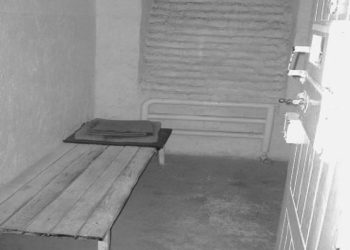
The friend (who was actually a Sigurimi informant) had told him: “Toli, our people are in a bad way. They are breaking with the Soviets.” Toli replied: “Why don’t you say ‘Thank God!’ You know I never liked the Slavs. But, if they attack us, I will bring my grandsons to you in the village.” This was enough, and the well-known old man of Vlora ended up in a cell. The general even called his children, all grown and with families of their own, and began the public denunciation of their father. Liri, upon learning of the event, went to Hysni Kapo (who else!).
The latter called Kadri Hazbiu and ordered that the old man of the Arapis be released immediately, while the head of the Branch is given a warning. In the trial of Kadri Hazbiu, the former general appeared as one of the most vicious witnesses against him. This could be considered normal for the time, but the accusation that Kadri Hazbiu “had not allowed the denunciation of Hajdar Aranitasi’s father-in-law” was not normal. What did Hajdar Aranitasi have to do with the case being tried?! The head of the Branch was taking revenge because, shortly after what happened with Tol Arapi, he was transferred to Tirana.
He was assigned to the same position, head of a Branch, in the Ministry of Internal Affairs. But this had not pleased him. After several years, in a plenum of the Central Committee on literature and the arts (1965), Mehmet Shehu targeted Fatos Arapi (along with Qamil Buxheli and Dhimitër Xhuvani). Analyzing one of Fatos’s poems, Mehmet accused him of being; “a man who does not reconcile with the new reality of Socialist Albania.”
Fiqret Shehu echoed this, analyzing a work of Fatos’s, “Drama of an Unnamed Partisan.” She accused him of “de-heroization tendencies and of dedicating the drama to his brother, Vllasi.” Who knows how the fate of the poet, Fatos Arapi, would have turned out if Enver Hoxha had not intervened? In the closing speech of the plenum, after speaking about the mistakes of some writers, he protected them by saying that; “they had erred, but they were sons of the party.” I have spoken about Mehmet’s birthday and his stance toward Vllasi (whom he labeled an enemy) and Fatos (whom he labeled a revisionist).
When the prime minister attacks you, even more so when he does it in front of twenty other people, it is something that brings serious consequences. That same day (January 10, 1968), hundreds of people learned of Mehmet’s words. However, by 1968, Liri Aranitasi and her husband had become well-known within the country. They also had many influential friends and comrades. Among others, they had Hysni Kapo and Manush Myftiu, comrades-in-arms from the 5th Brigade. Through their intervention, and with Enver Hoxha’s approval, this incident was moved past. Mehmet even apologized to her. Liri continued her work as a lecturer at the “Vladimir Ilyich Lenin” Party School. Her work was going well, but her relations with Fiqret Shehu remained constantly strained.
She did not like Fiqret. She could not stand her for her arrogance and her constant interference in the teaching process. I was a witness to how, after the break with Moscow and the ties with official Beijing, Fiqret interfered even in her lectures. She demanded that she include quotes and materials from Mao Zedong’s “Selected Works.” Such a thing irritated Liri. But there was a major reason that strained her relations with Fiqret. Between them hovered the ghost of Vllasi. Liri considered Fiqret and Mehmet as the main causes of what happened to her brother. I believe she was not wrong.
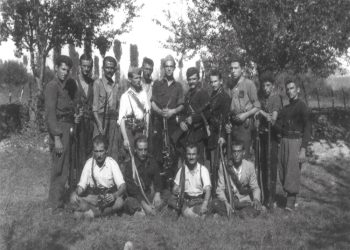
In the second volume (of the “Selected Works” series), Enver Hoxha criticizes Mehmet and Fiqret as; “guilty of Vllas Arapi’s desertion.” Had it been so? When Idriz Seiti (whom I have mentioned before) was released from prison (1991), he spoke to me about Vllasi’s desertion. Idriz defended Mehmet (he was known as his man) and blamed Dushan. Undoubtedly, Dushan had influenced Vllasi’s desertion. By his order, several partisan leaders in the Vlora District had been killed from behind.
We recall here Mynyr Xhindi and Fejzo Gjomema. For Vllasi too, elimination was decided. Dushan did not like people who spoke about the Kosovo issue and its unification with Albania. Nevertheless, Mehmet’s behavior after Vllasi’s desertion, and the stance he took toward the Arapi family after the war, cast doubt on Mehmet’s involvement in his murder. The relations between Mehmet Shehu and the Arapi family were always strained.
I have spoken about Liri’s clashes and criticisms regarding Fiqret’s work at the “Party School.” The group of lecturers at the school was divided into two parts: those who did not like Fiqret and those whom Fiqret did not like. Liri, naturally, was in both the first and second groups. Her stance became a concern for the Tirana Party Committee, headed by Manush Myftiu. He intervened and, “to heal the situation,” removed Liri. She was appointed as an instructor in the Party Committee, in the propaganda sector, under Fadil Paçrami. She worked there for five years.
Her main task was preparing materials to be sent to the Politburo. At one point, her name was proposed as deputy editor-in-chief of the magazine “Rruga e Partisë” (The Party Path), an organ of the Central Committee of the AWP. She refused, always with the same excuse—that she had a family of four men on her back. She went to Hysni Kapo, and he removed her from the list of candidates for that position. In 1971, she asked to go as a lecturer of Economics to the State University of Tirana. She had undergone surgery to remove a tumor which, fortunately, proved benign. She used this as an excuse, but the main reason, as she told me then, was that “party work with people created too many enemies.”
Manushi, upon hearing this, proposed that she go as party secretary at the University, but in this case too, she refused. She had no desire to deal with party work. Liri was lucky. Hysniu and Manushi, once among the main leaders in the Vlora District, knew her well, just as they knew her husband well. They granted her wish. The last two years before retiring, Liri worked as a lecturer at the University, in the Economics department. Then, in 1973, she retired.
Retirement Life, Always Engaged in Work
Liri continued to be part of the General Council of the WA (Women’s Union of Albania), where she had been a member for many, many years. She also continued to work as deputy chairwoman of the WA for Tirana (not as a functionary), also here elected and re-elected several times. She continued her work in the secretariat of the magazine “Shqiptarja e Re.” All of this without any financial compensation.
Her work was valued. From 1960 to 1980, Liri Aranitasi was rewarded with four state decorations, not counting here the “40th Anniversary of the AWP” decoration, which was given to party members with membership seniority of 30 years and above. It seemed that, finally, her life had found the peace she had always strived for. She had also become a grandmother.
But it was not meant to be…! The day it was learned that Mehmet Shehu had killed himself, Liri told Hajdar: “Hajdar, the in-law is finished!” She foresaw the trouble that was coming. In fact, ever since Hysni Kapo died, she had felt a sense of insecurity about the future. The situation worsened after the arrest of Kadri Hazbiu. She and Hajdar were targeted. The neighborhood’s party base organization (mainly retirees) was split in two. There were those who demanded their expulsion from the party. Among them, the former general, Sejdin Avdia, stood out. There were those who positioned themselves in their favor, where the “Hero of the People,” former general Vehbi Hoxha, stood out.
He protected them and tried to ensure they were not punished by the organization. Vehbi was also supported by a former member of the Central Committee of the AWP, Seit Bushati. But in the end, as usual, the decision was made by Enver Hoxha. Liri and Hajdar escaped with a heavy warning noted on their party membership cards. Their children were removed from Tirana. Vladimir was sent to Vlora and the city’s Executive Committee assigned him to work in a village. Gëzim, who had not yet completed a year in Tirana (until then he had worked for more than 10 years in Fier), was sent to the Kurbnesh mine. The eldest, Agron… his story is known. / Memorie.al
To be continued in the next issue