
From Dom Zef Simoni
Part sixteen
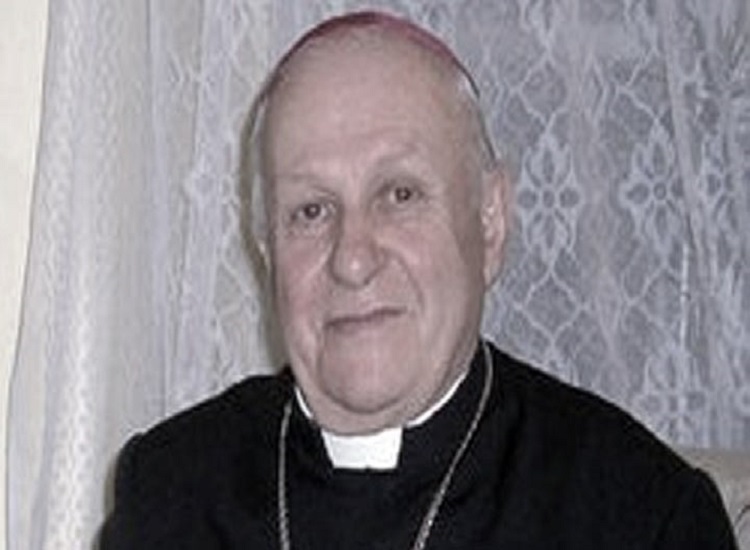
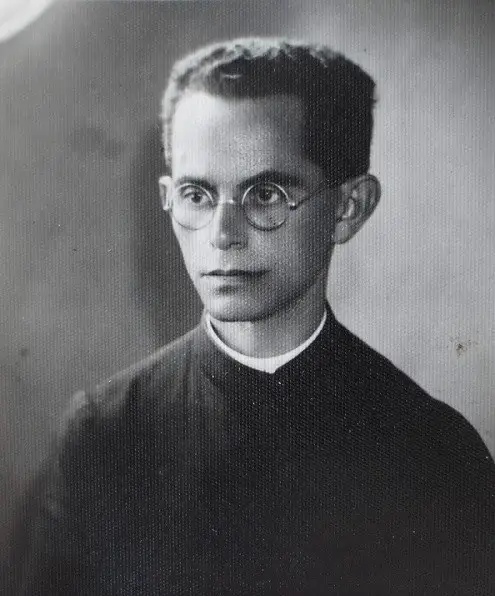
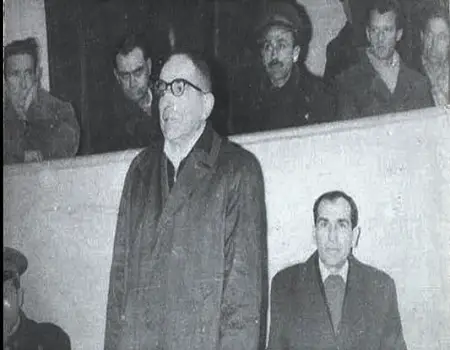
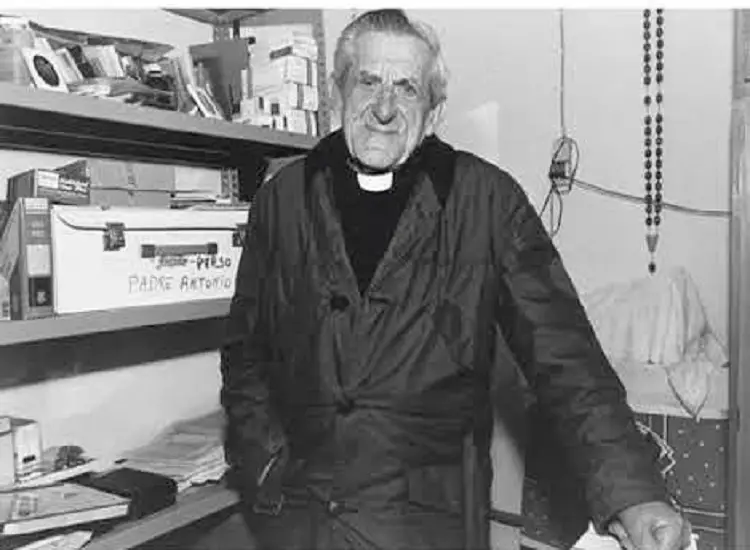
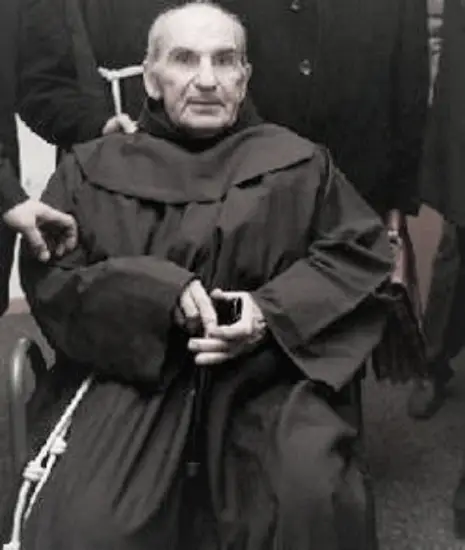
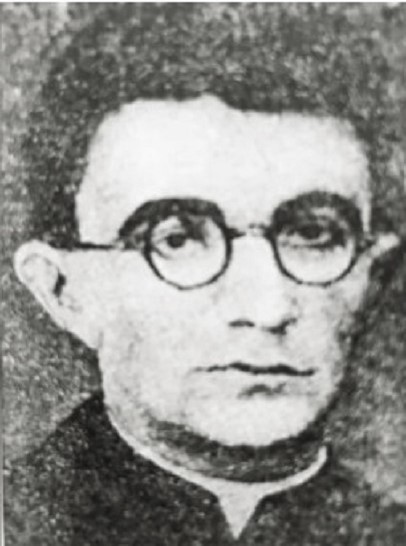
Memorie.al publishes an unknown study by Dom Zef Simoni, titled “The Persecution of the Catholic Church in Albania from 1944 to 1990,” in which the Catholic cleric, originally from the city of Shkodra, who suffered for years in the prisons of Enver Hoxha’s communist regime and was consecrated Bishop by the head of the Holy See, Pope John Paul II, on April 25, 1993, after describing a brief history of the Catholic Clergy in Albania, dwells extensively on the persecution suffered by the Catholic Church under the communist regime, from 1944 to 1990. Dom Zef Simoni’s full study begins with the attempts by the communist government in Tirana immediately after the end of the War to detach the Catholic Church from the Vatican, first by preventing the Apostolic Delegate, Monsignor Leone G.B. Nigris, from returning to Albania after his visit to the Pope in the Vatican in 1945, and then with pressures and threats against Monsignor Frano Gjini, Gaspër Thaçi, and Vinçens Prenushti, who sharply rejected Enver Hoxha’s “offer” and were consequently executed by him, as well as the tragic fate of many other clerics who were arrested, tortured, and sentenced to imprisonment, such as: Dom Ndoc Nikaj, Dom Mikel Koliqi, Father Mark Harapi, Father Agustin Ashiku, Father Marjan Prela, Father1 Rrok Gurashi, Dom Jak Zekaj, Dom Nikollë Lasku, Dom Rrok Frisku, Dom Ndue Soku, Dom Vlash Muçaj, Dom Pal Gjini, Fra Zef Pllumi, Dom Zef Shtufi, Dom Prenkë Qefalija, Dom Nikoll Shelqeti, Dom Ndré Lufi, Dom Mark Bicaj, Dom Ndoc Sahatçija, Dom Ejëll Deda, Father Karlo Serreqi, Dom Tomë Laca, Dom Loro Nodaj, Dom Pashko Muzhani, etc.
We passed Durrës and sped toward the north; it was then that views of our regions began to appear – beautiful Kruja, majestic even under the nation’s sky in bondage; historic Lezha, with a monument to our National Hero, desecrated even in death. He had been buried in a church, yet one can find no church in Lezha, or in all of Albania. We conversed along the way. The people followed the few priests who remained. But it was impossible to keep up, for they came – old and young – many seeking religious services. I had heard even in prison that many people went to the Sanctuary of Laç, especially on Tuesdays; a vast multitude gathered for that time, from every region and all faiths. The government had begun a sort of tolerance.
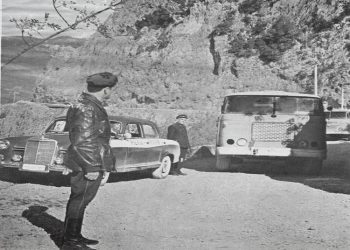
Along the road, I saw well-dressed people; many, even students, had watches on their wrists. As we reached the villages near Shkodra, darkness began to fall. A beautiful summer night. The twilight passed, and a mysterious evening covered everything. A hum was felt, and warmth made nature seem joyful. This is life. I remembered that life exists. It didn’t matter to me that it was getting dark, that night fell, because for me, this became a continuation of the day – a joy. And since I was experiencing these moments, almost forgetting where I had been, it felt as though I was allowed a sort of egoism. Near the village of Beltojë, before entering Shkodra, a policeman stopped the car. He asked for our identification.
I pulled out my release document. After looking at it, he said “goodnight” to everyone, and gave me a slight smile. Perhaps because he saw written in my document that I was a cleric. There, through the darkness, Rozafa Castle appeared, immovable through the centuries, and as we passed the square, I saluted Our Lady with all my strength in prayer. At home, they had long been prepared. No one was with my sister. The relatives had come out to wait for me. A deep embrace with everyone; they whispered to me that I looked healthy, that I hadn’t changed much. “His hair has turned white, but he is not finished,” I was aging now at the age of 60.
Mother’s Chest
First of all, when I entered the house, I went upstairs to the room where my mother’s chest was. I could not imagine my mother without her chest – the large Venetian chest that we still keep today as a precious memory. My grief for my father and mother remained hidden. But joy had great power over everyone. More than twenty of us sat at the table, and we stayed up late. I looked at everyone. So many events and changes within a single day. Life behind wires until 7:30 AM. Saranda, the journey, home, the table with loved ones. “Forget and think where you were,” I thought as I sat for a moment in reflection. A prisoner craves everything. In prison, hunger is vulgar. A banal hunger. Hunger. I haven’t drunk raki during my life, except occasionally during visits. But in prison, I had felt a strong desire for a glass of raki. There wasn’t any even at the restaurant in Tepelena when we stopped at “Uji i Ftohtë.”
They encouraged me to drink a glass of raki. “It will do you good,” they continued. That was what I was waiting for. That was what I sought. I praised Christ, greeting everyone with a joyful heart. For almost two weeks, I drank 50g of very good raki every day at home, made by our caring sister. The next day found me full of vitality. Early on, I would glance at the garden. I wanted the greenery, the air of my city, of my birthplace. I walked with my brother and sister. In our large, beautiful garden, I found bardalike plums, Bosnian plums, and clusters of grapes almost ripe. There is no life without memories. I was not yet fully myself. Soon the visits began, continuing for over a month. Many villagers came too—those who had not forgotten me from before I fell into prison.
Father Pjetër Meshkalla (July 1988)
On the second day, after learning that Father Pjetër Meshkalla had fallen gravely ill, I hurried to see him. I wanted to see him as soon as possible. I found him as if in a sleep, his face toward the wall. Beside him were three men. I approached the great man and, placing my hand on his head, called him gently. With a light smile, he recognized me. He could not speak. I did the talking. He was full of joy when he saw me. He had told people that I would soon be released. “The Church will not remain without priests,” he had said. He was waiting for me to perform services. The Father’s mind and heart were there. He was melting away, fading out while performing his sacred duty. Hundreds of people came every day, as if to a church or a Sanctuary, to confess, to take communion, to receive teachings, advice, and guidance.
I felt sorry to find him in that state, unable to exchange words with one another. In those moments, I felt great reverence, love, and pain, for the Church was losing an exemplary priest and a missionary in this time of our suffering and needs. I was deeply glad to find him alive, or at least to participate in his funeral, which – due to the presence of many young people – was like a serious demonstration, silent and determined, at 5:00 PM on July 29, 1988.
On the third day of my release, I would make the great and painful visit to the cemetery, to my mother’s grave. I went with my cousin Simon, my brother, and my sister. We had bouquets of flowers in our hands. Prayers and a few tears. I kissed that soil.
In those days, after celebrating Mass for my mother’s soul, I quickly began the Gregorian Masses for her. “May she rest in peace and pray for us, this great person who is a Mother, and my mother – after the Virgin, the greatest Mother.” Along with the visits, the services began. Not all at once, but they grew beyond my capacity to handle them. I had joy and strength. I began to be renewed. I recovered quickly. My sister took special care to feed my brother and me as well as possible. She stood by us with all the kindness of a sister: acts of love and good works for her brothers in their struggles, and true help for religious services.
Prison Writings
From the second day of my release, I occupied myself with writing: putting what I had worked on in prison onto paper and hiding it. It had to be written quickly, however possible, so that not a single word would be forgotten. In this case, I had to forgo resting in the midday heat and go to sleep late to finish writing the thirty pieces as soon as possible. Later, I would find time to revise them and write them on good paper. Religious services started early in the morning and continued throughout the day until late. After a few days, I began to speak the Word of God with a program, conducting a summarized catechism in families, especially in the villages where many gathered. It was clear that faith was strong. Strong faith in the villages. Stronger among the women. Very strong among the youth, who had faith and curiosity to know every word. Many began to come to be baptized, to confess and take communion, and also to be confirmed.
Everywhere in homes, televisions had been introduced with amazing programs. Preaching and church music could be heard. One could see the disciplinary changes made in the Church after the Second Vatican Council. People followed with such interest the movements of Pope John Paul II as he traveled the world across continents. The Pope had entered their hearts. The Church is adaptable to all times. Without changing dogma, moral principles, the ecclesiastical hierarchy, and the seven sacraments, it finds its place everywhere. It is new even in new times. Since the television had begun to open things up, there was a felt need for foreign languages, which were now being introduced in schools.
A year before I was released, a rumor spread through the prison, whispered through clenched teeth, that the priests would be let out. It was April. A special decree released the Catholic priests from prison. There were no more than five left. They were Father Anton Luli, Dom Ndoc Sahatçia, Father Zef Pllumi, and Dom Martin Trushi. One failed to make it out, for three months prior, the Lord had taken for Himself the worthy priest Dom Pjetër Gruda, with whom we spent many hours of the day. It touched me deeply when he shook my hand as I was being released, telling me that we would not see each other again. Truly, we would not see each other again in this life.
The Arrival of Mother Teresa (August 15, 1989)
It was August. It was the 15th. It was the day of the Assumption of the Blessed Virgin into Heaven. It was the day Mother Teresa arrived in Albania. This was an unexpected event. “They” called her the “well-known benefactress.” She came with another sister. Two good sisters. They welcomed the Albanian nun of Calcutta well. She is Mother Teresa, who performed her works throughout the world with a cross and a rosary. With these, she also came to Albania. She holds them in her hands even when meeting the sick in the hospital of Tirana, during her visit with the Ministry of Foreign Affairs, and with them, she will go to Nexhmije’s house. To her own mother’s grave. She has them with her. Even at Enver’s grave. I came to life. Who wouldn’t come to life? I gained momentum.
I expect good days. I expect freedom of faith. I wait. What do I not expect? I strive to speak the Word of God with great zeal, with great love. It was a time that was becoming interesting. The air was mixed because winds were blowing from many sides, both good and bad. The time seemed like a sun that does not last all day, like a moon surrounded by clouds. Out of necessity, people would say: let us eat only once a day, but let us have the church. A child nearly three years old in the village had been taught by his mother to pray. He would say “Amen” with hands joined, “Hail Mary,” and perform an act of contrition – this child who had committed no sin. At the ages of five or six, especially in the villages, children who did not know what a Church was, who had never seen a priest except now on television, knew several prayers they had learned in rooms and small courtyards, where the scent of the countryside and the aroma of manure linger.
For a sick person, the nature of our villager is to seek the priest first, then the doctor. They want holy water before medicine. They brought Mass offerings for everything. One, two, three, ten. Even Gregorian Masses: thirty Masses to be said in a row for a soul in purgatory. They ask for a Mass even for a dream they had seen. Someone begins to build a house – they need a Mass. For an engagement, likewise, for the well-being of soul and body. Even for the soul in purgatory, the most forgotten. For deceased priests. I received a request for a Mass for the soul of Dom Injac Gjoka, and for Father Meshkalla. On August 16th, I received a request for a Mass for the health and well-being of Mother Teresa. “Mother Teresa has a difficult task,” they would tell me.
The villager is tied to the land, to nature, to matter, yet the ideal of faith was not lacking. The villager is capable, while you speak of the afterlife, of listening to you for hours on end. Conditions are necessary and indispensable, especially among us. Saints are different. They desire for themselves lack, privations, sacrifices – only a simple bed, any kind of food. These are their high principles; they are always at war with luxury and stay far from the softness of comfort and the deceits of matter. They make inventions to do well for others and pray to God that people do not fall for new idols. Saints perform great penances. To a great penitent, even the “talon” – the Albanian communist ration – seems excessive.
The “Talon” System
What is the talon? Meat: three kilos a month, per family. Two kilos of cheese a month and 300 grams of fresh butter per family. Parents would leave it for the children. One hundred grams of coffee a month, per family – and even that, not every month. Beans, which Albanians eat a lot of, that which gathers small children or the elderly, would be received three times a year. Maybe four. An average of one kilo per season. The wage was 158 or 200 lek per day. Milk was scarce and required waiting in lines; people would wake up around two in the morning to wait until 5:00 AM, when the sale began amidst the noise, just to get one kilo of milk.
You might find an extra kilo if you knew the saleswoman, by paying a much higher amount than the official price. Two systems were entangled at once in everything, in every job, in every action. An ideological “car crash” was happening here. You paid the value of the socialist system plus the premium of the private system. These were contradictions, and not non-antagonistic ones. When are these dying out? May they rest in peace, as soon as possible? I wonder, can they rot on their own before they die?!
My Arrest Again
A day of gloom. The mixture of the end of summer with the beginning of autumn. The rains of September and October begin. Rain with storms, and mountains of waves at sea. Here, one must beware of sudden lightning. And under this sky, where sunbeams appeared from time to time, lightning was seen and then sudden thunder, amidst days and nights that jumped and skipped like broken shoes through the mud in the slush of the territory. Time is a bad shoe that doesn’t hold a nail. It gives no word. It never has. And you never be deceived. We thought we were heading toward freedoms. I say freedoms (plural), because one freedom cannot exist without another.
The freedom of conscience requires that of action. The freedom of speech requires that of the press, and so on. Faith, word, press, conscience, assembly, borders without wires. No wires at all. No socialist regime remained more faithful to the doctrine of communism than Albanian communism. The terror of the dictatorship of the proletariat had the consequence of decisions taken from time to time; it identified dehumanization with emancipation and ideals, and justified shortages by claiming we were working for a “happy future.” Communism has one face; two faces. Many faces. In the land that was beginning to sprout a little, after a year or so, a historical lightning bolt was falling.
The Eighth Plenum of the Central Committee of the Party: “No concessions to faith. We have closed religious institutions because they have destroyed national unity.” How did this happen now?! What does this mean?! But I continue my work and I do not destroy this unity. I had become very noticeable, as the services I performed had become very open. The city, the village, the homeland had become one. Services in many parishes. My movements were known by the state and the people, and many entered and left my house for services. The state had remained silent and seemed to be in a state of tolerance, but now some difficult days, difficult months, were coming for me.
Now I find myself in Rragam, a village that looks like a natural Bethlehem, called there to avoid a dispute between a clan, to reconcile them even before a marriage and wedding. I am in the very good house of a villager, the house of Ndrec Hanxhari. It is Tuesday, October 10th, with October rain. Around 5:00 PM, as it gets dark, I celebrate Mass. This evening I celebrated Mass early, with only the people of the house present and not like other times when more than a hundred souls could be found in the room. They set the table early, with Ndreca’s cousin and his two nephews present. It was organized to talk with them, as they were high-level workers. They took pleasure in learning the main knowledge of the faith.
Ndreca had assured me about these persons. Because of the stormy night, the electric lights went out, and then we continued our conversation under candlelight. That evening, almost without noticing, grew heavy – perhaps the influence of the weather with a sky of clouds like a hydra, with rain that was terrifying at times, a mysterious night. We were having social conversations. The rain fell heavily. Two persons had managed to enter the courtyard of the house easily, stealthily, armed. They had isolated the dog: “it is an enemy.” They had approached through that rainstorm to the window of the room where we were. They saw us. “This is him,” the operative had said to his companion, referring to me. It is almost 9:00 PM on this special night for us.
A heavy knock at the door. The operative bursts in with fury – a young, tall man, the local authority – a policeman, and with a decree, the head of the People’s Council, whom I knew and who knew me, and on whose head in this very house I had placed the holy crown (married him) one evening, as he was a cousin of Ndreca. With this group, the driver entered as well. They came in and immediately asked who the master of the house was. “I am,” Ndreca replied. “Who is this?” the operative asked about me. “A guest,” Ndreca repeated. “A priest guest?!” the operative said.
They began the search. A minute search of our pockets, clothes, rooms, the entire house. They even tore up the floorboards of the house. A package of mine was found in the cupboard of the room. In it was a stole, an office (prayer book) which was the “Spiritual Treasure” (Visari Shpirtnuer). The holy oils that I always carried with me. “Whose is this?” asked the Sigurimi operative. “It is mine,” I replied. A large Cross sat there, not hanging on the wall, but lying flat on the sideboard, just as it is found on Good Friday when it is exposed in church for adoration. “And this?” the operative asked again. “Mine,” spoke the master of the house calmly. “Are these for meshas (Masses)?” Because the operative was young and accustomed to speaking in a southern dialect, he didn’t know how to say “për meshë” but said “për mesha.” I replied that I had them for my personal prayers.
The house was terrorized. Fear had entered everyone: his wife, the children. The three who had come for dinner answered them when asked what they were doing there with the priest; they said calmly: “We have come to our kinsman and we do not know who this is.” The master of the house, Ndreca, was wide-eyed and resolute. They took me after the report of the materials was made and signed, but Ndreca told them: “I want to come with you too, for I will not let him go, because according to custom, I have been betrayed in my hospitality.” Ndreca was truly becoming a great man in this difficult event. Not bound by hands, they took us both, putting us into a Romanian car of the “Aro” brand. It took half an hour to reach the Department of Internal Affairs in Shkodra, that infamous building, while the rain continued to fall.
The driver, a mad communist lunatic and an even madder fundamentalist, along with the operative, expressed themselves against the faith with all the violence of the time and with a fury against the Catholic faith. “Do you think,” the driver said to me – who had no business speaking there, but imagining he speaking in the name of the working class and with a soul of anti-Catholic malice – “do you think Enver Hoxha’s government has ended in Socialist Albania? It is the people who are in power. The people have caught you and will show you and your comrades, who wait for your day, their place.” I was used to hearing these harsh ways of violence many times. At the Department, that miserable night, several – many – policemen appeared before me, surrounding me and attacking me with the worst, most furious words of the time.
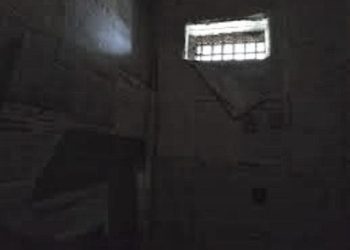
This war continued, with the driver also present – this contemptuous and angry soul of a very Oriental nature, who was surpassing everyone in his attacks. The heavy rain had begun to stop. They sent me to a room under observation. I began to shiver a little from that fine rain that stealthily cooled the air, in a room with a large window without glass, only bars. In the middle of the night, a young officer dressed in civilian clothes entered the room. I had disturbed his sleep. In a sharp voice, he asked me if I had anything forbidden at home. “No,” was my word. A fear entered me that they were going to the house to search. Perhaps they would violate the Eucharist, which I had wrapped and placed in a case./Memorie.al