Part One
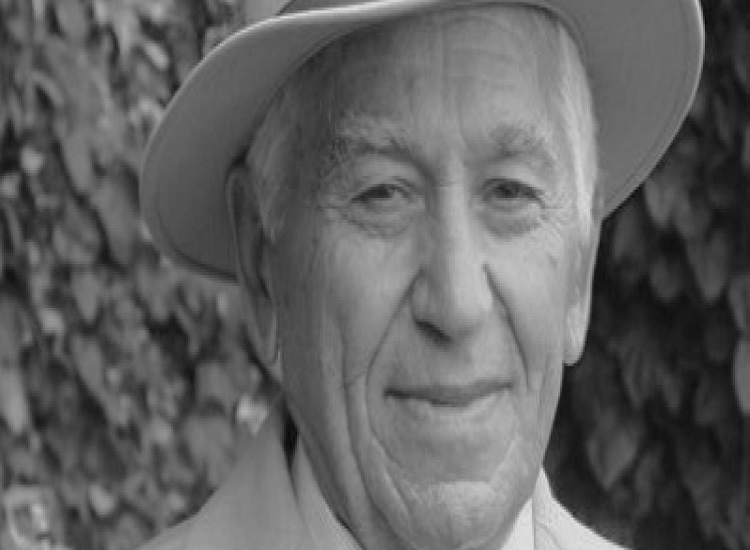
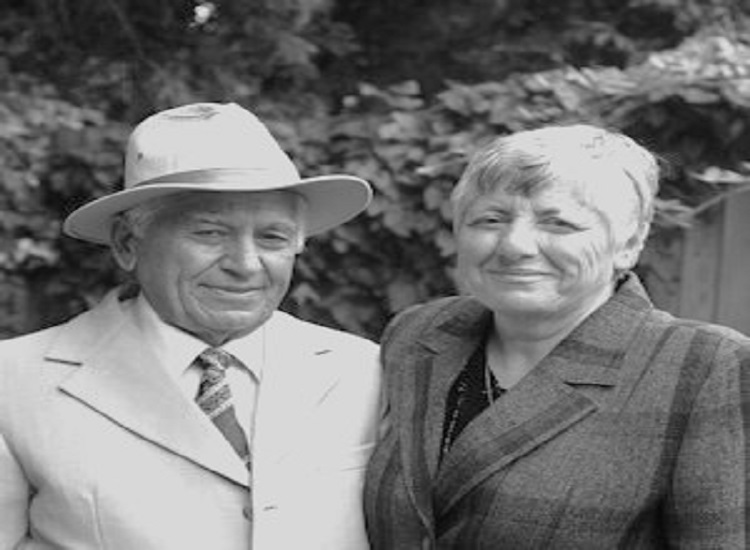
Memorie.al / Prof. Neki Babamusta, originally from Kavajë and residing in the USA for years, a well-known writer in the field of journalism and also a highly recognized historian in the Diaspora and Albanian territories, recounts in this interview his early relationship with America, but not only…! He also tells how his family saved a Jewish family in 1943, as well as several Italian soldiers who had deserted from the war front…! In his long narrative, Prof. Babamusta also tells us about one of the most difficult situations he went through in life, that of 1954, when he was only 17 years old and served as a teacher in Pezë. There, he had to intervene between two armed groups of the same clan, where one side belonged to Babë Myslym, and the other side to his brother, Shyqëri, who had been killed in the War! We will learn about these and other events, such as the one in March 1992, when the first American Ambassador to Albania, Mr. Ryerson, visited Kavajë and his life was endangered by a plot of communist extremists, in this long interview in two parts.
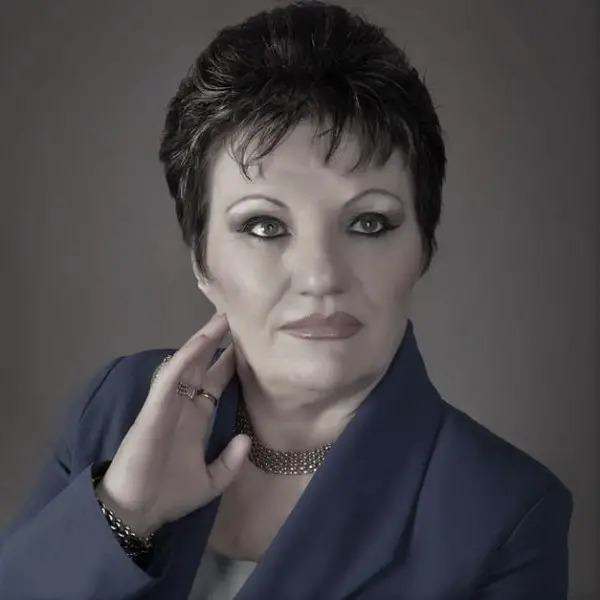
Babamusta, could you tell us the motive and interest that prompted the American Government to honor Father & Daughter – you, dear Professor, for your international contribution and democracy, and your daughter Ermira – “International Humanitarian Woman”?
The great American nation is built, based, and functions on the foundation of democratic and global humanitarian values. Based on the historical support that the USA has given our nation, at the most crucial moments and at all times, for Albanians, America is valued wholeheartedly as the second nation.
As an integral part of the Albanian nation, for the two clans, “Babamusta” and “Cani,” the time of nearly 100 years has been a period of cooperation and rapprochement in strengthening the traditional Albanian-American friendship.
The American school in Kavajë, founded in 1920 (Golem), the National Liberation War (1941-’44), the Resistance Front (1944-’46), the victory of Democracy (March 22, 1992), and the arrival of the first American Ambassador in Kavajë, Mr. William Ryerson (March 15, 1992), the Liberation War of Kosovo (1998-’99), the stay in the USA twice as a family, and the meetings in the American Congress (1999 & 2003), as well as the engagements of my daughter, Ermira, in American politics – are clear evidence of this long-standing friendship.
This close connection of my family, between the USA and Albania, is characterized by a strong friendship and shared alliances both on the diplomatic front and in the socio-cultural aspect.
Professor Babamusta, how did you feel after that high decoration from the American Congress, as an “International Defender of Democracy”?
The USA, as a country of functional democracy, radiates for the values of every human being, regardless of nationality, race, origin, or religious values. Every person who has dedicated their life to human values, peace, and democracy, is a respected value for the American people and its Government, and in the metaphorical sense, a “Hollywood star.” Even before my nation, the two clans “Babamusta” and “Cani” are highly honored based on facts.
The special thing about the second decoration (the first given by Congressman Kennedy in 2004) was that it was given on July 4, 2013, the day of the US Independence Day celebration and with very heartfelt approval from the Chairman of the American Senate, Mr. Harry Reid. Naturally, the feeling was one of extraordinary emotion. The merit and glory belong to my nation.
As an equal among equals, I feel proud alongside the hundreds of thousands of my compatriots who work for the same goal. I thank the American Congress, Senator Harry Reid, and the US Government led by the President of peaceful values in the world, Obama, very sincerely.
Regarding your two clans, Babamusta and Cani, it is said that there are many writings and documents in the Central State Archive and daily publications. What can you tell us about the most painful moments of these families – imprisonment, over 80 lives persecuted and executed? What threat did these clans pose to the dictatorial communist system in power?
Pope Francis has said, “Save life… it is the future of humanity”! To kill a person is madness; you become an eternal sinner. Only human love warms, ennobles, and makes life more prosperous and the Universe warmer. Although the sinner’s soul remains in darkness, his sins come to light.
I will never forget the day (in May 1954) when I was caught between two armed groups of 40 people, who were in political dispute, divided by the Communist Party, and were ready for political fratricide (class struggle).
One group sided with Shyqyri Peza (executed by the dictatorship), a collaborator with the British, while the other group sided with his brother, Myslim Peza, who supported the communist regime in power. I was only 17 years old, a teacher in the village of Gjysylkonaj, bordering Pezë. I quickly stepped in between and said aloud: “Before you kill brother against brother, shoot me. Kill your teacher.”
Fortunately, bloodshed was averted among the 35 families (with many households) of the village. After two days, I invited their eight representatives to my house in Kavajë, where reconciliation was made between the two groups. In November 1964, during my military service in Elbasan, I was asked to be recruited into the State Security organs, for external diplomatic service. Naturally, I refused to serve the communist regime, because my conscience did not allow me to put innocent people in prisons.
The refusal had consequences for my future. They mistreated me: traumatized, I was hospitalized in the Military Hospital of Elbasan (November 1964), they initially denied me the right to study (which I gained through correspondence, for both secondary school and university), they fired me, transferred me to remote areas, and persecuted my family.
Both clans suffered severe consequences from the communist persecution. Over 20 people died in prisons, were imprisoned, and interned. My wife’s brother, Naim Cani, only 21 years old, was run over by a car during working hours.
Although the family tried to find the person and the reason, appealing to the high organs of the government at the time, they remained silent and took no action against the driver who committed the murder. My father, Beqir Babamusta, suffered a painful death. In the first years after the liberation, the neighborhood counselor constantly put psychological pressure on him, saying: “I am Enver Hoxha.” My father died of a heart attack at a very young age, 68 years old.
Even my daughter Ermira, although she finished the eight-year school with excellent results and the English competition, the English examination commission did not give her the right to continue secondary school. The commission decided to send the daughters of communists and government functionaries to the Foreign Languages secondary school in Tirana, even though they did not achieve the minimum points in the competition.
When we received the negative result, with the intervention of my wife and me, I asked the commission to repeat the exam and correct all the exams of the competition participants in front of us. A member of the examination commission in another city informed us that they were correcting all the exams, based on Ermira’s exam answers, which was the best.
Even though Ermira deserved the highest points, they lowered her score at the request of the commission chairman. My indignant daughter addressed the commission: “The erroneous results you gave will be verified by the Foreign Languages School in Tirana and the Ministry of Education.”
What can you tell us about the sheltering of a Jewish family and Italian soldiers after the capitulation of Fascist Italy under Benito Mussolini?
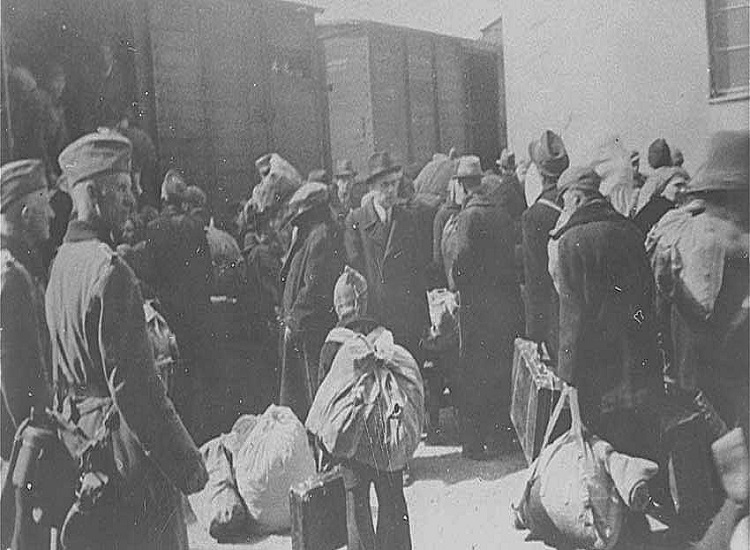
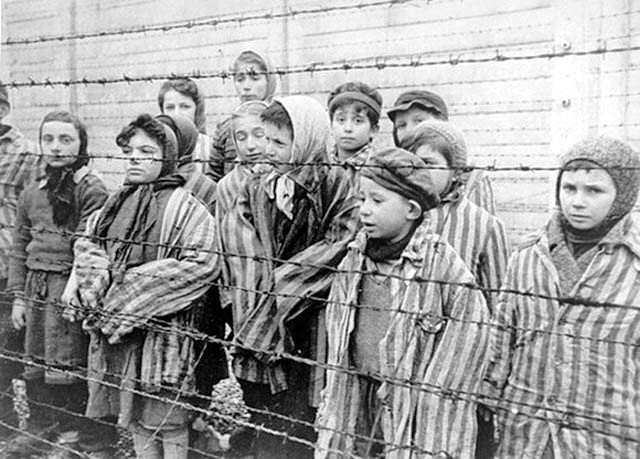
Former King Zog, for the humanism and intelligence that characterized the Israelis, signed an agreement with Europe in 1938, to bring several thousand Jews to Albania through the International Red Cross. Initially, they were installed in Vlorë, and then throughout Albania. Hitler exterminated over 6 million Jews in concentration camps (the ovens of death) in crematoria.
The Albanian people are proud of their humanism because they saved the lives of over 2,000 Jews. In Kavajë, the former court secretary, Mehmet Babamusta (“Martyr of the Nation”), in collaboration with the bailiff, the patriotic teacher Mihal Lekatari (“Meritorious Teacher”), managed to provide Albanian passports to 178 Jews in the first phase.
In my house, through my cousins Ragip, Mehmet, and Ibrahim Babamusta, they brought an Israeli tailor family of 4 people for shelter: a husband and wife with two children (a boy and a girl), in October 1943. Although the danger was great, we accepted them as guests and gave them our word (Besë).
My father, Beqir, communicated with them in Italian. The family told us that the other members of the Israeli family and most of the clan had been killed by the Hitlerian Gestapo. Their sad sight remains in my memory, especially the fate of the children.
Their sadness was accompanied by a sweet smile for my parents (Beqir and Rabihane Babamusta), who kept them sheltered for three months. During this time, we lived with the fear of control by German soldiers. During the check, the German soldiers killed all the family members who sheltered Israelis.
Even though the neighborhood was aware, no one reported them. When we learned that the Gestapo soldiers started controlling the neighborhood, we quickly moved the family to hide them in a cattle hut in the meadows, 700 meters away from the house.
No Israeli in Albania was reported to the Nazis, neither by Albanian citizens nor by the Albanian government – a great benevolence and humanism that shows the integrity and strong character of the Albanian people. After three months of stay, after being provided with documents, the Israeli family crossed the Adriatic. The separation was very emotional with hugs and tears in their eyes; they kissed the hands of my father and mother.
We considered the Jewish family as our own. Mihal Lekatari was called by the Israeli government to Tel Aviv for this heroic act he performed with Mehmet Babamusta (my cousin), saving hundreds of Israeli lives, as a sign of honor and gratitude.
He was awarded the Medal of Gratitude and his name is recorded in the memorial of the Historical Museum in Tel Aviv. Just as deep an impression was left on me by the sheltering of six Italian soldiers who had deserted from the war front (September 8, 1943).
Germany, after the capitulation of Italy, was looking for Italian soldiers to recruit them into the German army. We sheltered the soldiers in the grain depot, and at night they slept in a room, in the basement of the house. I remember that we children (I was about 7-8 years old), together with the Italian soldiers, were shucking corn at the barn (warehouse), the place of refuge.
To cheer them up, my father kept them company with jokes, communicating in Italian, and gave them hope with heartfelt words that they would soon return to their families. The youngest of the soldiers, Giuseppe, with tears in his eyes, hugged my mother: “Mia Mama – will we go home to our parents alive?”
– “Yes,” my mother hugged him, “you will soon be with your family.” After two months of staying, after being provided with documents, the six soldiers returned to their homeland. After arriving, they sent us heartfelt congratulations, because they escaped without being caught by the Gestapo.
The two Babamusta and Cani clans are a national and historical value, thanks to their precious and renowned contribution to patriotism, nationalism, democracy, peace, and generosity, where your family has hosted and seen off many Albanian and international historical figures. Tell us more about some of the personalities you have collaborated with and welcomed?
Time brings people together or separates them. In Peqin, in the western part of the city, near the Shkumbin river, there is a building – a two-story tower (built by Ramazan Cani, my wife Suzana’s grandfather), where two eagles, symbols of the patriotic hearth, are carved in stone on the two front sides. At the tower of Ramazan Cani, the partisan leadership gathered to discuss the problems of the National Liberation War, from the beginning of the years 1942-’44 (later they were linked to the Resistance Front). / Memorie.al