By Mërgim Korça
Part Three
I Killed, According to the Kanun of the Highlands – An Analytical View –
Memorie.al / Starting from the fact that during the dictatorship the ‘Kanun of Our Highlands’ was much talked about and attacked, and even more so, mud was slung at it, I decided to set myself the task of an analytical analysis of it (the ‘Kanun’). My aim is to analyze it by avoiding, as much as I can, extremes, thus not only by not following the example of the scholars of the communist dictatorship era and taking the diametrically opposite direction, but by trying to analyze the positions of the ‘Kanun’ with as much balance as I am able. In the following, attention will be paid and then it will be clearly understood why, although I am the son of a man from Korça and a woman from Gjirokastra, I feel the need, when dealing with a subject that essentially concerns how the norms of ethics and morality of the highlanders of the Northern regions were regulated, to address the readers in the Gheg dialect!
Continued from the previous issue
Without the slightest prejudice, I understand that this act of self-justice committed by the highlander was not only an incorrect implementation of § 920 of the ‘Kanun’, but also implemented out of time. Isn’t that so? Nevertheless, to stand by the truth and not by the ‘Kanun’, even in that aspect, this act would have been shown to be condemnable by the ‘Kanun’. Why? Because the ‘Kanun’ had allowed self-justice in cases of blood for a wicked deed, but only when the objects were caught in the act of the wicked deed.
Thus, the ‘Kanun’ must be judged impartially, and it must be understood that even in this case, the ‘Kanun’ would have judged and condemned the perpetrator, insofar as he bore responsibility for violating the canonical norm. In this context, I cannot now avoid another discussion either. The ‘Kanun’, for its time in the depths of the centuries and then throughout the middle Ages, starting with § 920 and continuing to § 931, defines the norms and violations of morality as well as their punishments. I too admit that they were very strict rules and perhaps harsh punishments. But it must be taken into account that since these norms were the rule of society at that time, centuries have passed and we have arrived and are living in circumstances where legal justice has begun to also approve same-sex marriages! (?) The question I pose is: Can judgments regarding the punishment of the ‘Kanun’ of that time be considered balanced with the mentality of today?
Now the turn has come for the paragraphs of article one hundred and thirty-three, which are, at least in my opinion, very interesting.
- If someone kills a kinsman, his blood goes in vain.
- 961. If a son kills his father, no one pursues him, except the son, the perpetrator, is torn apart either by the tribe or even by the village.
- 962. If a son kills his mother, he falls into blood with the mother’s parents.
- 963. If a husband kills his wife, he falls into blood with the wife’s parents.
- 964. If a wife kills her husband, her parents fall into blood. (It has happened that the parents have torn apart their daughter, who committed this shame.)
It is enough to consider the results of deaths that would occur as a result of decisions on capital punishment by state judicial bodies, where the death penalty is in force, and the result compared to the ‘Kanun’ would be day and night, wouldn’t it?
To conclude my presentation of views regarding the chapter on “blood,” I started with § 822, which is the first of the chapter ‘MURDER’, and I want to conclude it not by following the chronological order of paragraphs, but with § 898 – § 899 and § 900 which speak not only of the ‘Kanun’, but also as if it itself gives answers to today’s scholars from both sides, both appreciative and dismissive.
- In the ‘Old Kanun of the Highlands’ of Albania, only the perpetrator fell into blood, or he who drew, fired, and discharged a rifle or any weapon against a person.
- The house of the killed could not pursue or kill anyone else from the brothers, nephews, or relatives of the blood-spiller, except the finger – the perpetrator –.
- The ‘later Kanun’ includes the males of the perpetrator’s house from the cradle; the kinsmen and the nephews, even if divided, but for 24 hours, in the heat of blood; and after 24 hours, the house of the killed would give them assurance.
The first two paragraphs are so specific that, focused on their objective as they are, to go and comment on them, only some reckless person would take that burden upon themselves.
As for § 900, here things change. First, it must be noted that the first eight words of that paragraph speak so much… that they can confuse a series of foreign researchers and scholars, and not a few local ones, regarding the antiquity of the ‘Kanun’. The ‘Kanûja’, called later, we all know is the same unwritten legal body that governed (when there was no government) the Highlands of Albania throughout the Middle Ages. Whereas, when it comes to mentioning… In the Old Kanun of the Highlands of Albania, there we get down to business and we enter into that unwritten depth of history, (as the very ‘Kanun of the Highlands’ of the Middle Ages was unwritten until 1934), which goes beyond the limits of the second historical era.
Throughout this line, it also comes to light that the formulation of the first two paragraphs greatly increases the moral stature of the blood feud chapter. So the question naturally comes to mind: why, even when there was a need, was paragraph 900 inserted into the Kanun? It remains well in my mind, how Captain Gjon Markagjoni mentioned with the term “canonical repairs”, the changes that were made to the Kanun under the conditions of Ottoman rule, when there was no Albanian state, and even worse, in the absence of an Albanian government.
When I asked Captain Ndue Gjomarku about this problem in New York, he brought back to my mind his father’s arguments that; “… as times changed and with the increase in population, the pursuit and punishment of the perpetrator, who grew hidden among the clan and tribe, finding shelter among them, was becoming very complicated. The repairs to the Kanû made by the Pari of the land with Gjon Marku at the head, as a result, reduced the possibility of murderers abandoning their tower and fleeing to Kosovo, causing the shed blood to go to waste …”.
“Who maintained order and prevented killings in those dark times,” Captain Ndoji poses the question? “The rifle barrel and the Kanun of the Highlands,” he answers himself! After a decade-long, serious effort of evidence, as well as objections, regarding my stance towards the ethics as well as the morality of the various chapters of the ‘Kanun of the Highlands’, which finally today I was able to present in the light of day to the reader, solely for one purpose, namely for the twenty-second chapter entitled Murder.
It can clearly be seen that I have tried to refer in my reasoning for bringing before the reader the considerations, as well as the interpretations made by people who knew the ‘Kanun’ like their own pockets, and whom the fate of life allowed me to know and learn from. To close the circle now, I want to outline a line of reasoning, which I invite you to judge. I want to consider, without the slightest prejudice, but precisely with the scales of justice, four positions on the same circumstance, but in four different historical periods.
We are at the beginning of the last century. The increase in population also increased the cases of crimes. The wisdom of the leaders wanted to stop the spread of crime. So, in the absence of state authority, the ‘Kanun’ was repaired and from § 899 they moved to § 900. The purpose: so that whoever wanted to commit a criminal act would think twice before acting. Thus, the ‘Kanun’ expanded the circle of retaliatory action, specifically to prevent crime.
We come to the middle of the last century, at the time of a state that functioned supported by all its legal institutions. Leaving the country, according to the law of the communist dictatorship, was considered a crime. To prevent this crime, families as well as the kin and relatives of the person who fled abroad were taken and interned.
III. Now we move to the beginning of the 21st century. Two ugly problems began to tarnish the image of the Albanian in Europe and the world: drug trafficking and prostitution. The state existed as did all legal institutions, but the evil was that the state was enveloped in the tentacles of corruption, through the veins of which money flowed into the pockets of the country’s leaders. So poverty was intertwined with rapid enrichment. What was the result? Crimes began, which ill-wishers and inevitably also ignoramuses about the ‘Kanun’, began to call canonical acts.
Let’s not drag it out and we come to the year 2006. Let’s leave political propaganda aside. Let’s see what the facts speak to. Although the implementation of justice is like a plow with tied hands, the fact is that the state has begun to act and act strictly; within six months, the majority of crime bosses, who were allowed to roam for ten years, were handcuffed, and along with them, those who should have administered justice! How do I envision the judgment of these cases?
Case I: In a society without state authority, the repair of § 899 led to the genuine prevention of crime through the implementation of § 900.
Case II: The dictatorship state, with a harsh and functioning justice system at its peak, killing at the border as much as it could kill in an attempted escape, incapable of catching all those who attempted to flee, began to act as a legal state but without legal authority, which was exercised by the dictator. Without judging whether the escape was a crime or not, the dictatorship state achieved its goal.
Case III: State corruption undoubtedly paralyzed the actions of justice wherever and whenever, and the latter, falling prey to corruption as well, created the conditions for Albania to transform into a legal state without state authority and chaotic, as far as the implementation of laws is concerned.
Case IV: The very results in the fight against crime speak to an increasingly effective strengthening of state authority.
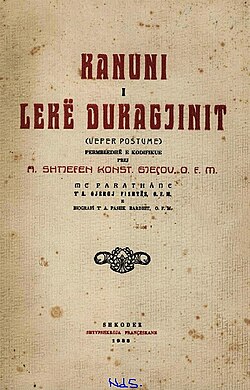
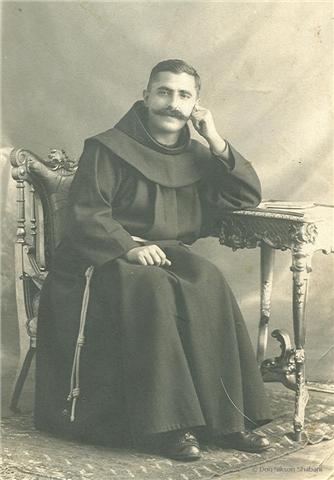
And now I ask permission that, having supported myself in my reasoning on the hundreds of Albanians who with their sharp minds drafted and formulated, and then the venerable Father Shtjefën Gjeçovi also compiled, all the materials that constitute the ‘Kanun of the Highlands’, I too can refer to a foreign author, but only one, Kazuhiko Yamamoto, professor at Kyushu University, who finally honored our nation with his study published under the title “The Ethical Structure of the Kanun and its Cultural Implications” (a work translated into Albanian by Dr. Selahedin Velaj).
According to the Japanese professor Yamamoto, our legal code, the ‘Kanun of the Highlands’, appears to be contemporary with the codes of ancient Greece, a time when these codes constituted a set of rules that functioned in the absence of state authority. These codes prevented conflicts as well as their escalation, thus preventing chaos in the society of that time.
This analysis made by Prof. Yamamoto regarding our ‘Kanun’ cannot be coincidental. The professor is educated with the Japanese Code of Law of 604 (AD) which, summarized in 17 articles, explicitly states that Peace and harmony must be respected because they are very important for relations within social groups, and that code sought to prevent conflicts, whereas the Western system seeks to resolve them after they occur.
I therefore invite the audience to pay attention to the conclusions drawn by Professor Yamamoto, that first of all, the ethical as well as moral positioning in our ‘Kanun of the Highlands’, he sees as one and the same with the norms that permeate the famous Iliad of Greek mythology. So in terms of age, he pushes the ‘Kanun’ with scientific conviction into prehistoric antiquity. On the other hand, Professor Yamamoto sees the ‘Kanun’ also as evidence of the autochthony of Albanians in their Balkan lands, if nothing else, at least contemporary with the ancient Greeks!
Without wanting to drag on now by spinning paragraphs and articles of the ‘Kanun’ related to the XXII chapter which treats in detail that much-talked-about theme which is Murder, I cannot avoid also putting into the hands of the readers of this analysis the basic criterion on which the balance of the ‘Kanun of the Highlands’ is supported. I have heard from the mouth of Captain Gjon Markagjoni, in his discussions about the ‘Kanun’, and Captain Ndue Gjomarku repeated it to me precisely after 60 years in 2002, this great criterion of justice in one of my meetings with him in New York. To not prolong it, I will quote three authentic paragraphs and then briefly a few passages from other paragraphs:
- The House of Gjomarku is the foundation of the Kanû.
- 1131. Beyond this House, there is no continuation of matters.
- 1134. In every judgment or assembly of elders, it has the right to the decisive word.
These paragraphs seem to give the House of Gjomarku unlimited power, don’t they? And to avoid precisely that fact, several points continue such as:
Gjomarku never goes as an elder. The elders are hereditary leaders, son after son. Gjomarku does not interfere in the leaders’ Kanun, only when he sees that the leaders exceed the limits of justice. If the elders do not reach an agreement, they go to Gjomarku to be judged. If they do not accept the judgment of the elders, the disputing parties go to Gjomarku but together with the elders. If the judgment of the elders was not fair, then Gjomarku decides. *If the leaders come into opposition with Gjomarku, he has the right to gather the men of the people house by house, and then Gjomarku abides by the decision of the people!
Thus, is there anything more beautiful than to have justice fully supported on the criterion of popular justice, that is, where the Voice of the People is the Voice of God, (without the slightest difference from Roman Law, which says; “Vox Populi, vox Dei”, and the latter is known to have become the cornerstone of modern justice), even though in the ‘Kanun’ the authority of the House of Gjomarku seems unbreakable, even that Great House bows its head and obeys the supreme popular will!
And since we are on the chapter Murder, there is also another great equalization: The blood of Gjomarku is equal to any blood. Life for life, because God gave it as a gift!
Before concluding this analysis of the most attacked chapter of the ‘Kanun of the Highlands’ by scholars or even artists who, some out of conformism and some out of ignorance, (but indoctrinated), danced according to the official line of the dictatorship, I want to note that alongside the chapter Murder, I had in mind to also treat the position of the ‘Kanun’ towards women who, after girlhood, was firstly a wife, then a mother, and finally a grandmother of the children of the household. While dealing with the chapter Murder, it took me more time than I thought, I am not continuing further with the issue of women in the ‘Kanun’, but in this direction I want to bring a memory of mine that speaks of an extremely serious problem.
I remember as if it were yesterday when Captain Mark Gjomarku, in a conversation, once told Father Anton Harapi that during those five years from the murder of Father Shtjefën Gjeçovi until the publication of the ‘Kanun’, the Franciscan Clergy had laid hands on the ‘Kanun’. Father Anton answered him positively with the reasoning that some things were regulated and repaired that had to be done, for example, the problem of breaking the wedding crown. This fact had remained in my mind but… unfinished.
After more than half a century, when I asked Captain Ndue Gjomarku, he not only admitted that hands had been laid on the ‘Kanun’, but also explained the reason to me. The reason for non-virginity, according to the ‘Kanun’, gave the right to the groom, the morning after the wedding, to return the bride to her family, and her father’s house had no right to take anything in return. But the Catholic Clergy was faced with a very great problem, because the wedding crown had to be broken, and its breaking could only be done with the permission of the Pope in the Vatican. So the Clergy removed that paragraph from the ‘Kanun’, which posed a great problem for the Church, while for the party of Muslim faith, it did not allow the formalization of an act that subsequently created no small complications. So even for this category of faith, this act was right.
I have mentioned this moment, which is related to the ethics of the issue of the treatment of women in the ‘Kanun’, just to let the readers know that another time, God willing, I will also treat this much-talked-about chapter of the ‘Kanun’, and perhaps I will treat even articles 112 and 113 of chapter XXV, (Theft and Plunder) to see how the early ‘Kanun’ would judge the actions today of some leaders of our state! / Memorie.al