
By Rezarta Delisula
Part Two
Memorie.al / Eighteen years is a long time – endless – as you wander from one horrific prison to another, from Burrel to Spaç; once to see a husband who has lost half his body weight, and next, a son imprisoned at a very young age. They are endless when you struggle to obtain travel permits to move from one city to another within Albania, as you suffer in horrific internment camps, leaving your books behind to tend goats in the shack where you live, hoping for a glass of milk; eating sweets made with the blood of a freshly slaughtered pig, convincing young granddaughters that their father is not an “enemy,” and carrying the burden of the pain caused by the absurd, loathing stares of others on your back…!
Continued from the previous issue
Liri Lubonja’s Memoirs: Facing Tirana
It was very difficult for her to return to Tirana after so many years. Things had changed; many events had occurred since the time she and her family lived happily. “I got off the train without looking at anyone. At the Faculty of Sciences, the first building you encountered upon leaving the station, one of my closest friends, Semirami, worked. Under no circumstances did I want to run into her. I did not want to experience from her that turning of the head to avoid seeing me, as often happened with many others. The disappointment, the pain of a friend lost forever, would be too great. Had I not already experienced it on a bus with another friend?
I had spent 13 years of school with her in the same class: kindergarten, primary, and secondary; in the communist youth, we had militated in the same organization. Afterward, until we were removed from Tirana, we met with affection. That day on the bus, she stiffened; she froze. She got off just like that,” Liri Lubonja writes in her book. In Tirana, Todi’s sister, Olimbia, was the only one who did not close her door to them while she was alone; however, after Todi’s arrest, her own husband was imprisoned, expelled from the party, and sent to Laprakë. When he returned from Spaç, that door closed forever, and after some time, Olimbia passed away. After receiving a second medical report, Liri was assigned as a worker in the sack repair unit. After his military service, Gimi, the youngest son, began working with a pickaxe.
Re-sentencing
In 1979, the Lubonja family received an even harder blow. “You cannot visit him because he is not here; I cannot tell you more.” These were the words told to Fatos Lubonja’s mother, wife, and daughter in March of that year when they went to Spaç for their regular visit. The family was terrorized. They began inquiring at the Internal Affairs Department, but no one gave them an answer. Even Todi had not received a letter from him for two months. “Zana returned late one evening from the Department and dropped the answer they had given her like a bomb: ‘They have isolated him; they are going to sentence him again.’ We adults were devastated, while the girls began to cry loudly,” says a moved Liri Lubonja.
The poor mother began writing letters to Minister Kadri Hazbiu, the ministries, and the directorate of prison camps regarding her son, but there was no response. Their suffering and fear were eased on June 5, when they finally received a letter from Fatos. At least he was alright. On June 11, they went to Spaç to meet him. “As we saw Fatos approaching the large iron gate, we were horrified by his appearance: he had turned into skin and bone, with an unusual pallor.
With frozen blood and trembling, I waited for him to speak. And what he told us was a true death knell: They had sentenced him to another sixteen years. Had I misheard? Fatos told us they had accused him of participating in a counter-revolutionary, revisionist organization and that they had permanently separated him from us. About 20 convicts had appeared as false witnesses against him in prison. What could we say to him?!” Liria recalls with great pain.
Internment in Fishtë
Finally, the exhausting jobs of Fatos Lubonja’s mother – from mixing mortar to loading-unloading and cleaning toilets – came to an end. Social security recognized her retirement. They assigned her a minimal pension, and even after letters sent to Adil Çarçani, she could not receive what was due to her. That same year, Fadil Paçrami’s family was moved from Fushë-Arrëz to Lezha, and Zana, Fatos’s wife, along with their two daughters, joined the family. Liri should have enjoyed her retirement, but not for long.
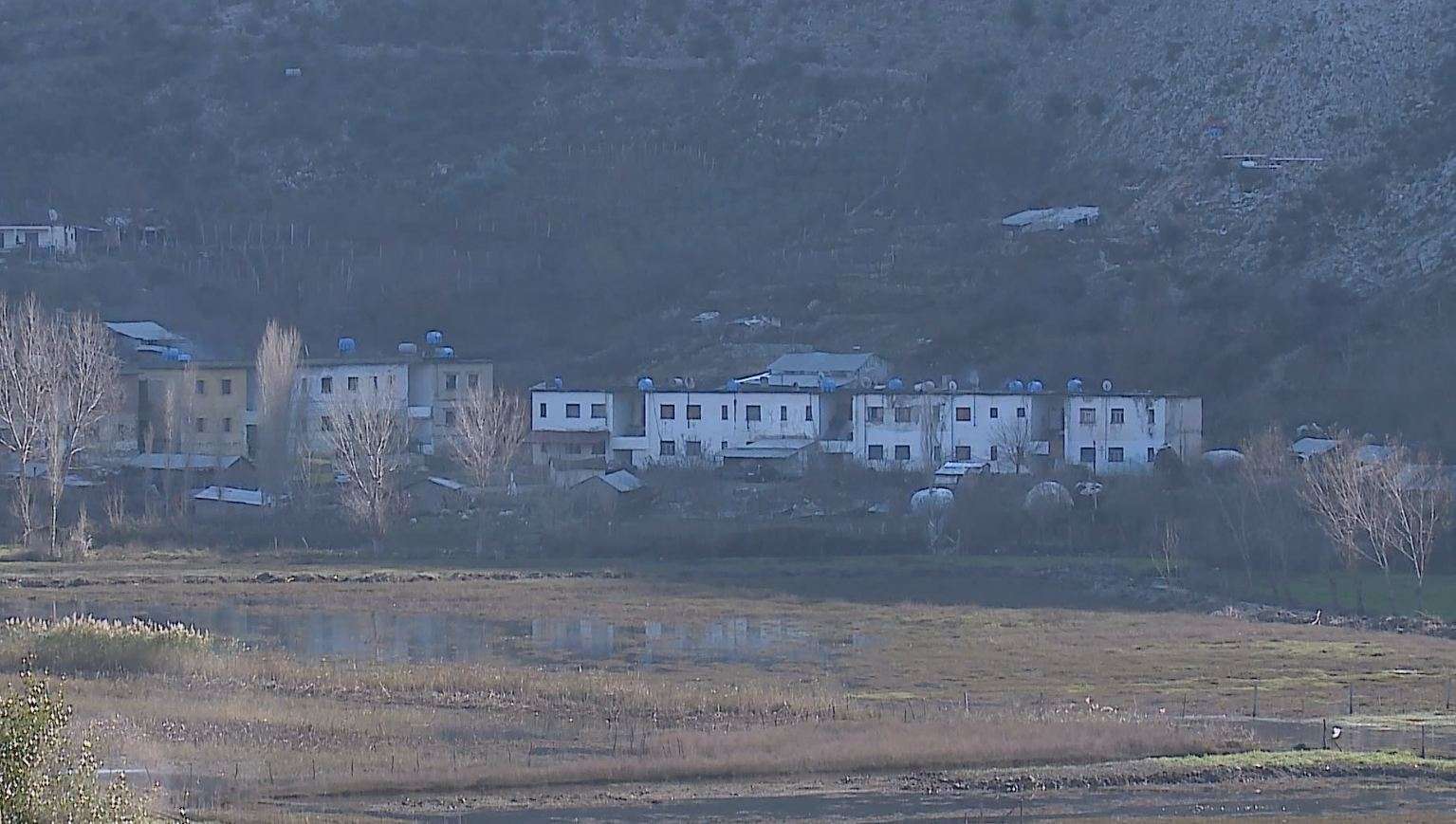
On December 22, 1982, Avni Mullaj, an employee of the Lezha Internal Affairs Department, declared the latest decision taken by the deportation-internment commission: The Lubonja family was to be interned in Fishtë. Fadil Paçrami’s family shared the same fate. The Fishtë camp was barren and dry. “Zana with the girls and Fadil’s family had arrived before us and had somewhat organized the belongings. After unloading ours, the referent for the implementation of criminal decisions, who dealt with those interned without criminal sentences, gathered us to introduce us to the regulations. Before he could start, Zana asked him insistently: ‘Why did you bring us here, what have we done?’
Even Todi, after the first letter I sent him from internment, wrote to me: ‘Ask for the reason for the internment.’ But this seemed like a useless waste of nerves and paper. Neither we, nor surely the referent, knew that on October 12, Enver Hoxha, in a plenum of the Central Committee, had made a ‘great discovery’: all the anti-party groups sentenced in the 70s – the ideology, army, and economy groups – had been branches of the hostile activity directed by Mehmet Shehu. It took only 10 days for the zeal of the Minister of Internal Affairs, Hekuran Isai, to pack our rags for Fishtë,” Liri Lubonja recalls.
Twice a day, all internees had to report to the guard of the warehouses and sector facilities for roll call. The issue of travel permits became extremely difficult; even to go to the doctor or dentist, one had to obtain permission. Fatos Lubonja had not seen his daughters or his brother Gimi for two years, so he asked for them to come and see him. But the issue was not the money; it was the travel permits. In December 1982, Fatos was transferred to Qafë-Bar. After three months, they returned him to Spaç.
The only privilege the Lubonja family had was a bathroom inside the house, while to get water, they had to walk 300 meters. Gimi tried to whitewash the blackened walls and help his mother, who had to walk long distances with heavy loads to rinse clothes. The only positive thing for Fatos’s young daughters was that when they started school, the teachers and students welcomed them well.
Amidst the suffering and poverty, Liri Lubonja along with her younger son, Gimi, began planting vegetables in front of the house to survive, while the mother sought work; she had two people in prison to whom she had to send food, and the expenses for the back-and-forth trips to get travel permits were significant.
“The only fruit we bought in 1984, a kilogram of apples, was brought by Linda from Tirana, and we saved it for Todi. At times, they also brought us cheese. When we were left without wood, and later without a stove at all, Linda would knock on the wall – a sign of invitation for me to go and warm myself at their place.” This is how Liri Lubonja remembers the difficult years in the Fishtë internment camp.
Hopes…!
“Everyone – some in silence, others out loud – nurtured hopes. Especially on the occasion of the 40th anniversary of liberation, we had one single great desire: we wanted an amnesty that would return Todi and Fatos home. Beyond that, it didn’t even occur to us to hope. Our ‘dreams’ were woven for there, in Fishtë,” Liri Lubonja writes in her book. Most people in the camp told her that Gimi might be released from internment under the amnesty, while others said it would be removed for both.
But while people hoped for a pardon, the referent declared the latest order from the commission: The family was sentenced to another five years in internment. “I met Todi for the first time after a year had passed since we went to Fishtë, in December 1983. The next permit was given to me and Gimi 10 months later, when Todi had been released from the Tirana prison-hospital.
He was reduced to fifty-eight kilograms. From the tests they had done for his glycemia, he had resulted ‘cured’ of diabetes, so the endocrinologists had removed that minimal diet they gave to convicts in prison,” Liria recalls. Shortly after this, she sent a letter to Ramiz Alia and Hekuran Isai regarding the diet issue. Todi’s food was restored, and this was the first time Liri Lubonja’s letter had an effect. In November 1985, after 16 months of requests, Liria and Gimi were able to get a permit for Spaç.
The Death of Enver
“A motorcycle climbed up from Baqel and, as it passed in front of our house, took the turn for Fishtë. We had never seen it before. Not even half an hour passed before Boxhi arrived at the gate. ‘Enver Hoxha has died,’ he told me. It seemed impossible, unbelievable. Damn it! To our misfortune, it seemed that man had become immortal. As it happens with gods. On the veranda, across the fence at Mark’s, were several men, among them the police ‘plenipotentiary,’ so after parting from Boxhi, I turned toward them with a serious face, without any particular expression.
I entered Gimi’s room and instinctively made a gesture that was unexpected, unusual for me: I knelt, stretched my hands with fists up, and whispered so that nothing would pass through the ‘sharp’ walls: ‘Gimi! He’s croaked, He’s croaked!’ Gimi was at work, but he was the only one with whom I could share the joy,” says Liri Lubonja, adding that Ramiz [Alia], in that black trench coat with the white shirt collar showing and the way he spoke, gave her the impression of a cleric.
“Because of the death of man, I had to suffer more than my share – certainly not from grief for him, but because the states of readiness that had been implemented did not allow me to go to Lezha to diagnose a low-grade fever that had started in February,” Liria recalls.
Torovica and Malecaj
On May 23, 1986, the Lubonja family was notified they would be transferred to Torovica. After writing two letters to Adil Çarçani – since the commission was under the Council of Ministers – Liria along with Gimi, Zana, the girls, and Fadil Paçrami’s family loaded their few belongings into a “Skoda” and set off for the Malecaj internment camp.
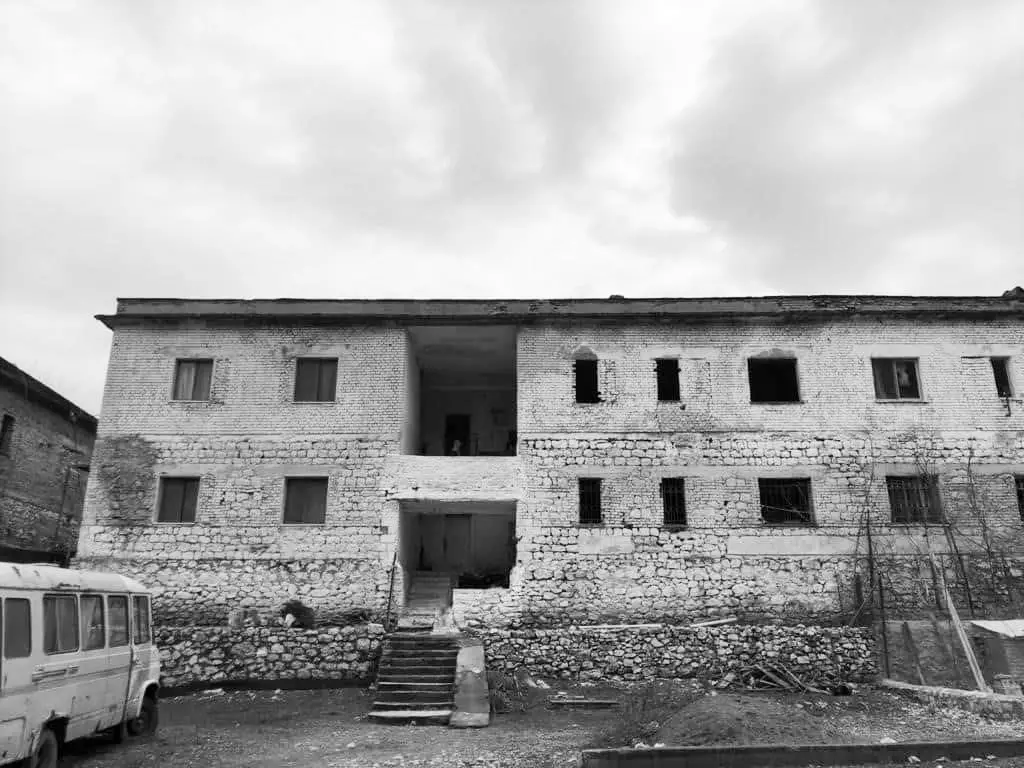
“The divisions were brick-thin, the floor isolations like those of a prison. A large, very large house, divided by panels. We even shared the water hole at the end of the camp square. It was no larger than a small laundry cauldron. While you filled water to drink, another was rinsing or washing clothes.
Oh God, how they were! I forgot, the trench where the camp’s sewage flowed was also shared…!” This is how Liri Lubonja describes the Malecaj internment camp in her book. Besides the hardships and the heavy work, Todi and Liria had one great worry: Gimi.
Since high school, the boy had started working with a pickaxe and experiencing the bitter taste of internment alongside his mother. Todi, who was still in prison, worried about his marriage, which under these conditions was extremely difficult? But it seems Gimi in Fishtë had become involved with Dila, a girl from a communist family. The brave girl abandoned everything and came to Malecaj, where she married Gimi.
The couple suffered the consequences until 1991, as only then was Dila able to get her residency registration, without which she could not start work. In difficult economic conditions, with a pension that mostly went to Todi and Fatos, and with Gimi’s small salary, the latter decided to buy a pig to rise for meat. But right at that time, an ordinance was issued for the removal of pigs, and the one they just bought, which cost a month’s pension, was slaughtered.
The Release of Todi
On June 7, 1987, after 13 years of prison in Burrel, Todi Lubonja joined his family. “Time did not move – the minutes, the hours – because the question continued to torment us: Would they really release him? Everyone kept this question to themselves. It was past 12 o’clock when a ‘Zuk’ vehicle passed the turn and headed to our entrance. We left the window and ran down the stairs. From the other ‘building,’ Teti, Ana, and Zana were rushing; behind them Violeta (Fadil’s wife) and her son Agimi. An emotional meeting that is rarely experienced.
After 13 long years, Todi was home again among us. A very beautiful letter had arrived from Fatos, full of feeling and love, expressing the joy of his father returning home. Could that be read or heard without shedding tears? We shed them without shame,” Liri Lubonja recalls. Another joy filled their family: the birth of Gimi’s first son, whom they named Eldorado. In 1989, Gimi’s second child was born. After difficult years, in 1989, other families arrived at the internment site, and finally Zana with the girls and Violeta were released from the weight of internment.
On August 15 of that same year, Liria and Gimi also received their pardon from internment. “Good winds were blowing. I cannot say I hadn’t hoped, but during those 18 years, I had made mine the proverb: ‘Happy is he who hopes for nothing, for he is never disappointed.’ Nevertheless, events rolled quickly. When we set off for Tirana, it seemed unbelievable to me that it was a journey with no return to that place. We had left so much behind in 13 years…!
How much I had learned in thirteen years about the evil, the cruel, the inhuman, but also about the good, the human, and the honest!” Thus ends the long and painful narrative of Liri Lubonja – the woman who suffered long in internment camps, but who suffered most from the imprisonment of her husband and her newly graduated son on a false charge! Memorie.al