By Reshat KRIPA
Part Eleven
Memorie.al / Arbër were standing in his corner in the hall, waiting for the arrival of the plane that would take him to another world, and he was meditating. He meditated and dreamed of the path full of nettles and thorns, through which his life had passed. He remembered the worries that had accompanied him for years. He had many passions. He wanted to become a lawyer, journalist, doctor, engineer, artist, writer, or anything else that was possible. But fate had condemned him not to reach any of the dreamed-of peaks. He encountered disappointment at every step of his life.
Continues from the previous issue
Arbër and Blerina had made it a habit to meet every afternoon after work hours and go for a walk or sit somewhere and talk about their dreams. But that afternoon, Arbër was gripped by a great tension. The conversations he had with Ibrahim, and especially when he learned that his brother had been released, further fueled the suspicion he had about his friend.
Nevertheless, he managed to maintain the same relationship with him, letting him understand that their friendship remained the same as before. In reality, he was not calm at all. Resul and the words he had told them when they met in front of the house kept popping up in his mind. He connected both these things together. That afternoon, he had decided to tell his fiancée everything.
– “Blerina,” he said, “I want to tell you something that has worried me a lot lately.”
– “What is it?”
– “For more than two months, Ibrahim has been provoking me, asking me to start an activity against the government.”
– “Has he gone mad?!”
– “I don’t know, but I have another suspicion.”
– “What suspicion?!”
– “Although I shut him down from the beginning, he doesn’t withdraw but continues. What surprises me more is that his brother has been released from prison for several days, without serving even half of his sentence!”
– “And then?”
– “Today we live in a difficult time. You can’t trust even your closest person. That’s why I suspect that Ibrahim might also be involved in this dirty game. His brother’s release strengthened this suspicion even more.”
Blerina did not speak. They remained silent for a few moments. Both were immersed in their world of conjecture.
– “I don’t know how to answer,” she finally spoke. “It seems unbelievable, considering the friendship you have.”
– “The history of these years has shown that for some personal gain, even brother has turned against brother, let alone friend against friend.”
– “As long as we don’t have any sign of this nature, let’s not jump to conclusions. In any case, you must be careful so that he doesn’t realize you’ve become suspicious. Let’s wait.”
– “Blerina, I want to speak openly with you. I have a bad premonition. Do you remember what Resul said when we met in front of the house: ‘Later you will hear his tune.’ It seems to me that this is the tune he mentioned. Both events are linked. They have the same command.”
– “You think so?”
– “Yes. I will be the victim of this, so I want to tell you that in case the earthquake falls on me, you should not suffer its consequences.”
– “That earthquake, if it falls, will involve both of us. We are connected forever.”
– “No way. You have your right to live normally, and that’s how you should act. You have my permission.”
That evening, mother Afërdita had prepared a yogurt casserole with lamb, which she had managed to buy at the market. It was Arbër’s favorite dish. She was sitting in an armchair, waiting for her son. Hours passed, and he was not showing up. Usually, walks with Blerina lasted until about nine o’clock, but now it was approaching ten and her son was still missing.
– “Where are you, my son,” the mother asked, “don’t you know how worried I am?!”
A thought told her he might have met his friends. The hours passed, and he was not showing up. She remembered Ibrahim.
– “Should I go see if he’s with him?”
Their houses were very close, no more than one hundred meters away. She set off. He opened the door himself.
– “Is Arbër not with you?!” she asked him.
Ibrahim trembled. He realized that Arbër had become a victim of his statement. He didn’t expect this to happen so quickly.
– “He met some school friends and went for a drink. He must be there,” he told the mother with a voice that barely came out.
The city clock chimed eleven times. The mother returned home. She sat by the window and watched the road from where her son would come. Her worry had reached its peak.
– “Where are you, son?” she constantly whispered, moving from one side of the room to the other.
She approached the window, opened it, and looked outside.
“Has one of those street hussies fooled him and lured him away?” she thought. “No, no, my son is not like that. He has already committed his fate,” she answered herself.
She returned to the room again. She grabbed her hair and pulled it strongly. But she did not feel pain. The pain was in her heart. She began to lose her memory. Her eyes rolled back. She stood frozen for a few minutes and then collapsed to the floor.
Meanwhile, the sun had just risen. A ray of it entered the room through the window and straight into the mother’s eyes. She regained consciousness. She heard a knock at the door.
– “My son!” she cried and immediately got up and ran toward it. She opened it.
– “Mother, what’s wrong!” Blerina asked when she saw her in that state.
– “Where is my son?”
– “Isn’t Arbër inside?”
– “No.”
– “He must have left early today?!”
– “No, my daughter,” the mother composed herself. “My son hasn’t come home at all tonight.”
– “What? He hasn’t come at all!?”
– “No.”
Blerina froze. The conversation she had had the day before and his last words came to mind. But seeing the mother’s condition, she composed herself and said:
– “Come, let’s go inside!”
They went into the room. Blerina sat the mother down on the sofa.
– “Lie down to calm yourself,” she said. “He must be somewhere around here.”
She got up, took a glass of water, and gave it to her.
– “Drink it, it will calm you down.”
The mother drank it.
– “Find my son, my daughter!”
– “Alright, but promise me you’ll stay calm.”
– “Alright.”
– “Then I’ll go out and find him.”
She left without knowing where to go herself. She announced that she would be absent from school that day and went to see Petrit. He was extremely shaken.
– “Where could he have gone?”
– “I don’t know.”
She told him about the suspicion Arbër had expressed.
– “Could they have arrested him?!” he said.
– “Maybe.”
– “Or perhaps he took the road to escape, to avoid prison?” he asked, without knowing why himself.
– “Arbër would never do such a thing at a time when we have just gotten engaged and are preparing for marriage. He would never leave his mother alone. He would rather accept prison than abandon his family.”
Meanwhile, the mother continued to wait for Blerina’s return. It seemed to her that at any moment, they would enter the room together, as on other occasions. Suddenly, a loud knocking at the door was heard. It seemed as if they would tear it from its hinges.
– “What’s wrong, have you gone mad?!” she cried out, opening the door, but she froze in place.
In front of her stood a civilian and two soldiers.
She recognized the civilian. He was the Security Operative from the enterprise where she worked.
– “What do you want?” she asked, but this time with a calmer voice.
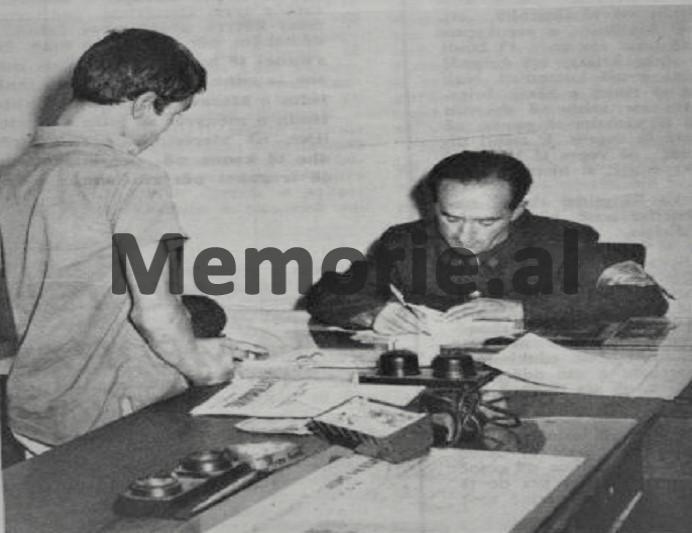
The Operative pushed her forcibly, and they entered. Without speaking at all, they began to search everything. They left no closet, shelf, or drawer unchecked. They even searched Arbër’s clothes. They found nothing.
– “We have arrested your son as an enemy of the people,” the operative told her as they were leaving.
– “Weren’t you satisfied with my husband, but you took my only one too?” she shouted after them.
The operative turned his head and stared as if he would devour her. The mother stood up to him, without a single muscle trembling. That’s how she had stood even when they arrested Sokol.
Meanwhile, Blerina and Petrit were returning. They heard the mother’s last conversation with them and rushed inside.
– “Mother, what happened?” they asked in unison.
– “Come inside,” she told them, “Arbër has been arrested.”
No one spoke. They had no words left.
A special place in Arbër’s life during those years of serving his sentence in prison was occupied by the figure of Xhavit, the brave machine gunner of the nationalist forces in his region. He became like a second brother to him. He loved him so much that he was ready to sacrifice anything to help him. They ate bread together and had beds next to each other.
He had a Great Spirit and heart. They recounted that in the battle the nationalist gang waged with the fascists, he would shoot at the Italian flag that waved opposite him. When his friends asked him why he didn’t shoot at the soldiers but at the flag, he answered:
– “I want to break their pride.”
He continued shooting until the flag fell, and with it, the Italians were also defeated.
After the war, he did not surrender but remained in the mountains for more than a year, fighting for violated freedom. He was betrayed by a man of his clan, where he had gone for a bite of bread. While he was washing his head and it was covered in foam, the People’s Defense Forces arrived and arrested him. He stayed in the Security cells for a year. But he did not lower his head.
– “Keep your heads up!” he would call out to his friends from the cell.
The court sentenced him to death, which was later commuted to life imprisonment.
The end of December. It was frosty; a cold, melted snow was falling. They were returning exhausted from the laborious work. They were soaked to the bone. Arbër began to have shivers. As soon as he entered the camp, he lay down on the bed.
– “Get up, let’s go to the doctor,” Xhavit told him.
Carried on Xhavit’s shoulders, they arrived at the infirmary. As soon as Doctor Istrefi saw him, he admitted him. He put the thermometer in. It showed $40^{\circ}\text{C}$. Arbër would never forget that night when his life fought tooth and nail with death. In that battle, the main protagonist was the doctor. He stayed over his head all night, changing cold-water towels that he placed on his forehead, the only means he had available, besides some aspirin or other medicine of that kind. In his delirium, he heard the doctor’s whispering words. He spoke to him about his family and friends, and Arbër felt as if they were close. Finally, the doctor’s persistence triumphed over death. Near morning, the temperature began to drop.
He hadn’t even recovered yet when he was notified that he would be transferred to another camp. The doctor strongly requested to keep him, but the drum beat on deaf ears. The separation from the doctor made Arbër feel abandoned to the mercy of fate. It seemed as if he had lost his support. He expressed this feeling to him. The doctor began to tell him that in the other camp, he would find many other men he could rely on.
– “I am young,” he told the doctor.
He didn’t let him continue. He stood up and, in pure French, recited the verses of Cid, from Corneille’s tragedy:
“Je suis jeune, il est vraie,
Mais aux âmes bien nées,
La valeur n’attend point,
Le nombres des années”
(I am young, it is true, but in well-born souls, value does not wait for the number of years).
The verses worked like magic in his heart. A feeling of self-confidence filled his heart. The previous feeling of spiritual brokenness had disappeared.
The next day, they set off for a camp in the South of Albania. The weather was very bad that day. A torrential rain began in the morning. It thundered and lightened as if everything would be submerged. Once it calmed down a bit, they got into the cars and left. Their bundles were loaded onto another car. They passed cities and bridges. Finally, they stopped. They were taken off and ordered to take their bundle on their shoulder. There were no more roads for the cars, so they had to walk.
The camp they were heading towards was located on the top of a high hill. The rain continued to fall, although not with the previous intensity. The police escorting them were wearing large capes and boots, so they did not get wet. The prisoners were soaked. Nevertheless, they were forced to walk on a muddy road, with the bundle on their shoulder, where they often slipped and had to get up immediately, otherwise the guard would come with a whip in hand and strike them wherever he could, saying:
– “Get up; you are hindering your comrades!”
The convoy of slaves continued its journey. After almost two hours, they arrived at the camp. They entered the barracks as best they could. Arbër opened his bundle of belongings. A set of clothes, which were in the middle of it, and a blanket had survived without getting wet. He was immensely happy. He changed quickly and wrapped himself in the blanket. They spent that night wrapped up like that, on the wooden planks of the barracks beds, shivering from the cold.
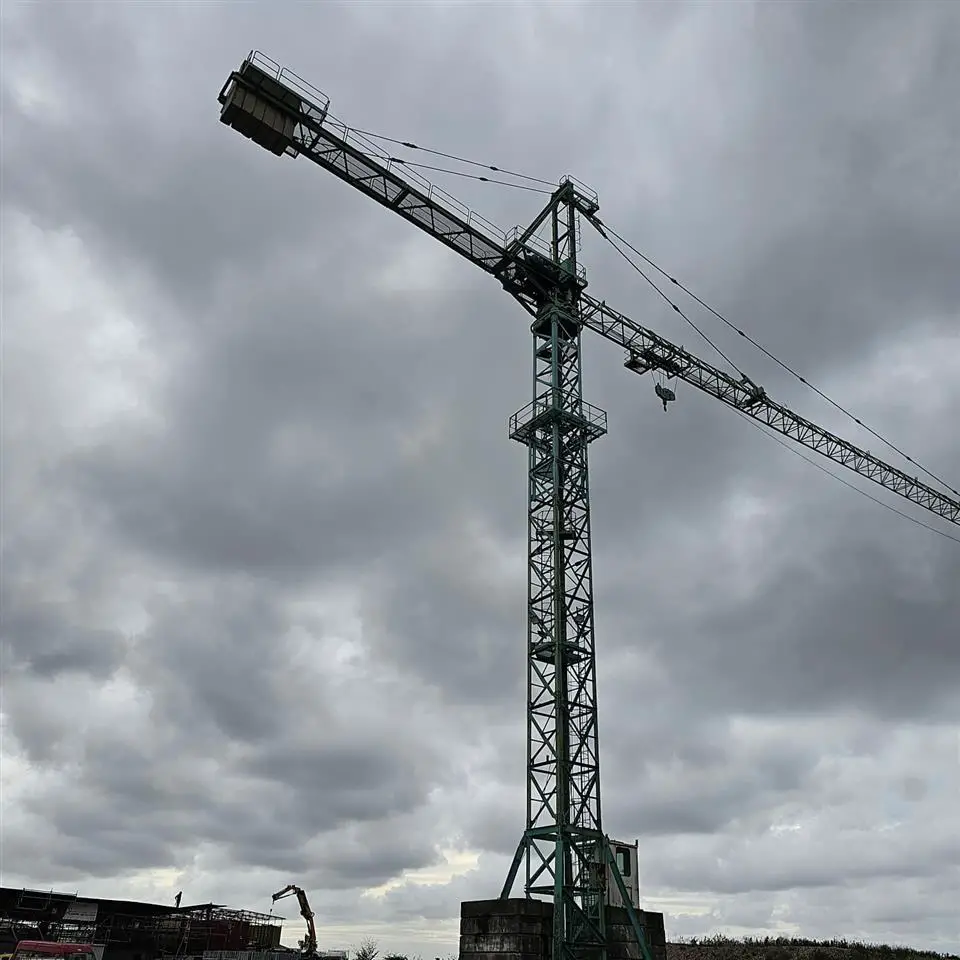
In the camp, work was being done to dry up a swamp. For this, a long canal, about six kilometers, had to be opened. The first kilometer of it, due to the mountainous terrain, had to be excavated up to thirty meters deep, where large concrete pipes were placed for the water to pass through. Up to the first ten meters of depth, the digging was done by hand and the soil was transported with wheelbarrows, along a zigzag path. Then, its extraction was done with cranes and transported with wheelbarrows.
The work was difficult and had serious consequences. Accidents were numerous. The platform for the crane made of beams and planks had just been finished. The crane operator was a young man. His name was Qemal. Arbër often stayed with him and they talked. He was a cheerful and humorous boy. After four months, he would be released. He mounted the crane, attached the counterweights, and began to rotate it, to test it. When they reached the outer side of the platform, two planks that had been forgotten without being fastened were lifted by the weight of the crane.
Qemal flew and fell into the canal from a height of more than ten meters. Immediately after him, the crane also fell, burying him about one meter into the ground. The death was horrifying. It had frozen his smile. His comrades, including Arbër, went down, dismantled the crane, and took out the mangled body. In the afternoon, they buried him in the designated place for the dead, a few steps outside the enclosure, on the upper side of the camp. No one was held accountable for this accident.
They were working on digging at the bottom of the canal. The depth had reached over twenty meters. Usually, a block of soil, with dimensions $80 \times 40 \text cm, was left unexcavated in the middle of it, to calculate the volume of the soil. Calculations were made every evening. You were obliged to meet the norm; otherwise, you would be left without your ration of bread and evening tea. The prisoners called these blocks of soil pyramids. Its height had reached almost two meters.
Skënder, the son of a well-known personality in Northern Albania, was working at the bottom of the canal. He sat down next to such a pyramid and lit a cigarette. But fatigue and weakness caused the cigarette to slip from his hands, and he fell asleep. He leaned against the pyramid. The guard who controlled the prisoners was approaching. Arbër, who was working with him, saw him and called out:
– “Skënder, get up, the guard is coming.”
In an attempt to get up, sleepy as he was, he leaned more forcefully out of haste. The pyramid collapsed. A terrifying scream was heard. The dirt had fallen on him. Arbër and the other comrades tried to lift him, but he couldn’t move. He had great pain in his back. He had remained hunched over. The comrades took him with difficulty and placed him on an improvised stretcher. They transported him to the camp’s infirmary.
Doctor Istrefi, who had only been at the camp for a few days himself, examined him and concluded that he might have broken his spine. Poor Skënder, from the waist down, was paralyzed. Amidst the pain, he asked the doctor:
– “Doctor, will I be able to survive, to see my mother once more?
His mother, along with other family members, was interned in a village in Southern Albania. The doctor knew that there was no more hope for him. Nevertheless, he constantly gave him courage:
– “Just a few days will pass, and you will get better. You will go to the hospital and be cured.” But the camp command had not even considered taking him to the hospital. He lived a few more days and closed his eyes. He was also buried in the designated place.
Meanwhile, the years passed. Arbër had been moving from one camp to another for more than twelve years. Everywhere the same condition. Everywhere the same treatment towards the prisoners. But outside, the situation was no better either. A deep economic crisis had gripped the country. The rationing system, now called the tollona system, had returned.
Nevertheless, state propaganda tried to keep the people’s enthusiasm alive. Newspapers and television spoke every day about the incomparable successes the country had achieved. An unprecedented indoctrination prevailed in almost the majority of the population. The “new socialist man” that the system had built was greatly heralded. Consequently, this had led a part of them to turn into mannequins who acted only according to the conductor’s baton, who was at the head of the country. Memorie.al