
By Fatbardha Mulleti Saraçi
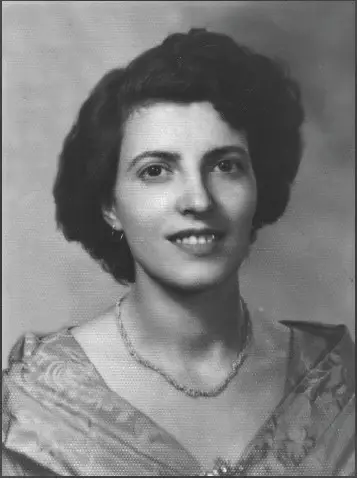
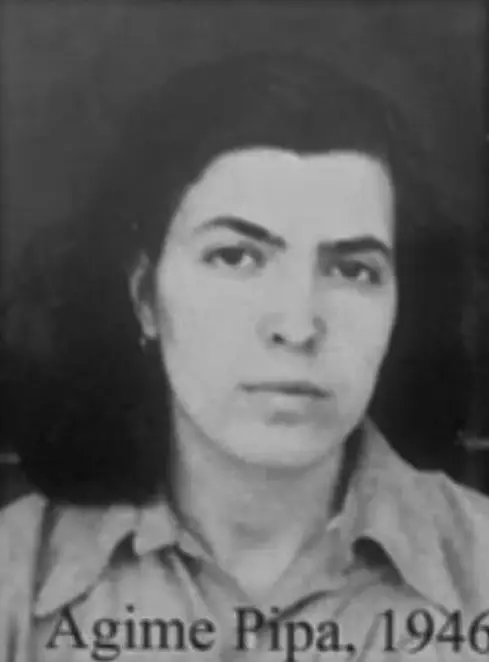
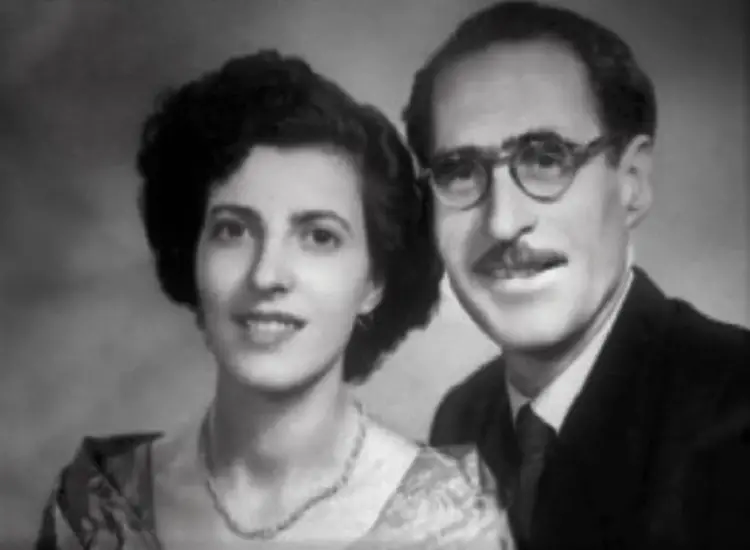
Memorie.al /Agime Pipa Aranitasi was born in 1924 in the city of Shkodra, but the origin of her parents is from Libohova in Gjirokastra, from where their family had long since moved to the northern city. Agime’s two parents, father Sei Pipa, a pharmacist, and Fatima, a housewife, raised and educated seven children, six girls and one boy. The two older sisters graduated from the “Queen Mother” Institute in Tirana, while the younger ones, Fiqireti, Gjyli, Sinja and brother, Luani, attended the state high school in Shkodër. Agimja, the third among the girls, finished primary school as well as fourth grade at the high school “Donika Kastrioti” in the city of Shkodra. She attended the four years of high school at the Women’s Institute of Tirana, and then called the “Mother of Skënderbeu” Institute in the branch of the classical high school. She had very good results, she aspired to attend university, but her aspiration for high school was not realized, because another fate followed her…!
She would enter a little later in another, dark, deep, bloody school…! Agimja had never been involved with the communists in their affairs, understanding well since then, where they were aiming and maybe about communism, she had listened to her close cousins, the brothers Myzafer and Arshi Pipa. In addition, she had read articles and books about communism in Russia and the October Revolution that bloodied that country.
It was those books that opened his eyes and showed him what awaited our country in the future, in the years to come. In 1945-’46, Agimja was appointed as a teacher in two primary schools in the city of Shkodra. During this short period, she with extraordinary zeal has tried a lot for the education of children, cooperating with the students by reading books, as well as in the compilation and publication of a magazine “Burimi” for the little ones, where she did the work of editor.
In education meetings, she persistently defended the student’s individuality, which was in danger of being suppressed, damaged by tendentious techniques in the design of social subjects of that time. And then the right, the truth was not understood or misunderstood, distorted, falsified. The individual was considered a tool, a machine to implement the instructions that came from above.
Based on her attitude and the biography of the family, at that time, the people of the State Security began to surveil her as they surveilled any intellectual who did not cooperate with them. She did not break from their pressures and remained very dignified, like all her family circle, who were protected and educated with a western culture, since many of them had studied abroad.
In the Postriba Uprising on September 12, 1946, Agimja was arrested by the State Security and she was the first girl, in the communist prison of the city, on the charge of “agitation and propaganda against the popular power”. She stayed a year and a half in the interrogator, in rooms with men, or in isolation. In the watery dungeon of the Internal Branch of Shkodra, without any bedding, she used the pillow where she had her bread and under her ribs, her shoes with rubber soles.
After several sessions of questioning, by the diligent officers of that Internal Branch, where most of them were selected because of their extreme indoctrination and their criminal character, who also used the electric current, putting it in her ears.
At the end of the investigative process (with investigator Pjerin Kçira), the trial against her took place inside the Prison of the Church of the Friars, without a lawyer at all, as required by law.
In conclusion, the Prosecutor’s request was to sentence her to ten years in prison, but the Court, seeing that there was no evidence against her, decided on four years, a sentence which she served until the end, with suffering, but with peace of mind. (Protecting the truth), without taking anyone’s neck, denying any involvement with others.
“And those monsters,” said Agimja, “they didn’t punish me for four years, but for the rest of my life, since after being released from prison, in a continuous surveillance, we were waiting for the fight for “existence” In this regard, Agimja continued the confession hers, saying: “When I returned home, I found the family in great misery.
The sisters’ two husbands, Ibrahim Dibra and Tefik Bekteshi, were in prison. My previously highly regarded sisters were expelled from all schools, unemployed, without bread and food and as if that was not enough, at the same time we were asked to pay “life tax” as it was called and we lived with manual labor.
After so many years, when I remember how patiently I faced those cruel sufferings in the Shkodra prison, my mind goes to my mother, who with my sisters and brother, lived my ordeal, with extreme difficulties. My mother did not leave the prison doors, both for me and for Myzafer, our cousin, who had stayed in Shkodër, near his lawyer’s office.
Seeing him often at the door of the Department of Internal Affairs, with loot, those of the State Security, after having committed the crime of his (Myzaferi’s) physical disappearance, called his mother Fatima, to officially confirm the version of the murder. , which was “for attempted escape from prison”.
With the altruism that always characterized her throughout her life, this mother stood out to me as a major figure and a reference point of high virtues.
In the most difficult moments, mine was my strength and support, an example of patience and selflessness. I wonder: what pain must have pierced her soul, when on the way the policemen who were going to take me from one prison to another, pushed her not to approach her daughter, who was seeing her outside hell after a year.
How many tears will she have shed, when she saw my skirt, with a hole the size of a button, woven with the strands of my hair, what a heroine mother she was to face me with courage, the disasters of the communist terror, which fell on the children of her?!
After leaving prison, I isolated myself at home, I was under the constant surveillance of State Security agents, (who in prisons told us that we would have them closer than the shirt of the body, whenever and wherever), when I was outside the walls of the prison, I had the only preoccupation, to help the family to reward the sacrifices and provide a living.
We turned the house into a small sewing workshop; we worked carefully, because the controls surprised us. In such conditions, it seemed quite normal to me when I decided to marry Mit’hat Aranitas, a well-known intellectual, who, after prison, was exiled to Çerma in Lushnje.
The same atmosphere of struggle for survival, maybe wilder, but I was happy that I loved him; he was a very good man. Together with our only daughter Odeta, we started after Çerma, the 30-year period of deportation to Dushk.
I worked as a laborer in agriculture until I retired, together with my husband Mit’hati, who in the meantime continued intellectual work in parallel. We lived in barracks, suffered the anxiety of the child’s fate, the constant pressures from the power of the dictatorship of the proletariat.
But we never broke morally. We currently live near my daughter’s son-in-law in Tirana, my husband also died here, while I continue to live near them, awaiting settlement from the state”.
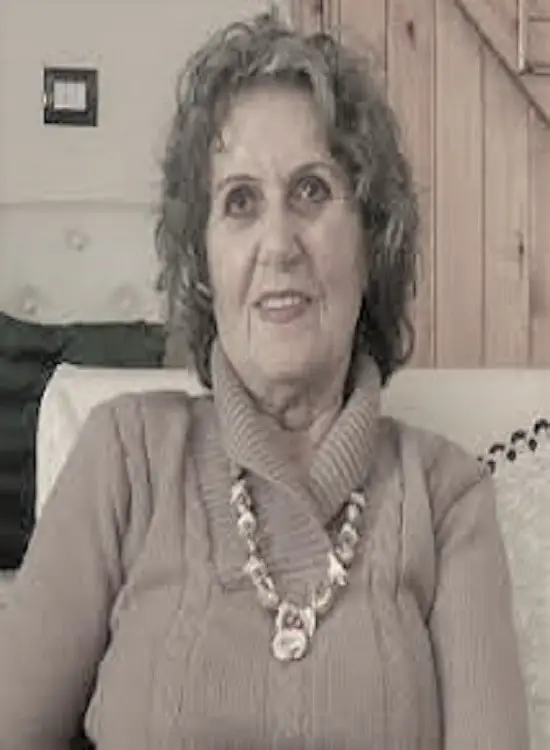
This is where my conversation with Mrs. Agime Pipa Aranitasi and as we talked, I could clearly see the suffering and pain on her face, which seemed to be firmly sealed there. A long suffering, almost her whole life. Her eyes showed little joy and a lot of suffering and pain. The drama of a life of true martyrdom. And when I talked to him, from those restrained eyes, a light full of sweetness, tenderness and hope shone, which warmed the heart.
Ms. Agime Pipa-Aranitasi, closed her eyes forever in May 2001. As a sign of respect for that lady and martyr at the same time, I decided to publish her life, in the book “Dhimbja 2”, which is part of the cycle “Shkodra women, of political prisoners of the communist dictatorship”. Memorie.al