


By Nafi Çegrani
-An essay on Albanians and the new chauvinism in Macedonia –
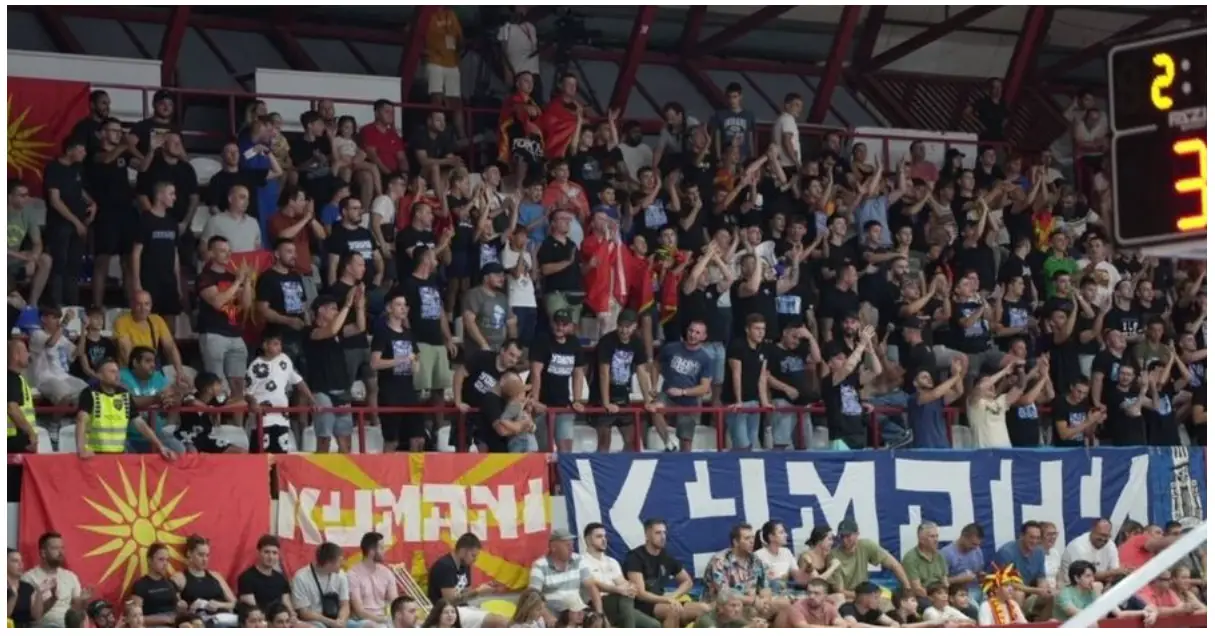
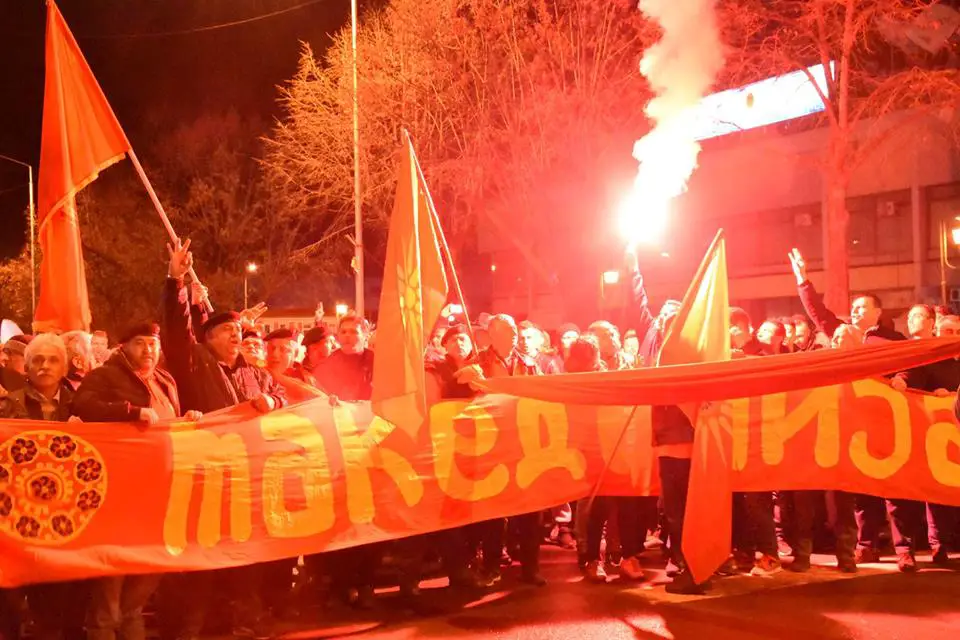
Memorie.al / At a time when humanity is trying to build bridges of understanding, in an increasingly turbulent world, in the heart of the Balkans, the shadows of the past are being revived, with a language that knows neither reason nor human conscience. In the media, forums and social networks of North Macedonia, calls such as; “Death to Albanians”! Or “Albanians should be burned in the oven”! Have taken root, which are more reminiscent of rhetoric of war than a climate of democratic coexistence.
On the surface, these may seem like emotional outbursts of irritated individuals, but in essence they represent a dark chauvinistic spirit, an old ideology that continues to feed on hatred and the myths of a “pure nation” on which a new political order would be built. And when such an ideology is not condemned, but tolerated, it becomes a collective danger – to coexistence, to security, to democracy itself. This climate is not new to Albanians living on their own lands in Macedonia.
We have gone through waves of historical denial, institutional discrimination and constant attempts to devalue our collective identity. We have endured the storms of centuries, we have preserved our language, culture, memory and roots – but we cannot remain silent when everything human is once again called into question by the primitive spirit of ethnic chauvinism. Philosophically, hatred is an expression of fear and the lack of a secure identity. A society that does not know itself, that does not build its history on human values, tries to show its strength through the humiliation of the other.
And when the “other” is your citizen, your fellow citizen, your neighbor – then that society is no longer a society, but a crowd manipulated by destructive passions. To shout today; “death to Albanians”! is not simply an insult or a threat – it is a moral crime, it is a denial of the very foundations of civil coexistence and of every principle of the modern world. This is an act that requires political, legal, ethical and social punishment. Silence in the face of this phenomenon is not neutrality, but complicity. We Albanians do not ask for mercy. We ask for justice. We ask to be equal in our common homeland. We do not ask to rule, but not to be ruled.
We demand that our children learn in their native language without feeling shame or fear. We demand that we not be “others” in history, but co-creators of it. In the end, this is not a question of ethnicity, but a question of humanity. It is not a battle for power, but for dignity. It is not an Albanian-Macedonian conflict, but a confrontation between hatred and reason, between dark ideologies and aspirations for a just society. If we want a future for all, then we must have the courage to stop evil at its roots. To call chauvinism by its true name. To build a civic consciousness where no one is threatened for who they are, for what they speak, for what they represent. Because there is no peace without justice, and there is no coexistence without respect.
… And now that we are in a world troubled by dark forces, we must try to rebuild bridges of understanding, through dialogue and intercultural cooperation. But, alas, it seems that in the heart of the Balkans, the shadows of a dark past are being reactivated, refusing to be transformed into a lesson for the future. The languages of hate, which should have been extinguished in the collective consciousness after decades of conflict, are now returning with shocking intensity on social networks, in political tribunes and in the public space of North Macedonia.
I reiterate that the Albanians of Macedonia know this climate well. They have lived throughout the past century through exclusion, silent assimilation, institutionalized discrimination and denial of their identity. They have faced oppression not with hatred, but with patience and awareness. They have preserved their language and culture, not as weapons against others, but as a means to survive with dignity. But now, when we thought that painful history was left behind, we are once again faced with a rhetoric that has no place in any democratic order.
Hate is not born of strength, but of insecurity. It is the voice of fear and the lack of a healthy identity. A nation that lacks self-confidence builds its pride on the humiliation of the other. And when the other is your neighbor, your fellow citizen, someone who speaks a different language but shares the same sidewalk, the same air, the same land – then we have entered a dangerous era, where citizenship risks being replaced by modern tribalism.
Calling for the death of Albanians today is not simply dangerous rhetoric – it is a criminal act. It is a denial of every moral norm, every constitutional principle and every aspiration for coexistence. It is required that society, institutions and political elites no longer stand on the side of conformism or fear, but react with courage. Because silence in the face of evil is a betrayal of the future. This is not a battle between Albanians and Macedonians – it is a confrontation between hatred and reason, between the dark ideologies of the last century and the dream of a common future. It is time for the society of North Macedonia to choose: will we move forward as equal citizens, or will we turn back as inherited enemies?
They are evidence of a deformed political and social spirit, which finds support or silence in some ideological circles that remain hostage to the nationalisms of the 19th century, which still dream of pure ethnic states, forgetting that history has judged these illusions with blood. As autochthonous Albanians on this land, with millennial roots in this ancient corner of the Balkans, we are accustomed to weathering storms – but not to remain silent in the face of the return of the hunt for hatred, which evokes dark memories of the “night of the long knives” and the bayonets of Slavic-majority ideologies.
Instead of building bridges of democratic coexistence, we see the raising of flags of hatred, which poison the minds of new generations and undermine every effort for equal social and political integration. Albanians are not strangers in this country. We are not newcomers, but a fundamental part of the history, culture and development of this space. Becoming Albanian in Macedonia today is not simply a matter of identity, but an act that requires courage, wisdom and constant dedication to maintain the fragile balance between existence and dignity. But can a society be called democratic, if in its heart it allows slogans to be chanted that call for the extinction of another people?
We demand that the human spirit not be trampled under the feet of hatred, because every such wound disrupts peace for everyone – even for those who chant today, but tomorrow will live in a more insecure and spiritually poorer country. Let us raise our voices not with cries of hatred, but with words that heal, with actions that build. Because the time of peoples is common, and no nation is great if it builds its greatness on the ruins of another. If we do not act today, these wounds risk returning tomorrow, deeper, more painful, and this time – for everyone. / Memorie.al
Two words about the author
Nafi Çegrani is one of the most special figures of Albanian thought and resistance in North Macedonia. Born in the historical land of Çegrani, he represents more than an intellectual – he is the voice of a generation that did not give up, a living memory of a time of confrontation, and a symbol of an unwavering commitment to truth and justice. Raised with sensitivity for the national cause and deep ideals for freedom and dignity, Çegrani chose neither silence nor compromise. On the contrary – his confrontation with the infamous UDB Service, especially before and after 1981, placed him at the forefront of the moral struggle against oppression and assimilation. Nafi Çegrani is a voice that challenges oblivion, a living memory that calls for reflection and documentation. He remains a rare witness to a time that was humble, but always enlightened by the Albanian ideal of freedom, equality and identity. His writings are a call to the collective conscience – not to forget and not to surrender in the face of injustice.