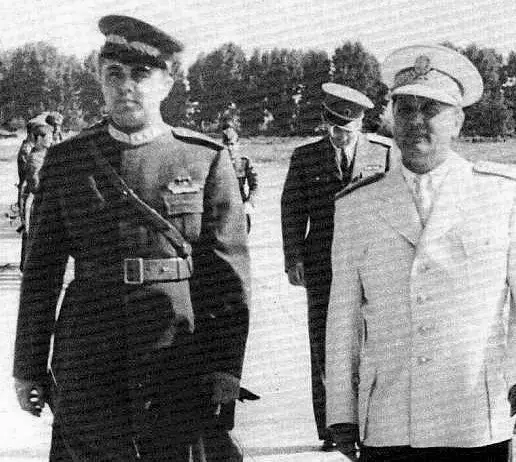
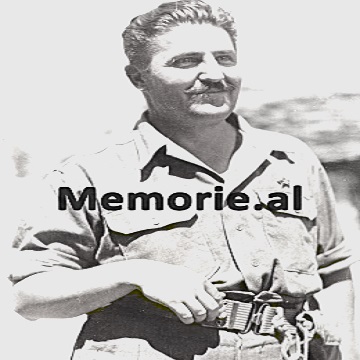

Memorie.al / The testimonies of the historiography of the Albanian mother state have clearly defined the major role of Belgrade’s envoys in the creation of the Albanian Communist Party in Tirana. This role, at that moment, was highly determinant, considering that communism as a doctrine was entirely unknown and, furthermore, did not suit the moral constitution of our people. Given that in the years 1939-1940, in Albania, Kosovo, and Albanian Macedonia, nationalist resistance was growing significantly to offer the nation its ethnic borders as the only solution, we become fully convinced that the “aid” from Belgrade was neither brotherly nor sincere, as the Albanian communists of those years sought to portray it.
Albanians also held a powerful impression that prevented them from opening the doors wide to communism. This impression was linked especially to the German attack against Belgrade (April 1941), an event through which the old dream of Ethnic Albania was revived in the regions of Kosovo and Albanian Macedonia. Whether we like to remember it today or not, I believe that Albanians across all our ethnic lands, before listening to communist “fairytales,” were determined to fight to rectify the injustices from which warm blood still flowed. Meanwhile, some of the early ideologues and leaders of communist groups in Albania had entered a dead-end street, seeking to seize the mantle of the nation’s savior.
They held several meetings in 1941, but instead of uniting to present alternatives, they quarreled over the division of seats and, moreover, lacked clear visions of what needed to be done at that moment. This situation of the Albanian communists in 1941 is described very accurately in a detailed report that Koço Tashko sent in the autumn of 1942 to the leadership of the Comintern, stating among other things:
“On the other hand, I was aware that the comrades proposed by me from all groups, however sacrificed for the cause and unsparing in their work, lacked the necessary political preparation to be members of the Central Committee (this fact was also pointed out to me by Comrade Miladin), meaning to understand the political and economic problems of Albania…! I hoped these major shortcomings would be avoided by the time the Party Congress met, through the presence of the two Yugoslav comrades, Miladin and Dushan, as instructors. In short, I handed over all responsibility to these two comrades (though I had no idea of their past), solely based on the recommendation of the Central Committee for Kosovo and Metohija of the Yugoslav Communist Party.” (Central State Archive – Tirana, Fund 14, File 5, Page 4).
From this authentic document by one of the primary communist leaders in Albania during 1940-1944, it is easily imagined that relations between the communists of the mother state and those of Belgrade could not exist as a partnership or brotherhood. These relations were conceived from the start as a relationship of vassalage, where the former, the Slavs, would direct all the “deeds” of communism in Albania, while the latter, the sycophantic Albanian communists, would struggle through the labyrinths of Serbo-Slavic policies, selling their honor for a blood-stained chair once Albania was “liberated.”
The Slavic communists, sensing the danger of the growth of the Albanian nationalist movement – a movement which from the beginning spanned all our ethnic borders – intervened energetically in the communist movement, at least to dominate it and then, through old Serbo-Slavic ruses, to ignite a fierce fratricidal war in Albanian lands. Thus, in the summer of 1942, they launched an initiative in Kosovo, a tract calling upon the Albanian people there to take up arms to fight against the common enemy, fascism. The masters of Belgrade did not desire the freedom of Kosovo; had they desired it, they would have at least allowed Albanians in their ethnic lands to live without that ordeal of suffering.
Instead, they sought an uprising against fascism to maintain the status quo of the border organization after the disastrous year of 1913. Although the proclamation distributed in Kosovo also bore the signature of the Albanian Communist Party, it was immediately understood that it had been “cooked” in the kitchen of Belgrade, as it lacked any mention of what would happen the next day to the fate of the Albanian people in Kosovo. This miserable position of the communists of the mother state – who prioritized their internationalist slogans and forgot the three decades of suffering of their blood brothers – is evidenced by their own documents. Precisely in 1942, the communists of Tirana were forced to testify that:
“For the Albanians of Kosovo, who constitute 50-65 percent of the population there, as well as two-thirds of the population of Old Albania (the 1913 borders), our Party has systematically remained silent, saying (in the words of Comrade Miladin) that this issue does not concern us but belongs to the Yugoslav Communist Party.” (Central State Archive – Tirana. Fund 14, File 5, Page 11).
Even in the years 1943-1944, the cooperation of the Tirana communist clique with that of Belgrade would be determinant, especially in the actions of the former against Albanian nationalists. I have stated elsewhere quite openly my opinion that the Mukje Agreement was the last hope for Albanians to cooperate with each other in the war against the occupier. But precisely because it carried this great historical chance, Mukje was sabotaged and anathematized for five consecutive decades by Albanian historiography. The post-Mukje period would constitute one of the most painful chapters for the Albanian people, who, though partitioned in 1913, though attacked, threatened, and decimated by Greeks, Slavs, and Bulgarians, were now experiencing a knife stealthily plunged into their back by their own brothers.
Without wishing to recount here the great and tragic calamity of the fratricidal war in Albania in the years 1943-1945, I can naturally affirm that all the ideas and organizations of this war were conceived in Belgrade, while Miladin and Dushan were merely the executors of their masters’ orders. Especially in the persecution of prominent Albanian nationalists, the Serbo-Slavic hand reached everywhere. By that treacherous hand, great braves of the Albanian nation fell on the field of honor. And a portion of them, sensing the Slavic-Albanian knife in their back, fought with weapons in hand against them, becoming eternal symbols of Albanian nationalism. In this entire masquerade, there was no lack of extreme Bolshevik ideologization or secret Serbo-Slavic actions to label these men (who today are a source of national pride) as collaborators with the occupier, according to the paradoxical principle: “Either with us, or against us!”
In 1945, the communist clique in Tirana, strictly adhering to Belgrade’s instructions, began to construct the first models of the communist dictatorship – models that would be considered unique in all of Eastern Europe for the ferocity with which they were implemented. Among these infamous models, we can briefly mention just one: the persecution of all their political opponents and their families in prisons or concentration camps, according to models borrowed from Stalin. Thousands of Albanian nationalists were sent in 1945 to black firing squads, prisons, or labor camps for the sole “crime” of having fought for Albania’s freedom and its ethnic borders. And in the face of this new Albanian tragedy, something “butaforic” (staged) was needed – something to make the communist world understand that the Albanian government was not focused only on dark deeds.
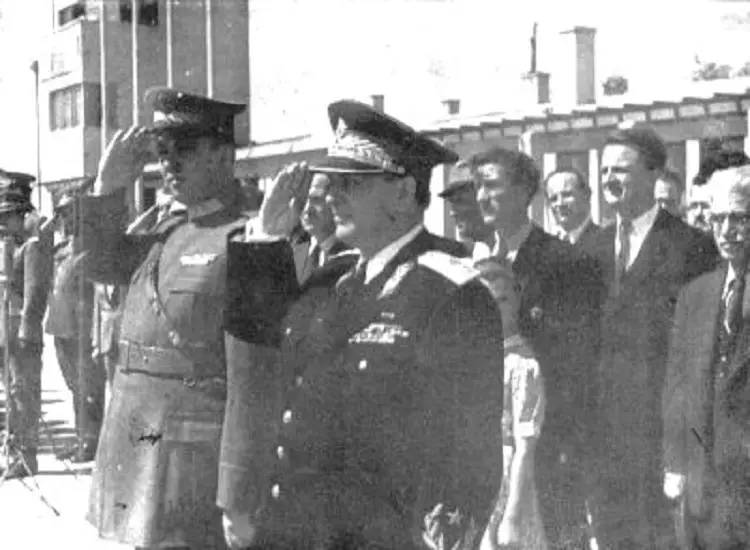
And precisely at these moments, so painful for our entire nation, this government – specifically to tenfold the Albanian tragedy – chose the procedure of decorating dozens of Serbo-Slavic officers who had certainly been killed fighting against Albanian nationalist forces. With this shameful act, as a national disgrace, the communist clique of the mother state also sought to have its say regarding its stance in favor of Belgrade’s idea of integrating into a seventh republic of the Yugoslav creation. Thus, on September 5, 1945, in the former royal palace in Tirana, a very pompous ceremony took place, with the participation of the entire Albanian government as well as diplomatic representatives and allied forces in the capital. With oratorical tones, Omer Nishani, in his capacity as Chairman of the Anti-Fascist Council, read the Council’s decision number 117, dated September 5, 1945:
“Based on the proposal of the Head of the Democratic Government of Albania and Commander-in-Chief of the National Army;
Taking into account that many foreign personalities from allied countries during our people’s National Liberation War have contributed and assisted by all means in the struggle of the Albanian people, whether within Albania side-by-side with our army, or outside Albania, and to show gratitude and to serve and honor their activity for the benefit of the Fatherland and the Albanian people,
The Presidium of the National Liberation Anti-Fascist Council,
Decided: To decorate with the medals noted for each, the persons mentioned in the following list: General Ivan Milutinović, with the Order ‘National Hero’; Lolo Ribar, with the Order ‘National Hero’; Ramiz Sadiku, with the Order ‘National Hero’; Ivan Ribar, with the ‘Order of the Flag’; Edvard Kardelj, with the ‘Order of the Flag’; Blažo Jovanović, with the ‘Order of the Flag’ and the ‘Medal of Remembrance’; Radovan Zogović with the ‘Order of the Flag’; the martyr Miladin Popović, with the ‘Order of the Flag’ and the ‘Medal of Remembrance’; Dušan Mugoša, with the ‘Order of the Flag’ and the ‘Medal of Remembrance’.
With the ‘Order of the Partisan Star, 1st Class’ and the ‘Medal of Bravery’: Brigadier E.F. Davies.
With the ‘Order of the Partisan Star, 1st Class’: Lieutenant-General Arso Jovanović, Aleksandar Ranković, Milovan Đilas, Peko Dapčević, Brigadier T. Churchill, Colonel Velimir Stojnić, Lieutenant-Colonel Palmer, Major Ivanov Konstantin, Captain Thomas Stefan.
With the ‘Order of the Partisan Star, 2nd Class’ and the ‘Medal of Remembrance’: Colonel Vojo Todorović. With the ‘Order of the Partisan Star, 2nd Class’ and the ‘Medal of Bravery’: Major Savo Stanov [Stanojević], W.V.G. Smith. With the ‘Order of the Partisan Star, 2nd Class’: General Terzić Velimir, Colonel Killer Peter, Colonel Obrad Cicmil, Lieutenant-Colonel Mijat Vuletić, G.W. Seymour, Major J.K.H. Shaw, Major M.J. Thornton, Major V. Robinson, Captain Northop, Captain J.M. Lyon, Lieutenant John O’Keefe.
With the ‘Order of the Partisan Star, 3rd Class’: Major Timochek Teodor, Major Viktor Bobol, Captain Miazi Dizdarević, Lieutenant Nick Cooky, Corporal George Routsis.
With the ‘Medal of Bravery’ and the ‘Medal of Remembrance’: Bije Vokshi, Martyr Hajdar Dushi, Emin Duraku, Xhevdet Doda, Vaso Strugari, Mikel Popović.” (Bashkimi Newspaper, Tirana, September 6, 1945).
Meanwhile, the head of the Tirana communist clique, Enver Hoxha, would solemnly declare that evening: “All these officers who were decorated have helped us with their souls in our efforts for liberation.” The zealous servant of the Serbo-communists thus thanked his teachers from Belgrade for their great contribution to the Slavic efforts to extinguish the Albanian race. With this message, he also wanted to assure his masters that he would always be a slave to Serbo-Slavic chauvinist policies.
How could high-ranking Yugoslav officers be decorated when, in the years 1944-1945 alone, more than 50,000 innocent ethnic Albanians were killed, imprisoned, and displaced in the territories of Kosovo and Albanian Macedonia? How could decorations be distributed to those who, among other things, did not leave an inch of Albanian land without drenching it in Albanian blood? How could those whom our people considered and consider occupiers of Albanian lands be decorated? How could these common war criminals be congratulated, when at those very moments in the Albanian mountains, dozens upon dozens of nationalist heroes were wandering, sacrificing their youth for our ethnic borders?
Confronted with these questions, one can speculate many answers. But the first answer that comes to mind is precisely that the communist clique in Tirana, in 1945, inflated by the tales of proletarian internationalism, by decorating the killers of its own people, took upon itself the heavy burden of a national shame. Besmirched in the miserable positions where it was led by the Serbo-Slavic stew, this clique was performing its first honors and services to Belgrade, thereby testifying to its own anti-Albanianism, rightfully accepting and recognizing the Serbo-Slavic occupation of the Albanian lands of Kosovo, Presheva, Bujanoc, Medvegja, and Albanian Macedonia. Time bears witness to the Albanian communist betrayals; it now remains for the Albanian government and the Institute for the Crimes of Communism to nullify and condemn all those who were decorated. Crime and treason must be uprooted from the source./Memorie.al
![“After the ’90s, when I was Chief of Personnel at the Berat Police Station, my colleague I.S. told me how they had once eavesdropped on me at the Malinati spring, where I had said about Enver [Hoxha]…”/ The testimony of the former political prisoner.](https://memorie.al/wp-content/uploads/2024/09/admin-ajax-4-350x250.jpg)