By Shkëlqim Abazi
Part sixty-eight
S P A Ç I
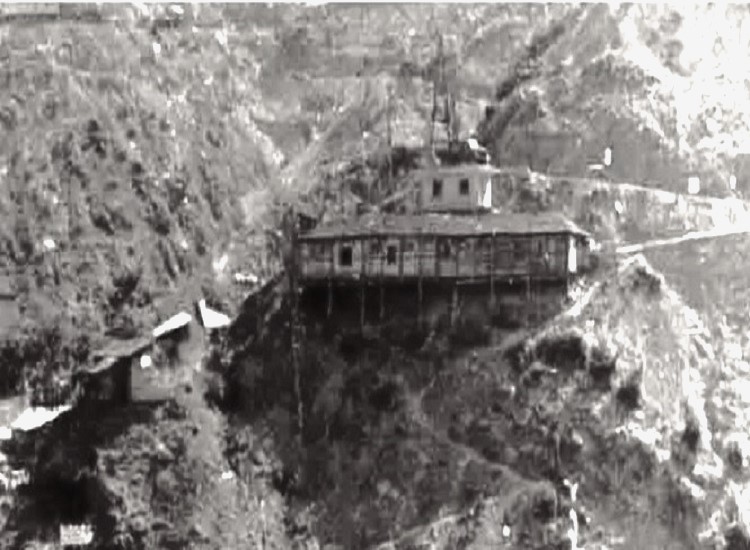
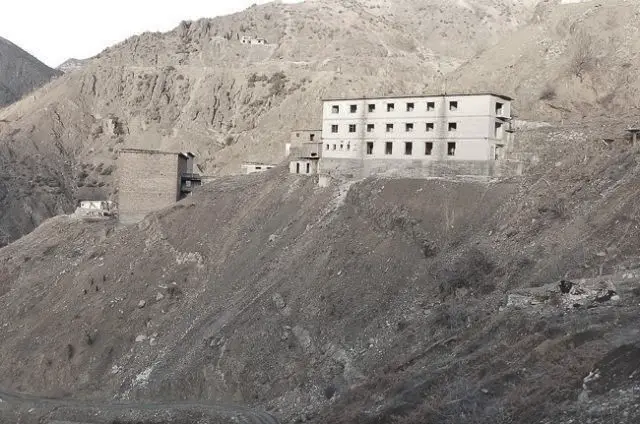
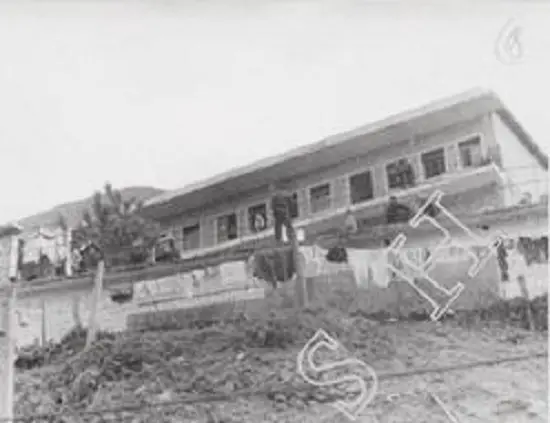
The Graveyard of the Living
Tirana, 2018
(My memories and those of others)
Memorie.al / Now in old age, I feel obliged to confess my truth, just as I lived it. To speak of the modest men who never boasted of their deeds, and of others whose mouths the regime shut and buried in unmarked graves. In no case do I presume to usurp the monopoly on truth or to claim laurels for an event where I was only accidentally present, even though I desperately tried to help my friends, who tactfully and kindly avoided me: “Brother, open your eyes… don’t get involved… you only have two months and a little left!” A worry that clung to me like an amulet from the morning of May 21, 22, and 23, 1974, and even followed me in the following months until I was released. Nevertheless, everything I saw and heard those three days, I would not want to take to the grave.
My God, those innocent murmurs sounded like a soft cooing! I abandoned the water and climbed onto the truck tire, pulled my bag close, and took out one of the packets of biscuits Tomor had packed for the journey. I handed it to the child, thanking God for this gift. He grabbed it with his tiny, soft hands and rushed to his mother, eyes fixed on me. His face lit up with a mischievous grin that made his blue irises sparkle. Rarely have I experienced such a sensation; not even the distance of forty-five years or the laughter of my own children has faded the pleasure of that moment!
Everyone turned to look at me and stood frozen, while the child continued to smile innocently, ignoring the political games of adults. As the group of officers whispered something we couldn’t quite make out, Preng Rrapi’s words rang out clearly: “These lowly enemies, they cast a spell! They win over even the little ones!” I gave Rroku a meaningful look, but he remained silent, continuing his conversation with his wife and sons, while I contemplated the child’s blue eyes as he enjoyed the biscuits. Amidst this, female voices repeating the refrain of a folk song softened the atmosphere: “Dance and sing, girls / Mrika has returned as an agronomist! / The highlanders raised her themselves / The Party gave her light and life, o e-eej!”
“On our way, men, we’re late!” the driver ordered. As we took our seats on the mineral ore, the female voices echoed off the hillside and vanished into the stream. Soon, we saw them at the head of a path that dropped steeply toward the road – women and girls in Mirdita costumes, carrying loads of branches on their backs. They were likely returning with cut oak leaves, for Preng remarked: “It’s exactly the time for oak leaves! What else will the goats eat in winter, man?!”
After a ninety-degree turn, the Fan valley appeared on the right, stretching as far as the eye could see. Ahead were Reps and the construction site surrounded by fences. Although they had been using it at full capacity for three years, they kept the perimeter fenced to protect it from thieves. Now we were driving on asphalt; the truck gained speed and no longer rattled through potholes. Somewhere it stopped, and two soldiers got out of the cabin. From the gate of one of the houses nestled under the trees, an old couple shouted: “Wait a bit, we’re coming!” and hurried down with baskets in hand.
Once they entered the cabin, the truck slid non-stop to Shpal, a cluster of buildings that I assumed was the center. When the two elders got out, Preng jumped up and took their place in the cabin. At the same time, the man beside me got down while his wife left the child in my lap. She handed her husband a bundle, and when I returned the child to her after she descended, I heard her whisper: “May God grant you light, brother; you are a good soul!” She took the little one, who never took his blue eyes off me, smiling brightly as if to reinforce his mother’s blessing, until they reached the bridge, where he blew me a kiss with his tiny hand.
The mother’s words and the child’s gesture are stamped on the film of my memory; forty-five years haven’t been able to erase them. I would have recognized those eyes today, even though that toddler is now a man in his fifties, for they were the first to welcome me to the “Hell of Corpses.”
From a single-story building – judging by the emblem over the door, it must have been the local office – emerged a group, including a woman and a man in folk costumes with holstered weapons. The woman entered the cabin, while seven or eight others took the seats of the passengers who had departed the truck bed. The man in the folk costume sat on the transverse board, laid his holster across his knees, and made room for two women between him and Rroku’s wife. The others squeezed in on either side of me; we were many now.
“Where are you heading, Comrade Soldier?” one on my right asked.
“To Berat.”
“You’ve a long road ahead!” a bald man on my left chimed in. “Your leave will be spent on the road – two days to go, two to come from Berat, that’s four! How many days did they give you?” my neighbor continued rambling.
I pretended to level the pile of mineral with my feet to avoid answering. The truck advanced along the river under the shade of plane trees, but the road was poorly maintained. We were jolted as the tires dipped into holes and bounced over mounds. For a while, no one spoke. On a slope, when the speed dropped, the neighbor to my right addressed the man in the folk costume:
“Where are you heading, Bardhok?”
The use of the plural “you” (Jena) caught my attention; it wasn’t typical of Mirdita highlanders, who generally address everyone with “tëj” (singular you). Perhaps he is someone important, camouflaged in folk attire, I thought, suspiciously watching the play of light and shadow on his features and the weapon on his knees.
“We’re heading to Rrëshen. Dilica and I have dress rehearsals; next week we’re in Shkodra for the Festival of Highland Songs,” the man replied. I relaxed then; the holster didn’t hide a weapon, but a musical instrument – a çifteli.
“Won’t you sing us a song, Bardhok?” the bald man teased. Bardhok didn’t wait to be begged; he unbuttoned the case and pulled out the çifteli, took off his white cap, produced a pin from somewhere, and stroked the strings. The instrument echoed joyfully. After playing the first chords, he raised his head, closed his eyes, and let out a piercing cry: “Ej-eeej!”
He continued verse after verse until the refrain: “Mother of Llesh Pali, leave your testament / Do not grieve for your son’s life / For you have the Party and the State as a son / You have Enver and Mehmet, who hold you like their own mother.” He ended with a long, drawn-out “O-oh-ej-eej.”
Except for me – and perhaps Rroku – who was racking my brain to digest the filth of these perverse verses, manufactured by some servile bard to praise communist rulers while ignoring the wounds of a mother who had lost her son in some border incident (likely fighting her own brothers from the north or south), everyone else listened wide-eyed to the brilliant voice of the curly-haired singer. I don’t know if Rroku thought the same, but when he looked at me from under his brow and blinked several times before turning back to his family to avoid drawing attention, I caught the message and continued my reasoning:
How can you ask a mother who has lost her child to hold back her tears? Can the heads of state ever compensate a mother for her blood and soul? No, never! A mother remains a mother! And even if these leaders turn out to be “traitors,” as has often happened during these thirty years, who will replace her “Llesh”? Who will care for her in her deep old age? Will Enver and Mehmet cover her with earth when she is at the edge of the grave? My God, what hypocrisy to play with a mother’s feelings!
This hypocritical behavior nearly drove me mad, while the rhapsodist sang with such pathos you would think he truly believed the nonsense he was reciting. Eventually, his voice faded, the çifteli went silent, and the others were left breathless by the emotion. My God, how far has the collective brainwashing reached in the “Hell of Corpses”!
I was shaken, but careful to control my actions and not speak the thoughts that were spinning in my head. Focusing on the singer helped me regain my calm. “Beep-beep-beeeep!” A long horn blast pulled us out of our stupor. The truck was now cutting through newly harvested fields. Despite the midday heat, men were gathering straw with wooden pitchforks, while women carried loads on their backs to the roadside. Another group was winnowing freshly threshed wheat, the chaff blowing into their faces.
“Beep-beep-beeeep!” the driver repeated, and the men responded with pitchforks in the air while the women waved their headscarves. “Greetings to the fellow villagers!” the bald man beside me whispered. I didn’t answer, and he fell silent. Suddenly the landscape changed; the eye was refreshed by organized plots and strips at the foot of hills that extended the horizon. As our singer went quiet, the sounds of another çifteli echoed from the cabin window, and a female voice, soft as silk, caressed our ears:
“O-o-oo, when the sun rises over the mountain’s brow / the girl of Shpal stands waiting / waiting in the trenches / sharp-eyed, rifle in hand / Blessed be the village, blessed the home / blessed the Party and the highlands.”
The singer in the cabin was rivaled by the çifteli on the truck bed, dancing joyfully in the rhapsodist’s hands: “O fair one at the edge of the woods / like the moon beside a star / beautiful as the moon, shining like a fairy / mother birthed a girl for the rifle / Blessed be the village, blessed the home / blessed the Party and the highlands.”
The voices blended harmoniously in the last two lines as the çiftelis became one. The crowd was left open-mouthed, excluding me – either because I was a southerner or because of the god-awful mixed-up text. Truth be told, it was a virtuous duet, but the weaving of epic verses into naive lyrical poetry – and the servility of a mediocre poet – diminished the value for me. The others remained mute even after the instruments stopped.
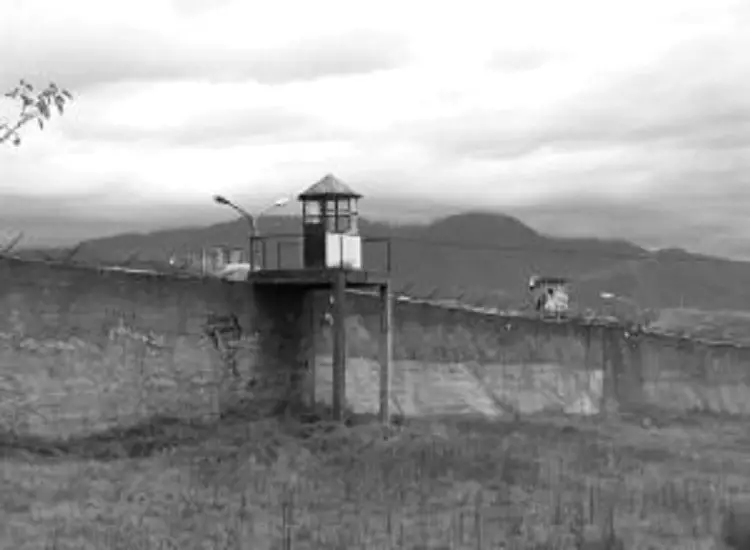
As an impartial judge, I could reason without passion, partly because I knew some simple versification techniques learned from masters in prison; the antithesis seemed not to fit the lyricism of the song. However, I didn’t have time to judge technicalities, because the truck stopped at the Rrëshen turn and the passengers jumped off, wishing us a safe journey – especially me, the “soldier on leave”! Only five of us remained on the truck: two former political prisoners and three others like us, likely candidates for prison. In the cabin sat the driver and two guards, perhaps assigned to escort us a certain distance. Rroku and I were well aware of the fate the “Hell of Corpses” held for us.
Rroku’s eldest son checked his watch: “It’s one o’clock; God willing, we’ll catch the bus to Shkodra!”
“Come on, man, the day is long and we have plenty of time!” his mother encouraged him. She turned to me: “And you, lucky boy, will you reach Berat by evening?”
“I haven’t traveled in five years; I don’t know the schedules,” I replied.
“Are you an orphan, son that no one came to meet you?”
“No, I have many people, but we got the date wrong.”
“It will be hard for you to orient yourself,” Rroku intervened.
“I’ll do my best,” I answered.
“Çim, I advise you to watch out for provocateurs; prison is unbearable a second time!” Rroku warned.
“You should get married, son; that way you can protect yourself more easily!” the wife added.
“Thank you, but I’m very young. Besides, they’ll draft me as a soldier soon.”
Leaving Rubik, traffic increased and the truck slowed. The road snaked through rugged terrain toward a massive rock under some ruins. Rroku and his wife crossed themselves three times, murmured a prayer, and lowered their heads. Knowing his veneration for faith, I guessed it was the holy church of Rubik that Father Simon Jubani had told me about. At the next crossroads, two men and a woman signaled the truck.
“Greetings, men!” They sat beside me. We returned the greeting and sank back into our own worries. We were now traversing a dangerous segment: a cliff on one side, an abyss on the other, the road wide enough for only one vehicle. We reached a bend and encountered a police “B.Ç.” (jeep) signaling us to make way. Two civilians jumped out and screamed at the driver:
“Are you blind? Pull back and make way, or you’ll end up where you least expect!” one threatened, while the other lifted his shirt to reveal a pistol holster. “I have a heavy load!” our driver justified. “You don’t get it, do you? Don’t you know who we are? We are from the Ministry of Interior – don’t play with us!”
Suddenly, a blue truck rounded the corner. As it faced us, I recognized it: the prison-van! It seemed they were replacing us – one for ten! Rroku couldn’t see well from his position and remained indifferent until he noticed my distress. He turned around so hard his bones cracked. When he saw the “Dyli’s Carriage” (as they called it in Shkodra), he froze. He likely thought the same: “They are replacing one with ten.” He blinked, shut his mouth, and lowered his head.
“See what we’re escorting now?” the first man pointed at the prison-van. “We have about twenty ‘enemies’ inside, perfect specimens for Spaç, and you tell me you have a heavy load? Make way, man! If these guys don’t mine pyrite, will you transport it in your mother’s womb?!” the thug boasted, hand on his holster.
The Skoda groaned and reversed until its nose was in the gorge. The “B.Ç.” and the prison-van followed at a meter’s distance. As they passed, one civilian gave us the middle finger; the other showed us half his forearm. The prison-van rattled away, carrying our replacements. That sight made my skin crawl. I began to shiver despite the July heat.
The rattling van took me back to November 23, 1968, when we vomited our guts out from Shkodra to Reps. It reminded me of the guards’ threats: “One dies here, we bring in ten; we won’t leave the prisons empty until you’re all extinct!” Alas, in the “Republic of Fools,” nothing had changed!
My God, how long will this slaughter continue with these spineless wretches ready to sacrifice even a child if the Party asks? How did this people – supposedly of heroes – become so degraded that they would deny mother, father, sister, and brother?
The “Hell of Corpses” supplied guinea pigs for the “Grave of the Living” at a ratio of ten to one! As I chewed on these bitter thoughts, one of the passengers asked:
“How much time does Gjoni have left, exactly?” They were continuing a previous conversation.
“One year, man!” the other replied. “Maybe they’ll pardon him now that he’s served half. We sent a petition to the Assembly.”
“They’ll pardon him; he didn’t kill anyone. All Albanians are stained with a bit of theft!” said the first, a man of fifty with a white cap.
“Prison is for men, truly! It’s a shame to feed children through theft, Gjok! But it’s a greater shame to betray the Party and end up in prison as an ‘enemy’!” He wiped his sweaty brow.
“Mark, if my son shamed me like that, I’d kill him with these hands, by Christ!” the other swore.
“I know, man; you are from a martyr’s family!”
“Yes, we have two heroines in our kin! That’s why they’ll release my boy!” Gjoka boasted.
“Don’t lose hope in Saint Anthony, Gjok!” As the passenger advised this, the truck hit a hole and he nearly knocked heads with his companion. I caught him by the waist and held him firm.
“Bless you, friend!” he thanked me. “Where are you from, soldier?”
“From Berat.”
“On leave, are you?”
“Yes,” I lied, of course.
If he had continued, I wouldn’t have known how to answer – to lie or to tell the truth to someone who clearly felt hatred for “enemies of the Party.” Luckily, he reached his destination. He jumped off, and silence fell. I was saved from a tedious chatterbox, but fell into the lap of dark thoughts.
At first, I couldn’t believe I was really out. Then Preng Rrapi, the terrified couple with the innocent child, the naive bards singing political-epic songs, the winnowers working for thirty cents a day, and these poor souls who accept theft but would kill their own children rather than “shame the Party.”
The final seal was the prison-van packed with twenty people to replace two of us – ten for one!
My God, so many misfortunes in just three hours outside the “Enemies’ Grave”! What awaits me when I dive deep into the “Hell of Corpses”?
I crossed the gate of the “Enemies’ Grave” hoping for paradise or at least purgatory, but I ended up in the screes of the “Hell of Corpses,” where I would have to either reconcile with their vices or struggle for another twenty years to reach the harbor of hope…!
I do not claim a monopoly on the truth, nor do I seek laurels for an event where I was a random witness, though I tried with my soul to help my friends. They had turned me away with tact and kindness: “Brother, keep your eyes open… don’t get involved… you only have two months left.” That concern clung to me like an amulet from the morning of the 21st, 22nd, and 23rd, following me until the day I was released./Memorie.al