Part Two
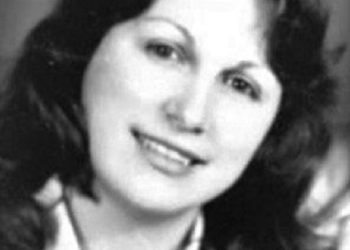
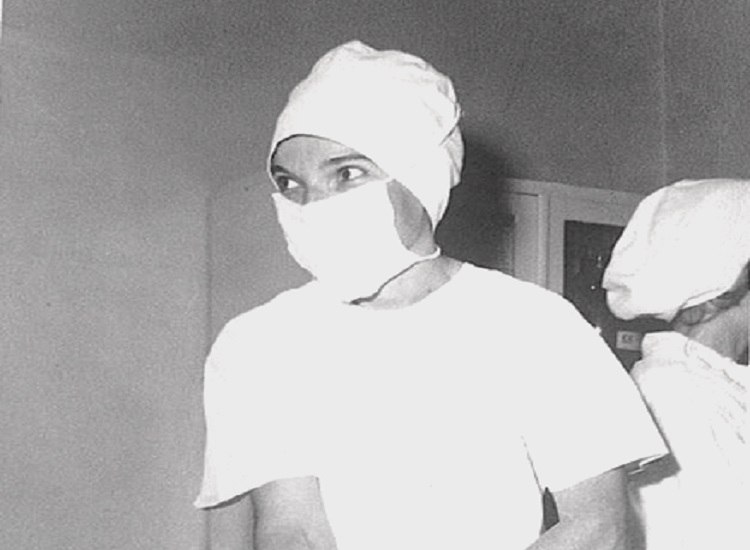
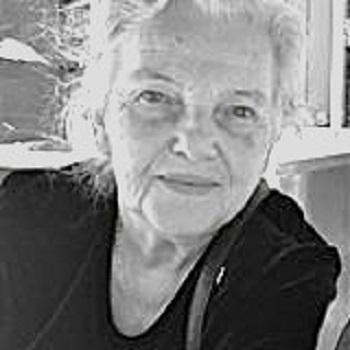
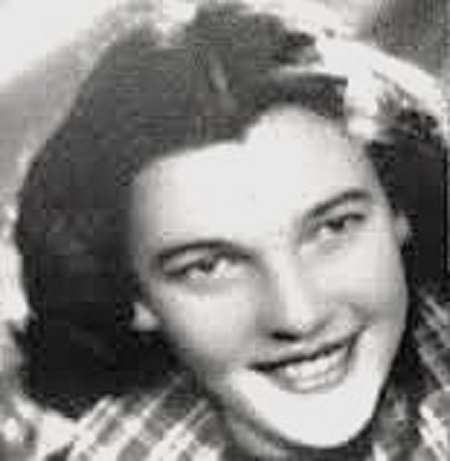
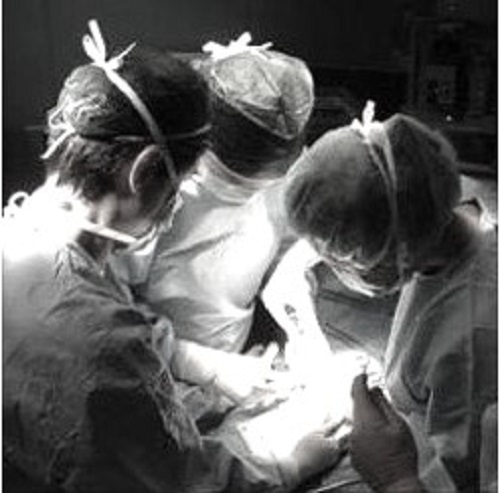
Memorie.al / She was the first in many events that made history. The first female surgeon in Albania. The first to discover threatening envelopes for a “death sentence.” The first as a Deputy in the Democratic Party, when the majority was still from the Party of Labour. The first time she confessed exclusively…! This was Rushen Golemi, the doctor who has been honored with several Albanian medals, where the highest, “Grand Master of Work,” stands out, and simultaneously included in an encyclopedia of Great Britain, where she was chosen as one of the 2,000 distinguished world personalities of the 20th century. Modest as she spoke to us about her contribution and equally modest in her way of life. When we conducted this interview, she was living with her husband, Alfred, in a small apartment, somewhere near “Rruga e Kavajës.”
Continues from the previous issue
Ms. Golemi, during that period when you were a Member of Parliament, did you have state protection, with bodyguards as is the case today?
Not even close. In the 1991-1992 legislatures, being a deputy brought no income at all. That is, there was no salary and none of the other privileges that exist today. I woke up early in the morning and went to work at the hospital, finished the operations there, and then returned to Parliament. Again, the same thing in the afternoon. Since I couldn’t manage to walk back and forth, I started using a bicycle.
For how long?
In both legislatures that I was a deputy, I went to Parliament by bicycle. Not only that, but regarding clothes, when there was an important session or meetings with foreign delegations, I would borrow a sweater from my daughters.
As one of the first right-wing deputies, what was your relationship like with the women of the Party of Labour?
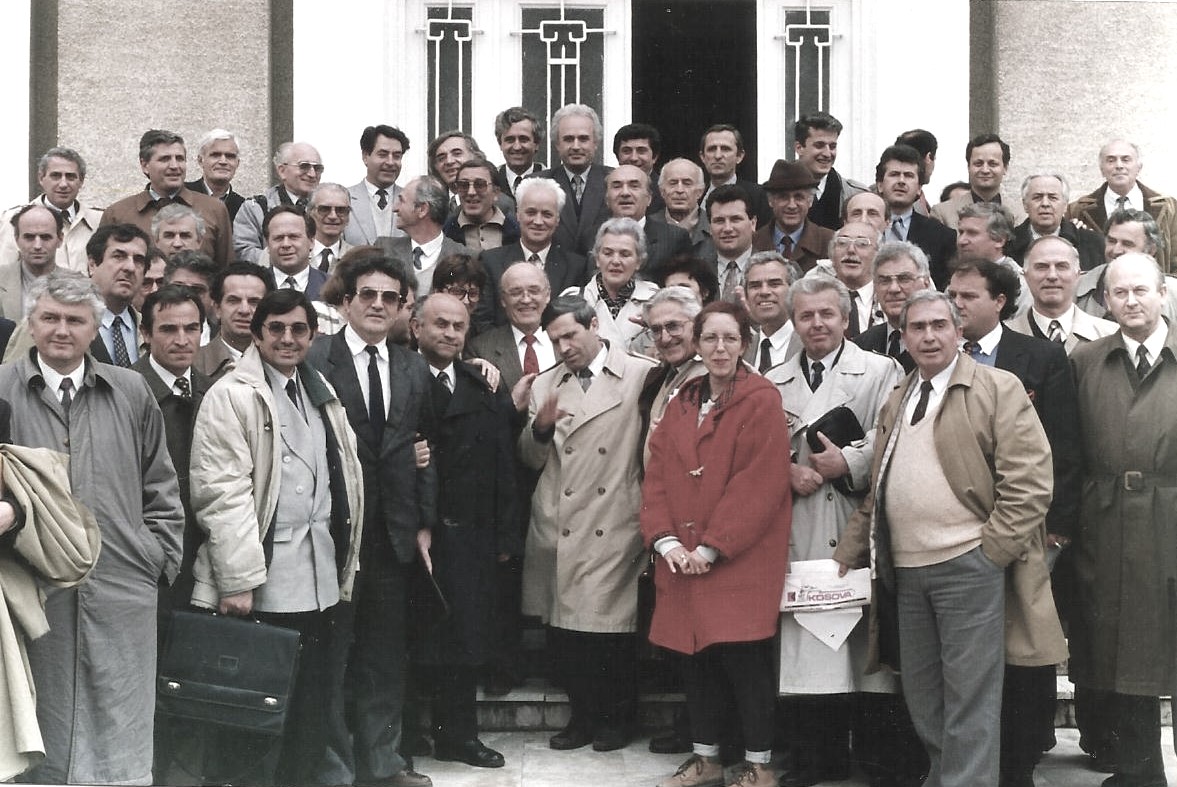
Initially, it wasn’t that I had much friendship, as my time was very limited. I told you that for a salary, I had to go to the hospital; I had the children, so we faced each other very little. We rarely sat in cafes because we didn’t have money. The salary I received, with prices rising every day, was just for survival. Then, the APL deputies were only there for 1 year, as early elections were held in 1992. That’s when the right-left ratio of women changed. We were 7 women from the Democratic Party and only Ermelinda Meksi from the Socialist Party.
As the only woman on the left, did you then have the opportunity to know Ermelinda Meksi better?
Not only did I know her, but I shared a bed with Ermelinda for about a month.
For what reason?
It started as a joke. My DP friends (seven of them) had set off for a meeting in the USA, in a women’s lobbying group. I accidentally missed the plane and was forced to leave the next day, while Ermelinda herself had booked her ticket one day late. So, we both landed simultaneously in New York, and when we arrived at the hotel, my friends had settled two by two in the rooms and were joking, saying that “as punishment” for missing the plane, I would sleep with the “enemy.”
Was Ermelinda worth it as an “enemy”?
She is a lady and is worth having as an “enemy” or as a friend. We had a very good relationship during that period we shared the room, and even later. She was and remains a correct politician, and also a lady who knows how to build and keep friendship in balance with militancy.
Do you see any female deputy in Parliament today who knows how to maintain these balances?
Unfortunately, I have to say “No.” Today, the political climate is very harsh, and women are also involved in this. I am very sorry about this. They have forgotten to speak to each other, woman-to-woman, but only like gramophone records of leader-to-leader. There are no expressions, thoughts, or statements of their own, but only repetitions of the leaders’ sentences. I feel sorry for what I hear…!
What do you hear?
Personal insults. Familial swearing. Personal attacks. None of these happened even at the beginnings of democracy in Parliament. I remember Azem Hajdari well; he was one of the people who spoke the loudest in Parliament and would get carried away into arguments, but even he, problematic as he was, did not mention the names of families and clans, branch by branch…!
Where do you think all this comes from?
Self-interest has deeply penetrated. The statements made in Parliament, besides being shameful, distract attention from the real problems.
“Berisha, a persistent student, a harsh politician”
She would have remembered him well, even if he hadn’t become a public figure. Sali Berisha, as a student, was just as persistent as he is as a politician. “And very smart,” adds Professor Rusheni quickly, who had the chance to teach Berisha. Having faced him again over the years, due to political commitments in the same party, Rusheni is one of the rare personalities who can speak about the former Prime Minister Berisha over five decades.
How did you know Berisha?
I knew Berisha before he turned 20. He was my student, but not exactly, because due to my biography, after 1975, I suffered some familial party blows. Many doctors married to foreigners were removed from their jobs. My husband was removed from his job as a lawyer and sent to the NPVSH (New Plant of Spare Parts). My salary was lowered, and I was transferred from internal lecturer to external lecturer. Also, I had the right to practice and was present as a second lecturer in the exam. In this situation, I occasionally taught Berisha.
What kind of student was Berisha?
Leaving aside party convictions, at this moment, I speak as a lecturer: Berisha was very well prepared. I remember one case when I was teaching and asking questions to the class. It was a topic about fractures. He stood up first and spoke with great confidence about the topic. He seemed very well prepared from the first minute, so I told him to sit down and that I would ask someone else, but he kept going. He continued to answer until the end and did not want to sit down. A character he still maintains today.
What character?
He has been persistent since then, and also very smart. I see that he has remained so.
And what do you think has changed about him?
He has only become harsher.
Where do you think this harshness comes from?
I think from the circumstances, because the opposition has also become harsher. However, I do not agree with the vocabulary he has been using lately. The entire parliamentary battle with the opposition should be conducted only based on the right information, and the manner of speaking is important. I don’t say this only for Berisha, but for all other politicians.
Have you ever opposed him?
I remember one time, quite strongly. It was the time when the DP group demanded the abolition of the death penalty in Albania, while I disagreed. God forbid, I thought about my daughters if someone harmed them, not to think deeper… I was opposing all the time and declared that I would vote against it in Parliament. However, he managed to convince me with a lot of tactics, but not without effort.
However, Berisha did not re-nominate you in 1997. Did you not want it, or did he not include you on the list?
To be honest, I would choose the latter more. I also no longer had the desire. Do not forget that my age was no longer so suitable for active politics. I was passing 60, while I was very upset with some media at that time. I barely managed to get 10,000, out of the 60,000 square meters of family property that belonged to me, while they called me a thief. They hurt me a lot, and an anti-campaign was waged against me. Perhaps this was one reason, and age was another, but also my lack of desire, which led me not to run again in 1997.
What have you gained from politics?
In the first legislature, I only gave. In the second legislature, only the salary, which was very small? I told you, in my entire career, as a surgeon or politician, my only gain was 800 old lek. I haven’t even managed to get my properties. Out of 60,000 square meters that I inherited in Durrës from my family, I only received 10,000, and even those through slander, by the end of that time (1995-1996).
Likewise, my husband as well, on whose property there is a 16-story building and another 20-story building is being constructed. And where would you say? Right on the “Volga” area in Durrës, where construction and excavation have been banned, as it is protected by law as an archaeological zone. The only asset Fred and I have is just this one-bedroom apartment you see. For the others, we have been at the doors of the courts for 20 years and cannot get them. Make your own calculations now, about how much I have gained from politics…!
In the doctor’s family
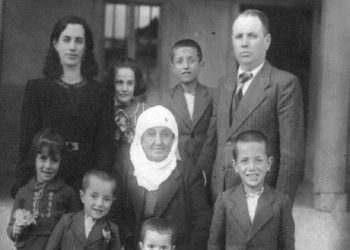
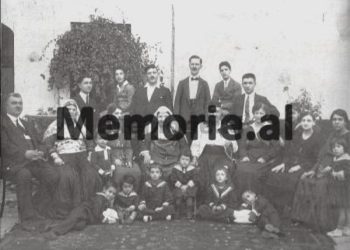
Her name comes from Persian and means enlightenment (Rushen). Born in Durrës on July 16, 1935, Rusheni is the daughter of Mahmut Golemi, known as a prefect in many cities of Albania, and also as the General Commander of the Gendarmerie. She is now the mother of three children, the twins Inis and Iris, and her son Konstandin, and has 7 grandchildren. A documentary was also made about Rusheni in the ’70s and ’80s as the first female surgeon in Albania, while she was distinguished for sports activities, especially in volleyball and athletics. / Memorie.al