
Memorie.al / In the geopolitical aspect, it is widely known that thanks to the decisions of the Congress of Berlin (1878), the political map of the Balkan Peninsula underwent changes, because from the former autonomous principalities, independent states were created, which also included Montenegro. Instead of the Great Powers of the time insisting that Montenegro, as a newly internationally recognized state, should be allocated Slavic territories and populations from its western side, based on ethnic criteria, the opposite was decided, gifting this state with regions populated by Albanians. Hence, from this time, with the beginning of the shrinking of the Albanian space in favor of the neighbors, the “Albanian question” was characterized as a special dimension, because in this specific case, Albanian-Montenegrin relations took a different direction.
1. Albanian territories under Montenegrin administration after 1878
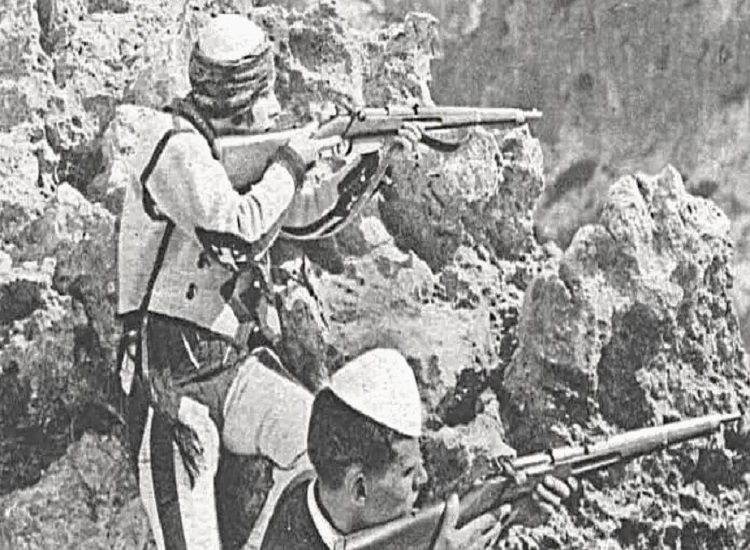
It was the decisions of the Great Powers at the Congress of Berlin that legitimized the beginning of the partitioning of Albanian lands, initially with the recognition of the independence of neighboring states, such as Montenegro and Serbia. Even though the aspirations for territorial expansion of Montenegro during and after the wars against Turkey (1876-1878) were greater, the regions of Trieshi, Koja, Podgorica, Zhabjak, Tivari (Bar), and the North-Western part of Kraja came under its administration. Even though the Congress decided that the regions of Plavë and Gucia should also be given to Montenegro, such a decision was not implemented, thanks to the military engagement of the Albanian population organized by the League of Prizren, where the well-known Battle of Nokshiq took place in December 1879.
As compensation for this, compromises were made by the Great Powers to give Montenegro the region of Gruda, but it was the League of Prizren that organized the military defense in April 1880, preventing the annexation of Albanian territories by Montenegro. However, finding themselves in such a situation, the Great Powers reached the final compromise for the compensation for Plavë and Gucia, and this was the city of Ulqin (Ulcinj) with its narrow surroundings, where, even after the resistance of the local population, this territory was handed over to Montenegro by the Ottoman Empire in the presence of international forces, at the end of November 1880.
The Albanian regions that passed under Montenegrin administration, even in new social and political circumstances, managed to maintain their inter-regional communication with the capital of the Albanian north, which was the city of Shkodra. Even though the new border between Montenegro and Albania, which was under the administration of the Ottoman Empire, remained in these positions for 32-34 years depending on the region, the Montenegrin government had plans for the occupation of territories inhabited by Albanians.
In a word, the territories gained through the Congress of Berlin were the beginning of an expansionist policy at the expense of Albanian lands and population. Such a phenomenon was practically observed during the Uprising in Malësia e Madhe in 1911. This was an unfavorable situation for the Albanians, but also a signal of what was being prepared against them, a fact that would become transparent in the autumn of 1912 and later.
2. The conquering offensive of Montenegro against Albanian lands and the siege of Shkodra (October 1912 – April 1913)
The Balkan states, seeing the military successes of the Albanians against the army of the Ottoman Empire, especially the uprisings of 1910-1912, hurried to form the Balkan Alliance to start the war against the Sublime Porte. Thus, Serbia, Montenegro, Bulgaria, and Greece formed an alliance among themselves. Secret talks between the Balkan states were initiated by Russia in 1911, concluding in September 1912 with the realization of the alliance between them.
Meanwhile, the alliance reached between Montenegro and Serbia in Lucerne, Switzerland (September 27, 1912), with the signing of the political and military agreement, where it is underlined that; “what each country liberates from the Turks that belongs to it” clearly demonstrates the objectives of their states. Such an observation is transparent and does not require comment, from which it follows that the Albanians were facing great challenges from the new occupiers who, supposedly in the name of war against the Empire, had the occupation of new territories as their final orientation.
The case of the siege of Shkodra and the fighting that took place (October 1912-April 1913) is special, where even though the Conference of Ambassadors in London had begun, with information that this city would be within the framework of the independent state of Albania, its siege and the fighting between the Turco-Albanian and Montenegrin armies continued persistently. Such an action is explained by the fact that Shkodra presented a special issue for Montenegro in their military and political philosophy and aspirations, which was based on medieval myths, and not on geographical and historical reality.
Even King Nicholas dreamed that if his project of territorial expansion to the east, even up to the Drin River, were realized, Shkodra would be the capital of his Kingdom. He stated that he “would not put down his arms before the Drin River becomes the southern border of Montenegro.” Meanwhile, during the First Balkan War (1912-1913), in the secret talks held between Serbia and Montenegro (in the second half of November 1912), King Nicholas demanded the division of territories in Albania. Montenegro sought to take the regions up to the Mat River, while Serbia wanted the territories from Mat to Shkumbin.
At the Conference of Ambassadors in London (December 1912-July 1913), the Serbian-Montenegrin delegation demanded that Albania be narrowed as much as possible, because in this form, it would enable Serbia to realize its dream of access to the Adriatic coast. On the other hand, the Montenegrin delegation persistently demanded Shkodra. The request stated that; if such a decision were not made, Montenegro would give its last man for the city of Shkodra, which is also evidenced by King Nicholas’s slogan; “either Shkodra, or death.”
Meanwhile, at the Conference of Ambassadors in London, in the diplomatic struggle for the demarcation of the Albanian-Serbian and Albanian-Montenegrin border, it was decided on March 22, 1913, that Shkodra and its surroundings should remain with Albania. But the Montenegrins had their mythomaniac aspirations and constantly continued to keep Shkodra besieged; continuing the military operations, convinced that what is won by war will belong to them. However, since Montenegro hesitated to respect the decision of London, at the initiative of Austro-Hungary and Germany, a naval demonstration began against it, which on April 5, 1913, reached outside Tivari (Bar) and after a few days blocked the coastline, from that city to the mouth of the Drin.
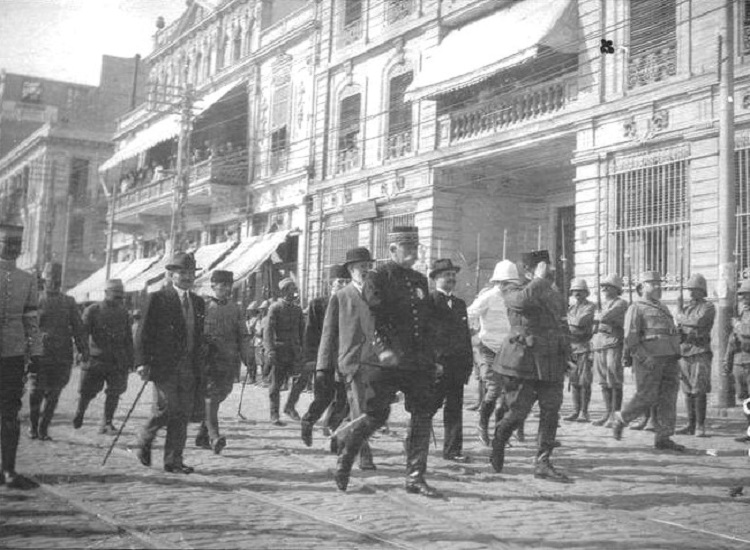
Nevertheless, the Montenegrin forces occupied Shkodra on April 24, 1913, after Esat Pasha Toptani surrendered it to them. But the energetic action and pressure of the Great Powers, especially Austro-Hungary, meant that after a three-week stay, the Montenegrin forces, after plundering it, left Shkodra on May 14, 1913, where international forces were immediately stationed.
But even though it lost Shkodra after the Balkan Wars, Montenegro expanded territorially, gaining an area of $4958 \text{ km}^2$, which is more than 48% of its territory after the Congress of Berlin ($9475 \text{ km}^2$). From such data, it follows that Montenegro has continuously expanded after every war, where a significant part of these territories belongs to the Albanian ethno-geographical space.
3. Circumstances of the war and the emigration of the Albanian population
In such circumstances of war, there is no doubt that the Albanian population found itself in an unfavorable position, and therefore, it was forced to move from their settlements. Thus, such a phenomenon occurred initially from 1878 onwards, where the case of Ulqin serves as a typical example, where with the passing of this city under Montenegrin administration (November 1880), almost $1/3$ of the city’s population emigrated, settling mainly in Shkodra, but also in other cities of Albania.
Montenegro’s state policy in the annexed territories had set clear objectives regarding the new territories, where the key issue was changing the ethnic structure of the population. By order of Simo Popoviq, who was in the function of the first governor of Ulqin, the Montenegrin authorities began the work of registering and measuring the land area that was to be colonized.
In connection with this issue, his statement sent to the Minister of Foreign Affairs also testifies transparently, where it is stated that; “The district of Ulqin is foreign to us. Everyone here is a Turk (Albanian of the Islamic confession – N.D.) and a mountaineer. Our first concern, for many reasons, must be to assimilate the local inhabitants and that as soon as possible in two ways: through colonization, by settling 4-5 thousand Montenegrin families here, and through the opening of schools. Colonization will be achieved when the mountaineers are displaced from this place. When this project is realized, then this beautiful and rich region will be completely and permanently Montenegrin. Until this goal is achieved, we have nothing to rejoice about.”
Such content does not need to be analyzed, because everything is transparent, but it remains to be realized in practice, where the final goal was the change of the ethnic structure of the population by all means. Thus, colonization in the Field of Ulqin lasted until the middle of 1893, in which case a total of 400 settler families were settled, to whom 5000 rrallë (a unit of measure) of land were allocated, from which it appears that one household gained $12.5$ rrallë of land (which is equal to $22,450 \text{ m}^2$).
To create better conditions for the settlers, the government planned to open new lands, planning in this direction the draining of Lake Zogaj and the Marsh (Kënetës). In this direction, various experts were engaged who prepared projects for the drainage of the respective lands, where it was planned in the long term to gain new land around, with an area of $20,000$ rrallë, but the social circumstances of the time, especially the Balkan Wars, interrupted the works in this direction, in which case the objectives “for massive colonization in this part of Montenegro” were not realized.
The expansionist aspirations towards this environment were also expressed by Prince Nicholas himself, who emphasized; “…by settling Montenegrins from Mozhur to Buna, we will Montenegrinize the entire district of Ulqin,” continuing that; “…the entire city and its surroundings are inhabited by Albanian residents of the Islamic and Catholic confessions. The Serbian language has not been heard on this side of Mozhur. With the settlement of Montenegrins, the Albanian type of this area will disappear.”
And from such a political and social situation in these environments, we have a violent emigration due to dissatisfaction with the new occupiers, in which case a significant part of the Albanian regions and settlements were depopulated. The action of the Montenegrin state policy was identical even after the First Balkan War, where the officialization of the annexation of the occupied territories is evidenced by the approval of the Law on the colonization of new liberated lands in the People’s Assembly, in the autumn of 1913.
Such a decision undoubtedly influenced the change in the national structure of the population, and also shrank the Albanian ethno-geographical space, which was in flagrant contradiction with the legal and legitimate right of every people to govern their own territory.
4. The Declaration of Independence of Albania and the Albanian territories in Montenegro
Albanians did not fight against Turkey to fall under a new occupation; they fought to be free and independent like other peoples. In fact, the Independence of Albania, declared in Vlora on November 28, 1912, was not declared for half of the Albanian territories which were internationally recognized at the Conference of Ambassadors in London in 1913, but it was declared for all territories inhabited by Albanians in their ethno-geographical space on the Balkan Peninsula.
Albanians were waiting for the definitive decisions of this Conference, hoping that the representatives of the Great Powers would take into account the ethnic criterion, the homogeneity of the Albanian ethno-geographical space, the continuous struggles to be liberated from the occupier, but everything remained just an illusion, because the decisions were subjective, mainly according to the intrigues and interests of the different clans of the respective states, dividing the Albanian ethno-geographical space in half. Such an observation is even admitted by the English Foreign Minister, Edward Grey, who said that;
“I am convinced that when everything is known, this action will be rightly criticized from many sides, by every person who knows the country and looks at the issue only from the viewpoint of its population. But we must keep in mind that, in the discussions about the borders of Albania, the main goal was not to open a conflict between the Great Powers. Therefore, if the agreement on Albania was reached by maintaining harmony among the Great Powers, we can say that it was a complete success for the vital interest of peace in Europe.”
Meanwhile, the border between Montenegro and Albania would be determined by the International Boundary Commission in 1914, which unfortunately legitimized the annexation of Albanian territories, disregarding the ethnic criterion and the continuous aspirations of the population in the respective regions for union with the independent Albanian state.
Conclusion
After the Congress of Berlin (1878), the years 1912-1913 were decisive in determining the new political map of the Balkan states, which was legitimized at the Conference of Ambassadors in London. Thanks to these decisions, the international recognition of Albania finally took place, which was halved both territorially and in terms of population. On the other hand, it was the Montenegrin, Serbian, and Greek neighbors who demonstrated their expansionist policy.
Such a policy undoubtedly was based on mythomania and the diplomatic and military support of some Pan-Slavic states, led by Tsarist Russia, which, supposedly in the name of fighting the Ottoman Empire, had as their final goal the annexation of as many parts of the ethnic territory populated by Albanians as possible. It is now clear that such an action had a strategic background so that the new independent state of Albania would be as small as possible in area and population and without any special political influence in the future on the Balkan Peninsula. / Memorie.al