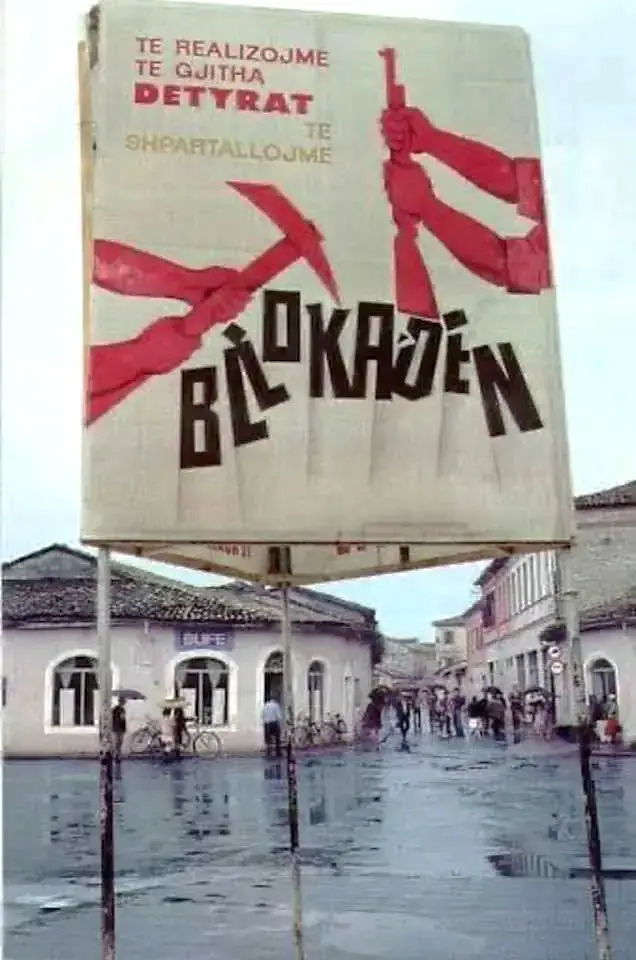
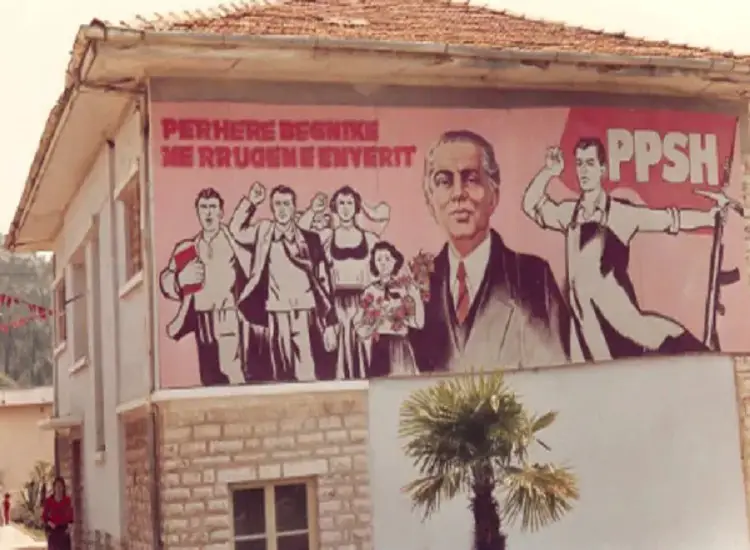
Memorie.al / Known to its natives as the “Land of the Eagles,” Albania stands out and is viewed with suspicion for two things: it is the poorest country in Europe and a relic of the Stalinist era. For four decades, the doctrinaire dictator Enver Hoxha ruled the country with monomaniacal persistence and a broad sense of fanatical xenophobia. He presented Albania as the only true Marxist-Leninist country in the world and pursued a program of “nationalist self-reliance,” which made it possible to cut almost all virtual ties with both east and west. The country has no diplomatic relations with either the Soviet Union or the USA.
Hoxha’s Policies, Still Present
Although Enver Hoxha died last year, his isolationist policies still guide the current leadership; at least as things appear on the surface. In a speech at the Congress of the Albanian Communist Party earlier this month, Hoxha’s handpicked successor, 61-year-old Ramiz Alia, stated that “our party will implement his teachings with courage and wisdom.”
Yet, even before Hoxha’s death, Albania had begun to apply a policy of “opening doors,” and today there are signs that “the Eagle may be ready to spread its wings as wide as possible for a longer flight.”
Fear of the World, Based on History
Albania’s persistent and exemplary opposition to the outside world is rooted in a long history of foreign domination. After the communist partisans led by Hoxha defeated the German occupiers and their internal opponents in 1944 and rose to power, Hoxha imposed a centrally planned economy and laid the foundations of a totalitarian state through a secret police with a fearsome name, the “Sigurimi.”
In the years that followed, he distanced Albania from other communist countries. Offended by Nikita Khrushchev’s de-Stalinization campaign, Hoxha broke with Moscow in 1961. When the Chinese began experimenting with economic reforms in the late 1970s, he denounced them as “revisionists” and effectively cut all economic ties with them.
Constitution Prohibits Foreign Loans
Albania is a small country (11,100 square miles, with a population of 3 million), mountainous, and of extraordinary beauty. Fewer than 300,000 people live in Tirana, the nation’s capital; 85% of the population lives in other cities and villages. Small factories produce products such as textiles, canned goods, glass, and glassware, as well as machine parts for industry. The economy is in stagnation, partly due to a pathological fear of foreign aid and credit.
The Constitution prohibits the acceptance of foreign aid, making Albanian exports directly dependent on barter trade agreements, where it mostly exports chrome, oil, and agricultural products. The economy is also supported by an unintegrated industrial base. Metallurgical plants built by the Chinese and Russians, hydroelectric dams, and tractor factories – ranging in age from 8 to 25 years – are failing.
“Self-Reliance” Parallel to Nationalism
Economic self-reliance has gone hand in hand with militant nationalism. Starting in the early 1960s, Albania began building bunkers with small windows just large enough to poke a rifle barrel through – the result of a defense campaign initiated and inspired by Hoxha, who trumpeted the constant threat of invasion from both the West and the East.
The regime maintained an iron grip on its population. In 1967, Hoxha issued a punitive directive where imams and Christian priests were removed from their functions and sent to work on farms or labor camps; some Catholic priests who resisted were sentenced to long years in political prison or executed. The result: the banning and suppression of religious freedom.
Failures Justified by Standards
For all its faults, the regime can justify itself with the fact that it has given its citizens what it could and what, according to them, has been the best, as they pay no taxes and enjoy a standard of living they never had before. Most major consumer items have seen no price increases since the 1950s, and some have even decreased.
Extreme poverty has been eliminated. Some basic food items, such as meat and dairy products, are rationed, but supplies of the most essential foods are available. People, however, are no longer so detached from the outside world. Their primary contact with the West comes through foreign radio and TV channels.
Young people wear blue jeans and Italian sunglasses. As Albanian society grows younger – the majority of the population is under 30 – some social problems, including criminality, are on the rise, and there are signs of increasing dissatisfaction with Hoxhism.
Without the World, the Albanian Economy is paralyzed
The Albanian economy cannot improve, however, without an opening to the outside world. Toward the end of the Hoxha era, official Tirana began to accept the fact of increasing diplomatic contacts abroad. Albania now has official relations with 104 countries, almost double the number it had in the late 1970s. And at the Party Congress, Alia called for a greater increase in foreign trade.
A key step in this direction came earlier this year with the inauguration of a 40-mile railway line, exclusively for freight trains, connecting two border cities: Shkodra with the Yugoslav city of Titograd. The Albanians have also made deals with Western firms to open a plant and import telecommunications equipment, as well as heavy-duty trucks.
Alia Has Only 4 Strong Supporters in the Politburo!
Apparently, in anticipation of strengthening foreign contacts and carrying out some internal reforms, Alia has consistently brought more pragmatists into the party leadership and has also made efforts to improve production initiatives.
Hardline Hoxhists, who still dominate the government, are likely to resist such changes. For Alia, who is thought to have only four loyal and strong supporters in the 15-member Politburo, the time has come to proceed with caution./ Memorie.al
(From TIME Magazine, Monday, December 1, 1986)